Search Results
9334 results found using the following search criteria: .

Part 2: “Love”I will admit that it’s much easier for me to write about the downsides of being a teacher-administrator than the upsides.And I wouldn’t say that I love being a teacher-administrator any more than I would say that I hate being a teacher-administrator. There are gives and takes on both ends.As much as I loathe to admit this in the midst of an incredibly satisfying sabbatical, there is deep joy in getting to know and work with students in spaces beyond the classroom. Theological field education—which exists in the form of internships or specialized chaplaincy training (called Clinical Pastoral Education or CPE)—serves as a kind of in-between educational space. There might be a class component where students meet regularly with an instructor, but in my role I mostly engage with students through the processes surrounding the classroom and the field site. In this more liminal space, I really get to know them—the good, the bad, and the ugly. Sure, some personalities might arise in the context of the classroom. Faculty generally know the students who collectively engender the most joy and the most challenge throughout their courses and the degree program or school as a whole. Some individuals, however, try to model particular behaviors in a course because they know they are being evaluated. The rest of us who work with students beyond that space often have a little bit more insight into how those individuals show up differently when they aren’t being evaluated formally, and we often have more chances to engage in personal conversations about students’ lives and experiences that may not be surfaced in the context of a graded course. Sometimes, I’d rather not know a few of the more personal details that I have learned over time. Other times, I’ve developed lasting relationships with individuals over our shared experiences or affinities (especially guinea pigs, who are the greatest pets a human could have). In some instances, I’ve held my tongue in faculty meetings where a majority of my colleagues want to award a particular individual with the title of Student of the Year because they displayed exemplary intellectual skill or agreeable behavior in classes, yet I have encountered them as completely different (i.e., less agreeable) persons in the field education process. In other settings, I’ve marveled at the deep wisdom and maturity with which students have navigated very difficult internship or CPE situations, yet my colleagues would consider them to be fairly average students intellectually or otherwise. I suppose we all know different aspects of students, in the same ways that they know different parts of us as educators. I would argue, however, that my knowing individuals both within (as a teacher) and beyond (as an administrator) the classroom space grants a level of joy that I wish more faculty could experience. Not joy in the sense of ephemeral happiness or elation but, rather, as a process of both knowing and being known. This itself cultivates a profound sense of fulfillment, constituting education as relationship rather than content or container. Relationship is certainly messier and more frustrating; it results in more meetings and more emails than I care to count. As an introvert who would rather spend every waking moment either reading or writing books, I am easily depleted by the continual interactions required for relationships. Some students treat our exchanges as merely transactional and, many days, so do I. They want me to fix their problems or change some policy, and the technicalism of it all can be wearing.But if I hold on to the capacity for dynamic knowing, if I dare to open myself up to what might unfold in the in-betweenness of our vocational conversations and at the edges of the paperwork needing to be completed, I might actually love being a teacher-administrator. It’s not for the faint of heart and requires some true grit, as my teacher-administrator (especially field educator) colleagues know. Also, I can say with confidence that it is more work than that of my faculty colleagues with no administrative responsibilities. It is hybrid, holy work. And I feel honored to be doing it.

Pope Leo XIV has just released his first encyclical, focused on artificial intelligence and the future of human society. The timing could not be more urgent for theological institutions. Prior to the encyclical, Pope Leo already has stressed that emerging technologies place a particular mandate on Catholic educators: “Catholic education can be a beacon: not a nostalgic refuge, but a laboratory of discernment, pedagogical innovation and prophetic witness. Drawing new maps of hope: this is the urgency of the mandate.”Pope Leo’s call to “draw new maps of hope,” echoes his predecessor, Pope Francis, who urged Catholic universities to “Be present as great laboratories of hope at this crossroads of history.” There is just one glaring problem with this captivating vision: hope is in short supply right now in higher education.Long before ChatGPT answered its first query, changes in demographics, pandemic-era disruptions in student preparation, and a political climate that seeks to undermine the value of critical reasoning had already dramatically decreased the level of hope in these intellectual “laboratories.” Reading student reflections that have been quite obviously written by robots is depressing; even more depressing are the despondent attitudes of students struggling to find value in classroom learning itself.Like most educators and administrators, I have wrestled with how to prepare our community for inevitable technological transformation. Last summer, I co-led a group of faculty at our private Catholic R1 university to discuss how we might prepare for inevitable technological transformation. These conversations renewed our confidence in a liberal arts education as the critical tool we will need to face the future.This era requires thought leaders who are trained to ask better questions, who know the value of human reason and creativity, and who can critically and ethically evaluate rapidly changing technologies and their applications. Liberal arts colleges and universities are designed to prepare precisely this kind of leader, and that should be the reason for our hope.Our curriculum does not teach students to find answers to arbitrary questions; it enlivens their creative capacity to refine their questions in order to build a more just world. At a moment when large language models promise instant answers at unprecedented speed, universities have a different responsibility. We must prepare students who know how to evaluate knowledge critically, recognize the limits of technological systems, and ask difficult moral and intellectual questions about the societies those systems are shaping. ‘Education in the round’Many institutions of higher education are grounded in an educational tradition that is vitally important for this historical moment. The Greco-Roman tradition of encyclios paideia, or “education in the round,” was a technology of the empire that worked by ensuring a common language and training, but also by educating the whole person. This circular, or complete, education was thought to advance society by forming the human soul through a set of shared educational habits, habits that shaped the ways humans would think, behave, and dialogue with each other to produce knowledge.The Catholic intellectual tradition is full to the brim with thinkers who leaned into inquiry in the face of dramatic change. Pope Leo underscores that “dynamic history” tracing it from the Desert Fathers to women educational reformers of the 19th and 20th centuries who led the way in educating the marginalized.Catholic higher education is part of a living tradition, and there are a few key features that I have observed as a historian working at a Catholic university that strike me as particularly valuable for this historical moment. First and foremost is that we continue to prioritize the dignity of the human person in the process of advancing knowledge. This means that the utility and profitability of discovery is not the sole telos of our research — the human metacognitive and dialogic processes by which we arrive at those discoveries in community are just as important. The human researcher is essential for the successful evaluation, interpretation, and integration of knowledge. New discoveries are not possible without human reason and verification in a community of researchers who are held accountable for their work. LLMs do not possess these essential human faculties, and when they are wrong, they bear no accountability.The ethical questions we face in this technological age are more complex than the citation or fabrication of sources; they strike at the foundations of human interdependence and its centrality for the advancement of human knowledge. LLMs promise to provide answers to human questions at an unprecedented rate, but they attempt to do so by indiscriminately pulling from available sources in ways that obscure the contexts and relationships between those sources, limit the perspectives considered, and reinforce inequalities. University education prepares students not just to examine the sources and evidence they can readily see, but to ask critical questions about the evidence itself. This is the intellectual scaffolding that meets the changing needs of our students and our world.Pope Leo reminds us, “education does not measure its value only on the axis of efficiency: it measures it according to dignity, justice, the capacity to serve the common good. This integral anthropological vision must remain the cornerstone of Catholic pedagogy." This does not mean we educate students on every injustice in our current world, but that we teach them discernment so they can “recognize and name both justice and oppression” in an ever-changing world. In Magnifica Humanitas, Pope Leo places particular emphasis on community and human relationships for achieving this learning: “Schools are not called to follow the pace of the digital world, but to offer that which the digital sphere by itself cannot provide, namely a shared time for learning and developing trustworthy relationships.” As AI threatens the biodiversity of human knowledge, university education “in the round” will be vitally important for protecting human innovation and its roots in the human community. We know as educators that we cannot possibly provide our students with all of the knowledge they will need ten or twenty years from now. Our hope is grounded in knowing that a student who graduates with the humility to recognize the limits of their knowledge, the curiosity to ask a different question, and the moral courage to ask a difficult question will be prepared for the uncertainty of a changing world. In the era of AI, the ability to stay curious and center human flourishing will distinguish the leaders from the users.
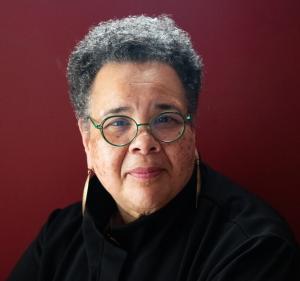
The practice of writing and publishing can be among the most life-giving dimensions of scholarship, and, at times, among the most difficult. Recently, I have held both joy and fear in the same open hand.My latest book is now available: Thinking Teaching: Stories, Insights, and Strategies to Ignite Reflection, Discussion, and Imagination.Thinking Teaching is a collection of blogs I have written for the Wabash Center over more than twenty years. In many ways, this volume most fully reflects my pedagogical commitments, both in content and in form. The book gathers sixty-six essays shaped by story, memory, wonder, and hard-earned wisdom—offerings intended to help teachers teach with greater imagination, reflection, and care. Each essay concludes with questions designed to spark conversation and communal discernment.Throughout the book, I draw from my experiences in classrooms and on faculties, while also leaning into the teachings and memories of family life. Womanist pedagogical commitments guide the work deeply. I understand education as a practice of emancipation, healing, and human flourishing. My hope is that this book will serve as a companion for individual readers, small groups, and faculty communities seeking richer conversations about teaching and the teaching life.Anyone who has published a book knows that writing and publication rarely unfold in a straight line. Books often arrive through detours, disappointments, revisions, unexpected grace and help from friends and colleagues. This was certainly the journey of this manuscript’s becoming.Around 2014, I began to imagine my Wabash blogs as a collected work. Though I had not written them according to a systematic plan, I sensed that together they traced meaningful terrain for colleagues engaged in conversations about teaching. I prepared a proposal for an anthology of these essays and carried it with me to a conference where scholarly and trade publishers gathered in search of new projects.I shared the proposal with several publishers. Most were not interested. Then, during a conversation with a fifth editor, I began to feel hopeful. We had a lively and engaging exchange about teaching, writing, and audience. As the conversation came to a close, she said gently, “Of course, you will expand each blog into a full chapter—right?”My heart sank.I wanted the brief essay form—those 750 to 900-word reflections—to remain intact. I believed the short form carried its own integrity, accessibility, and power. After thanking her for the conversation, I quietly set the project aside. With disappointment lingering close by, I placed the dream of a book-length collection on the back burner.Then, in 2022 I met Donald Quist. Donald became both editor and thoughtful conversation-partner for my writing life. He helped me trust my voice again—particularly my love for short-form creative nonfiction. What began as a professional collaboration soon grew into a relationship marked by shared imagination, intellectual curiosity, and mutual trust. Donald’s editorial guidance deepened my writing, clarified my sense of purpose, and refined my voice. Through his encouragement, I began once again to believe that these collected essays could make a meaningful contribution to theological education. Without hesitation, Donald urged me to pursue the book anew.With renewed confidence, I returned to the manuscript.I then called Jack Seymour for help. Together, we shaped a table of contents that finally felt coherent and spacious. My earlier attempts had been tangled and overworked. From among hundreds of blogs, Jack helped identify sixty-six essays for inclusion in the volume. I prepared a proposal for Wipf and Stock Publishers, and in the spring of 2026, the book came into the world. Somewhere between 2014 and 2026, this book slowly found its way toward becoming. Some books, this book, require more time to ripen before they are ready to meet the world.One of my deepest joys connected to this book is its cover art. The cover features an original painting, Eden #13, by Najee Dorsey, artist and founder of Black Art in America in Atlanta, Georgia. The artwork is luminous and beautiful. For the past two years, the Wabash Center and Black Art in America have been in creative partnership. Through that collaboration, Najee has generously shared his work and encouraged artists within his gallery community to contribute artwork for scholarly book covers. This partnership has blessed us in ways both marvelous and unforeseen.When I received the email from the publisher announcing that Thinking Teaching had been published, I felt an overwhelming sense of gratitude, joy, and humility. The dread and frustration that accompanied parts of the journey seemed to fall away. In their place was a deep appreciation for the possibility that my work might accompany colleagues, nourish meaningful conversations, and encourage more liberative approaches to teaching and learning.Reflection QuestionsIn the blog, I describe my resistance to expanding the brief essays into long chapters because I trusted the “integrity, accessibility, and power” of short forms. What forms of wisdom or truth might theology and religion teachers overlook because academia privileges length, complexity, or abstraction?Who are your trusted conversation partners who cheer you on, bring needed skills and expertise, and allow you space to shine in your writing and scholarly work? List them. Thank them.The writing of some books “require more time to ripen.” What in your teaching life is still ripening? What unfinished idea, classroom practice, or project might need patience rather than productivity?What are your practices of relief and release when dread seizes you? How can you better handle disappointment and rejection?For the colleagues who you mentor, advise, and support, how will you encourage their persistence, agency, and tenacity for their creative work?When your work brings you satisfaction and joy, how do you celebrate? How do you show appreciation for those who assisted you?