Search Results
9334 results found using the following search criteria: .
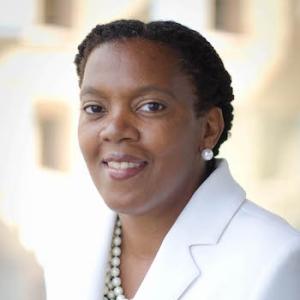
Mouth open, story jump out was a phrase that I grew up hearing in Anglophone Caribbean cultural and linguistic contexts. It described an experience where the avoided topic of conversation somehow, in spite of our best machinations, managed to insert itself into the narrative, often awkwardly. You might say to yourself in advance that you are not going to discuss a particular topic or idea for any of the following reasons: it is controversial, it might seem rude or uncouth, it might be shameful to oneself or others, it could stir up deep emotions for which one may be unprepared. In other words, having the conversation will undoubtedly upset the status quo. However, as the phrase warns, as you begin to speak with the intention of uttering the carefully prescribed words of avoidance and subterfuge, it is as if the story has a life of its own and the suppressed topic comes tumbling out. Typically, the subject matter which was being carefully avoided is one which needed to be addressed. And despite the discomfort, there is a very real possibility of transformation for oneself and others through honest dialogue and careful inquiry.As I mentioned in another blog, “Story Bones,” my older brother and I spent our early childhood with our maternal grandparents in Antigua. They were born about a century and a quarter ago in Caribbean colonies, of the then British West Indies, when the British Empire arguably was at the height of its power. Household items and technologies for preparing food and washing clothes from the nineteenth and earlier centuries would have been in daily use. We, the current generation living adult lives in the early decades of the twenty-first century, were not there as living witnesses. However, those who lived during those earlier times raised us, fed us, taught us how to cook, and told us their stories using what poet and literary scholar Kamau Brathwaite terms “nation language,” a creole expressive language created by Caribbean people. We learned about descriptions of a variety of qualities of speech and oral expression including how bodies moved in motion or held postural positions. These descriptions told us a lot about the speaker and how to listen to whatever they were saying with discernment. For instance, someone who was dicty was fussy and ostentatious in their personal style. From my Trinbagonian (Trinidad and Tobago) friends, I learned the term mauvais lang to describe those who relished gossip. I also grew up hearing the term speaksy-spokesy used to describe deliberate, careful speech which indicated the user’s self-conscious striving for upward social positioning, often through avoidance of common, everyday language use including creole. From my experience, mouth-open-story-jump-out speech challenged controlled speaksy-spokesy utterances and lived into the postural, audacious style of the dicty. Mouth open, story jump out was outspoken speech which offered an invitation to radical truth telling. It held the promise of a path to engagement with the challenging work of personal and social transformation.Mouth open, story jump out is an observation about the power of stories which can transform our own consciousness and that of others in their utterance. Teaching can involve moments like these which surprise and jolt us out of expected conversational routes, especially those designed to avoid what we might consider topics that are too challenging, or for which there just does not seem to be enough time to adequately address. We teachers might pause believing that students may not be adequately prepared, but the topic intrudes on the planned lesson. Popular cultural texts, world events, and changing cultural landscapes can prompt what might seem like impromptu expressions. My suggestion is to embrace them as they come up. They might be the entry point to creative ventures, new research and curriculum ideas, and collaborations and collaborative problem solving. For instance, when I opened my mouth and dared to listen to some of the half-whispered stories, my work as a short story writer jumped out. They were the hidden stories, fragments of which lurked in archival documents. Speculative fiction was the genre which enabled me to blend historical research with imaginings about what the lives and thoughts of people living in the colonial era in the Caribbean may have been like as they grappled with theological and spiritual themes about the nature of liberation. In other words, these stories explored many of the same themes as my scholarship and course development. Speculative fiction enabled me to reimagine the life worlds of Caribbean people using Caribbean folklore to explore themes such as intergenerational trauma, liberation, memory, and invisible branches of family trees. Incorporating opportunities for students to examine challenging topics through written reflections, creative writing, facilitated conversations, and other creative projects holds great potential rewards for transformative learning. What stories will jump out, if we dare to open our mouths authentically in our teaching practice?Suggested ReadingBennett, Louise. Jamaica Labrish. Sangsters, 1966.Brathwaite, Kamau. History of the Voice: The Development of Nation Language in Anglophone Caribbean Poetry. New Beacon Books, 1984.

To me, grades are the biggest problem that we contend with as we help to shape an egalitarian classroom. On one hand, the process of engaging with student work – prompting ideas (the assignment), offering conversations in office hours and class to refine the approach, and offering feedback and (possibly) revision opportunities – is at the core of a conversational, enriching classroom. Drawing on bell hook’s notions of pedagogy rooted in love, I believe that honest and generous engagement with a student’s work is at the core of assessment when done correctly. I am excited by the ideas of ungrading, but given that many of us work in institutional contexts that do not support these practices, I have had to confront the question: how do we grade, and grade with rigor, while not lapsing into authoritarian practices?First I’d say we need to accept that this often creates the somewhat frustrating dynamic that my title alludes to. With the egalitarian practices outlined in my previous blog post, students occasionally have the perspective that I’ll be an “easy” grader. After all, I am flexible with deadlines, offer affirming comments throughout class, and frame my teaching on building skills they already possess rather than corrections or an exposure of deficiency. Yet, staring down at lengthy comments and a B-, students sometimes feel confused or even betrayed. They thought I liked them! At first, this attitude really bothered me – and sometimes it still does. But try as we might to decouple rigor from authoritarian approaches, we have to contend with the fact that these two things are often synonymous in students’ eyes. In other words, being kind but still rigorous remains a bit of an anomaly. Therefore, we need to first practice patience because we’re operating in a system that usually only has room for “nice, easy” teachers or “tough but fair” (or just tough) teachers. Getting through the “nice person, but…” comments can allow us to press on and continue to have a rigor rooted in egalitarian love. Perhaps one day it will be “nice person because she’s a rigorous grader,” but for now, I try to enjoy the experience that may lead to this transformation.What does this look like? Borrowing from ungrading/labor grading, I aim to involve my students as much as possible in crafting the assignments themselves, assessing their own work, and building in responses to my feedback so that it becomes less of a “hand off” (described elegantly by Freire as the “banking model”) and more of a collaboration. In seminar classes, my students and I collaborate to make a participation rubric based on their feedback on quality discussions. They submit their own assessment of their participation frequently, which levels the grading (i.e., they are accountable to themselves rather than seeing me as the arbiter of what “counts”) and creates a dynamic of community in which contributing becomes less about a grade and more about building quality, in-depth discussions together.When assigning papers, I often have students work to create their own questions, meet with them one-on-one (during regular class time for those of you worried about extra labor!), give extensive feedback on what worked, what could be improved, and specifically how to improve it. Following this, students have the opportunity to revise, and in their revisions, they include reflections on my feedback. Perhaps most important, I ask “What was the biggest issue as you see it, and were you worried about it coming in, or was my feedback a surprise to you?” I find this question is particularly effective for leveling authority and maintaining rigor as it reveals any moments in which a student is blindsided by a grade or comment. Such a moment is important to respond to when thinking about anti-authoritarian practices. While I often want to reply, “Well, I’m the expert, so listen!” I now use this as an opportunity to discuss with students the conversational and collaborative nature of learning: some things are only revealed when we are vulnerable enough to trust others to read and think with us. There are some areas of growth and improvement we cannot see and we depend on the generosity of others to work with us. And sometimes, professors get it wrong too – I have had moments where a student objects to my characterization of their work, and upon rereading, I realized that I was tired or unfocused when I read it the first time. Again, egalitarian classrooms allow for an exchange like this without feeling like we’ve compromised our expertise or authority, but rather allows a moment for vulnerability and true transformation.In an ideal world, I think this feedback and conversation could take place in the absence of grading. But in the world and institutional contexts almost all of us operate in, shifting the narrative, allowing students in, and creating opportunities to emphasize process and growth over each individual attempt allow us to maintain standards, rigor, and knowledge, but from a place of care, collaboration, and, yes, love.
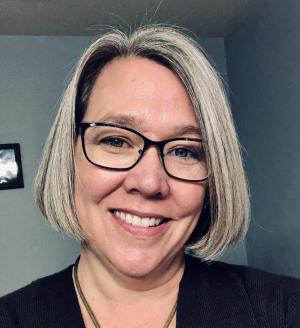
It happened again this semester. I had planned a new class for this term called “Religion, Imagination, and Facing the Future.” While the class technically fulfills a first-year seminar curricular function of teaching graduate level reading, research, and writing, I can pick the theme. I chose it in light of the chaos in the United States right now and the fascinating conversations arising amongst scholars and organizers I admire about how to imagine a different future than the late-stage capitalist, wealth inequality laden, earth-destroying, violent social world we currently live in. I collected readings hoping to explore imagination as a key quality for religious leaders facing scary and death-dealing situations in their communities. We started with Ruha Benjamin’s Imagination: A Manifesto and moved into Octavia Butler’s The Parable of the Sower, with later readings from so many friends and colleagues I respect… Willie James Jennings, Sarah Farmer, Yara González-Justiniano. I created assignments and built a rhythm for the course with great care and excitement for the students I would encounter. I read and re-read the texts I had chosen, creating discussion prompts for the students to engage. The course was built out in Canvas, the students had been populated into it by the registrar, and it was time to hit the button to “publish” the course. I hesitated. I re-read the course description and its now seemingly impossible claims about what we would be exploring during the term. And then I sat there with the deep feelings of inadequacy that flooded my body. Who was I to be teaching such a course? I was achingly aware of the privilege of my social position, of my work as a professor rather than an organizer, of my lack of experience working in institutions that didn’t allow space for my vocation to emerge and be expressed. In those days I was watching former students and professional colleagues involved in organizing resistance to the ICE occupation in Minneapolis, living into the mutual aid, love for neighbor, solidarity, and bold witness that I have taught about for years. Deep in my bones and my gut, my intuition told me that I was inadequate to the task of teaching this course that I had put together. What did I do? I pushed the button and published the course anyway.Why? Because in my deeper wisdom, I know these are the questions and the struggles that my students need to wrestle with, whether or not I feel up to the task. They need to learn more than I can teach in this moment. That moment of profound humility before the work of teaching is absolutely the place to begin, at least for me. It marks a moment of letting go of the control of the learning environment and leaning in to trust that the students will show up. Together we might begin a journey that won’t be fruitless. They will learn things that I intend to teach them, and they will learn things that I never imagined or don’t yet understand myself. They will teach me what they know from the work they engage where they are, from the mentors who have guided them, from the challenges they have already survived, from the faith they have when I am lacking. Together, we are good enough to engage these questions that they are already responsible to in their lives well beyond my classroom. If I only taught the things I feel expertise and skill in teaching, I would fail to provide the education they need in this moment. It takes courage and vulnerability to recognize my limits and to still take necessary risks for significant learning anyway.