Scholarship on Teaching
What are grades doing in a homiletics classroom? This article traces the function of grades through the broader history of the educational system in the United States and then makes suggestions for how grades can be used more effectively in teaching preaching. Beginning in the nineteenth century, teachers used grades to rank and motivate students, as well as communicate across institutions. With the more recent assessment movement, educators have conceptualized grading as the larger process of evaluating the success of learning objectives. The commission on accreditation for the Association of Theological Schools does not view grades as part of its assessment, but it evaluates theological schools on whether they achieve intended learning outcomes. Theological educators need to be able to evaluate whether their teaching fulfills their schools' mission and learning objectives. For homiletics, the author measures learning through pre- and post-preaching feedback and incorporates professor- and student-crafted rubrics.
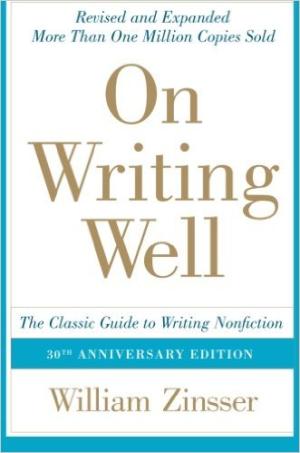
On Writing Well has been praised for its sound advice, its clarity and the warmth of its style. It is a book for everybody who wants to learn how to write or who needs to do some writing to get through the day, as almost everybody does in the age of e-mail and the Internet. Whether you want to write about people or places, science and technology, business, sports, the arts or about yourself in the increasingly popular memoir genre, On Writing Well offers you fundamental priciples as well as the insights of a distinguished writer and teacher. With more than a million copies sold, this volume has stood the test of time and remains a valuable resource for writers and would-be writers. (From the Publisher)

Writing is a solitary sport—but none of us can do it without good company at crucial moments. This spirited collection of inspiring and useful essays and exercises on the craft of writing is the next best thing to having an experienced writer at your side. These twenty-nine pieces, more than half of which have never been published in book form, include selections as unusual and diverse as behaviorist B. F. Skinner's "How to Discover What You Have to Say"; Brett Candlish Millier's investigation of the seventeen drafts of Elizabeth Bishop's poem "One Art"; Ursula Le Guin's "Where Do You Get Your Ideas From?"; Anne Eisenberg's "E-Mail and the New Epistolary Age"; and Nancy Mair's "The Writer's Thin Skin and Faint Heart." Other contributors include Gloria Naylor, Stanley Kunitz, Bernard Shaw, Natalie Goldberg, Anne Tyler, Rita Dove, Peter Elbow, and Gail Godwin. (From the Publisher)
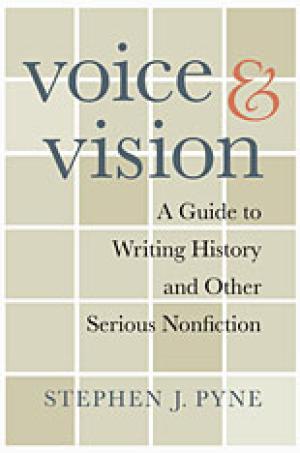
It has become commonplace these days to speak of “unpacking” texts. Voice and Vision is a book about packing that prose in the first place. While history is scholarship, it is also art—that is, literature. And while it has no need to emulate fiction, slump into memoir, or become self-referential text, its composition does need to be conscious and informed. Voice and Vision is for those who wish to understand the ways in which literary considerations can enhance nonfiction writing. At issue is not whether writing is scholarly or popular, narrative or analytical, but whether it is good. Fiction has guidebooks galore; journalism has shelves stocked with manuals; certain hybrids such as creative nonfiction and the new journalism have evolved standards, esthetics, and justifications for how to transfer the dominant modes of fiction to topics in nonfiction. But history and other serious or scholarly nonfiction have nothing comparable. Now this curious omission is addressed by Stephen Pyne as he analyzes and teaches the craft that undergirds whole realms of nonfiction and book-based academic disciplines. With eminent good sense concerning the unique problems posed by research-based writing and with a wealth of examples from accomplished writers, Pyne, an experienced and skilled writer himself, explores the many ways to understand what makes good nonfiction, and explains how to achieve it. His counsel and guidance will be invaluable to experts as well as novices in the art of writing serious and scholarly nonfiction. (From the Publisher)
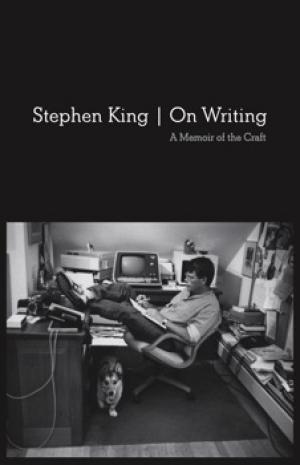
Immensely helpful and illuminating to any aspiring writer, this special edition of Stephen King’s critically lauded, million-copy bestseller shares the experiences, habits, and convictions that have shaped him and his work. “Long live the King” hailed Entertainment Weekly upon publication of Stephen King’s On Writing. Part memoir, part master class by one of the bestselling authors of all time, this superb volume is a revealing and practical view of the writer’s craft, comprising the basic tools of the trade every writer must have. King’s advice is grounded in his vivid memories from childhood through his emergence as a writer, from his struggling early career to his widely reported, near-fatal accident in 1999—and how the inextricable link between writing and living spurred his recovery. Brilliantly structured, friendly and inspiring, On Writing will empower and entertain everyone who reads it—fans, writers, and anyone who loves a great story well told. (From the Publisher)
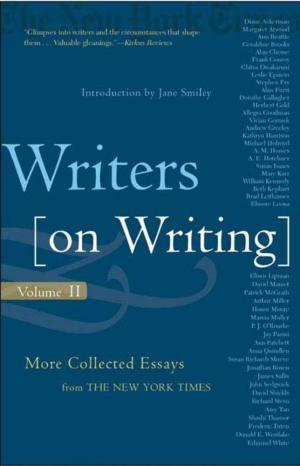
In a second volume of original essays drawn from the long-running New York Times column, Writers on Writing brings together another group of contemporary literature's finest voices to muse on the challenges and gifts of language and creativity. The pieces range from taciturn, hilarious advice for aspiring writers to thoughtful, soul-wrenching reflections on writing in the midst of national tragedy. William Kennedy talks about the intersecting lives of real and imagined Albany politics; Susan Isaacs reveals her nostalgia for a long-retired protagonist; and Elmore Leonard offers pithy rules for letting the writing, and not the writer, take charge. With contributions from Diane Ackerman, Margaret Atwood, Frank Conroy, Mary Karr, Patrick McGrath, Arthur Miller, Amy Tan, and Edmund White, Writers on Writing, Volume II offers an uncommon and revealing view of the writer's world. (From the Publisher)
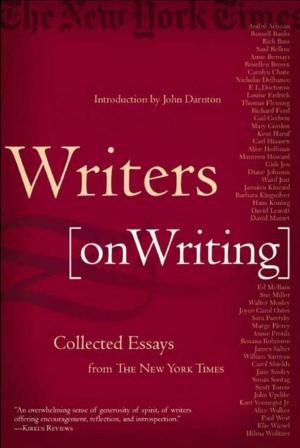
By turns poignant, hilarious, and practical, Writers on Writing brings together more than forty of contemporary literature's finest voices. Pieces range from reflections on the daily craft of writing to the intersection of art's and life's consequential moments. Authors discuss what impels them to write: creating a sense of control in a turbulent universe; bearing witness to events that would otherwise be lost in history or within the writer's soul; recapturing a fragment of time. Others praise mentors and lessons, whether from the classroom, daily circumstances, or the pages of a favorite writer. For anyone interested in the art and rewards of writing, Writers on Writing offers an uncommon and revealing view of a writer's world. Contributors include Russell Banks, Saul Bellow, E. L. Doctorow, Richard Ford, Kent Haruf, Carl Hiaasen, Alice Hoffman, Jamaica Kincaid, Barbara Kingsolver, Sue Miller, Walter Mosley, Joyce Carol Oates, Annie Proulx, Carol Shields, Jane Smiley, Susan Sontag, John Updike, Kurt Vonnegut Jr., Alice Walker, and Elie Wiesel. (From the Publisher)
Despite deans playing critical roles in education, little is known about the knowledge, skills, and dispositions needed for the job, or the practical dilemmas they face on an almost daily basis. Each chapter of this international collection opens the role up for examination and critique, developing a deeper understanding of what it means to be a dean, and offering insights into the transition into the role, managing the daily demands and expectations of it, and what it means to exit the deanship. The book brings being a dean and the leadership inherent in the position into sharp focus based on international perspectives on doing the job.
Click Here for Book Review Not everyone is surprised at the rumor suggesting that Karl Wolfe, Dean of The University School, recently told Rebecca Swingle, new professor at the school, that a promotion could be more easily attained were she to sleep with him. Certainly those least surprised were several female students who had been the target of the Dean's amorous behavior. But the question remains--who might stand and suggest that such behavior should not occur in a divinity school, of all places? The Dean's Demise offers readers a fictional case study in how something like sexual harassment impacts a divinity school's educational vision, its theological understanding of community, and the practical issues of governance.
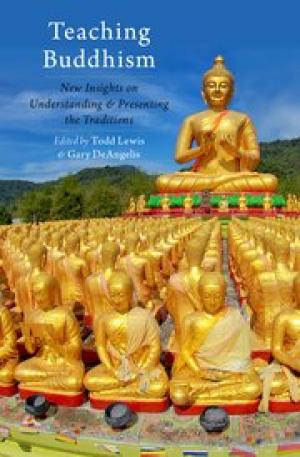
Click Here for Book Review Buddhist studies is a rapidly changing field of research, constantly transforming and adapting to new scholarship. This creates a problem for instructors, both in a university setting and in monastic schools, as they try to develop a curriculum based on a body of scholarship that continually shifts in focus and expands to new areas. Teaching Buddhism establishes a dialogue between the community of instructors of Buddhism and leading scholars in the field who are updating, revising, and correcting earlier understandings of Buddhist traditions. Each chapter presents new ideas within a particular theme of Buddhist studies and explores how courses can be enhanced with these insights. Contributors in the first section focus on the typical approaches, figures, and traditions in undergraduate courses, such as the role of philosophy in Buddhism, Nagarjuna, Yogacara Buddhism, tantric traditions, and Zen Buddhism. They describe the impact of recent developments-like new studies in the cognitive sciences-on scholarship in those areas. Part Two examines how political engagement and ritual practice have shaped the tradition throughout its history. Focus then shifts to the issues facing instructors of Buddhism-dilemmas for the scholar-practitioner in the academic and monastic classroom, the tradition's possible roles in teaching feminism and diversity, and how to present the tradition in the context of a world religions course. In the final section, contributors offer stories of their own experiences teaching, paying particular attention to the ways in which American culture has impacted them. They discuss the development of courses on American Buddhism; using course material on the family and children; the history and trajectory of a Buddhist-Christian dialog; and Buddhist bioethics, environmentalism, economic development, and social justice. In synthesizing this vast and varied body of research, the contributors in this volume have provided an invaluable service to the field (From the Publisher)