Scholarship on Teaching
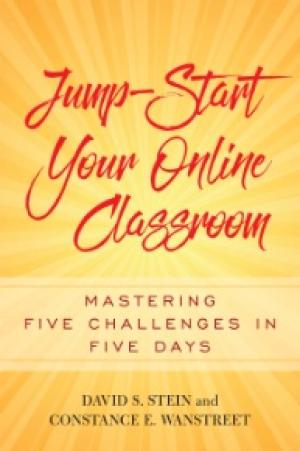
Click Here for Book Review Every year, more online or technology-enhanced learning experiences are added to the landscape of education, and the number of students taking online courses on residential campuses continues to grow. In addition, new instructional tools are creating environments that are mobile, interactive, and collaborative. These trends present challenges to the online classroom, and this book will help instructors meet those challenges. Jump-Start Your Online Classroom prepares a first-time online instructor to successfully manage the first few weeks of a course, including activities to help instructors plan, manage, and facilitate online instruction; and provides resources helpful during the beginning weeks of class. Each chapter is developed around the immediate challenges instructors face when teaching online. The authors address everyday problems and suggest solutions informed by their extensive research and experience. The five challenges, which are designed to be addressed in five days, are to: • Make the transition to online teaching • Build online spaces for learning • Prepare students for online learning • Manage and facilitating the online classroom • Assess learner outcomes in an online classroom The book is based on the authors’ design and facilitation model that identifies five elements comprising an online learning environment: digital tools, participants, social practices, learning community, and outcomes. The book shows how each of those aspects influences instructional practices and interacts to create an environment for a meaningful online educational experience. (From the Publisher)
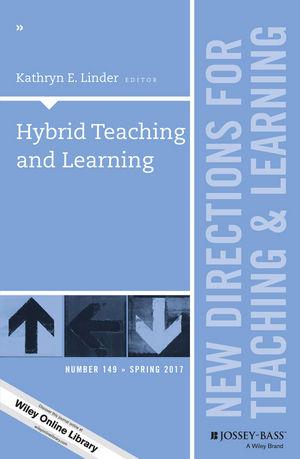
Click Here for Book Review Hybrid, or blended, classrooms are expanding on campuses across the United States (and internationally). Intentionally combining in-class instruction with online activities not only aids student learning, it also provides more self-directed, technology-mediated learning experiences for students who will incorporate technology into their professional lives post-college. In addition to explaining and defining the phenomenon of hybrid teaching and learning, this volume answers: • What is hybrid teaching and learning? • How does it promote student learning? • Why should faculty and administrators consider it? • How are its components different from traditional classrooms? • What are the best practices of hybrid course design? • How can instructors incorporate accessibility into their hybrid courses? • What models can be used to train faculty as hybrid teachers? • Where is it being practiced? • How can institutions best prepare students for and promote their success in hybrid courses? • Who should be involved in implementing and supporting these initiatives at the institutional level? This is the 149th volume of this Jossey-Bass higher education series. It offers a comprehensive range of ideas and techniques for improving college teaching based on the experience of seasoned instructors and the latest findings of educational and psychological researchers. (From the Publisher)
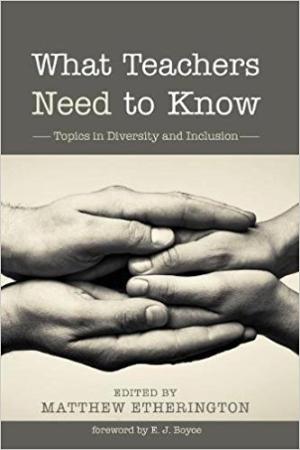
Click Here for Book Review Every generation has sought to make teaching and learning more inclusive and equitable, but pesky questions always remain, such as, how can teaching and learning be conducted in ways that satisfies and respects everyone? What are the parameters of an inclusive pedagogy? Who defines its principles? How should these principles be taught and by whom? And by what authority shall they be grounded? These types of thorny questions occupy the essence of educators and the authors of this book. This book is about teachers, educators, and topics related to inclusion. Teachers and educators have a lot to know, therefore the topics are broad and relevant to the times. What should teachers know about special needs, religion and spirituality, Aboriginality, the environment, tolerance, and school choice? Although teachers have knowledge of their subject matter, knowledge alone is not sufficient. They must know and understand how people learn. A teacher must also care deeply about who they teach. And this "teacher knowledge" grows and changes over time as teachers become more experienced, informed, skilled, and wiser. At the same time no teacher preparation will be sufficient because there will always be discussions that were never had and knowledge that was never shared. Time has its costs and there is only so much a formal education can prepare someone. This book helps to satisfy a cavity in learning for teachers and educators in general. (From the Publisher)

Click Here for Book Review Religion and Higher Education in Europe and North America illuminates the experiences of staff and students in higher education as they negotiate the university environment. Religious extremism has been rising across Europe, whilst recent attacks have thrown public debate around the place of religion on campus, the role of universities in recognising and managing religious fundamentalism and freedom of speech on campus into sharper focus. Despite these debates, research exploring religion on campus has been largely absent from discourse on higher education outside of America, with policy and practices designed to deal with religion on campus largely founded on supposition rather than evidence. This book speaks into that void, including results from recent studies in the field which form an empirically grounded base from a broad variety of perspectives on religion at universities. Aiming to offer a deeper perspective, more dialogue, and engagement on the experiences of students, Religion and Higher Education in Europe and North America presents us not only with an opportunity to counter growing trends of intolerance, but for people to connect with the humanity of others. Focusing on what research reveals about staff and students’ experiences, it incorporates research from different academic disciplines including sociology, education, social policy, theology and religious studies, and across different faith and belief groups. This thought-provoking and challenging volume features chapters written by researchers involved in informing policy and practice relating to religion and belief in higher education in the UK, US, Canada, France and the Netherlands . Spanning the academic-practitioner divide, students and academics interested in the sociology of religion and of higher education, as well as those responsible for the practical management of campus life, will find this text of particular importance. (From the Publisher)
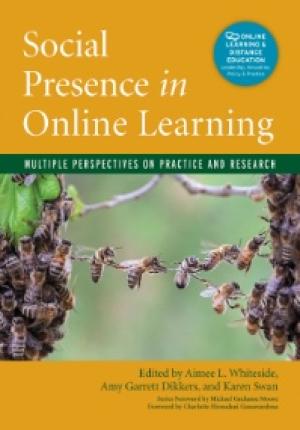
Click Here for Book Review Social presence continues to emerge as a key factor for successful online and blended learning experiences. It is commonly described as the degree to which online participants feel connected to one another. Understanding social presence with its critical connections to community-building, retention, and learning outcomes allows faculty and instructional designers to better support and engage students. This volume, Social Presence in Online Learning, addresses the evolution of social presence with three distinct perspectives, outlines the relevant research, and focuses on practical strategies that can immediately impact the teaching and learning experience. These strategies include creating connections to build community, applying content to authentic situations, integrating a careful mix of tools and media, leveraging reflective and interactive opportunities, providing early and continuous feedback, designing with assessment in mind, and encouraging change in small increments. Because student satisfaction and motivation plays a key role in retention rates and because increased social presence often leads to enriched learning experiences, it is advantageous to mindfully integrate social presence into learning environments. Social Presence in Online Learning brings together eminent scholars in the field to distinguish among three different perspectives of social presence and to address how these viewpoints immediately inform practice. This important volume: • Provides an overview of the evolution of social presence, key findings from social presence research, and practical strategies that can improve the online and blended learning experience • Differentiates three distinct perspectives on social presence and explains the ideas and models that inform these perspectives • Explores specific ways in which social presence relates to course satisfaction, retention, and outcomes • Offers practical implications and ready-to-use techniques that are applicable to multiple disciplines • Introduces current research on social presence by prominent researchers in the field with direct inferences to the practice of online and blended learning • Looks at future directions for social presence Social Presence in Online Learning is appropriate for practitioners, researchers and academics involved in any level of online learning program design, course design, instruction, support, and leadership as well as for graduate students studying educational technology, technology-enhanced learning, and online and blended learning. It brings together multiple perspectives on social presence from the most influential scholars in the field to help shape the future of online and blended learning. (From the Publisher)
Click Here for Book Review Teaching the Whole Student is a compendium of engaged teaching approaches by faculty across disciplines. These inspiring authors offer models for instructors who care deeply about their students, respect and recognize students’ social identities and lived experiences, and are interested in creating community and environments of openness and trust to foster deep-learning, academic success, and meaning-making. The authors in this volume stretch the boundaries of academic learning and the classroom experience by seeking to identify the space between subject matter and a student's core values and prior knowledge. They work to find the interconnectedness of knowledge, understanding, meaning, inquiry and truth. They appreciate that students bring their full lives and experiences—their heart and spirit—into the classroom just as they bring their minds and intellectual inquiry. These approaches contribute to student learning and the core academic purposes of higher education, help students find meaning and purpose in their lives, and help strengthen our diverse democracy through students’ active participation and leadership in civic life. They also have a demonstrated impact on critical and analytical thinking, student retention and academic success, personal well-being, commitments to civic engagement, diversity, and social justice. Topics discussed: • Teacher-student relationships and community building • How teaching the whole student increases persistence and completion rates • How an open learning environment fosters critical understanding • Strategies for developing deep social and personal reflection in experiential education and service learning The authors of this book remind us in poignant and empirical ways of the importance of teaching the whole student, as the book's title reflects. (From the Publisher)
Click Here for Book Review This powerful book explores how institutions of higher education can successfully serve “breakaway” students—first-generation, low-income students who are trying to break away from the past in order to create a more secure future. The gap between low-SES and high-SES students persists as efforts to close it have not met with great success. In this provocative book, Gross offers a new approach to addressing inequities by focusing on students who have succeeded despite struggling with the impacts of poverty and trauma. Gross draws on her experience as a college president to outline practical steps that postsecondary institutions can take to create structures of support and opportunity that build reciprocal trust. Students must trust their institutions and professors, professors must trust their students, and eventually students must learn to trust themselves. Visit the book’s website at breakawaylearners.com.(From the Publisher)
Click Here for Book Review Flipped learning is an approach to the design and instruction of classes through which, with appropriate guidance, students gain their first exposure to new concepts and material prior to class, thus freeing up time during class for the activities where students typically need the most help, such as applications of the basic material and engaging in deeper discussions and creative work with it. While flipped learning has generated a great deal of excitement, given the evidence demonstrating its potential to transform students’ learning, engagement and metacognitive skills, there has up to now been no comprehensive guide to using this teaching approach in higher education. Robert Talbert, who has close to a decade’s experience using flipped learning for majors in his discipline, in general education courses, in large and small sections, as well as online courses – and is a frequent workshop presenter and speaker on the topic – offers faculty a practical, step-by-step, “how-to” to this powerful teaching method. He addresses readers who want to explore this approach to teaching, those who have recently embarked on it, as well as experienced practitioners, balancing an account of research on flipped learning and its theoretical bases, with course design concepts to guide them set up courses to use flipped learning effectively, tips and case studies of actual classes across various disciplines, and practical considerations such as obtaining buy-in from students, and getting students to do the pre-class activities. This book is for anyone seeking ways to get students to better learn the content of their course, take more responsibility for their work, become more self-regulated as learners, work harder and smarter during class time, and engage positively with course material. As a teaching method, flipped learning becomes demonstrably more powerful when adopted across departments. It is an idea that offers the promise of transforming teaching in higher education. (From the Publisher)
Click Here for Book Review Dancing in the Rain offers a lively and accessible guide aimed at helping education leaders thrive under pressure by developing the inner strengths of mindfulness and self-compassion, expressing emotions wisely, and maintaining a clear focus on the values that matter most. Jerome T. Murphy, a scholar and former dean who has written and taught about the inner life of education leaders, argues that the main barrier to thriving as leaders is not the outside pressures we face, but how we respond to them inside our minds and hearts. In this concise volume, Murphy draws on a combination of Eastern contemplative traditions and Western psychology, as well as his own experience and research in the field of education leadership. He presents a series of exercises and activities to help educators take discomfort more in stride, savor the joys and satisfactions of leadership work, and thrive as effective leaders guided by heartfelt values. Every day, education leaders find themselves swamped in a maelstrom of pressures that add to the complex challenges of educating all students to a high level. With humor and compassion, Dancing in the Rain shows educators how to lead lives of consequence and purpose in the face of life’s inescapable downpours. (From the Publisher)
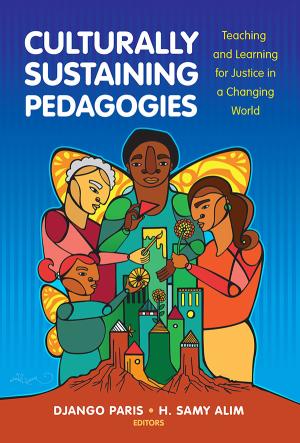
Culturally Sustaining Pedagogies raises fundamental questions about the purpose of schooling in changing societies. Bringing together an intergenerational group of prominent educators and researchers, this volume engages and extends the concept of culturally sustaining pedagogy (CSP)—teaching that perpetuates and fosters linguistic, literate, and cultural pluralism as part of schooling for positive social transformation. The authors propose that schooling should be a site for sustaining the cultural practices of communities of color, rather than eradicating them. Chapters present theoretically grounded examples of how educators and scholars can support Black, Indigenous, Latinx, Asian/Pacific Islander, South African, and immigrant students as part of a collective movement towards educational justice in a changing world. (From the Publisher)