Scholarship on Teaching
Click Here for Book Review Since 1993, forty-nine theological seminaries have created opportunities for high school students to participate in on-campus High School Theology Programs (HSTPs) that invite them to engage in serious biblical and theological study. Many of the young people who take part in these programs go on to become pastoral or lay leaders in their churches. What has made these programs so successful — especially given the well-documented "crisis of faith" among young people today? In this book thirteen contributors — many of whom have created or led one of these innovative theology programs — investigate answers to this question. They examine the pedagogical practices the HSTPs have in common and explore how they are contributing to the leadership of the church. They then show how the lessons gleaned from these successful programs can help churches, denominations, and seminaries reimagine both theological education and youth ministry.
This Auburn Studies report highlights the changing features of online distance education (ODE) within theological schools. Distance education is not a new phenomenon, particularly within the broader field of higher education, and yet the “disruptive innovation” of the internet, as Clayton Christensen and others have argued, has only recently begun to change theological education.[i] While in some respects the impact of the internet is dramatic and new, many faith traditions have deep experience with the sort of mediated presence distinctive of ODE. For many world religions, the embodied presence of their founders—Moses, Jesus, Mohammad, Buddha, and others—was brief. For most of the histories of these great traditions, “not being there” has been normative. Take, for example, the story of Jesus’ post-resurrection appearance to the disciples in the Gospel of John. All the disciples were there, save Thomas, who would not believe Jesus was truly alive without “being there” to see and touch Jesus. Lucky for him, a week later Jesus appeared to Thomas as well. But note what Jesus said: “Have you believed because you have seen me? Blessed are those who have not seen and have come to believe.” This is the case for millions of believers today, whose experience of the holy is through a mediating presence, holy objects, or rituals, and perhaps, most profoundly, through scriptures understood as God’s presence, voice, or word. It is then not an unfamiliar world at all for people of faith to teach and learn at a distance, using mediated relationships to do so—even when the technology affording the connection is indeed new. While this report outlines our research findings, we also hope to offer resources for thinking in creative and hopeful ways in a time of change. The report takes stock of a generation of change in theological education driven by what is often called the “digital revolution.” We highlight three key findings: First, ODE is growing rapidly, pushing the boundaries of who typically attends theological school. Over the past decade, enrollment at member schools of The Association of Theological Schools (ATS) dropped by 11%; in the same period, online enrollment rose almost 200%. Broader cultural patterns regarding spirituality are surely at play as we see the democratizing force of the internet opening theological exploration to a much wider—and, it turns out, quite interested—audience. Given the success of ODE, many schools suddenly find themselves with too large and expensive a physical plant for the educational needs. Second, ODE student outcomes are equal to or better than those of traditional residential classes. Many critics—even now—harbor doubts that anything but students and a professor in a room together can achieve the desired educational outcomes. Yet the evidence shows this is not true. ODE provokes pedagogical innovation, shifting the focus from teacher to learner, and the power of the contexts in which the student learns. For both faculty and students, it is powerful to take seriously the “real world” context where student learning and daily work dynamically interrogate one another. Ironically, we found, while ODE takes more time and effort, remarkably few resources are currently dedicated to training and supporting faculty as they learn this new medium. Third, the integrated reality of digital life is quickly making the old divide between “traditional” and “online” classes—and hybrid courses or programs, which toggle between the two—obsolete. ODE creates an identity crisis for many schools that value highly the formative power of “being there” in classroom, chapel, and community life. Yet the question the disruption of the internet raises is “where” does education actually happen? It is clearly wherever the student lives, works, and learns, including in virtual spaces and through digitally mediated access to human and material resources.
Click Here for Book Review In Going Online, one of our most respected online learning leaders offers insights into virtual education―what it is, how it works, where it came from, and where it may be headed. Robert Ubell reaches back to the days when distance learning was practiced by mail in correspondence schools and then leads us on a tour behind the screen, touching on a wide array of topics along the way, including what it takes to teach online and the virtual student experience. You’ll learn about: -how to build a sustainable online program; -how to create an active learning online course; -why so many faculty resist teaching online; -how virtual teamwork enhances digital instruction; -how to manage online course ownership; -how learning analytics improves online instruction. Ubell says that it is not technology alone, but rather unconventional pedagogies, supported by technological innovations, that truly activate today's classrooms. He argues that innovations introduced online―principally peer-to-peer and collaborative learning―offer significantly increased creative learning options across all age groups and educational sectors. This impressive collection, drawn from Ubell's decades of experience as a digital education pioneer, presents a powerful case for embracing online learning for its transformational potential.
Click Here for Book Review Reappraising ideas associated with Ernst Bloch, Roland Barthes and Gaston Bachelard within the context of a utopian pedagogy, Hope, Utopia and Creativity in Higher Education reframes the transformative, creative and collaborative potential of education offering new concepts, tactics and pedagogical possibilities. Craig A. Hammond explores ways of analysing and democratising not only pedagogical conception, knowledge and delivery, but also the learning experience, and processes of negotiation and peer-assessment. Hammond shows how the incorporation of already existent learner hopes, daydreams, and creative possibilities can open up new opportunities for thinking about popular culture and memory, learning and knowledge, and collaborative communities of support. Drawing together theoretical and cultural material in a teaching and learning environment of empowerment, Hammond illustrates that formative articulations of alternative, utopian futures, across sociological, humanities, and education studies subjects and curricula, becomes possible.
Almost twenty-five years ago a small, liberal arts college began a journey into critical pedagogies, both in some classes and at the departmental level. Students and faculty engage in department work together--setting curriculum, assessing programs, planning events, and rotating chairing of meetings. We are attempting to engage in transformative leadership with each other, as we re-imagine what a truly radical, democratic department would look like.
Discussions of world citizenship that elide the challenge of grappling with religious worldviews expose a covert intolerance at the very core of secularism, calling into question the “liberality” of liberal education. The ethical imperative of engaging with different worldviews not only demands that religions be taught, but also raises questions regarding how religious worldviews should be taught.
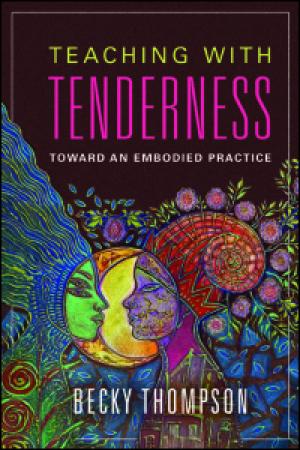
Click Here for Book Review Imagine a classroom that explores the twinned ideas of embodied teaching and a pedagogy of tenderness. Becky Thompson envisions such a curriculum--and a way of being--that promises to bring about a sea change in education. Teaching with Tenderness follows in the tradition of bell hooks's Teaching to Transgress and Paulo Freire's Pedagogy of the Oppressed, inviting us to draw upon contemplative practices (yoga, meditation, free writing, mindfulness, ritual) to keep our hearts open as we reckon with multiple injustices. Teaching with tenderness makes room for emotion, offer a witness for experiences people have buried, welcomes silence, breath and movement, and sees justice as key to our survival. It allows us to rethink our relationship to grading, office hours, desks, and faculty meetings, sees paradox as a constant companion, moves us beyond binaries; and praises self and community care. Tenderness examines contemporary challenges to teaching about race, gender, class, nationality, sexuality, religion, and other hierarchies. It examines the ethical, emotional, political, and spiritual challenges of teaching power-laden, charged issues and the consequences of shifting power relations in the classroom and in the community. Attention to current contributions in the areas of contemplative practices, trauma theory, multiracial feminist pedagogy, and activism enable us to envision steps toward a pedagogy of liberation. The book encourages active engagement and makes room for self-reflective learning, teaching, and scholarship. (From the Publisher)
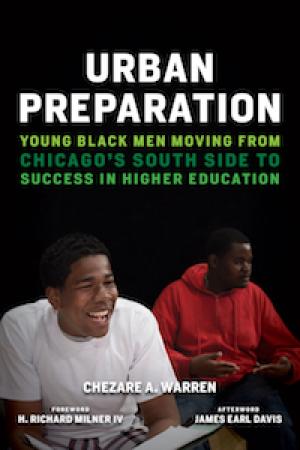
Click Here for Book Review Chezare A. Warren chronicles the transition of a cohort of young Black males from Urban Prep Charter Academy for Young Men to their early experiences in higher education. A rich and closely observed account of a mission-driven school and its students, Urban Preparation makes a significant contribution to our understanding of how young males of color can best be served in schools throughout the United States today. A founding teacher at Urban Prep, Warren offers a detailed exploration of what this single-sex public high school on the South Side of Chicago has managed to accomplish amid profoundly challenging circumstances. He provides a comprehensive portrait of the school—its leaders, teachers, and professional staff; its students; and the community that the school aims to serve—and highlights how preparation for higher education is central to its mission. Warren focuses on three main goals: to describe Urban Prep’s plans and efforts to prepare young Black males for college; to understand how race, community, poverty, and the school contributed, in complex and interrelated ways, to the academic goals of these students; and to offer a wide-ranging set of conclusions about the school environments and conditions that might help young Black males throughout the country succeed in high school and college. (From the Publisher)
This book argues that the cognitive resources for learning of over half our young people have been diminished by the negative effects of economic insecurity, discrimination and hostility against non-majority groups based on race, ethnicity, sexual orientation, or gender identity, and other aspects of difference. Recognizing that these students are no different than their peers in terms of cognitive capacity, this book offers a set of strategies and interventions to rebuild the available cognitive resources necessary to succeed in college and reach their full potential.>br> Members of these groups systematically experience conditions in their lives that result in chronic stress and, therefore, decreased physical and mental health and social and economic opportunity. The costs of the many kinds of scarcity in their lives – money, health, respect, safety, affirmation, choices, belonging – is seriously reduced “mental bandwidth,” the cognitive and emotional resources needed to deal with making good decisions, learning, healthy relationships, and more. People who are operating with depleted mental bandwidth are less able to succeed in school, starting in childhood, and are much less likely to make it to college. For those who do make it, their bandwidth capacity often interferes with learning, and therefore, persisting and graduating from college. This book presents variety of evidence-based interventions that have been shown, through implementation in high schools and colleges, to help students to regain bandwidth. They are variously intended for application inside and outside the classroom and address not only cognitive processes but also social-psychological, non-cognitive factors that are relevant to the college environment as a whole. Beginning with an analysis of the impacts on mental and physical health and cognitive capacity, of poverty, racism, and other forms of social marginalization, Cia Verschelden presents strategies for promoting a growth mindset and self-efficacy, for developing supports that build upon students’ values and prior knowledge and for creating learning environments both in and out of the classroom so students can feel a sense of belonging and community. She addresses issues of stereotyping and exclusion and discusses institutional structures and processes that create identity-safe rather than identity-threat learning environment. This book is intended for faculty, student affairs professionals, and college and university administrators, all of whom have an interest in creating learning environments where all students have a chance to succeed. (From the Publisher)
Click Here for Book Review Christian higher education needs something richer and deeper. Faith-based institutions yearn for more than business as usual, and Echoes of Insight invites you to listen again to older, forgotten, and perhaps even ignored voices. Designed to stimulate conversation among colleagues, Echoes of Insight offers brief summaries of several thought-provoking writers from the last century and encourages a new, vigorous conversation about Christian higher education. (From the Publisher)