Scholarship on Teaching
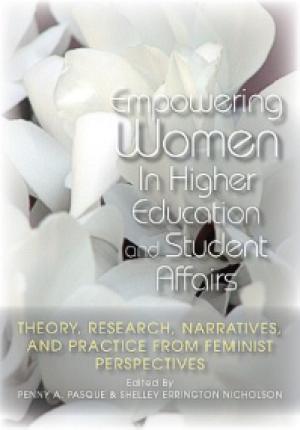
How do we interrupt the current paradigms of sexism in the academy? How do we construct a new and inclusive gender paradigm that resists the dominant values of the patriarchy? And why are these agendas important not just for women, but for higher education as a whole? These are the questions that these extensive and rich analyses of the historical and contemporary roles of women in higher education— as administrators, faculty, students, and student affairs professionals—seek constructively to answer. In doing so they address the intersection of gender and women’s other social identities, such as of race, ethnicity, sexual orientation, class, and ability. This book addresses the experiences and position of women students, from application to college through graduate school, and the barriers they encounter; the continuing inequalities in the rates of promotion and progression of women and other marginalized groups to positions of authority, and the gap in earnings between men and women; and pays particular attention to how race and other social markers impact such disparities, contextualizing them across all institutional types. Written collaboratively by an intergenerational group of women, men, and transgender people with different social identities, feminist perspectives, and professional identities— and who, in the process, built upon each other’s work—this volume constitutes a call to educators and scholars to work toward centering feminist and other marginalized perspectives in their practice and research in order to equitably address the evolving complexities of college and university life. Employing a wide range of theoretical lenses, examining a variety of models of practice, and giving voice to a diversity of personal experiences through narrative, this is a major contribution to the scholarship on women in higher education. This is a book for all women in the academy who want to better understand their experience, and to dismantle the remaining barriers of sexism and oppression—for themselves, and future generations of students. (From the Publisher)
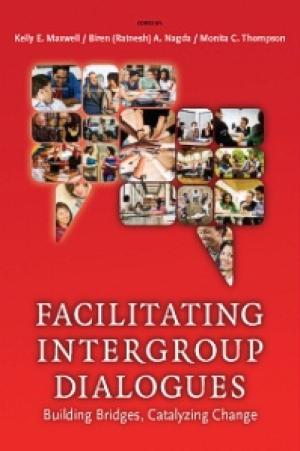
Intergroup dialogue has emerged as an effective educational and community building method to bring together members of diverse social and cultural groups to engage in learning together so that they may work collectively and individually to promote greater diversity, equality and justice. Intergroup dialogues bring together individuals from different identity groups (such as people of color and white people; women and men; lesbian, gay, and bisexual people and heterosexual people), and uses explicit pedagogy that involves three important features: content learning, structured interaction, and facilitative guidance. The least understood role in the pedagogy is that of facilitation. This volume, the first dedicated entirely to intergroup dialogue facilitation, draws on the experiences of contributors and on emerging research to address the multi-dimensional role of facilitators and co-facilitators, the training and support of facilitators, and ways of improving practice in both educational and community settings. It constitutes a comprehensive guide for practitioners, covering the theoretical, conceptual, and practical knowledge they need. Presenting the work and insights of scholars, practitioners and scholar-practitioners who train facilitators for intergroup dialogues, this book bridges the theoretical and conceptual foundations of intergroup relations and social justice education with training models for intergroup dialogue facilitation. It is intended for staff, faculty, and administrators in higher education, and community agencies, as well as for human resources departments in workplaces. (From the Publisher)
Though there is a general awareness of the need for change in education relative to school organization, teaching and learning, curriculum, and school administration; most, if not all, of what is said is only partially processed by the reader's mind. The need for profound, revolutionary change in the way we think about education is highlighted in this work. Author J. Richard Wingerter addresses the natural shortcomings of the mind's thinking process in an attempt to bring about fresh, new ideas to contemporary education literature. (From the Publisher)

Journal Issue.
This article explores the educational concept of experiential learning, particularly in terms of service learning and situated learning. It proposes an alternative definition of an academic learning community, namely the role of primary social relationships as God-given contexts for learning. It concludes with practical application of the enormous potential for accomplishment of educational objectives through situated learning.
Journal Issue. Full text is available online.
Journal issue. Full text is available online.

The academic profession, like many others, is rapidly being transformed. This book explores the current challenges to the profession and their broad implications for American higher education. Examining what professors do and how academia is changing, contributors to this volume assess current and potential threats to the profession. Leading scholars in sociology and higher education explore such topics as structural and cognitive change, socialization and deviance, career development, and professional autonomy and regulation. A comprehensive analysis of the significant questions facing this crucial profession, The American Academic Profession will be welcomed by students and scholars as well as by administrators and policy makers concerned with the future of the academy. (From the Publisher)
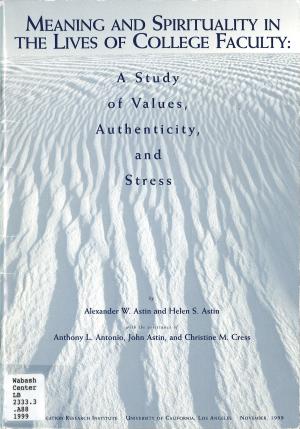
During the past three years more than 80 scholars, students, and educational leaders have participated with the Higher Education Research Institute in an extended series of dialogues about issues of spirituality, authenticity, meaning, wholeness, and self-renewal in higher education. These dialogues explored issues related to: achieving a greater sense of community, spirituality, and shared purpose in higher education; what are the causes of the divisions and fragmentation experienced by many academics in their institutional and personal lives; what it means to be authentic, both in the classroom and in dealings with students; and what disconnections higher education is experiencing within and in relation to the larger society. Through personal narratives the monograph explores expressions of spirituality, as well as obstacles to and facilitators of spiritual development; value conflicts; personal authenticity; sources of stress, including time pressures, competition between work and family life, research and publication, administrative responsibilities, students and teaching, tenure and peer review, and institutional climate; effect of stress; coping with stress; and sources of renewal. The monograph concludes with a brief review of ongoing and further work on spirituality in higher education. Appended are letters of invitation, the interview protocol, and a list of committee members. (From the Publisher)