Scholarship on Teaching

Why do we see so little progress in diversifying faculty at America’s colleges, universities, and professional schools? This book explores this important question and provides steps for hastening faculty diversity. Drawing on her extensive consultant practice and expertise as well as research and scholarship from several fields, Dr. Moody provides practical and feasible ways to improve faculty recruitment, retention, and mentorship, especially of under-represented women in science-related fields and non-immigrant minorities in all fields. The second edition of Faculty Diversity offers new insights, strategies, and caveats to the current state of faculty diversity. This revised edition includes: • New strategies to prevent unintended cognitive bias and errors that damage faculty recruitment and retention • Expanded discussion on the importance of different cultural contexts, political, and historical experiences inhabited and inherited by non-immigrant faculty and students • Increased testimonials and on-the-ground reflections from faculty, administrators, and leaders in higher education, with new attention to medical and other professional schools • Updated Appendix with Discussion Scenarios and Practice Exercises useful to search and evaluation committees, department chairs, deans, faculty senates, and diversity councils • Expanded chapter on mentoring that dispels myths about informal mentoring and underlines essential components for formal programs. Moody provides an essential, reliable, and eye-opening guide for colleges, medical, and other professional schools that are frustrated in their efforts to diversify their faculty. (From the Publisher)
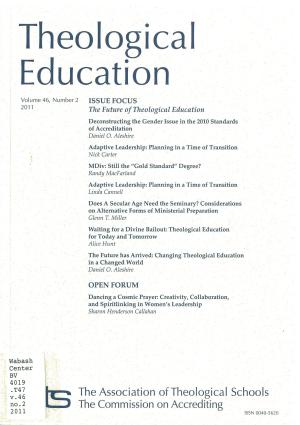
Journal Issue. Full text is available online.
The authors’ purpose in this book is to provide “a collection of practical tips drawn from real-life experiences.” We believe this particular book is so important to share with today’s audience, we almost called it Take My Book, Please! On the other hand, does the scholarly world need another book on the importance of scholarship? Further, if the book standard for tenure is slowly disappearing because so many academic presses are closing, why would we bother to write one? And recent studies show that new faculty members consider university employment a 9:00-5:00 job, so doesn’t that leave out time for job-related reading? Finally, with the instant gratification of the internet, aren’t books dead in our culture or at least well on their way to extinction? Why, then, in the name of all that’s sane, did we put this collection together? a. Our publisher wanted a follow-up to our It Works for Me as a Scholar-Teacher as he believed we had a lot more to say on the subject. b. With over 800 publications, we thought we had something insightful to say. c. Most books on the importance of scholarship are either textbook in nature or extremely theoretical, while this book is neither. d. With our successful It Works for Me series we’ve found a niche in the marketplace. e. Being a large collaboration, this book provides many voices who all believe that reiterating the importance of scholarship is important. f. With a series of short, practical tips on scholarship, this book is very easy to read and, hence, might be read. Actually, all of the above are true. We feel certain you will benefit from the collective work found between these covers. To find information on the full “It Works for Me” series, go to www.newforums.com. (From the Publisher)
This volume contains material on research based teaching techniques for use in higher education. The focus is on small group learning procedures. None of this material has previously appeared in book form. Twenty of the articles first appeared in the Cooperative Learning and College Teaching newsletter that Jim Cooper and Pamela Robinson edited from 1990 to 1999. These articles address applications of small group learning within a variety of academic disciplines. (From the Publisher)
The authors’ purpose in this seventh book in the “It Works for Me” series is to demonstrate that “everyone possesses creative talent, though it may be latent in some and difficult to bring out in others.  It’s not just a talent possessed by artists and engineers, mind you, but everyone.”  Furthermore, “Creative people have figured out consciously or un- that a small seed of creativity can be made to grow by having the proper environment and a minimal set of skills.  And people can be taught or self-taught this process.” The authors/editors also believe that “all creative ideas link themselves to other creative ideas to develop something new and useful, be it a concept, a process, or a product.  In order to disseminate and perpetuate [their] belief that the creative impulse resides in all of us, [they] have asked a host of friends to demonstrate it with essays and practical tips touching on supportive creative environments, strategies that foster and enhance creativity, and assessments that demonstrate creativity has indeed taken place.” (From the Publisher)

If your class is ever bored, hostile, aggressive or just not quite right, this teaching improvement manual is for you! Packed with proven tips for making small class teaching more effective, it is full of advice that is easy to apply and aimed at solving day-to-day teaching problems quickly. Well organized and designed to help lift flagging classroom morale and interaction, the book provides specific practical suggestions for a broad range of problems that teachers of all age groups regularly encounter, including: • dealing with problems of group goals, whether goals are unclear, unattainable, or unacceptable; • solving problems of group interaction, whether the group lacks interaction, is dominated by the group leader, or fails to share the interaction; • motivating the group and yourself when either begins to “tune out” or when students don’t cooperate. (From the Publisher)

Journal Issue.
In June of 2008, teams from diverse campuses across the country came together to explore and create programs aimed at enhancing the religious literacy of their students. The Society for Values in Higher Education sponsored this Institute for Religion on Campus and Community, with funding from the Jesse Ball duPont foundation. This publication is a description of the diverse curricular and co-curricular projects developed at these institutions. Miriam Diamond and her colleagues in the Society for Values in Higher Education have produced a wonderful little volume that deals with a major contemporary problem in higher education: how to foster religious literacy across the American academic landscape. This is a vexed (and vexing) problem in the American academy, and the authors have made a major contribution – which continues the tradition of Bellah, Wuthnow, and Prothero. To quote contributor Nancy Thomas, “American civil society seems less than civil”. (From the Publisher)
Over the coming decades, every academic discipline will have to respond to the paradigm of more sustainable life practices because students will be living in a world challenged by competition for resources and climate change, and will demand that every academic discipline demonstrate substantial and corresponding relevance. This book takes as its point of departure that integrating a component of sustainability into a discipline-specific course arises from an educator asking a simple question: in the coming decades, as humanity faces unprecedented challenges, what can my discipline or area of research contribute toward a better understanding of these issues? The discipline need not be future-oriented: an archaeologist, for instance, could incorporate into a course some aspects of sustainable archaeological practices in areas threatened by rapid climate change, as well as examples of sustainable or unsustainable ways of living practiced by members of the long-gone society under investigation. This book also argues that courses about sustainability need to cross disciplinary boundaries, both because of the inter-relatedness of the issues, and because students will require the ability to use interdisciplinary approaches to thrive through the multiple careers most of them will face. The contributions to this book are presented under four sections. “Sustainability as a Core Value in Education” considers the rationale for incorporating sustainability in disciplinary courses. “Teaching Sustainability in the Academic Disciplines” presents eight examples of courses from disciplines as varied as agriculture, composition, engineering, and teacher education. “Education as a Sustainable Practice” reviews how the physical environment of the classroom and the delivery of instruction need themselves to reflect the values being taught. The final section addresses the issues of leadership and long-term institutional change needed to embed sustainable practice as a core value on campus. (From the Publisher)
Reviews programs such as the Carnegie Academy for the Scholarship of Teaching and Learning and literature on the scholarship of teaching at the higher education level. Suggests that the scholarship of teaching is not synonymous with excellent teaching, but requires faculty to "go meta," to systematically investigate questions of student learning. Also examines issues of credibility, openness, and sustainability.