Scholarship on Teaching
Many undergraduates are culturally shaped to avoid making ethical judgments. They spontaneously adopt relativist and skeptical strategies such as “It all depends,” or “Whose morality?” or “Who's to say?” as ways of fending off the challenge of making moral decisions. The current tsunami that is washing away traditional sexual norms is both a result and a cause of this cultural shift. Case studies can mitigate this decline and help students to grow in both confidence and ability to make good ethical judgments. The case method, used with a Socratic pedagogy, engages imagination and counters the deficits in empathy found in many contemporary students. It moves students toward understanding morality itself. Against skepticism, it assists students in exercising practical reason, culminating in decision. Five cases invite students to overcome extreme relativism, to look for and evaluate relevant differences, and to enter into ethical discussion with other students on the sexual issues they face in their college years.
How do we deal with our own sexuality as teachers and as learners in the classroom? As a seminary professor in a mainline Christian context, I find that discussing sexuality increases student discomfort levels by threatening to raise questions about the connections between morality, behavior, and bodies of those in the room – questions we have been culturally trained to avoid. In order to decrease discomfort, many instructors approach sexuality only as content-based subject matter. Particularly for ministry students, this approach can be a disservice to their discernment process and preparation for future ministry contexts, especially for those in turmoil regarding sexuality-related issues. By explicitly engaging how personal experience and cultural contexts shape our sexuality, pedagogical models can promote critical self-reflection and seek perspective transformation, not values change, as a resource for professional sexual ethics training in ministry.
Sexuality, more so than other subject areas, magnifies the embodied nature of teaching and learning as well as conspicuously silences open dialogue given its taboo status in many religious and theological contexts. Yet, student learning about sexuality that incorporates knowledge of and about religion, in particular, may greatly improve the public discourse about sexuality through our students as responsible citizens and as leaders in their chosen professions. To bridge this gap, through a year-long collaboration, a group of professors and instructors with expertise and experience teaching sexuality and religion in a variety of disciplines and diverse institutional and religious contexts developed, tested, and refined classroom teaching strategies to shift from a content-based “subject matter” to an embodied learning experience, resulting in perspective transformation as a primary student-learning outcome. Findings in the form of “guiding questions,” encourage instructors to attend to contextual, experiential, and performative aspects of the classroom environment.
Develop effective models of practice and positively impact institutional teaching and learning quality. This volume provides examples and evidence of the ways in which post-secondary institutions in Canada have developed and sustained programs around the scholarship of teaching and learning (SoTL) that impact the institutional pedagogical climate. Topics include: - the historical development of SoTL in Canada, - institutional SoTL practices, including evidence of impact, - program design and case studies, and - continuing challenges with this work. This is the 146th volume of this Jossey-Bass higher education series. It offers a comprehensive range of ideas and techniques for improving college teaching based on the experience of seasoned instructors and the latest findings of educational and psychological researchers. (From the Publisher)
Click Here for Book Review No longer relegated to just the classroom, learning has become universal through the use of social media. Social media embodies constructivism itself as the users engage in the development of their own meaning. And, constructivism is relevant to education, and learning theory and technological advance can be better understood in the light of one another. This volume explores: - particular areas influenced by constructivist thinking and social media, such as student learning, faculty development, and pedagogical practices, - practical and useful ways to engage in social media, and - dialogue and discussions regarding the nature of learning in relation to the technology that has changed how both faculty and students experience their educational landscape. This is the 144th volume of this Jossey-Bass higher education series. It offers a comprehensive range of ideas and techniques for improving college teaching based on the experience of seasoned instructors and the latest findings of educational and psychological researchers. (From the Publisher)

Journal Issue.
Why is it important to learn about higher education in international contexts? Why learn about curriculum, teaching, and learning at Dubai Women’s College of the Higher Colleges of Technology? Global education systems have remarkable contributions to make to understandings of 21st century curriculum, teaching, and learning. Adult educators across the globe are exploring how to make learning meaningful in a world that is experiencing change, global migration, rapid development, cross-cultural communication demands, and systems with mandates for accountability and international standardized measures of quality. Dubai is an Emirate in the United Arab Emirates that has experienced these issues, which have had a profound impact on higher education for Emirati women. The international educators who contributed to this book reveal how they designed and implemented a curriculum that represented a complex balancing act replete with recognition of local, global, religious, cultural, and societal implications. There is no other book like The Balancing Act: International Higher Education in the 21st Century. It reveals the nature of a highly devoted team of international educators who designed a contextually and globally relevant transdisciplinary, 21st century curriculum. “Dr. Mary Gene Saudelli has tremendous knowledge and experience with delivering world class education in the Middle East. She has a deep commitment to progressive education and an understanding of global mindedness. It is wonderful that she shares her research on a wide range of topics in educational curriculum and global issues. In The Balancing Act: International Higher Education in the 21st Century, Dr. Saudelli opens the dialogue of reciprocity in learning from higher education in diverse contexts. This book honours Emirati women’s backgrounds and differences, yet cherishes the uniqueness of the international educators involved in this study.” – Kim Critchley, Dean and CEO, University of Calgary in Qatar (From the Publisher)
Teacher, Scholar, Mother advances a more productive conversation across disciplines on motherhood through its discussion on intersecting axes of power and privilege. This multi- and trans-disciplinary book features mother scholars who bring their theoretical and disciplinary lenses to bear on questions of identity, practice, policy, institutional memory, progress, and the gendered notion of parenting that still pervades the modern academy. (From the Publisher)
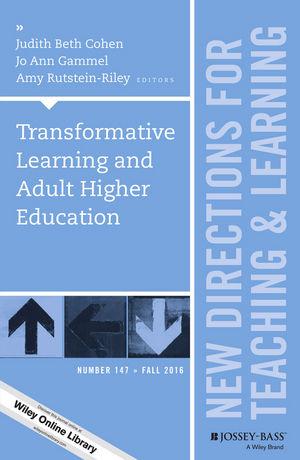
Click Here for Book Review Presenting current trends in transformative learning and adult higher education, this volume paints a vivid picture of the Transformative Learning theory in action. The concepts that knit these articles together despite the variety of educational settings and populations are: relationships, community, and the body experience - often missing in higher education. This volume includes: - the voices of marginalized populations often excluded from research studies such as community college students, emerging adults with learning differences, English language learners, native Alaskans, African-American health educators, doctoral students, and yoga practitioners; - new paradigms for thinking about adult undergraduate education; - new ways to deal with social conflict and advise doctoral students; and - personal stories from Black women leaders, college teachers, student writers as well as pregnant women, and social service providers. This is the 147th volume of this Jossey-Bass higher education series. It offers a comprehensive range of ideas and techniques for improving college teaching based on the experience of seasoned instructors and the latest findings of educational and psychological researchers. (From the Publisher)
A global leadership training and consulting program serving religious and civic leaders who are committed to solving society’s most intractable problems, such as racism, extremism, and economic justice. Includes resources suitable for classroom use.