Resources
This essay explores a midrange teaching and learning issue regarding the teaching of biblical languages and one strategy for addressing the issue. Seminary students do not yield a great enough return in exchange for the investment they are required to make in learning biblical languages. Students invest great time and money, but they do not learn to use the biblical languages to think critically about the Bible. This essay argues that a fruitful strategy for addressing this midrange issue is to require students to write in English about the Hebrew language. This strategy fosters students' ability to think critically about the biblical text. It also fosters their ability to use their budding knowledge of a biblical language to engage questions of meaning and issues of interpretation.
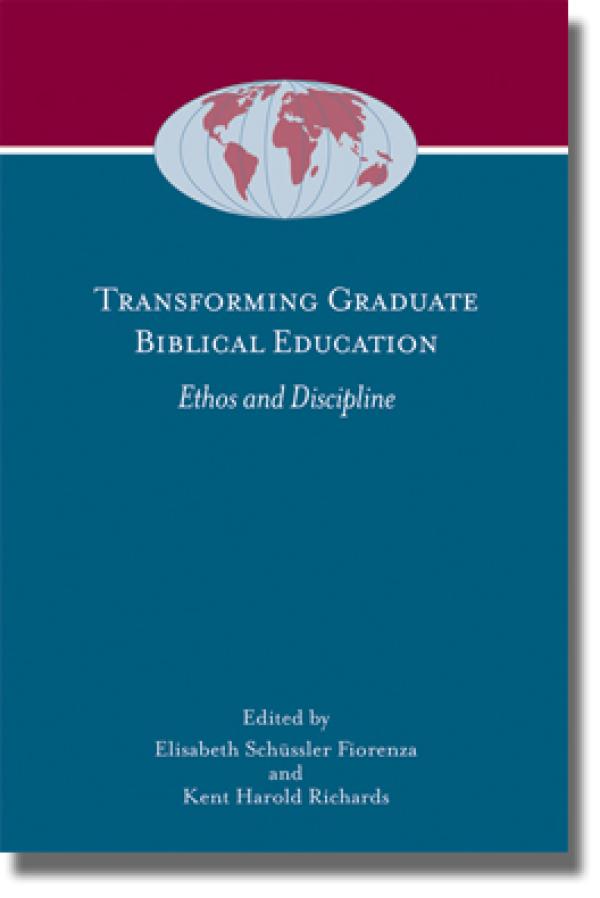
This unique collection of essays, originating in seminars held at SBL’s Annual and International Meetings, explores the current ethos and discipline of graduate biblical education from different social locations and academic contexts. It includes international voices of well-established scholars who have urged change for some time alongside younger scholars with new perspectives. The individual contributions emerge from a variegated set of experiences in graduate biblical studies and a critical analysis of those experiences. The volume is divided into four areas of investigation. The first section discusses the ethos of biblical studies and social location, and the second explores different cultural-national formations of the discipline. The third section considers the experiences and visions of graduate biblical studies, while the last section explores how to transform the discipline. All the contributions offer ways to transform graduate biblical education so that it becomes a socializing power that, in turn, can transform the present academic ethos of biblical studies. (From the Publisher)
One page Teaching Tactic: students learn to create models in order to increase their grasp of nuanced theological arguments.
This essay presents educational principles of Mahatma Gandhi, specifically principles of character education, as a model for strengthening non-violence in students. Its major concern is to show that Gandhi's ideal of non-violent character education is important for university teaching in disciplines including religious studies, and that Gandhi offers methods for fostering non-violent character, namely the teaching of world religions, service learning, and setting an example. The effectiveness of Gandhi's views, moreover, finds some support in contemporary teaching practices, including my own experiences in the classroom.
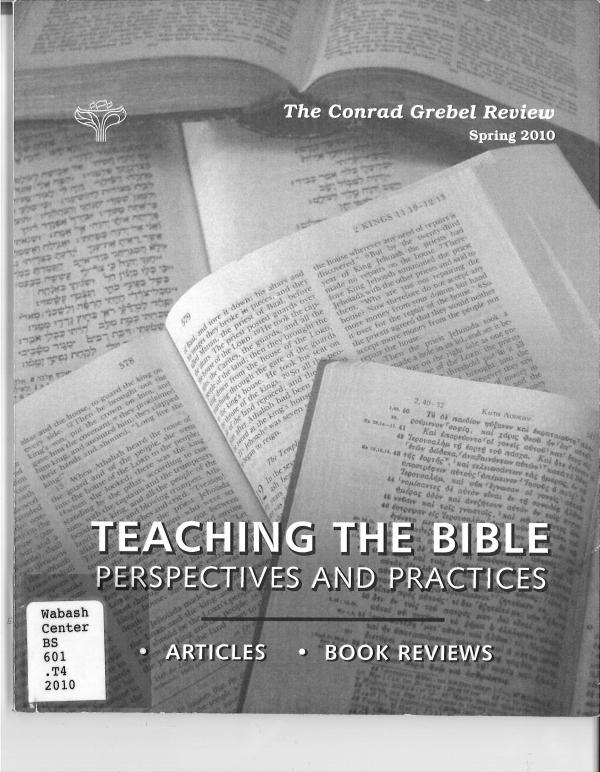
Articles and book reviews
One page Teaching Tactic: students learn about Lutheranism by doing historical research of local congregations.
This essay explores intersections among Jesuit, Quaker, and feminist theologies and pedagogies of social justice education in order to propose and elaborate an innovative theoretical and theological framework for experiential learning in religious studies that prioritizes relationality, called erotic education. This essay then applies the relational rationale of erotic education to interpret the author's design of a service or community-based learning component in a course about contemporary U.S. Christian social justice movements, offered in both religiously-affiliated and religiously-inspired liberal arts colleges. The course case study not only chronicles the author's evolving pedagogical praxis as a feminist theologian teaching in Jesuit and Quaker institutions, but also is grounded in how the author's course embodies erotic education, that is, how specific objectives, learning practices, and assignments build and bolster relationships among students (in peer-to-peer small groups inside and outside the classroom) as well as among students and their community sites. In developing this framework and implementing it within this particular course, the author argues that erotic education emphasizes the naming and training of our existential desires for interpersonal relations in order to upbuild not only the individual but also the common good.
The student dramatic performance is an effective way for undergraduates to learn biblical studies. In this article I will give an example of a dramatic performance assignment that I developed over a number of courses and used most recently and most successfully in an undergraduate course in the Hebrew Bible at a small liberal arts college in the Midwest/Appalachian region in 2008. Drawing on my own experience as a teacher, as well as on the ideas of philosophers, educators, playwrights, and biblical scholars, I will explain why such performances are effective teaching tools. I will also give guidance on how to use dramatic performances effectively. I intend to show that the success of this assignment depends on, and ultimately validates, two basic trusts: trust in the intellectual and creative capacity of students, as well as trust in the wealth of meaning in the biblical text.
This paper presents an overview of a newly developed spectrum pedagogy of Christian ethics that emerged from the authors' experience of teaching a contemporary Christian ethics course for seven years. A spectrum pedagogy is a comprehensive approach to teaching Christian ethics that combines the modeling of key dispositions using specific tools (issue-specific spectrums and ethical theories) and learning experiences (engaging multiple positions and responding to concrete situations). The pedagogy gains its name from the issue-specific spectrums used by instructors to orient students to contemporary debate on a given issue and by students in their ethical reflection. The goal of this pedagogy is to empower students to construct their own responses while respecting differing viewpoints without resorting to relativism. This article surveys the essential elements of a “spectrum pedagogy,” describes its implementation into a semester-long course, and identifies multiple benefits of using this pedagogy.
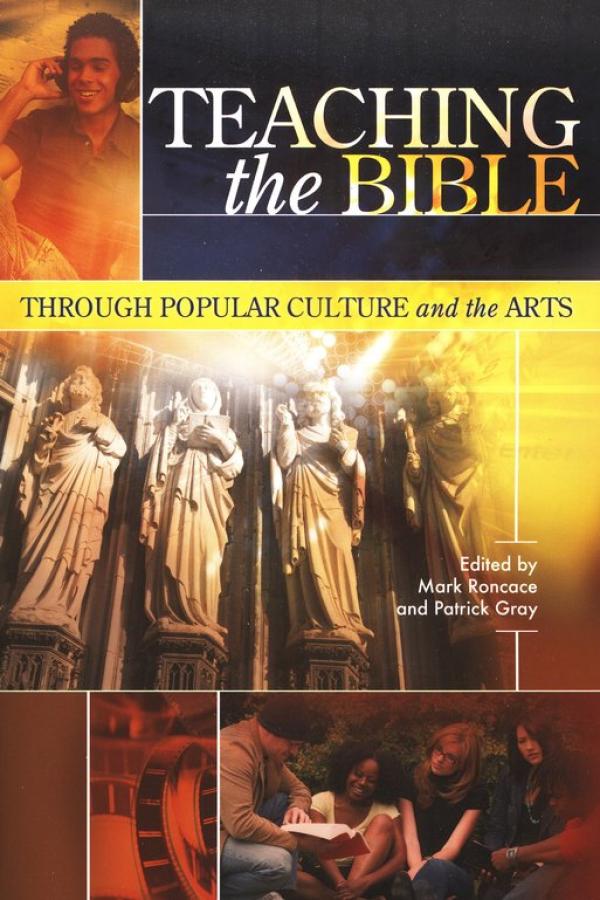
This resource enables biblical studies instructors to facilitate engaging classroom experiences by drawing on the arts and popular culture. It offers brief overviews of hundreds of easily accessible examples of art, film, literature, music, and other media and outlines strategies for incorporating them effectively and concisely in the classroom. Although designed primarily for college and seminary courses on the Bible, the ideas can easily be adapted for classes such as Theology and Literature or Religion and Art as well as for nonacademic settings. (From the Publisher)