Resources
Looks at some of the roles that cultural context plays in developing and using various teaching and learning styles. Re-print of chapter 7 of “Teaching, Testing, and Measuring Intelligence” (University of Wisconsin Press).
Collection of tip sheets on how to teach responsively to persons with various disabilities. From UC Berkeley’s Disabled Students’ Program
Harvard University’s Derek Bok Center provides teaching tips for the racially diverse college classroom. Recommends that instructor educate himself or herself and not make assumptions regarding individual students. Includes suggestions for teaching preparation and classroom engagement.
Responding To Distressed Students Extensive list of topics, prepared for UC Santa Barbara teaching assistants, with do’s and don’ts in responding to student issues such as anxiety, hazing, depression, eating disorders.
Kalwant Bhopal and Patrick Danaher examine 'race', identity and gender within education and explore the difficulties of relating these concepts to the experience of students in higher education. In drawing together the experience of local and international students in the UK and in Australia, they examine the ways identities are understood and conceptualized within higher education in local contexts and on a global level. They consider the complexity of 'race', gender and identity in relation to education within the context that education continues to be dominated by predominantly white, middle class values and perspectives. Identity and Pedagogy in Higher Education examines the extent to which education as a vehicle for change in the light of the controversial debates surrounding race and gender inequalities. (From the Publisher)
Journal Issue.
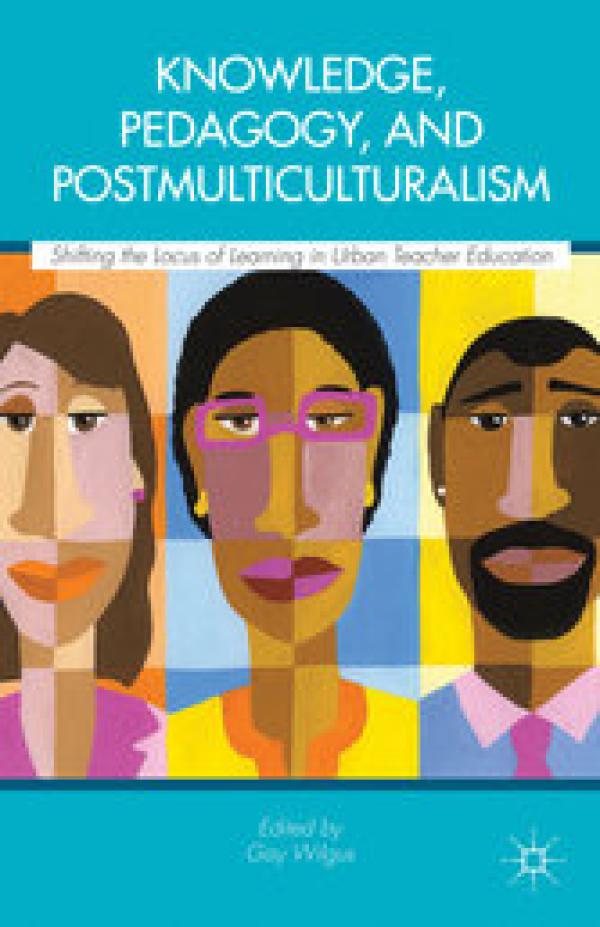
Knowledge, Pedagogy, and Postmulticulturalism opens for examination the research and experimental pedagogies of a teacher education faculty at a large, urban, public university, where teacher candidates from working-class and ethnic and linguistic minority backgrounds are prepared to work with learners from similar backgrounds. The pedagogies discussed have been expressly designed to elicit the funds of knowledge and community cultural wealth of these teacher education candidates. The research in this volume calls attention to the distinctive, complex perspectives that individuals from historically marginalized groups bring to the university classroom, and demonstrates how these valuable perspectives can be brought front and center in the university's teacher education curriculum. It counters contemporary trends of discouraging and preventing students and teachers from critically and intellectually engaging with issues of which knowledges are taught, and how. (From the Publisher)
Click Here for Book Review Abstract: Latinos’ postsecondary educational attainment has not kept pace with their growing representation in the U.S. population. How can Latino educational attainment be advanced? This monograph presents relevant contemporary research, focusing on the role of institutional contexts. Drawing particularly on research grounded in Latino students’ perspectives, it identifies key challenges Latino students face and discuss various approaches to address these challenges. Because so many Latino students are enrolled in federally designated Hispanic-Serving Institutions (HSIs), it also specifically explores HSIs’ role in promoting Latinos’ higher education access and equity. As a conclusion, it offers recommendations for institutional, state, and federal policies that can foster supportive contexts. This is Volume 39 Issue 1 of the Jossey-Bass publication ASHE Higher Education Report. Each monograph in the series is the definitive analysis of a tough higher education problem, based on thorough research of pertinent literature and institutional experiences. Topics are identified by a national survey. Noted practitioners and scholars are then commissioned to write the reports, with experts providing critical reviews of each manuscript before publication. (From the Publisher)
This book utilizes the theory of intersectionality to focus on the divergent identities and experiences of marginalized groups and to analyze the ways these experiences infiltrate the classroom. It examines teaching and learning as integrated and synergistic practices and highlights the personal and institutional power dynamics existing between scholars and students. Starting with the premise that institutions of higher education must pay attention to the ways intersecting identities and structures of privilege and disadvantage enter all educational settings, the contributors to this text represent a range of academic disciplines and they are both scholars and students. This approach demonstrates that ideas related to teaching and learning should not follow models that separate teachers, students, and disciplines, but rather that significant learning occurs in the areas where they overlap. Each chapter provides pedagogical strategies and methods for classroom practice that facilitate student learning, equitable classroom environments, and a social justice agenda. (From the Publisher)
The degree to which your post-secondary school understands and supports students from poverty makes all the difference in meeting your recruitment, retention, and graduation goals. Understanding your students starts with better information about their personal experience of poverty, and about the skills and strengths they bring with them to college. Supporting your students involves creating opportunities to access a variety of resources, remedial education relevant to their lives, and fully engaged relationships inside of school and out. You'll learn to: Recognize the impact of economic class on student preparedness and educational success Build on students' existing resources, experiences, and abilities Encourage student success through curriculum design and programming Partner with communities and businesses to support academic progress Help students look beyond the classroom through service learning and civic engagement (From the Publisher)