Resources
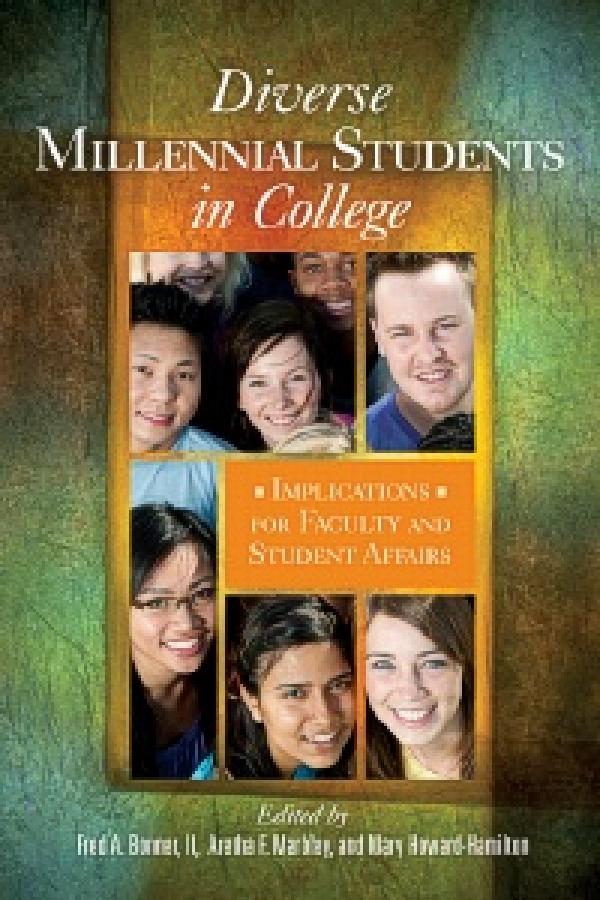
While many institutions have developed policies to address the myriad needs of Millennial college students and their parents, inherent in many of these initiatives is the underlying assumption that this student population is a homogeneous group. This book is significant because it addresses and explores the characteristics and experiences of Millennials from an array of perspectives, taking into account not only racial and ethnic identity but also cultural background, sexual orientation, and socioeconomic status differences—all factors contributing to how these students interface with academe. In providing a “voice” to “voiceless” populations of African American, Asian American, Bi/Multi-Racial, Latino, Native American, and LGBT millennial college students, this book engages with such questions as: Does the term “Millennial” apply to these under-represented students? What role does technology, pop culture, sexual orientation, and race politics play in the identity development for these populations? Do our current minority development theories apply to these groups? And, ultimately, are higher education institutions prepared to meet both the cultural and developmental needs of diverse minority groups of Millennial college students?” This book is addressed primarily to college and university administrators and faculty members who seek greater depth and understanding of the issues associated with diverse Millennial college student populations. This book informs readers about the ways in which this cohort differs from their majority counterparts to open a dialogue about how faculty members and administrators can meet their needs effectively both inside and outside the classroom. It will also be of value to student affairs personnel, students enrolled in graduate level courses in higher education and other social science courses that explore issues of college student development and diversity, particularly students planning to work with diverse Millennial college students in both clinical or practical work settings. (From the Publisher)
From the Publisher Understanding college students' intellectual development is at the heart of effective educational practice. How do college students learn? How can educators maximize intellectual development in the college environment for both sexes—both in and out of the classroom? In this book Marcia B. Baxter Magolda demonstrates how educators can use a deeper understanding of the way students learn to teach more effectively. Drawing on a unique longitudinal study of more than one hundred college students, both male and female—and presenting information not available in single-gender studies—the author explains surprising gender-related patterns that affect the way students develop. Baxter Magolda uses data gathered from in-depth interviews over a five-year period to reveal four distinct "ways of knowing." The book provides useful real-life examples of how instructional approaches, class expectations, peer interaction, evaluation methods, and other factors affect intellectual development in the classroom. Similarly, the author demonstrates how peer relationships, student organizations, educational advising, internships, employment, and international and cultural exchange can support and develop complex learning beyond the classroom. "Knowing and Reasoning in College" provides practical recommendations on how to respond to each of the four ways of knowing. It shows how, by designing instruction and interaction to reach students at every level, educators can maximize learning, promote skill acquisition and development of complex reasoning, and enrich students' overall college experience. (PsycINFO Database Record (c) 2012 APA, all rights reserved)

This book offers ideas that secondary teachers, university content faculty, and teacher educators can use to challenge traditional literacy practices and demonstrate creative, innovative ways of incorporating new literacies into the classroom, all within a strong theoretical framework. Teachers are trying to catch up to the new challenges of the twenty-first century. It is a superheroic feat that must be achieved if education is to stay relevant and viable. There is a lot of zip, bam, whap, and wow in the fast-paced, social networking, technological world, but not so much in the often laboriously slow-paced educational world. Where is the balance? How do teachers and students learn together, since one group has seasoned wisdom with limited technological know-how and the other uses all the cool new tools, but not in the service of learning? These are some important issues to consider in finding the balance in an unstable, fast-moving, ever-changing world. This book is practical and useful to literacy teachers, teacher educators, and university faculty by bringing together the expertise of composition/rhetoric researchers and writers, literacy specialists, technology specialists, and teachers who are on the cutting edge of new literacies. (From the Publisher)
Transforming Classroom Culture is an anthology of original work authored by diverse faculty who work in a variety of New England college and university settings--private and public, racially homogeneous and diverse. The authors focus on institutional contexts that promote innovation in teaching practice, faculty identity as a resource for effective pedagogy, and dilemmas and outcomes of student-faculty engagement in the classroom. (From the Publisher)
This article builds upon the theological insights of feminist and womanist theologians with respect to the sin of self-hate, and explores the ways in which gay male cyberculture inhibits the spiritual development of gay Asian men. 
Are cultural centers ethnic enclaves of segregation, or safe havens that provide minority students with social support that promotes persistence and retention? Though Black cultural centers boast a 40-year history, there is much misinformation about them and the ethnic counterparts to which they gave rise. Moreover, little is known about their historical roots, current status, and future prospects. The literature has largely ignored the various culture center models, and the role that such centers play in the experiences of college students. This book fills a significant void in the research on ethnic minority cultural centers, offers the historic background to their establishment and development, considers the circumstances that led to their creation, examines the roles they play on campus, explores their impact on retention and campus climate, and provides guidelines for their management in the light of current issues and future directions. In the first part of this volume, the contributors provide perspectives on culture centers from the point of view of various racial/ethnic identity groups, Latina/o, Asian, American Indian, and African American. Part II offers theoretical perspectives that frame the role of culture centers from the point of view of critical race theory, student development theory, and a social justice framework. Part III focuses specifically on administrative and practice-oriented themes, addressing such issues as the relative merits of full- and part-time staff, of race/ethnic specific as opposed to multicultural centers, relations with the outside community, and integration with academic and student affairs to support the mission of the institution. For administrators and student affairs educators who are unfamiliar with these facilities, and want to support an increasingly diverse student body, this book situates such centers within the overall strategy of improving campus climate, and makes the case for sustaining them. Where none as yet exist, this book offers a rationale and blueprint for creating such centers. For leaders of culture centers this book constitutes a valuable tool for assessing their viability, improving their performance, and ensuring their future relevance – all considerations of increased importance when budgets and resources are strained. This book also provides a foundation for researchers interested in further investigating the role of these centers in higher education. (From the Publisher)
Reviews research on Native Americans in higher education and discusses its implications for Native Americans' experiences in colleges and universities. Discusses current research, current programs and practices, and learning styles of Native Americans. Identifies cultural barriers that prevent Native Americans from obtaining equal access to higher education.
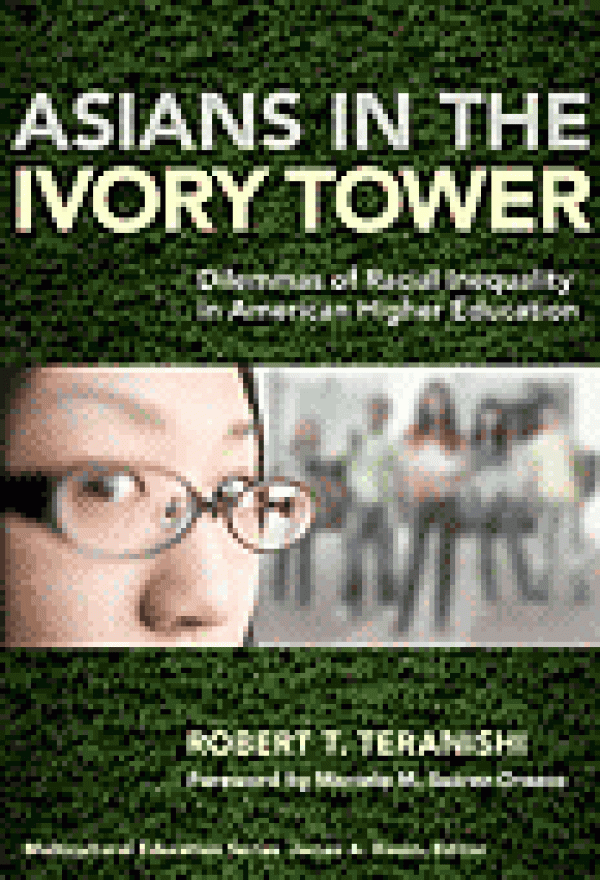
This timely and compelling examination of the experience of Asian Americans in higher education explores why and how Asian Americans and Pacific Islanders (AAPIs) are important to our nation's higher education priorities and places the study of AAPI college participation within a broad set of conditions through which all students must navigate as they pursue higher education. Teranishi captures the intersections of individual agency, social conditions, and organizational structures as synergetic forces that result in a range of postsecondary outcomes for subpopulations within the larger body of AAPIs.
College and university instructors continue to seek models that help students to better understand today's complex social relationships. Feminist, Queer, and Ethnic Studies scholars put forward compelling arguments for more integrative understandings of race, class, gender, and sexuality and for centering the experiences of women, people of color, and others traditionally relegated to the margins. Intersectionality is one such approach. In nine chapters, the contributors to this volume offer an overview of key tenets of intersectionality and explore applications of this model in faculty and instructional development in higher education. Gathered from across the disciplines, they draw upon a range of approaches to social identity formation, different theoretical models, and a complement of lived experiences. When read together, these chapters offer a systemic approach to change in higher education by addressing innovations at course, department, and institutional levels. Intersectionality does not advocate for a flattening of differences. Instead, it argues for another layer of critical analyses that acknowledge the powerful interplay of the many aspects of social identity to address the rapidly shifting ways in which we talk about and describe identities in society and the complexity of classroom dynamics in the academy today. By illuminating the interconnected nature of systems of oppression, we shine a light on the potential for disrupting the status quo and create stronger alliances for social justice. (From the Publisher)