Resources
The developer of the University of Mary (Washington) project "A Domain of One's Own," explains the program’s innovative and expansive understanding of student e-portfolios in a TEDx talk.
This piece concerns "public work" in the sense of student assignments taking place outside the classroom or a closed Learning Management System. It is in the form of a Storify of a Twitter chat that took place March 26, 2012.
Baker offers four (4) strategies for being a public intellectual in one's field: Embrace mass media; imrove your communication style; resist the urge to dumb down the message; keep communication channels open.
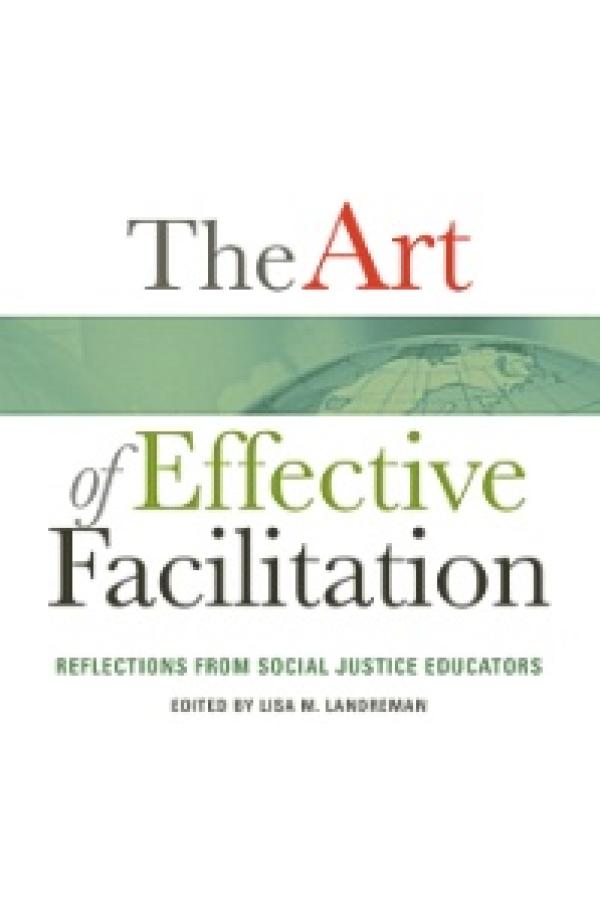
Click Here for Book Review Abstract: How can I apply learning and social justice theory to become a better facilitator? Should I prepare differently for workshops around specific identities? How do I effectively respond when things aren’t going as planned? This book is intended for the increasing number of faculty and student affairs administrators – at whatever their level of experience -- who are being are asked to become social justice educators to prepare students to live successfully within, and contribute to, an equitable multicultural society. It will enable facilitators to create programs that go beyond superficial discussion of the issues to fundamentally address the structural and cultural causes of inequity, and provide students with the knowledge and skills to work for a more just society. Beyond theory, design, techniques and advice on practice, the book concludes with a section on supporting student social action. The authors illuminate the art and complexity of facilitation, describe multiple approaches, and discuss the necessary and ongoing reflection process. What sets this book apart is how the authors illustrate these practices through personal narratives of challenges encountered, and by admitting to their struggles and mistakes. They emphasize the need to prepare by taking into account such considerations as the developmental readiness of the participants, and the particular issues and historical context of the campus, before designing and facilitating a social justice training or selecting specific exercises. They pay particular attention to the struggle to teach the goals of social justice education in a language that can be embraced by the general public, and to connect its structural and contextual analyses to real issues inside and outside the classroom. The book is informed by the recognition that “the magic is almost never in the exercise or the handout but, instead, is in the facilitation”; and by the authors’ commitment to help educators identify and analyze dehumanizing processes on their campuses and in society at large, reflect on their own socialization, and engage in proactive strategies to dismantle oppression. (From the Publisher)
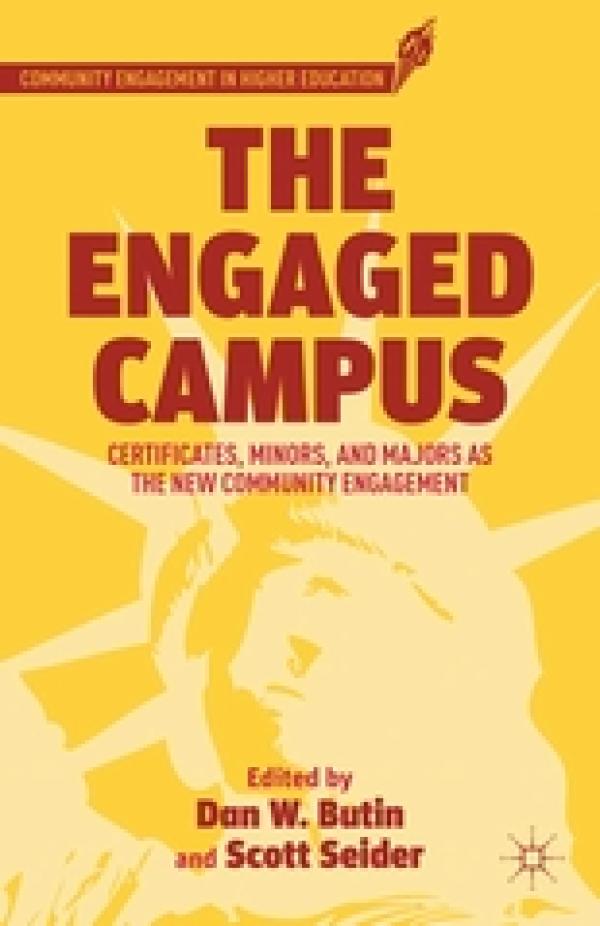
The Engaged Campus offers a set of emerging best practices and articulation of critical issues for faculty and administrators committed to developing, strengthening, or expanding majors or minors in community engagement at their respective institutions. (From the Publisher)
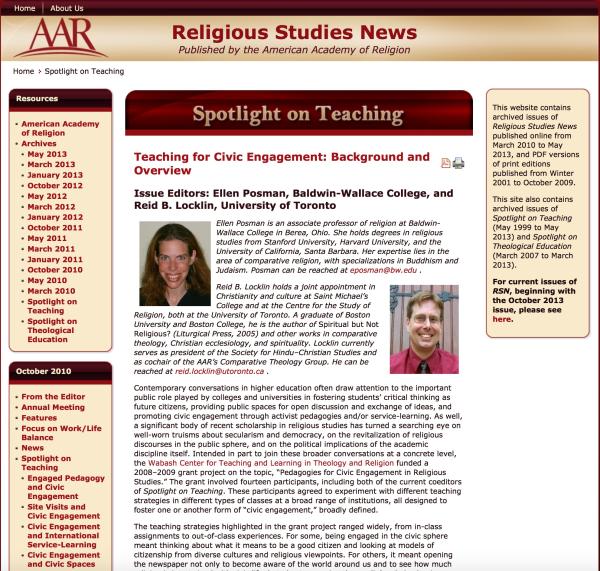
Journal Issue. Full text is available online.
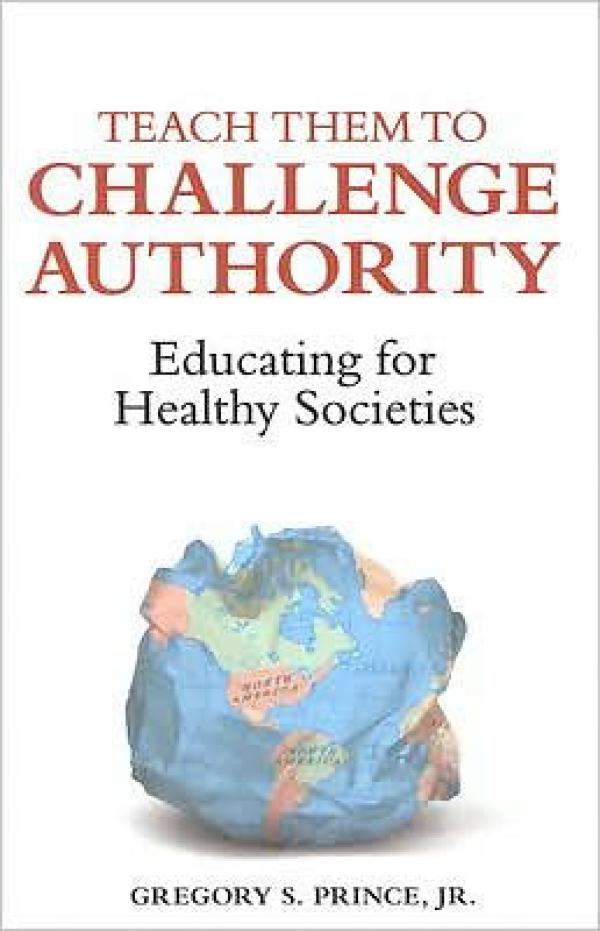
Teach Them to Challenge Authority gets to the heart of what education should really be about. Drawing on decades of experience, Gregory S. Prince Jr. moves seamlessly between his experience as President of Hampshire College and the broader picture made up of national and international issues. He demonstrates that the debate between "neutral" versus "engaged" universities could have radical consequences - not just for the world of education, but for society as a whole. (From the Publisher)
An investigation of how the contemporary university should develop and the form of pedagogy used. (From the Publisher)

Contemporary universities are very much an integral part of communities. However, while much has been written about teaching and research in universities, the "service" role of universities has been neglected. In an attempt to address this imbalance, The Academic Citizen looks at how these three roles interrelate and explores the idea of a compact between universities and society. This book argues that in order to achieve a compact, we need to re-evaluate the poorly rewarded aspects of service and leading academics need to set a new standard. Based on in-depth interviews with an international group of academics, it sets out to: · outline the interconnecting communities served by university lecturers · explore what the notion of "service" means for academic staff · develop a moral basis for the "service" role in academic life as both a collegial and civic duty · show how service supports teaching and research in a more competitive environment ·examine the ideal character required to fulfill the functions academic citizenship Drawing on a range of university and service traditions, The Academic Citizen has a strong historical and comparative perspective that should prove stimulating for those interested in the role of the academic in modern society. It has international relevance and will appeal to staff and educational developers in universities and colleges, as well as students of higher education. (From the Publisher)

Educating Citizens reports on how some American colleges and universities are preparing thoughtful, committed, and socially responsible graduates. Many institutions assert these ambitions, but too few act on them. The authors demonstrate the fundamental importance of moral and civic education, describe how the historical and contemporary landscapes of higher education have shaped it, and explain the educational and developmental goals and processes involved in educating citizens. They examine the challenges colleges and universities face when they dedicate themselves to this vital task and present concrete ways to overcome those challenges. (From the Publisher)