Resources
Journal Issue. Full text is available online.
Journal Issue. Full text is available online.
Preparing citizens through education is not a novel idea. Its origins lie in Greco-Roman approaches to the task, and in American history the goal of educating the citizenry can be traced back to Charles Sanders Peirce (1839-1914), William James (1842-1910), and John Dewey (1859-1952). Dewey, who was perhaps the most articulate about the implications of pragmatism for education, saw academic preparation for life in a democracy and the moral education of children as part of the same endeavor. The contributors to this volume acknowledge Dewey’s role in this enterprise, but do not explicitly explain why these essays represent the “next generation” of educators inspired by his vision. The best explanation, perhaps, is that they emphasize academic advocacy, as opposed to broader social wellbeing; engagement with society over preparation for engagement with society; and social location over citizenship as a point of departure for academic work. With that set of assumptions in mind, it is easier to discern the larger purpose of the sixteen essays in this volume which include an introduction and afterward, along with chapters devoted to three subject areas: (1) “The Collaborative Engagement Paradigm”; (2) the work of “New Public Scholars”; and (3) thoughts on “The Future of Engagement.” The vast majority of the contributors to this volume are specialists in education and programs in community engagement, and there are individual writers from the disciplines of art and political science. For that reason, some seminarians and seminary faculty will find more immediate points of contact with their work than others. Both groups will also find themselves asking – if education driven by engagement is appealing or necessary – whether the more natural point of contact for seminaries is the community, the church, or both. A critical evaluation of the essays will also raise other questions to which there are no simple answers: What is the place of “social relevancy and public legitimacy” in shaping the curriculum of higher education (1)? Can engagement as a model for learning set aside more abstract, disciplinary concerns (17)? What role has commodification played in shaping higher education and is learning through engagement immune to commodification (24)? To what degree do faculty members remain accountable to the disciplines that they represent when using engagement as a model for teaching and, if so, how is that accountability achieved? The answers to those questions will all look potentially different in theological schools and seminaries where faculty regularly grapple with the relationship between the work that they do and the needs of the church. Indeed, that realization may point to the most important question that the subject matter, but not the book itself, raises for theological educators: What does it mean for seminaries to engage the church “as reciprocal partners and coeducators” (5)? Answering that question is one that everyone who cares about theological education would do well to answer.
Inclusive Teaching: Presence in the Classroom (New Directions for Teaching and Learning, Number 140)
In his opening essay in the collection, editor Cornell Thomas of Texas Christian University invites readers to envision a new type of pedagogy that sees each student as a “unique being with the potential for great growth” (2). The educational philosophies of John Dewey and bell hooks grace the pages of this volume, even when they are not cited directly. The strength of this small collection lies in its variety. Ranging from an existentialism-inspired clarion call for the importance of “presence” in the classroom (Don Hufford) to a challenge posed to teachers and other mentors (in and out of the classroom) to integrate “criticality” and identity development in order to better meet the needs of students from low socioeconomic backgrounds (Anthony Walker), the essays are unfortunately a bit uneven when it comes to offering specific strategies and details about best practices. Prophetic calls for practicing “intellectual hospitality” and the value of more robust “connectedness” with our students are preaching ideas to the already converted, I suspect. Most readers of this journal likely already practice such pedagogy and are committed to creating “environments that maximize learners’ academic and social growth” (back cover). Some of the essays rely upon the briefest of anecdotes. The shining counter-example to that trend is the longer piece by Freyca Calderon Berumen and Cecilia Silva (also from Texas Christian University), describing a creative example of civic engagement for preservice teachers in an ESL class: students were matched up with newly resettled refugee families from Nepal and Burma in order to help with initial visits to local schools. The unexpected successes of their “Refugee Family Project” offers a nice example of why it is important for us to be authentic and creative if we are truly committed to more inclusive teaching. The essays offering concrete advice or descriptions of successful projects are the most rewarding, and some of the bibliographies offer further resources for anyone interested in exploring how critical race theory might be applied to our pedagogies and practices in higher education. In this vein, Kimberly Diggles’ essay is particularly helpful, as she lays out specific suggestions for implementing cross-institutional efforts that are not just racially aware but actively anti-racist in their intent and in their transformative effects on campus culture and student learning. I also appreciated Anthony Walker’s call for involving students in curricular reform as an antidote to what is otherwise “a propensity for an ideological stasis” (78). Walker goes on to state that, “a curriculum built for the integration of students’ thoughts and experiences has the ability to create a learning environment in which students are connected and engaged” (79). To the degree that teachers in religious studies have worked to develop such learning environments in their classrooms in recent years, Walker’s insights suggest that we should take the lead in larger curricular change. Unfortunately, given its brevity and the uneven quality of the essays, the collection does not ultimately deliver what is promised by the summary on the book jacket.

Sumka, Porter, and Piacitelli offer both the history and strategy of an emerging educational model that crosses borders between disciplines to develop competencies and leadership characteristics for social change. The authors document “short-term, student-run immersion service trips” designed to sharpen critical thinking and deepen commitment to future action for social justice (8). In this study their primary example of the alternative break movement is an organization called Break Away that grew out of Vanderbilt University. This and other new programs like the Alternative Break Citizenship school (ABCs) are rooted in efforts from the 1960s that experimented in transformational learning experiences combining travel, intercultural dialogue, collective action, and critical theorizing. A common denominator of these programs is the goal of social justice education. One theoretical framework undergirding these programs is an “active citizen continuum” pointing the way toward authentic relationships for life-long reflection, action, and community enrichment (10). The integration of critical theory and practice moves participants beyond charity and critical theorizing to active citizenship and intercultural competence. A key component of these programs is student leadership. By practicing the actual implementation of the model from the planning and training stages, students gain confidence and facility with each step of the work. In addition to providing the history and theory behind the programs, this book offers practical details contributing to the success of the learning. Readers find pointers on working relationships between staff and students as organizers and leaders of the trips, the alcohol and drug free policy, clarification of the roles of staff versus student leaders, as well as ideas about training, assessing, and fund-raising. The study would be strengthened by further development of the concept of justice. Despite the significance of social justice to this work, little attention is given to making explicit what is meant by justice. Similarly, the concept of global learning could be explored in relationship to literature on intercultural dialogue, collective action, and transcending political borders. Although this book provides an introductory discussion of what community means, contrasting communities of affinity versus communities of geography, the extensive body of work in philosophical and critical theory developing that distinction is not acknowledged (351). In other words, the academic and intellectual strands contributing to this model are not noted with as much care as the recent history of the particular program. This is a compelling read for anyone interested in learning that fosters authentic relationships rooted in “values of social justice, dignity, empowerment, and capacity building” (33). Although religious and theological frameworks are not discussed directly, schools or educators who offer immersion or intercultural learning experiences will benefit from reading this research. The authors’ caution about the tendency to slip toward do-gooder tourism, poverty tourism, and forms of educational travel where privileged students unwittingly perpetuate legacies of colonialism is timely and relevant.The conclusion of this book includes observations about the “need for inspiration and collective action” (359). If faith communities hope to be known as sources of inspiration and collective action in the future, this book offers potential for fertile common ground.
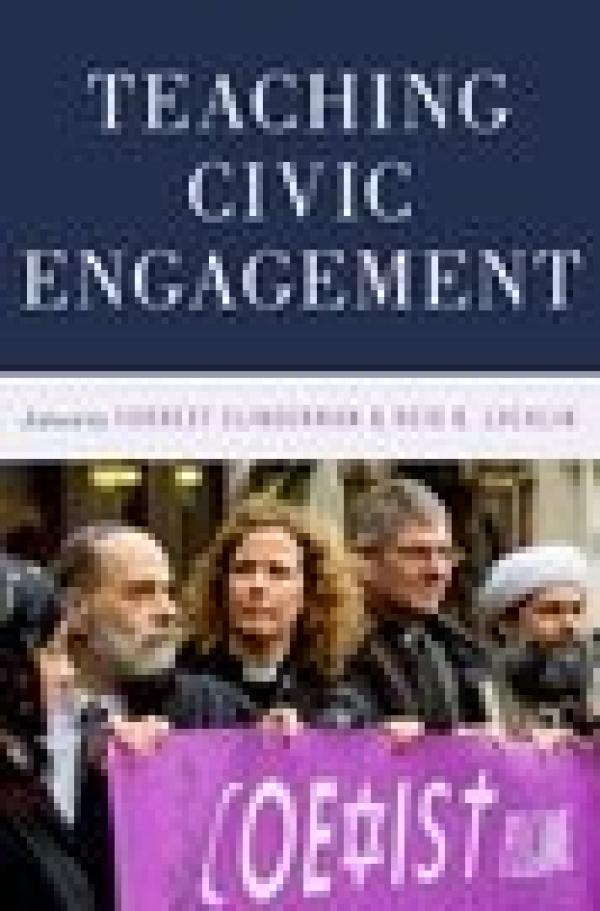
This collection of fourteen essays, most of which originated from a faculty workshop on Pedagogies for Civic Engagement sponsored by the Wabash Center for Teaching and Learning in Theology and Religion, is divided into three sections. The collection represents a variety of perspectives and the authors engage that diversity through a distinct set of questions. “What is the civic relevance of the academic study of religion, considered on its own terms and in its increased diversity? What unique contributions does religious studies offer the public sphere, especially when seen as separate from the work of religious communities who concentrate on religious belonging? How might the disciplines dedicated to such study offer a distinctive shape and response to the civic mission of the contemporary university?” (xiv-xv). Further uniting the individual contributors’ perspectives are their insights offered towards the development of a model of civic engagement that answers these questions. Section I describes the CLEA model of civic engagement. The employed acronym is drawn from the terms complexity, location, empathy, and action. The terms refer to dimensions, better still, capacities essential for civic participation emerging from the “virtues of civility, reasoned deliberation, and commitment to the common good” (xiii). The intellectual capacity needed for democratic society is evident when persons achieve awareness of the complexity of the world, especially a view of the world beyond the way the powerful control the interpretation of social reality (8-10, 14, 25). As democracy blossoms into pluralism, the person who would be a responsible citizen must exhibit awareness of his or her social location and point of view relative to that of other persons (15, 27-28). Beyond awareness of difference, he or she must have empathy, namely a sense of connection to others as all are (or should be) in pursuit of the common good (15-16, 31). The responsible citizen must act on what he or she has come to know as true (16, 34). In Section II, various strategies for teaching civic engagement are described. Among the various methods used for teaching civic engagement is reflective writing which is summary and evaluation of different points of view relative to one’s own view (49, 50-53). In critical assessment of texts and media, students learn to interrogate symbols, internet (websites), newspaper and news programs, visual and performing arts, and various forms of entertainment (49, 53-54, 88-89, 95) but also learn how they may be used responsibly (100-102). Field trips are immensely helpful aids in teaching (49, 54-55, 77-80, 119-121). Another method of teaching civic engagement is community-based learning which involves teachers and students going into the community as well as representatives from the community visiting their classroom (49, 55-56, 66-71, 110, 112, 136-137). Engagement may also be taught through students’ involvement in community service projects designed to address a need or problem in a community (49, 57, 110, 112). Ascetic withdrawal, for example, in the form of abstinence from or limiting use of cell phones, smart phones, email and texting, impulse buying, consumption of fast-food, use of products made through exploited labor, may enable students to empathize with other persons adversely affected by American consumerism and to discern and cease the unhealthy habits they have formed through compulsive behaviors (93-94, 151, 155). Successful teaching requires creativity in the selection of instructional methods as well as discernment of the combination of methods, two or more, that will lead to achievement of specified learning objectives (58-59). Section III goes further into defining civic engagement and locating it within the curriculum. Civic engagement is defined as participation in political processes such as voting, development of relationships, and collaborations or partnerships that lead to policy that contributes to the common good (165, 167, 170, 175). Civic engagement is not only local and national but also global (184). It is connected to, inseparable from, the idea of social justice (185). Also, it is connected to advocacy, not taking a political position but rather “taking a side in a debate and arguing for it” (209-210). Disagreement about the relation of and distinction between religious studies and theology is resolved in the consensus that both function best as means for analysis and critique of societal and cultural traditions that result in privilege and inequality (236). Whether in religious studies or theology, the course offered in civic engagement is an opportunity for students and teachers to practice democracy (17, 188-190, 246-247). In spite of the charge that the described teaching methods are difficult to grade and are not academically rigorous (37-39, 218-220), this volume of essays merits consideration. It is a rich resource on instructional methods. The combined essays offer a substantive definition of civic engagement. Most importantly, the collection correlates teaching method to the cultivation of capacities needed for life in democratic society.
First published in 2005, Learning through Serving is a collection of critical thought on the nature of service-learning, as well as a practical field guide for educators looking to expand their skills in this arena. Cress, Collier, Reitenauer, and their colleagues at Portland State University seek to respond to the organic growth of service programs in contemporary higher education – both curricular and extracurricular. Fundamentally, the authors consider service-learning as a liberatory pedagogical tool that induces students to take control of their own learning, and deconstructs the banking model of schooling (famously attacked by Paolo Freire) that remains dominant in much contemporary education. Learning through Serving is intentionally transdisciplinary, and will certainly be helpful for religious studies or theology educators who employ community-based learning or service-learning models. The wealth of experience the authors share, their diverse voices, and lucid consideration of socially-engaged pedagogy yield great value for those seeking to deepen their practice of service-learning. The authors’ goals are to assist educators and students in thinking through their community service experiences, in the interest of holistic conscientious formation: “In sum, the book is about how to make academic sense of civic service in preparing for students’ roles as future citizen leaders” (xix). Although some readers might balk at the emphasis on “leadership” – and even the use of the term “service” itself – the authors consider a variety of leadership styles suited for different contexts, and make considerable effort to attend to questions of privilege and social justice. This is interspersed throughout the text, but the authors also dedicate a full chapter (“Creating Cultural Connections”) to addressing these issues explicitly. This guide was constructed with the intention that it would be read in the context of an academic class – thus the chapters are arranged to build on one another throughout the course of a semester. Learning through Serving is composed as a textbook, placing great emphasis on clarity and structure, without sacrificing substance for the sake of readability. The different chapters oscillate between hands-on course planning and more theoretical treatments of civic engagement and democratic philosophy. The new edition makes a particular effort to attend to the global interconnectedness that increasingly defines contemporary digital realities. Service-learning courses have traditionally cultivated porous boundaries between “town” and “gown,” but in an academic climate that increasingly embraces remote student enrollment, service-learning benefits from critically considering how it might adjust to accommodate – and even take advantage of – new developments in university structure, while empowering students to be responsible citizens. Cress and her colleagues are experienced enough to know that, in practice, service-learning courses rarely go as planned, and that for a variety of reasons, instructors may have to adjust their approach mid-semester. Ultimately, the service component of a class aspires to be interwoven into the fabric of the more formal coursework, integrating the two elements into a mutually-enhancing, symbiotic whole. Learning through Serving offers a wealth of pedagogical advice for service-learning courses, but also situates service-learning within a larger commitment to civic engagement and building a more just society. It contains invaluable nuts-and-bolts course planning assistance, and gives wise counsel on how to develop enduring, reciprocal community partnerships that build capacity for the long haul.
Growing up with a father who served as the director of the service-learning experiences at a faith-based college, I heard many stories of the joys and challenges of academic and non-profit agencies trying to work together. Later in my own teaching career, similar stories emerged as I witnessed the power and problems of out-of-the-classroom learning experiences. With a clearly stated goal (12), the authors of Community Partner Guide to Campus Collaboration effectively present an orderly guide for non-academic organizations to begin to develop mutually beneficial partnerships with post-secondary institutions. Building on the premise that “effective community-campus relationships educate students and enhance communities” (4), the authors provide multiple ideas and strategies for a community group to function in partnership with a post-secondary institution. After a brief introductory chapter, the book lays out in subsequent chapters particular ways for non-profit leaders to explore and establish potential relationships with colleges and instructors. Within the opening chapters, the authors provide a useful definition of reciprocity that notes the differences between charity and solidarity (41) in community-campus relationships. The authors set a foundation on which a mutually beneficial relationship for both organizational and individual involvement in such partnerships can be constructed. The book also presents a variety of examples to explain the concepts of community-campus relationships. Building on the opening chapters, the authors outline specific steps to assist an agency coordinator in both engaging faculty and empowering students for engaged learning. Again, a variety of practical examples and creative ideas are suggested. The final chapter on evaluation helps community partners, academic instructors, and students evaluate both the impact of their work with the organization and their own personal involvement and learning through such engaged learning experiences. There is little to criticize about this book since it speaks clearly to both academic and non-academic organizations. The authors’ illustrations demonstrate a breadth of experience working within both types of organizations and their writing style is welcoming to readers who may be unacquainted with how community group and college partnerships work together to produce significant student learning outcomes. Some checklists may have provided a helpful summary, but there are other visual clues in the book to emphasize their key points and demonstrate the benefits of this educational approach. The authors are clearly convinced that “communities are stronger when campuses and community agencies collaborate because it creates knowledgeable and engaged students who give back to their communities as committed citizens long after they graduate” (108). Their manual, written specifically for helping non-academic people navigate the post-secondary world, also benefits academics interested in connecting their students to experiential learning opportunities.
This bookadvocates civic engagement and service learning in higher education to provide students with transformative learning experiences. Linking service learning with online learning the authors present eService-Learning – a high-impact modality of learning for the twenty-first century. Contributors to the volume present research on teaching and learning as it relates to eService-Learning and provide best practices on how to incorporate eService-Learning experiences in courses and curricula. Divided into three parts, the first part of the book consists of four chapters setting forth “Essentials, Components, and Nuts and Bolts of eService-Learning.” Contributors present a rationale for civic engagement and service learning in higher education (7-19) and provide theoretical foundations for service and experiential learning, coupling both theory and practice to the emerging field of online learning (20-39). Authors guide readers in creating syllabi and learning experiences that facilitate the development of aptitudes and skills for service in online courses (40-57) and address the technology requirements for implementing eService-Learning (58-66). The second part, “Models for eService-Learning,” introduces readers to five different models for implementing eService-Learning as illustrated by universities that have implemented it at course or program levels. Models described leverage online and on-site learning in the following ways: (1) instruction online, service-learning on-site (69-88); (2) e-portfolio and reflection online, instruction and collaboration with service partners in class (89-104); (3) instruction and service partially on-site and online (105-118); (4) instruction and service conducted online (119-129); and (5) a mixed hybrid of models (130-143). Research in part two provides a critique and analysis of these five models of eService-Learning and step-by-step guidance for implementing each model. The third part, “Next Steps And Future Directions” provides advice to administrators and faculty interested in implementing eService-Learning at the course or program level. The first of two chapters describes the challenges that universities face if they question the relevance of higher education. The author skillfully argues that eService-Learning can reassert the relevance and worth of higher education in the twenty-first century (149-163). The final chapter expands the horizons of eService-Learning beyond the borders of higher education, suggesting possible applications for K-12 education, workplace training, learners with disabilities, and senior adults (164-166). This book is to be commended for articulating a rationale for including outcomes related to civic engagement and service-learning in higher education and best practices for using online technologies to implement eService-Learning in courses and curricula. A conspicuous strength is the description of various eService-Learning models. As such, the volume is particularly valuable for faculty and administrators in higher education.
Service-learning, as a valued curricular support to learning, has received attention in institutions of higher education as an approach that provides students with social and academic capabilities for their future careers. The concept of service-learning has been around for centuries in the American academy, but higher education in Europe has not fully embraced service-learning as an innovative pedagogy to better prepare graduates for a global workforce. Research on service-learning has mainly focused on the benefits students receive, and how to organize service-learning to produce these benefits. Author Susan Deeley suggests “[moving] away from attempts to ‘prove [service-learning] works’ towards a more sustainable approach of improving how it works” (31). Critical Perspectives on Service-Learning in Higher Education offers a pioneering voice in the field of service-learning because the author practices what she preaches. She addresses the role of the teacher in service, offering practical strategies to facilitate critical reflection and academic writing, and tips for writing critical incidents and reflective journals to enable students’ “lifelong critical development” (8). The author constructs a theoretical paradigm with guidance on how to design, implement, and accomplish service-learning. Through the analysis of a theoretical perspective, Deeley offers multiple practical service-learning applications, including some from personal experience, both in local and international settings. The author does not intend to solve the critical need for innovation in teaching across the disciplines; rather, she offers learning theories, ideas, and perspectives for the regard of service-learning as a critical pedagogy that fosters agency and empowers students to explore on their own terms with guidance from faculty. Each chapter can stand alone or be used as a resource for teaching and learning. The book is divided into two major sections: (1) theory and (2) practice grounded in field experiences. In search of an inclusive view of service-learning, the first section (chapters 2 to 4) engages the reader in defining “service-learning” through a theoretical and philosophical lens, presenting an extant list of definitions and considerations that raise questions about service-learning’s “suitability” as a critical pedagogy. The second section (chapters 5 to 7) moves toward the practical application of service-learning “[which] involves students as active learners, constructing meaning in order to make sense of their experiences” (103). Students experience a “transformation” in the process of reflecting critically on their beliefs, opinions, and values. The research includes journal excerpts from eight students over the course of seven years showing how service-learning works in community settings. The importance of summative co-assessment is underscored for facilitating a democratic approach to learning that helps students master and articulate skills which are transferable to the workplace. While only three pedagogical theories are reviewed (traditional, progressive, and critical), the discussion provides an approach to enhance the scholarship of teaching (Boyer, Scholarship Reconsidered: Jossey-Bass, 1990). This approach is advanced by Deeley’s explanation of practices used in critical reflection. Even though the book was written from an international viewpoint, the service-learning experiences only take into account two countries: the United Kingdom and Thailand. Thus, additional approaches from around the world would enhance the global perspective. This book is an excellent resource that would benefit faculty members and administrators collaborating to integrate this “powerful pedagogy” as a complement to or replacement for traditional forms of teaching and learning.