Resources
In this issue, the authors argue that adult educators must find ways to add a spiritual dimension to their practice if they are to take a truly comprehensive approach to adult education, one that meets all of adult learners needs. They show how an integral part of adult education is helping learners discover a sense of meaning and purpose in their lives, a feeling of connection with something larger than themselves. The contributors discuss how mentoring, self-directed learning, and dialogue can be used to promote spiritual development, and advocate the learning covenant as a way of formalizing the sanctity of the bond between learners and educators. They draw on examples from settings as varied as continuing professional education, community development, and health education to show how a spiritual dimension has been been successfully integrated into adult education programs. (From the Publisher)
More than thirty-six million people in the United States are already using the Internet, and many more will join them in the years to come. Tools such as e-mail, Web browsers, and on-line conferencing present exciting opportunities for both adult learners and their instructors. The purpose of this volume of New Directions for Adult and Continuing Education is to explore the effects of the Internet on adult learning--both as that learning is facilitated through formal instruction and as it occurs spontaneously in the experiences of individuals and groups--and to provide guidance to adult and continuing educators searching for ways to use the Internet more effectively in their practice. Taken as a whole, the sourcebook provides a thorough survey of the research literature. The chapters also reflect the hard-won personal experiences of the authors, all of whom are directly involved in the use of Internet technologies to facilitate adult learning. This is the 78th issue of the quarterly journal New Directions for Adult and Continuing Education. (From the Publisher)
Here, at last, is a volume that explores and analyzes learning as a distinctive experience for women. The authors are all established adult education professionals and recognized authorities on women as adult learners. Together, they examine and compare theimportance of such factors as sense of identity, self-esteem, social world, and power in what and how women learn. Drawing from extensive research and scholarship, as well as from personal stories, they reveal the numerous ways in which women experience the learning process. They explain, for example, how women often become personally connected to the object and process of learning. They also analyze these different experiences to show education and training professionals how to better design and conduct programs for women. Women as Learners offers specific recommendations to improve all types of formal and informal adult educational programs, including literacy education, counseling and support groups, workplace training, and professional development activities. Concise yet comprehensive, this long-awaited book provides the most current principles for practice. (From the Publisher)
Drawing on the myth of Mentor as companion and advisor to Odysseus, preeminent educational mentoring expert Laurent A. Daloz uses the metaphor of the mythic journey as a way of making sense of life's changes. He looks closely at what good teachers and mentors actually do, and inspires post-secondary educators to think of their work in fresh new ways. This classic, beautifully written work has been newly updated and is available for the first time in paperback. (From the Publisher)
The paper presents and critiques some important philosophical and educational arguments that are used to support the practice of personal self-disclosure in the classroom, both in group settings and in the form of autobiographical journals. It argues that there are important reasons for valuing privacy even when self-disclosures occur in an environment of perfect trust and caring; that to understand the importance of privacy primarily in terms of trust, or the absence of trust, is to risk overlooking the less apparent, yet more subtle, threats which ‘sympathy’ and ‘caring’ can pose to self-disclosers.
Reviews the literature on characteristics of adult learners and implications for teaching. Idea Paper no. 29, from the series developed by the Center for Faculty Evaluation and Development, Kansas State University.
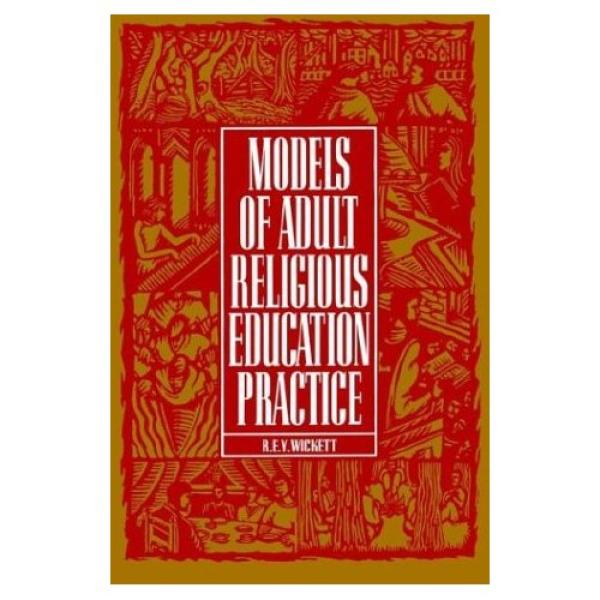
MODELS OF ADULT RELIGIOUS EDUCATION PRACTICE offers a foundational rationale plus a wide inventory of workable teaching procedures for vitalizing the religious education of adults. No other major book on adult religious education offers as wide a range of concrete teaching procedures as does this volume. The distinctiveness of this book lies in its holism. It provides concrete practical models for teaching cognitive, affective, and lifestyle outcomes to all kinds of adult learners in all kinds of settings. This volume has been widely praised by major authorities in adult education and religious education, including Allen Tough, Nancy Foltz, Ron Habermas, and Kenneth Gangel. (From the Publisher)
Adult education occurs whenever individuals engage in sustained, systematic learning in order to affect changes in their attitudes, knowledge, skills, or belief systems. Learning, instruction, and developmental processes are the primary foci of educational psychology research and theorizing, but educational psychologists' work in these domains has centered primarily on the childhood and adolescent school years. More recently, however, a number of educational psychologists have studied learning and development in adulthood. The results of these efforts have resulted in what is now called adult educational psychology. The purpose of this volume is to introduce this new subfield within educational psychology. Section 1 focuses on the interplay between learning and development in adulthood, how various forms of instruction lead to different learning outcomes for adults, description of the diverse social contexts in which adult learning takes place, and the development of metacognitive knowledge across the life span. Section 2 describes both research and theory pertaining to adult intellectual functioning, thinking, and problem-solving skills within various contexts. Section 3 describes research in a variety of adult learning domains; discusses the cognitive and behavioral dimensions of reading in adulthood and the applications of reading in real-life circumstances; examines an educational intervention developed to promote forgiveness; and relates the outcomes of an intervention designed to educate parents about their children's mathematics learning. Section 4 summarizes the themes and issues running throughout this, the first book that has sought to span the gulf betweenadult education, adult development, and educational psychology. (From the Publisher)
This completely revised edition of Enhancing Adult Motivation to Learn offers updated, culturally responsive practical advice and strategies in the jargon-free, readable style that made the original work so popular. This valuable resource is for teachers, trainers, and anyone who wants learning to be a motivating experience for all adults. (From the Publisher)

In this updated version of her landmark book Learning to Listen, Learning to Teach, celebrated adult educator Jane Vella revisits her twelve principles of dialogue education with a new theoretical perspective gleaned from the discipline of quantum physics. Vella sees the path to learning as a holistic, integrated, spiritual, and energetic process. She uses engaging, personal stories of her work in a variety of adult learning settings, in different countries and with different educational purposes, to show readers how to utilize the twelve principles in their own practice with any type of adult learner, anywhere. New material includes: the latest research on learning tasks; updated ways to do needs assessment; and new insights from the field of quantum physics applied to adult teaching and learning. (From the Publisher)