Resources
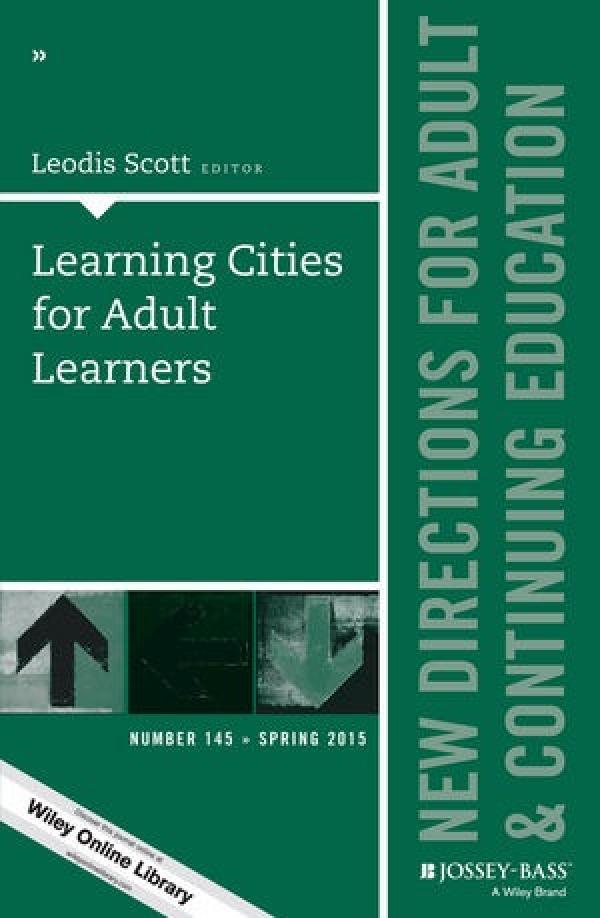
In Learning Cities for Adult Learners, Leodis Scott compiles seven articles that explore how cities are uniquely positioned to provide new directions for adult and continuing education. “Adult education needs more space,” Scott writes, and scholars and practitioners must take the lead in building larger spaces for all learners (1). The larger spaces are cities themselves – “learning cities” that take education beyond the traditional walls of schools, colleges, and workplaces in order to connect and grow in all life experiences. Scott suggests cities can take on the characteristics of learning, and in doing so, adults of every social class and educational level can experience a new quality of life. Scott is cofounder and research scholar at LearnLong Institute for Education and Learning Research, and lecturer in adult learning philosophy and practice at DePaul University–School for New Learning and Columbia University–Teachers College. Contributors to the volume come from a variety of universities, research centers, and programs that are committed to connecting the scholarship of adult learning with concrete practices that encourage a more widespread approach to learning. Most articles are co-authored, further demonstrating how collaboration and cross-disciplinary thinking is a natural hallmark of building the necessary infrastructure for learning cities. After an Editor’s Note by Scott, Connie Watson and Aimee Tiu Wu introduce key themes of lifelong learning and lifelong education in Chapter 1, as they explore the evolution and reconstruction of learning cities for sustainable actions. In Chapter 2, Hiram E. Fitzgerald and Renee Zientek write about the connections between learning cities, systems change, and community engagement scholarship in the context of a learning city/region. Lyle Yorks and Jody Barto investigate in Chapter 3 the interconnections between workplace, organizational, and societal learning, showing how 21st-century cities must function to promote learning for a larger society. In Chapter 4, Alysia Peich and Cynthia Needles Fletcher provide research and a case study for how public libraries and cooperative extension can work as community partners for lifelong learning and learning cities. In Chapter 5, Joanne Howard, Diane Howard, and Ebbin Dotson provide a connected history of health and education and demonstrate the necessity of including both health and education endeavors in any strategic planning of learning cities. Dan K. Hibbler and Leodis Scott write in Chapter 6 about the role of leisure in humanizing learning cities. Finally, Scott provides a summary in Chapter 7 of the main themes from the book and suggests a way forward: scholars and practitioners in the field of adult and continuing education can become facilitators of learning cities so that citizens have the power and ability to construct their own cities appropriate to their needs. This book is written for scholars and practitioners in adult learning and provides both a compelling vision and practical strategies for how citizens can work across fields and disciplines for the betterment of society. It will take leadership, vision, and talent to connect civic institutions in the formation of learning cities. One strategic type of institution not mentioned in the book is local religious communities. It seems that religious groups could be uniquely situated to both model and help facilitate the essential elements of a learning city. As scholars and practitioners continue to work towards this new direction for adult and continuing education, they will certainly do well to collaborate with as many different types of civic institutions as possible – for building a learning city is certainly worth the pursuit.
The question, “Can you give me some feedback on this,” is incredibly problematic. It is what some leadership theorists call a “landmine question.” Giving constructive feedback can be a tricky wicket. We may call feedback “honest.” However, it almost always comes across as critical, perhaps even mean. The idea is to focus on the negatives or how others can improve themselves, so we address it in what I call a “combatively collaborative” fashion. However, because of the possibly aggressive or even bullish nature of the one giving the feedback, it can have the reverse effect. Tell Me So I Can Hear You is a helpful volume for educators and leaders. Rooted in the cognitive-developmental theory of human development as espoused by Robert Kegan, the authors base their entire argument firmly in the “four ways of knowing – instrumental, socializing, self-authoring, and self-transforming” (40). The authors convincingly argue that feedback to colleagues and peers works best when it is understood to be part of the continuing education or professional development process. For them, this results in primarily offering feedback in a way connects with our learning styles. For example, if you are an instrumental learner, you will focus on offering feedback that adheres to the rules, regulations, and expectations of an employee of that organization. Since this approach relies heavily on rubrics, it will positively help colleagues understand where they stand professionally, based on the commonly-accepted careerist markers. However, it does not take into account more abstract qualities, such as emotional health, creativity, or one’s personal background. Those in administrative educational leadership often offer constructive or critical feedback and tend to process feedback differently than the faculty colleagues and students who are recipients of that feedback. The one receiving feedback may become confused, angry, or withdrawn because they interpret the administrator’s comments differently than the intended meaning. The benefits of this volume are in the consistent and thorough explanation of the “four ways of learning,” as the authors ground their entire discussion on showing how these ways of learning can work together through feedback settings to build a healthy and collaborative environment. To this end, the chapters on how we receive feedback (chapter 4), give feedback (chapter 5), and build a culture of trust in the organization (chapter 6) are certainly worth the price of the book. The reader should, however, be aware of two minor concerns: First, this volume accepts Common Core Standards as its operating model for understanding competency rather than seeking out a more integrated model of content comprehension and skills application. Second, the authors seem to interchange the concepts of “colleague” and “adult learner,” which causes some confusion as to whether this handbook is for the quad office or the adult-learning classroom. If you find yourself being required to offer more and more intense feedback or are in a leadership position, read Henry Cloud’s extremely practical volume Necessary Endings (New York: HarperBusiness, 2011) before diving into this volume.
Institutions of higher education can treat the life experiences of adult learners as raw student material – material that requires expert educators to transform it into knowledge. Elana Michelson questions hegemonic tendencies in higher education that often perpetuate dualism of mind versus body as well as dismissive attitudes about the value of embodied knowledge. Her argument that “professional discourse concerning experiential learning remains rooted in the disembodied Enlightenment knower” rings true in theological education as well as other areas of scholarship (38). When claims of knowledge need to be authorized in some way, the process of authorization is always embedded in power relationships. Michelson elucidates these relationships through her examination of institutional assessment of life experience for academic credit. Her book serves as a window for surveying epistemological issues of trends in higher education. Academic scholars continue to question the legitimacy of learning from experience. Michelson traces the history of the program Assessment of Prior Experiential Learning (APEL), as it originated from liberal educational ideals responding to needs of returning war veterans after World Wars I and II. College equivalency assessment and training programs met needs for “both relevance and access” (103). Similar programs were generated globally with changes in educational multiculturalism and class mobility. The need for systems that evaluate experiential learning in order to assign academic credit and professional credentials continues to be furthered by globalization. Michaelson examines more recent developments in APEL as it responds to corporate and technical pressures on higher education. Michelson enlists Alisoun, the wife of Bath from Chaucer’s Canterbury Tales, as a memorable symbol of the canny, shrewd, embodied insight that stands in contrast to the orthodox knowledge of formal scholars and clerics. The figure of Alisoun creatively questions gendered polarities of body versus mind in the history of what counts as knowledge. Alisoun’s critique of the church’s leaders has a persuasive force while questioning textual authority, misogynistic attitudes of the priesthood, and orthodoxy’s monopoly on interpretation. Michelson beautifully illustrates her argument connecting tales of old wives like Alisoun with M.M. Bakhtin’s symbol of carnival as metaphor for the “transgressive possibilities of experiential learning” and “subversive knowledges” which may pose challenges to the economic and political structures of formal education (189). Although Michelson does not address theological education directly, religious studies programs and theological schools with programs in field education and contextual learning will benefit from her study. Authorization for ministry is changing rapidly. Consider an applicant for a Doctor of Ministry program who does not have a Master of Divinity degree but has decades of pastoral experience. Experiential knowing may be valuable, but how can that value be assessed? Unfortunately, people seem capable of failing to learn from their experience, so explicating the processes that facilitate learning from experience requires more study. Institutions of higher education or authorizing bodies who oversee workplace competencies must assess knowledge in terms of preparedness to practice professional tasks. Michaelson’s study would be stronger if she directly addressed specific examples of practical challenges of assessing the worth of experiential knowledge in consistent and fair ways. However, her book makes an important and timely contribution to the discourse on learning theory and will be valuable to those in religious studies and theological education, especially regarding intersections with critical-race theory, queer theory, and feminist theory.
Part of the series “New Directions for Adult and Continuing Education,” Meeting the Transitional Needs of Young Adult Learners is the first entry to address young adult learners in thirty years. As such, it is a welcome contribution to the series, as well as a valuable resource in its own right. Faculty teaching traditional undergraduates, as well as those in continuing and adult education roles, will find much of value here. The terms “young adult” and “youth” are used across the essays in the volume, though without a single common definition. Generally, “young adult” refers to individuals from ages eighteen to twenty-five, though with some flexibility on both sides; adult education may begin at sixteen, as Davis notes (chapter 6). Chapter 1, by Joanna Wyn, introduces several key concepts that recur in subsequent chapters. Wyn offers a nice overview of the scholarship of youth transitions, new adulthood, and age. She argues that the “metaphor of transition” — a frequent feature in discussions of young adulthood — should be replaced with a “metaphor of belonging” that emphasizes relationships and connections (9). Indeed, many of the following chapters take up this call for an emphasis on relationships and belonging. Chapters 2 through 8 follow a basic model of identifying a specific community, reviewing the literature, data, or relevant theoretical work relating to that community, and concluding with suggestions for instructors. Thus Brendaly Drayton (chapter 2) introduces and theorizes cultural difference, with special attention to ethnic difference and the experience of young adults positioned in multiple cultures. Drayton encourages instructors to use texts from a range of cultures as well as collaborative learning practices. Rongbing Xie, Bisakha (Pia) Sen, and E. Michael Foster (chapter 3) offer a similar introduction to “vulnerable youth,” a broad category that encompasses socio-economic disparities, mental health, welfare, and involvement with the justice system. Noting the problem of youth who “age out” of social services, they call on educators to be informed and competent allies for vulnerable youth and to provide social support. Jessica Nina Lester (chapter 4) makes a similar argument with respect to “youth with dis/ability labels.” The pedagogical emphasis in these chapters is on the affective and relational, encouraging instructors to engage beyond course material. Steven B. Frye’s contribution addresses young adults in faith communities (chapter 5). Instructors in confessional contexts may find his insights helpful; in other contexts, less so. The final three chapters are the work of the editors, C. Amelia Davis and Joann S. Olson. Davis (chapter 6) discusses adult education programs as they serve young adult learners, and offers some helpful suggestions for strengthening these programs. Olson (chapter 7) takes up the transition from school to workplace, arguing that educators can intentionally create classroom and school experiences that prepare students for, and ease the transition to, the workplace. She also offers a number of useful examples, including discussing class assignments. A final chapter by Olson and Davis (chapter 8) offers a concise overview of key themes from the preceding chapters. This is a valuable collection of essays, which much to offer all educators working with young adults.
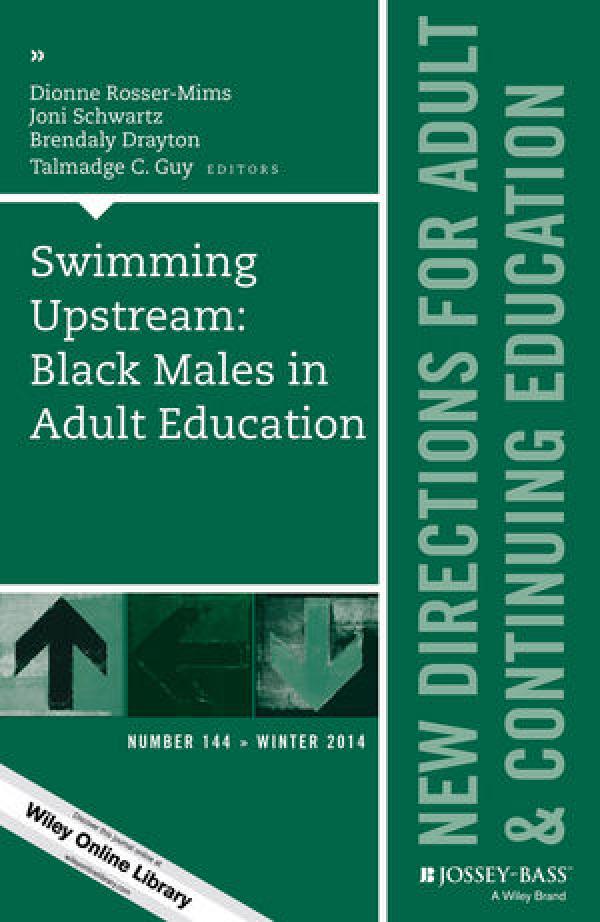
What person of sound mind would make a conscious decision to swim upstream against the current of turbulent waters? The correct answer is “probably no one.” Swimming upstream requires not only excellent navigational skill but perhaps, more importantly, demands that one possess the tenacity and spirit of a survivor. That is precisely why the metaphor “swimming upstream” is so appropriate in describing the plight of scores of African-American men who elect to enter and succeed in higher education (1). Swimming Upstream: Black Males in Adult Education is one volume in the series entitled: New Directions for Adult and Continuing Education. This anthology is intended “to make space for the experience and voices of Black men in the canon of adult education literature, to promote a critical assessment of institutional policies and practices, and to foster awareness and involvement among adult educators” (89). The format of this book is well-suited for academic settings. Each essay is preceded by a short introductory paragraph. At the close of each chapter the authors provide a robust list of reference sources that should prove helpful for students and educators alike. The first chapter discusses the impact of race and racism in the American adult educational system. Chapter two addresses myths and stereotypes employed to depict Black men and their influence on educational attainment. Chapter three explores the reasons for entering adult basic education programs and the role of gender identity. The topic of high school equivalency is discussed in chapter four. Chapter five addresses young Men of Color and engagement in adult learning. Chapter six is concerned with college reentry for African-American males. Chapter seven addresses the sobering topic of Black male college study following a term of incarceration. Chapter eight discusses military veterans and access to the GI Bill to pay educational expenses. The final essay, chapter nine, culminates with a call to action for educational practitioners. Understanding context is critical. In recent years a growing constituency has emerged that believes society has entered a post-racial or “colorblind” era. They advance the proposition that one’s race or ethnicity has no bearing on one's ability to survive and prosper in modern America. I strongly disagree with the post-racial theorists but recognize that it would be helpful for books like Swimming Upstream to squarely confront the legitimate concerns of post-racial proponents. In so doing one hopes that individuals on both sides of the argument will ultimately reach a consensus that the mission of ensuring equal educational opportunities for every individual remains a struggle that must still be waged today. Swimming Upstream moves that discussion forward with compelling statistical and anecdotal evidence. In 1903, the late W.E. B. DuBois prophesied in The Souls of Black Folks that the problem of the twentieth century would be the “color line” – the invisible yet palpable line of demarcation between Caucasians and African-Americans that was often characterized by overt discrimination and bigotry. More than one century later the question of whether “Black lives matter” is, in my view, a logical extension of DuBois’ central thesis. It can be argued that Swimming Upstream may unintentionally serve to remind us that certain remnants of the issues raised by DuBois remain unresolved today. For some readers this will speak to the relevance and timeliness of Swimming Upstream. An average book informs and a good book intrigues the reader. But an excellent book sparks self-reflection and may even compel one to act in new and bold ways. As a college instructor I routinely survey students to ascertain why they decided to embark on a college education. The primary responses from students generally, and African-American males specifically, are: “I want to make my parents proud of me” and “I want to set a positive example for my children/siblings/family.” Those learners confirm what I have long known to be true: that given equality of economic and institutional opportunities, African-American males have no less potential to achieve academic and vocational success than any other segment of the American population. College study may not be right for everyone but it must become accessible for anyone. Arguably that is the controversial and exciting rationale for Swimming Upstream. It is an excellent anthology that serves to affirm our collective belief in the basic humanity and intellectual capacity of every individual.
Nancy Lynne Westfield Associate Professor of Religious Education Drew Theological School Please indulge this low-grade rant. I believe the notion of “safe space” in adult classrooms is un-interrogated and oversubscribed. The question is … Safe for whom? Well-intentioned teachers, in wanting students to attempt deep conversation, wrongly presume adult students..
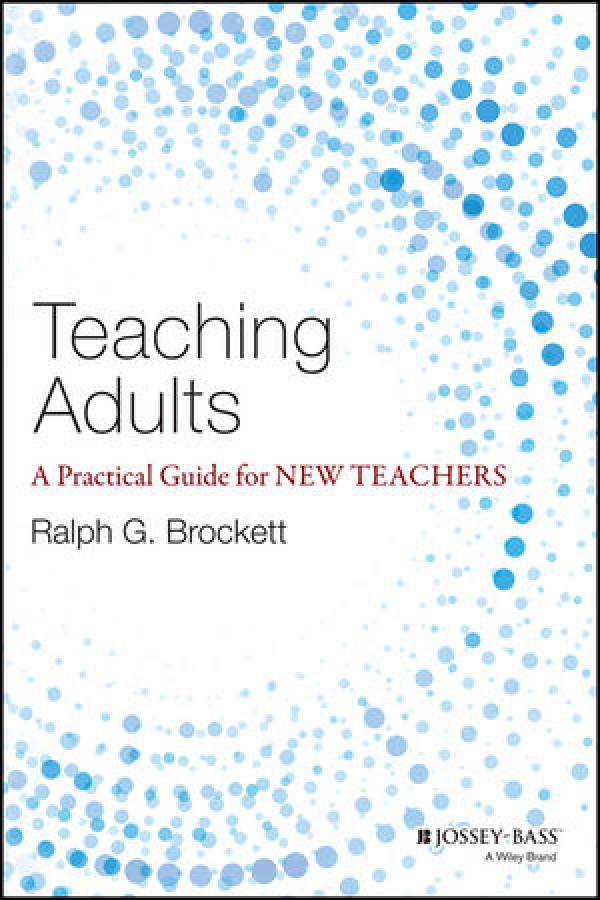
Ralph Brockett has spent his career on the leading edge of adult learning theory and practice. He is widely published, a master in the classroom, and – having been inducted into the International Adult and Continuing Education Hall of Fame in 2005 (among other accolades) – has earned the respect and admiration of his peers. In Teaching Adults: A Practical Guide for New Teachers, Brockett takes the posture of a caring mentor to provide a succinct and accessible introduction to the dynamic field of adult learning. His style is conversational, his expertise evident, and he is clearly most interested in helping to equip you, the teacher, with very practical advice for teaching adults in a wide variety of formal and informal learning contexts. Teaching Adults is written for a variety of readers. Brockett suggests an audience that may include a professional tasked with offering a training session in her field, a layperson asked to teach an adult Sunday School class, and a scout leader needing to orient a cadre of adult volunteers. In addition, the book is applicable to those who may not primarily think of themselves as teachers, but who nevertheless spend a fair amount of time teaching – such as ministers, social workers, and health care professionals. Further, higher education professors and instructors will find this book valuable. As Brockett rightly points out, these educators are not always equipped to meet the unique needs of an ever-increasing population of adult learners. Finally, this book can benefit graduate students in the field of adult education, helping to further define and map the foundational concepts of adult learning. Teaching Adults is organized around a simple formula: effective teaching leads to successful learning! To illustrate this, Brockett weaves together (1) seven essential attributes of effective teachers and (2) four keys to effective teaching. To describe the qualities of effective teachers, Brockett continually reinforces seven characteristics: trust, empathy, authenticity, confidence, humility, enthusiasm, and respect. Attending to these essential qualities has a distinctive impact on the success of an adult learning event. Similarly, the four keys of effective teaching (know the content, know the adult learner, know about teaching, and know yourself) help to steward learning for maximum transfer and impact. Especially helpful in processing these concepts are the end-of-chapter “think about it” exercises and focused listings of additional resources. Teaching Adults is an accessible and valuable primer. New and seasoned teachers alike will find practical resources for honing their skills, whatever their educational context. As a basic, introductory text, this book is not peppered with citations and endnotes; however, its bibliography serves as an essential reading list for those new to the field of adult learning theory. I would venture to suggest one drawback: despite its focus on new teachers there is a noticeable lack of discussion of new and emerging learning modalities (such as online environments). The concepts from the book are certainly applicable to all forms of teaching and learning, but an explicit mention of how these could be worked out in the online environment would have reflected the educational learning experiences for many new teachers and learners. The book does contain a self-made remedy, however. The end-of-chapter reflection questions provide teachers from any background with the implicit wisdom needed for addressing the diverse and ever-changing landscape of teaching and learning.

Learning with Adults begins with the following assumption: adult learning is central to the flourishing of a democracy, a democratic world, and practices of justice and peace. The volume borrows the foundations of Paulo Freire, Jürgen Habermas, John Dewey, Theodor Adorno, Jack Mezirow, and other critical theorists and democratically-minded educators and philosophers to develop a substantial discourse around adult learning. This volume is a companion to the original, Learning with Adults: A Critical Pedagogical Introduction (2012, Sense Publications) and is volume 13 in a series committed to the expanding field of adult learning centered in emancipatory, democratic, and critical studies. This second volume developed as a multi-authored extension of the initial volume. The authors of the initial volume understood that more work needed to be completed around adult learning as it relates to sexual orientation, disability, literacy, and consumer rights. The authors extended this initial plan to include chapters on relating adult education to poverty, libraries as learning sites, social creation, aesthetics, and media. Unlike traditional reader-companion volumes, this reader does not provide the foundational texts for the initial volume but provides amplifying essays brought together by contemporary authorities in adult learning and outside scholars, including Zygmunt Bauman. This is an interesting collection as it lays out essays toward an emancipatory vision for adult learning and away from the consumerist or compliance categories of training and education. The volume has five parts, beginning with the learning society and moving through questions of identity, instruments of practice, and learning in everyday life. The final section is on policy and context, which connects to an important literature on citizenship education for adult learners. The volume makes a contribution to the definition and scope of adult learning. In sum, adult learning, throughout the volume, is best understood from Oscar Negt. In his essay, “Adult Education and European identity,” he says adult learning is “learning processes that are determined by people’s own interests and horizons of perception, so that general relationships are made comprehensible” (126). The assumption throughout the volume is that adult learning is dynamic and that the methods, processes, and outcomes constantly shift as people’s own interests and horizons of perceptions shift. D.W. Livingstone outlines how adult learning that is emancipatory extends the scope of education and reverses the trend that “we may becoming increasingly willfully ignorant societies rather than learning ones” (33). Each of the chapters offers models for adult learning, some better than others, to increase critical thinking and to challenge societal norms. Several of the essays highlight the social inequality evident in access to formal education and claim that social and economic class status continue to be roadblocks in granting access to transformational learning. Adult learning, for these authors, is an invitational practice for all people and is, in itself, emancipatory. The authors continually highlight how the history of education (à la Meyers [1960] and Smith [1955]) is in need of ongoing critique if education, specifically adult education, is going to move beyond compliance and consumerist practices. These essays press against dominant ideologies, namely that “the dominant tendency in contemporary thought has been to equate learning with the provision of learning opportunities in settings organized by institutional authorities and led by teachers approved by these authorities” (37). Adult education has rarely moved beyond this dominant trend and has mostly accentuated it, which limits transformative learning for marginalized adult communities. The essays engage in a clear critique while also offering models for emancipatory and transformational adult learning processes (see Livingston’s and Cranton’s chapters). These models are the take away gifts from the volume. The models fall into three categories. The first set of models are site-based learning models, where the locations of everyday life are taken up as locations for learning. The second set of models arise from within the institutionalized practices of societies, where social and economic practices invite critical questions and transformative learning opportunities; and the third model is rooted in the ideologies of good education, namely processes to enact justice and peace. Overall, the volume holds education for adults as a learning paradigm for its own consideration. The site-based learning discussion recognizes that learning spaces are most often beyond the classroom and are found in the student’s everyday experiences. However, adult education that occurs in a classroom then becomes, itself, a site of the everyday experience. Additionally, this volume is a model for how the liberal arts tradition is a common practice in adult learning, whereby multiple disciplines make intersections around a common question. There is broad range of voices from education, philosophy, economics, sociology, and elsewhere included, yet all are committed to common questions of lifelong adult learning. Finally, the volume in itself is an adult learning model; the renaissance feel to the book results in unexpected points of informational learning for the reader. For example, on the topic of capitalism’s impact on the labor force and access to education, D.W. Lingston highlights that in 1983 only 28 percent of workers needed a college degree; by 2004 this figure rose to 45 percent. What is important is that over this same time period, degree attainment increased from 22 percent (of the population) to 54 percent, which is an increase of 34 percent (46). The data assists the reader in understanding how formalized processes of education result in trends toward underemployment. The point of information locates the implications of economics on the practice and process of adult learning. The volume, however, falls short of expectations. I was expecting the inclusion of several foundational texts in relationship to the field of adult learning. Also, several of the essays trail away from the central argument around learning with adults into diatribes on the respective intellectual agendas of each author; this is both a gift and burden. Each of the diatribes is not unimportant yet limits the volume’s coherence toward detailing models and processes for adult education amidst diverse populations. The positive aspect of this is mentioned above. I recommend this volume to curious readers. Learning with Adults assists its readers in understanding the complexities of learning with adults and makes clear that the field of adult learning is underdeveloped and misunderstood when connected to the traditional avenues of education. If a reader is looking for a more basic and invitational text on the topic of adult learning, I recommend purchasing the first volume in this series (English and Mayo, Learning With Adults: A Critical Pedagogical Introduction, 2012).
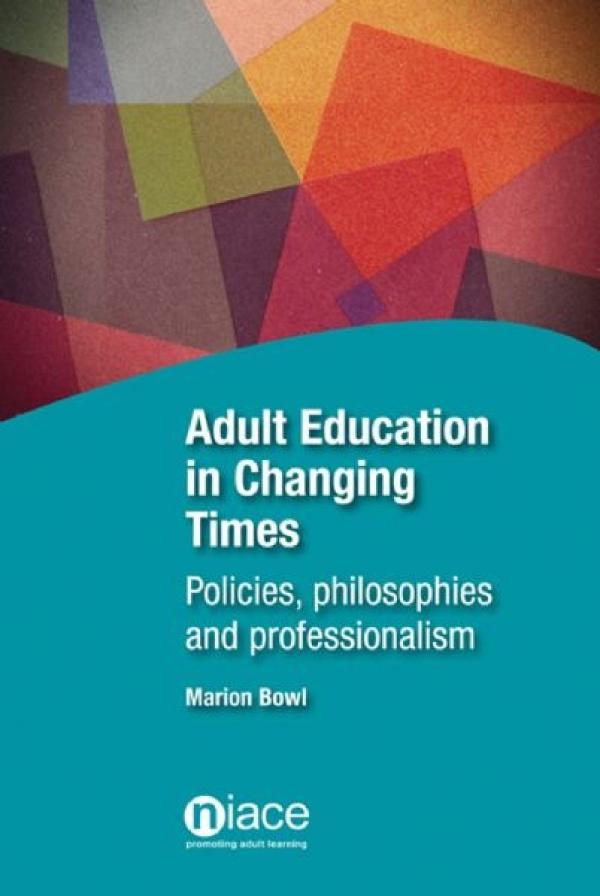
Marion Bowl’s Adult Education in Changing Times: Policies, Philosophies, and Professionalism explores the impact of changes in global policy on the field of adult continuing education. She teaches as a Senior Lecturer in the School of Education at the University of Birmingham in the UK. This title is Bowl’s most recent in a long line of publications on adult and continuing education. Bowl states “this book explores how adult educators – their work, their expectations, and the expectations laid upon them – are being affected by the changing political and economic environment” (5). She asks “why, when lifelong learning has been a policy priority for the past 40 years, does publicly funded adult education appear to be fighting for its life? And why do so many qualified, skilled, and experienced adult educators find themselves in an educational landscape that does not recognize or value their contribution?” (1). She begins by tracing the development of neoliberalism and its impact upon adult education specifically in England and New Zealand, examining the scope and definition of adult education and exploring adult educators’ beliefs and values. She then divides the rest of the volume into two sections: “Historical and Political Contexts for Adult Education” and “Adult Educators’ Working Lives Researched.” The first section presents a brief historical overview of adult education, including the impact of the Protestant Reformation, the Enlightenment, colonial expansion, urbanization and industrialization, post-World War II institutions, and globalization. The author pays particular attention to institutions, including UNESCO, OECD, the World Bank, and the European Union. She ends her historical survey by examining the role of professionalism and professionalization in the development of adult education. In the second section, Bowl explores policy and practice using her interviews with sixty-two educators in the field of adult education, evenly split between England and New Zealand. Interviewees were invited to discuss their career histories, their values and philosophies, how the field has changed over their careers, and perceived challenges and opportunities (76). She brings their narratives together to fashion a picture of adult educators’ working lives. Her findings on these educators’ attitudes toward theory, particularly the approaches of Paulo Freire and Carl Rogers, provide some interesting conclusions. In addition, her discussion of the factors impacting career identity are very insightful. Bowl ends her book by offering lessons for changing times (153). This is arguably the strongest chapter of her book and deserves to be expanded. She argues that the shifts in adult education – the growing emphasis on economic ends, marketization, the view that adult education is an individual responsibility, and tighter monitoring of educator standards – have deeply impacted the field. She advocates for a stronger linking of political engagement with pedagogical approaches; argues against hegemony in education, including preordained outcomes; supports more scrutiny of the use of power; and argues in favor of a stronger exercise of agency by educators. Finally, she notes that educators must be more willing to engage theory and politics for a “re-birth of radical education” (166). This book is well written and contains an excellent bibliography which provides a road map to these areas of the professional literature. The historical overview, however, is very limited. For example, the Protestant Reformation receives only one paragraph, and the book’s scope covers only England and New Zealand. Despite these limitations, Bowl’s scholarship provides a great starting point for explorations into these subjects in other contexts. Even though Bowl does not address theological education, adult education remains an important topic for theological education. Theological continuing education needs more discussion about its theoretical foundations and approaches, and Bowl provides a good starting point. Adult Education in Changing Times would make a good addition to progressive theological libraries with strong educational programming and terminal degrees with tracks in religious education.
Researchers and teachers will find this book a useful resource on student learning and enhancement. Based on twelve international collaborative research units’ seminars sponsored by the Scientific Research Network of the Research Foundation Flanders at Antwerp in December 2011, the volume reports empirical research and theories on educational practice to support studies of learning pattern development in higher education. Thirteen of fifteen essays are multi-authored, and the contributors are mostly higher educational specialists from Belgium, Finland, the Netherlands, and Spain. A few essayists are from Ireland and United Kingdom. Though written from the European continent, many of the learning concepts, strategies, and patterns – cognitive strategies, factors for learning patterns, and learning-learner characteristics – are transposable in higher education. A few essays explore pedagogy in global contexts. One article in particular compares multidimensionality and learning differences between students from the Netherlands, Sri Lanka, Indonesia, Spain and Latin America, and Hong Kong. Six chapters in Part I examine dimensions of learning patterns. Given the twenty-first century’s multifaceted learning environment, educators face the challenge of presenting learning integratively and creatively so as to motivate learners in their respective contexts and learning patterns. The authors claim that individual learner-oriented approaches and student subgroup orientations in learners’ cultures affect learning presage, perceptions, processes, patterns, and outcomes. The book claims that research continues to validate self-directedness among mature adult learners amid other reasons for facilitating effective adult learning. Nine chapters in Part II engage aspects of measuring student learning patterns and development. Core measurement issues include (a) learners’ academic achievements, (b) motivations and cognition on measuring achievements, (c) student teaching experience as a process for their deeper learning, (d) transition from higher education into the workforce and professional service, and much more. Teachers may be interested to discover that learners’ self-confidence and self-directedness are crucial to inspire their performance. Even so, perceived workload, task complexity, working memory capacity, and attention span directly affect learners’ degrees of engagement. The effectiveness of a pedagogical mode – whether it is lecture-based, case-based, an immediate mixed-learning model, or a gradual mixed-learning model – will depend on the student’s motivation and learning profile. The empirical settings and the theories presented are not directed at the teaching of religion and theology. Students of religious studies are not among the human subjects identified in the reported empirical investigations. Thus, for Teaching Theology & Religion’s readership, the book is not as relevant as other edited volumes including: Andrea Sterk’s Religion, Scholarship, and Higher Education (University of Notre Dame Press, 2002); Richard Devine, Joseph Favazza, and Michael McLain’s From Cloister To Commons: Concepts and Models for Service Learning in Religious Studies (Stylus, 2002); Sherry Hoppe and Bruce Speck’s Identifying and Preparing Academic Leaders (Jossey-Bass, 2004); and David Smith and James Smith’s Teaching and Christian Practices: Reshaping Faith and Learning (Eerdmans, 2011). Several essays in Learning Patterns in Higher Education allude to the importance of learners’ contexts for constructing effective pedagogical models. However, the book does not examine the many sociopolitical aspects that have impacted learning (for comparison, see Liam Gearon and Sue Brindley’s MasterClass in Religious Education, Bloomsbury Academic, 2013). Nonetheless, this book is well researched. Readers will profit from its extensive treatment of learning theories, and it will enhance an educator’s overall teaching competence. Educational psychology and theories of human development are embedded in many of these theoretical explorations, and therefore, the findings in this book may be transferrable to the practice of religious studies or theology.