Resources

Theological schools are complex institutional systems with many interlocking "moving parts." In most schools, the curriculum is the engine that drives the institution, influencing all aspects of the seminary, from the makeup of the student body, recruitment, faculty hires and...
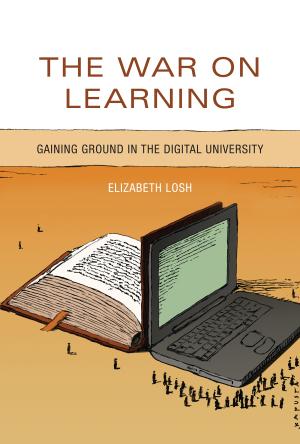
The War on Learning is an important contribution to public debate on new instructional technologies and the future of the university. A scholar of media history and digital rhetoric, Elizabeth Losh clarifies charged issues with her knowledge of historical context and a talent for cutting through publicity to identify the most important facts. In her first chapter, Losh describes how Good Morning America hoped to use her as “a voice of moral outrage” in response to online videos showcasing techniques for cheating on exams (19). To their disappointment, Losh was unwilling to paint an uncomplicated “us versus them” picture of how professors and students use technology. Losh’s thesis is that both sides are engaged in an “incredibly destructive war on learning itself by emphasizing competition and conflict rather than cooperation” (26). In her second chapter, Losh uses her teaching experiences to illuminate the “rhetoric of crisis” around the status of education in our culture (46). As a literature review which explains key moments in a conflict that is wide enough to include policing of student Internet activity and calls for the end of universities as we know them, it is here that Losh’s thesis is at its most persuasive. In the third chapter, “On Camera,” Losh explains how the online sharing of lectures turned one professor into a beloved celebrity and another into an object of ridicule. The war on learning is a costly distraction from the “digital literacy and competence in digital rhetoric” that is professionally important for both professors and students (89). The pedagogy of distance learning is reviewed in chapter 4 with the salient observation that the online lecture “often is more likely to resemble a traffic school tutorial rather than a compelling professorial performance” (109). Chapter 5 discusses “The Rhetoric of the Open Courseware Movement” with a critique of the optimism around platforms like Coursera and edX that is nevertheless respectful of their potential. Chapter 6 examines the technological struggle over plagiarism and the rise of Turnitin as a somewhat ethically ambiguous policing tool. Chapters 7 and 8 consider the merits of gadget distribution (for example, iPods and iPads) and efforts to create educational video games respectively. In the ninth chapter, Losh lays out six clear suggestions for making the digital university “more inclusive, generative, just, and constructive” based on “two decades in the trenches” (224). Losh argues that knowledge of the history of instructional technology and reflection on learning as process rather than product should precede elaborate plans for the digital university. This is not a book for professors seeking a step-by-step guide for bringing technology into their classrooms. Losh, in fact, mentions that she wrote this volume with college presidents in mind (14). I recommend it to anyone wanting a broader picture of how technology might impact the future of university education. With well-chosen case studies Losh provides a crash course on the history of instructional technologies and deep reflection on their implications.
“Learning to learn” is a strong and appellative concept for people involved and interested in education. The book’s title suggests a continuous search for an appropriate and practical understanding of the meaning of “learning to learn,” and its significance in the practice at various levels. “Learning to learn” is viewed as a holistic and dynamic concept that encompasses relationships with learning, reasoning, knowledge, consciousness, critical thinking, working memory, education self-awareness, motivation, lifelong learning, life-wide learning, inference, systems of thinking, spiritual matters, social heritages, cultural contexts, and “natural learning” as an ordinary activity with others. The concept is also related to fields of knowledge such as education, psychology, sociology, and so forth, and it is presented as a paradigm in continuous construction. This book is strategically divided in two main parts; (1) theory and (2) international research and practices. Seeking for a comprehensive view of education, the first part engages the reader in the concept of “learning to learn” from a theoretical and philosophical perspective, bringing together an extensive list of definitions, visualizations, and considerations related to the subject. The second part offers research based on nine case studies showing how “learning to learn” works in the practical arena in schools, curriculums, educational polices, and teachers’ pedagogical practices. However, even though the book does not deal directly with specific pedagogical strategies in the classroom, the discussion offers good insights and approaches that can enhance the practice of teaching. This aspect is further advanced by the authors’ emphases in explaining the methodologies used in the research. “As an organizing concept in education. . . learning to learn” not only deals with scientific matters concerning learning, but also with curriculum, pedagogy, and educational policies within the politics of a particular context (xv). Written from an international perspective, the book takes into account the educational experiences and practices from a few European countries, China (Hong Kong), Australia and New Zealand, and considers one example from the United States. Nonetheless, the authors’ intentions are clear − to influence and offer relevant applications for an international understanding of what “learning to learn” means for a global world. That said, additional approaches from Africa and Latin American countries are strongly needed. Learning to Learn can serve as something of a paradigm for excellence in education and learning. It can also function as a helpful text for reflecting on the meta-competencies required to be fully efficient in contemporary vocational contexts. This meta-competency includes a strategic competence for lifelong learning (93). The challenge of this discussion for religious and theological educators is evident -- it requires educators to examine the applications of “learning to learn” in their particular educational practices. Educators will benefit from reading this book and may feel motivated to read the extended literature references in the book, particularly those concerning recent texts advancing new theoretical approaches on this topic. Furthermore, educators will benefit from the rich research data discussed in the theoretical and practical sections. This material represents an excellent source for advancing new research, while at the same time offering useful applications for educators’ practices in their individual higher educational contexts.
Today the question of how to manage the three dimensions of a professor’s work – teaching, writing, and institutional citizenship – in ways that are satisfying, sustainable, have integrity, and allow for other dimensions of “having a life,” is increasingly fraught. Multiple contextual factors contribute to this state of affairs, from economic conditions that result in fewer tenure-stream positions to demands for greater accountability and the questioning of the value of a baccalaureate degree. The contemporary situation creates uncertainty for faculty, most of whom have made significant investments to become professors. Uncertainty feeds anxiety that grows into distraction that saps energy and enjoyment in the work. This is bad for professors and for their universities. Enter Susan Robison, psychologist, former full professor, and faculty development expert. Hardly naïve about larger contextual factors impinging on the professorate, Robison offers a way forward: teaching faculty practices of self-regulation that “increase their own productivity and satisfaction in areas over which they have control” – their own lives and work (xv). Robison presumes that faculty become professors motivated by deep purposes to which they are committed. Purpose grounds aspirations and commitments. It anchors internal coherence to satisfying lives in which professors accomplish good work as teachers, scholars, and university citizens. From this basic assumption flows Robison’s framework: (1) capture the energy or “power” of one’s deep purpose and articulate that purpose and the mission, vision, and goals that flow from it; (2) establish priorities, organize projects, and cultivate work habits that align with purpose; (3) develop interpersonal skills and cultivate mutually supportive relationships; and, (4) engage in the self-care essential to long-term health. After explaining and providing both reflective exercises and concrete strategies for each element in the first four parts of the book, Robison applies her framework very explicitly to the roles that professors occupy – professor, teacher, scholar, servant leader, and human being – in part five. Her claim: when individual faculty “define productivity and happiness for themselves with a view to their own long-range success,” the results will benefit both faculty and institutions (11). Composed in a workbook format, readers can turn to the sections of the volume that most interest them, or read from beginning to end. The volume employs theories and strategies from a range of fields, selected, conceptualized and presented specifically for faculty. This is one of its strengths. It also has an extensive bibliography for those wishing to pursue a particular topic. Robison’s positive tone and direct, uncomplicated approach likely will lead some readers to dismiss The Peak Performing Professor as too simple, too normal. And the workbook format leads to some repetition. But for those trying to compose lives and careers, those looking to find a way to retrieve the lost pleasure of being a professor, and those charged with supporting others to do good work, this is a book worth reading
Sharan Merriam and Laura Bierema aim to present “an overview of the major theories and research in adult learning in language that those new to adult education can understand.” They also seek to “[point] out applications of these ideas to practice” (xii). They have certainly hit the mark. They discuss relevant theory clearly and concisely, including multiple perspectives and ethical issues. Graphs, tables, and charts illustrate complexity and detail. Each chapter ends with a summary of its main points, a list of its highlights, and suggestions plus resources for pedagogical development and classroom practice. These features make Adult Learning eminently useful for college, university, and seminary professors, pedagogical development professionals, and anyone else who introduces adults to new ideas or new skills. Adult Learning falls roughly into four parts. Chapters 1 and 2 set the stage. First, the authors examine the social and developmental contexts of adult learners. In order to thrive in a global and diverse society that values knowledge and technology, we must develop habits of lifelong learning. But what kind of learning best serves our needs? Should it change our behavior? Develop our bodies, minds, and spirits? Train our brains? Socialize us? Help us make sense of our experiences? The authors outline five approaches to consider based on these questions. Chapters 3 to 5 are devoted to the latest research on three prominent theories of adult learning. Andragogy (as opposed to pedagogy) presumes that learners are self-directed, experienced, preparing for particular social roles, and ready to apply what they learn. Self-directed learning, although facilitated by teachers, makes adult learners responsible for what they learn and how they learn it. Transformative learning uses critical reflection and dialogue to help learners rethink their worldviews. The next four chapters build on significant components of adult learning theory, exploring the roles of experience, body and spirit, motivation, and the brain. Adult learning is not limited to the cerebral dimensions of memory, intelligence, and cognition. It also involves activity and emotion; evocations of the past and incentives for the future. Merriam and Bierema discuss pedagogies for all five ways of knowing and end with three chapters on contemporary contexts for learning. These include digital technologies, approaches to critical thinking, and cultural diversity. Adult Learning succeeds because the authors practice what they preach. They address an audience of adults who are developing themselves for a social role -- the role of a teacher. At the same time, they assume that their readers are not highly trained in pedagogical theory. As they share their expertise, therefore, they appeal to their audience’s teaching experience and motivations to hone the craft of teaching. They address contemporary higher educational contexts, help faculty think critically about teaching practice by presenting multiple perspectives, and offer concrete suggestions for applying new pedagogies. Adult Learning is a book to be read once, consulted often, put into practice, and shared with others.
There is a whole industry of administrative agents and auxiliary student service providers inhabiting the world of higher education bordering the classroom. Whether it is in the areas of residence life, student affairs, or service learning, practitioners provide social justice education (SJE). Inside the classroom, universities and colleges engage faculty to provide discrete courses, or enable interdisciplinary multicultural experiential learning for their students under the rubric of social justice education. Indeed, as this collection testifies, even student peer instruction can be key to unlocking conversations and attaining social justice learning outcomes. The book’s multiple authors were brought together under the aegis of the ACPA-College Student Educators International Commission for Social Justice Educators. Faculty, administrators, development support staff, and students themselves contribute a variety of chapters focusing on the task of facilitation. As the title suggests, each gives a thick description of their context to flesh out the claim that facilitation is an art rather than an exact science. This is not a simple how-to manual. The book is organized into four sections: Frameworks from Theory to Practice; Understanding Identities and Facilitation; Facilitation Design and Techniques; and Supporting Student Social Action. One might ask, “Why should teachers of Theology and Religion care?” One attractive answer is that SJE aims at transformation and action in relation to social structures of dominance and oppression. There are underdeveloped suggestions in the text that dominant religious assumptions need examining on campus and in wider society. Certainly the investment of religious studies and theology disciplines in the questions of race and whiteness, gender, sexuality, and broadly, identity -- however controverted -- means that awareness of the theoretical and practical bases of campus work for students is important. To my mind, the most interesting chapters are those framed largely as dialogues between two authors. Where facilitating conversation, awareness, disclosure, negotiating triggers, and gaining empowerment is the topic, this mode of writing is immediately attractive for demonstrating what is being written discussed in a way that cannot otherwise be done. The authors are wonderfully humane in addressing their own growth in awareness of the importance of social justice education, and their faltering steps to facilitate that growth along with their students or peers. Social justice education is about relationships and fostering learning that is transformative. Not all will agree with the account of justice that is drawn on in the book: Justice as inclusive individual identity rights procedurally secured over against hegemony is the framework. Certainly different ways of living religious traditions, with their thick accounts of the good framing what counts as just, will dispute some assumptions here. Nevertheless, or rather, precisely so, they are invited into the conversation that is facilitated. Teachers of theology and religion might take much of the wisdom accrued here into their class discussions, seminars, and workshops. Further, everyday teaching will be more attuned to the strivings toward justice in the wider higher education community. I would have liked more discussion about ableism and people with disabilities. At times the thick description felt thin, given the constraints of what is communicable on a page: the experiential stories almost needed longer narration to draw in a reader who does not always inhabit the SJE discourse. What is in one sense a distraction for one jumping into the field -- numerous references to authoritative tomes unknown -- is at the same time a boon to the reader wanting to explore further: the chapter bibliographies are extensive and rich.
College students respond to my enthusiasm for old-fashioned dorms − long hallways, shared rooms, communal bathrooms − with the same eye-rolling disdain I once brought to my mother’s valorization of a three-mile walk to school. So when I heard that authors Chambliss and Takacs extol dorm life in How College Works, I was curious. Would they affirm other staples of college life from a bygone era? Book in hand, I discovered that the authors’ massive database, compiled by mining Hamilton College resources (including graduating student surveys, one thousand student papers collected over five years, and campus focus groups) and following a hundred Hamilton College students from their first year to ten years past graduation, supports research findings that confirm the value of several longstanding practices at liberal arts colleges. Although the authors acknowledge that Hamilton College is not representative of American higher education (it ranks fifteenth on US News & World Report’s list of national liberal arts colleges), they suggest that their exclusive focus on Hamilton has enabled them to uncover, beneath the kinds of statistical correlations that both define and constrain large-scale studies, experiences crucial to a good college education anywhere. I agree. On my reading, their findings and recommendations (evidence-based, resource neutral, and free of red tape) are relevant for schools with profiles far different than Hamilton’s. Although the authors do advocate traditional dorms because they correlate with enhanced student engagement, most of their recommendations focus on the faculty. (1)Put your best teachers in your first-year classes. First-year students tend to choose their courses based on their time and location, not their subject matter. Students follow a compelling professor into a second or third course, often becoming de facto majors before they become declared majors. Because students perceive that a professor is the discipline she teaches, students dismiss an entire field after one bad course. (2)Frontload writing-intensive classes: students experience the biggest gains during their first two years, and the weakest students gain the most. (3) Engage students outside the classroom. Graduating seniors report that dinner at a professor’s home had a profound impact. Crunching the numbers from two thousand senior surveys and controlling for GPA, major, gender, race, and so forth, the authors were startled to discover that students who were a guest in a professor’s home even once have an 11 percent higher college satisfaction score than students who were never a guest. (4) Don’t equate college success only with assessable skills. Yes, alumni do comment on the difference that their writing, speaking, and critical thinking skills make in the workplace. But alumni who are highly satisfied with their college experience also report “confidence” and “relationships” as key outcomes. Alumni repeatedly attest to a sense of efficacy they attribute to four years of taking on and successfully meeting challenges, and they strongly affirm not only friendships forged in college but also their membership in a community that, over four years, shaped their identities and their values. Evidence, not nostalgia, supports the authors’ case that three factors − skills, confidence, and relationships − comprise an index of satisfaction that shows how college works, now as in the past.

Proleptic Pedagogy: Theological Education Anticipating the Future is the capstone project of a three-year study undertaken by faculty members at Saint Paul School of Theology. In the volume’s first essay, co-editor Nancy R. Howell explains that this study was designed to investigate three “distinct pedagogical challenges” that the Saint Paul faculty has come to recognize within the rapidly changing landscape of its own institution: (1) teaching in ways that adequately address the needs of both digital natives and digital immigrants, as well as distance learners; (2) creating instructional approaches that are flexible enough to accommodate students with diverse learning styles and backgrounds; and (3) attending in new ways to the changing racial and ethnic demographics among theological students. While these particular emphases are clearly shaped by Saint Paul’s particular context, the authors of the essays argue convincingly that they also represent broader emerging themes within theological education. Proleptic Pedagogy includes eight chapters. The first of these, “Proleptic Pedagogy, Transition, and Teaching Toward the Future” by Nancy R. Howell, serves as the introduction to the volume and describes the origins of this project and the major pedagogical challenges it aims to address. Though brief, the introduction provides a helpful guide to the central themes that the other contributors address in varying degrees of depth. The remaining chapters focus primarily on one of the three main challenges named in the introduction: Chapters 4, 6, and 8 emphasize the challenge of racial and ethnic diversity; Chapter 2 addresses the challenge of educating students with diverse learning styles and needs; and Chapter 5 engages the challenge of discerning the proper place of technology within theological education. Chapters 3 and 7 simultaneously address diversity in race and ethnicity and learning styles, and how these two dimensions may influence one another in the classroom. Although the essays vary in their particular emphases, they all employ the same organizational structure and include the following sections: (1) Telling a Classroom Story; (2) Identifying the Pedagogical Challenges; (3) Engaging Pedagogical Literature; (4) Considering a Theology of Pedagogy; and (5) Constructing a Pedagogical Proposal. This structure exemplifies a practical theological approach: it begins in the lived experience of teachers in the classroom, engages pedagogical and theological resources, and finally returns to concrete implications for practice. The essays prove particularly helpful in summarizing a wide variety of pedagogical literature (which many theological educators may not have time to explore on their own) and providing examples of theological reflection on teaching. The unique strength of this volume lies in its modeling of constructive theological and pedagogical dialogue between faculty members from one institution, without necessarily suggesting that they are in full agreement. As Howell notes in the introduction, “The essays demonstrate that the faculty interprets the Saint Paul mission, theological education, theology, and pedagogy in diverse ways. Not to be interpreted as inconsistency, our diverse pedagogical approaches are our strength” (7). Taken together, the essays identify challenges to which faculty in many different contexts can relate, while grounding reflection on those challenges in the authors’ lived experience of teaching in a theological school. Additionally, the volume’s index makes it easy to identify which essays address particular topics and themes. The lack of a concluding chapter, however, makes for a rather abrupt ending to an otherwise well-integrated and compelling volume. It would have been helpful to include a brief chapter at the end of the book to reiterate the essays’ primary emphases and to propose avenues for future conversation. Nonetheless, Proleptic Pedagogy represents an important contribution to the broader conversation about the relationship between pedagogical practice and the future of theological education.

Kate Blanchard It's late January in Michigan and I'm in a certain mood. So here for your mid-winter schadenfreude are eight (click-baity) things I hate right now, in no particular order. Perhaps many of you can relate. Teaching requires me to dress like a grown-up. While I have male friends...

S. Brent Rodriguez Visiting Associate Professor of Religious Studies Hamilton College Plate In the final seconds of their struggle, Ferguson, Missouri police officer Darren Wilson shot and killed Michael Brown because of a visual impression. From Wilson's point of view, Brown appeared to him like Hulk Hogan, and like a demon. His only conceivable response, he stated, was to shoot. Six bullets penetrated Brown's body, killing him quickly. Demons do not appear to sane people with any frequency. Some people believe that demons exist, but few will admit they have ever seen one live, face to face. So, how would Wilson know what a demon looked like? What transposed...