Resources
An interface between academic learning and civic engagement. The Initiative promotes the divergent thinking of arts and humanities in the service of solutions to real life problems.
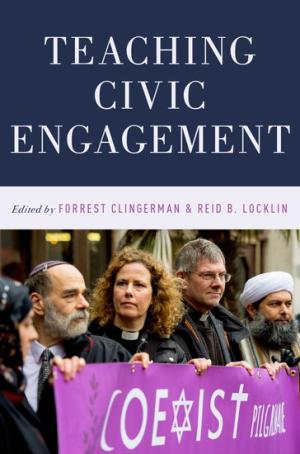
Click Here for Book Review Abstract: Using a new model focused on four core capacities-intellectual complexity, social location, empathetic accountability, and motivated action--Teaching Civic Engagement explores the significance of religious studies in fostering a vibrant, just, and democratic civic order. In the first section of the book, contributors detail this theoretical model and offer an initial application to the sources and methods that already define much teaching in the disciplines of religious studies and theology. A second section offers chapters focused on specific strategies for teaching civic engagement in religion classrooms, including traditional textual studies, reflective writing, community-based learning, field trips, media analysis, ethnographic methods, direct community engagement and a reflective practice of "ascetic withdrawal." The final section of the volume explores theoretical issues, including the delimitation of the "civic" as a category, connections between local and global in the civic project, the question of political advocacy in the classroom, and the role of normative commitments. Collectively these chapters illustrate the real possibility of connecting the scholarly study of religion with the societies in which we, our students, and our institutions exist. The contributing authors model new ways of engaging questions of civic belonging and social activism in the religion classroom, belying the stereotype of the ivory tower intellectual. (From the Publisher)
Click Here for Book Review Abstract: This volume explores the twenty-first century classroom as a uniquely intergenerational space of religious disaffiliation, and questions about how our work in the classroom can be, and is being, re-imagined for the new generation. The culturally hybrid identity of Millennials shapes their engagement with religious "others" on campus and in the classroom, pushing educators of comparative theology to develop new pedagogical strategies that leverage ways of seeing and interacting with their teachers and classmates. Reflecting on religious traditions such as Islam, Judaism, African Traditional Religions, Hinduism, Christianity, and agnosticism/atheism, this volume theorizes the theological outcomes of current pedagogies and the shifting contours of comparative theological discourse. (From the Publisher)

Journal Issue.

Click Here for Book Review Abstract: How can discerning critical hope enable us to develop innovative forms of teaching, learning and social practices that begin to address issues of marginalization, privilege and access across different contexts? At this millennial point in history, questions of cynicism, despair and hope arise at every turn, especially within areas of research into social justice and the struggle for transformation in education. While a sense of fatalism and despair is easily recognizable, establishing compelling bases for hope is more difficult. This book addresses the absence of sustained analyses of hope that simultaneously recognize the hard edges of why we despair. The volume posits the notion of critical hope not only as conceptual and theoretical, but also as an action-oriented response to despair. Our notion of critical hope is used in two ways: it is used firstly as a unitary concept which cannot be disaggregated into either hopefulness or criticality, and secondly, as an analytical concept, where critical hope is engaged and diversely theorized in ways that recognize aspects of individual and collective directions of critical hope. The book is divided into four sub-sections: - Critical Hope in Education - Critical Hope and a Critique of Neoliberalism - Critical Race Theory/Postcolonial Perspectives on Critical Hope - Philosophical Overviews of Critical Hope. Education can be a purveyor of critical hope, but it also requires critical hope so that it, as a sector itself, can be transformative. With contributions from international experts in the field, the book will be of value to all academics and practitioners working in the field of education. (From the Publisher)

Click Here for Book Review Abstract: Critical theory has much to teach us about higher education. By linking critical models, methods, and research tools with an advocacy-driven vision of the central challenges facing postsecondary researchers and staff, Critical Approaches to the Study of Higher Education makes a significant—and long overdue—contribution to the development of the field. The contributors argue that, far from being overly abstract, critical tools and methods are central to contemporary scholarship and can have practical policy implications when brought to the study of higher education. They argue that critical research design and critical theories help scholars see beyond the normative models and frameworks that have long limited our understanding of students, faculty, institutions, the organization and governance of higher education, and the policies that shape the postsecondary arena. A rigorous and invaluable guide for researchers seeking innovative approaches to higher education and the morass of traditionally functionalist, rational, and neoliberal thinking that mars the field, this book is also essential for instructors who wish to incorporate the lessons of critical scholarship into their course development, curriculum, and pedagogy. (From the Publisher)
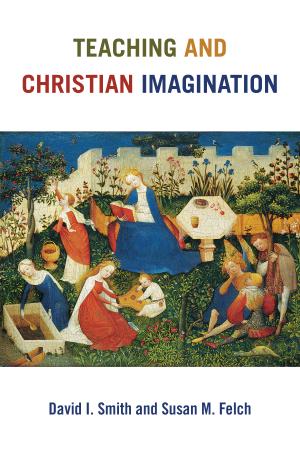
Click Here for Book Review Abstract: This book offers an energizing Christian vision for the art of teaching. The authors - experienced teachers themselves - encourage teacher-readers to reanimate their work by imagining it differently. David Smith and Susan Felch, along with Barbara Carvill, Kurt Schaefer, Timothy Steele, and John Witvliet, creatively use three metaphors - journeys and pilgrimages, gardens and wilderness, buildings and walls - to illuminate a fresh vision of teaching and learning. Stretching beyond familiar clichés, they infuse these metaphors with rich biblical echoes and theological resonances that will inform and inspire Christian teachers everywhere. (From the Publisher)
Teaching and Digital Technologies: Big Issues and Critical Questions helps both pre-service and in-service teachers to critically question and evaluate the reasons for using digital technology in the classroom. Unlike other resources that show how to use specific technologies – and quickly become outdated, this text empowers the reader to understand why they should, or should not, use digital technologies, when it is appropriate (or not), and the implications arising from these decisions. The text directly engages with policy, the Australian Curriculum, pedagogy, learning and wider issues of equity, access, generational stereotypes and professional learning. The contributors to the book are notable figures from across a broad range of Australian universities, giving the text a unique relevance to Australian education while retaining its universal appeal. Teaching and Digital Technologies is an essential contemporary resource for early childhood, primary and secondary pre-service and in-service teachers in both local and international education environments. Empowers pre-service and in-service teachers to understand why they should or should not use digital technologies Notable team of contributors from across a broad range of Australian universities Companion website is kept up-to-date with any major technological changes as well as emerging ideas, debates, policy and other relevant information (From the Publisher)
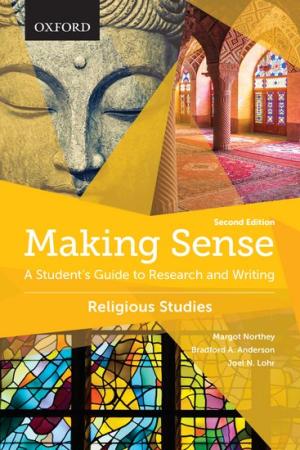
Click Here for Book Review Abstract: Features an overview of research and writing for students in religious studies, for a reasonable price, and can be used as a resource for a student's entire academic career. Uses straightforward language to discuss the basics of research and writing. Instructors agree that as an overview, the Making Sense series is much easier to digest than heavier writing style guides, and they appreciate the discipline-specific content. Features up-to-date guidelines for documentation and referencing and provides the most current guidelines for documentation in religious studies, including coverage of MLA, APA, and Chicago styles and referencing. Along with including the most up-to-date citation styles, the Making Sense series also features current examples, and useful information on using the internet as a research tool. More Accessible. This edition contains more bulleted points and summaries to make the content easier to reference and absorb. New to this Edition: Chapters are reordered to better match the writing and learning process Includes comprehensive coverage of new developments in technology-based research and writing Sections on MLA, APA, and Chicago style have been revised to be completely up to date (From the Publisher)
The “Make Your Own Religion” class project was designed to address a perceived need to introduce more theoretical thinking about religion into a typical religion survey course, and to do so in such a way that students would experience the wonder of theoretical discovery, and through or because of that discovery hopefully both better retain knowledge gained from the project and nurture within themselves the practice of thinking more analytically about religion (and other social and cultural things). Despite a number of challenges and unresolved questions associated with the project, it has proven relatively successful at introducing and provoking theoretical thinking about religion in a compressed period of time, without taking an inordinate number of class periods away from the survey itself. A brief description and analysis of the assignment is followed by four short responses.