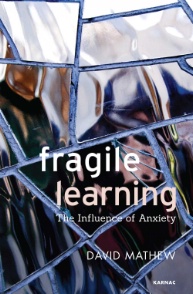
- Author
- Mathew, David
- Publisher
- Stylus, Sterling, VA
- ISBN
- 9781782202592
- Table of Contents
-
Acknowledgements
About the Author and Contributor
Introduction
Part I—Challenges to Learning
ch. 1 Prison language
ch. 2 Disease and distance: an anxious diptych (Susan Sapsed)
ch. 3 The Stable group
ch. 4 Ethical issues in problem-based learning (Susan Sapsed)
ch. 5 On empty spaces: an afterword
ch. 6 Steps forward, steps back (Susan Sapsed)
ch. 7 Ghosting
Part II—Online Anxiety
Introduction to Part II
ch. 8 Cyberbullying: a workplace virus
ch. 9 From fatigue to anxiety
ch. 10 The absence of E
ch. 11 Cyber tools and virtual weapons
ch. 12 E-learning, time, and unconscious thinking
ch. 13 The role of the online learning personal tutor
ch. 14 Conflict in online learning
ch. 15 The Internet is unwell . . . and will not be at school today
Notes
References
Index
Click Here for Book Review
Abstract: What are the barriers and obstacles to adults learning? What makes the process of adult learning so fragile? And what exactly do we mean by fragile learning? This book addresses these questions in two ways. In Part One, it looks at challenges to learning, examining issues such as language invention in a maximum security prison, geography and bad technology, and pedagogic fragility in Higher Education. Through a psychoanalytic lens, Fragile Learning examines authorial illness and the process of slow recovery as a tool for reflective learning, and explores ethical issues in problem-based learning.
The second part of the book deals specifically with the problem of online anxiety. From cyberbullying to Internet boredom, the book asks what the implications for educational design in our contemporary world might be. It compares education programs that insist on the Internet and those that completely ban it, while exploring conflict, virtual weapons and the role of the online personal tutor. The book also examines the issue of time as a barrier to learning and its links to unconscious thinking, as well as defining fragility in a summative essay. Using real-life examples, originality and wit, Fragile Learning is an important contribution to the field of psychoanalysis and pedagogy. (From the Publisher)
Abstract: What are the barriers and obstacles to adults learning? What makes the process of adult learning so fragile? And what exactly do we mean by fragile learning? This book addresses these questions in two ways. In Part One, it looks at challenges to learning, examining issues such as language invention in a maximum security prison, geography and bad technology, and pedagogic fragility in Higher Education. Through a psychoanalytic lens, Fragile Learning examines authorial illness and the process of slow recovery as a tool for reflective learning, and explores ethical issues in problem-based learning.
The second part of the book deals specifically with the problem of online anxiety. From cyberbullying to Internet boredom, the book asks what the implications for educational design in our contemporary world might be. It compares education programs that insist on the Internet and those that completely ban it, while exploring conflict, virtual weapons and the role of the online personal tutor. The book also examines the issue of time as a barrier to learning and its links to unconscious thinking, as well as defining fragility in a summative essay. Using real-life examples, originality and wit, Fragile Learning is an important contribution to the field of psychoanalysis and pedagogy. (From the Publisher)