Resources
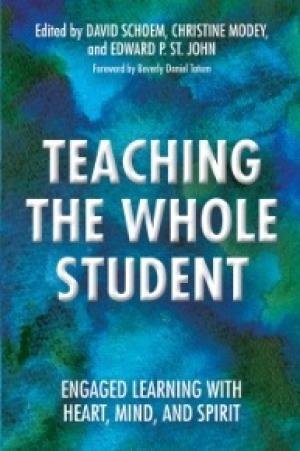
This book gives both more and less than what its title promises. For the editors of this collection, teaching “the whole student” requires engaged learning (“active, participatory, experiential learning that links doing with thinking”) and integrative pedagogy (“crossing and stretching traditional intellectual disciplinary boundaries”) (1). In turn, these commitments are part and parcel of a larger commitment to educating for social justice, and the essays take on a wide array of topics, including effective and balanced service-learning, learning communities “done well,” and the importance of meaningful, sustained diversity engagement. Some of the essays are rather auto-biographical while others focus on a particular course or program. As is the case with many books of this type, the collection is an uneven assortment, and it is not always clear how an essay pertains to the promised subject of “teaching the whole student.” For those reasons, it can be somewhat disappointing. Read in one way, however, hope emerges as a kind of connecting line and important theme. This is addressed most directly in the essay by Gillies Malnarich, who describes a moment of personal crisis as a teacher. She lay awake at night wondering, “What does it mean to educate for hope?” How can we make space for “raw, angry, heartbreaking, life-affirming hope… especially in our classrooms,” she asks, drawing upon both Paulo Freire and Rebecca Solnit’s writings (58). It also becomes clear that the kind of relational pedagogy being prescribed by many of the writers requires a willingness on the part of the teacher to bring his or her whole self into the classroom. In her essay on “Incorporating Social Justice into Teaching,” Kathleen Manning encourages readers to think of teaching as a spiritual act: “Teaching is not something learned once and perfected. The ever-changing nature of students, theory, and your personal and professional cycles as a person and professor make teaching an art. Because you are affecting people’s lives, approaching teaching and learning as spiritual practice places it in the realm of transcendence. Particularly when using principles of social justice to work toward a more just world, faith, trust, and authenticity must be part of the teaching and learning processes” (52). There are many helpful ideas and strategies here, including the “Where I’m From” poetry assignment, a powerful way for students to disclose important aspects of their identity and express “links between their faith tradition and ethnicity,” among other things (164 - the activity comes from Beverly Daniel Tatum’s Can We Talk About Race? [Beacon, 2007]). Some of the essays include useful appendices - see, for example, the collaborative learning self-assessment (77) or the chart describing experiential classroom activities to promote dialogue (143). Ultimately the strength of this book can be found in the questions that it poses more than in the answers it suggests. Each essay concludes with a set of reflection questions prompted by the content of the essay, and a patient, thoughtful reader could work her way through this book and be richly rewarded.
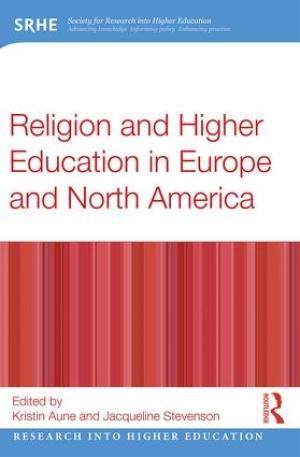
When I arrived on campus as a first-year student, I had the name of an economics professor to track down, given to me by close church friends who knew that he and his wife belonged to a church in my new college town. When I knocked on his office door, he was both delighted and surprised; “I assumed you’d come about enrollment in my seminar. No student has ever asked me about church.” Four years later, he celebrated my graduation with other members of the church I’d faithfully attended. Admittedly, I was an outlier. But my story helps dispel the myth that college is a place to go to lose your faith. Widespread assumptions hold that campuses are secularized spaces where religion surfaces only when it becomes a threat (“Fundamentalist students might endanger others”) or a nuisance (“Religious minorities might protest intolerance”). Contributors to Religion and Higher Education in Europe and North America argue that ordinary, everyday religious experience on campus is more common, less problematic, and more nuanced than many realize. Editors Aune and Stevenson collected thirteen essays by researchers and theorists representing different disciplines and approaches who are all curious about how students negotiate the university environment. Section One shares findings from survey research demonstrating, for example, that when it comes to retaining their religious affiliations, practices, and beliefs, students differ from non-students of the same age only in identifying even more strongly with mainstream religious institutions upon graduation, and in shedding their belief in miracles. Other research shows that all groups, including the ‘nones,’ encounter campus climates hostile to their worldviews. This section tries to render empirical the question of secularization and higher education. It affirms both that religion is a slippery thing to measure and that more research is necessary. Section Two presents qualitative research into the experience of being religious in ostensibly secular British, French, and Canadian universities. It challenges the idea that as a pluralistic, secular ethos grows at the institutional level, loss of faith results at the personal level. Becoming friendly to students’ faith would mean, among other things, ceasing to bracket religion as something purely private and propositional, moving beyond mere tolerance and accommodation toward formation of the whole person, expanding vocabulary beyond the moderate/radical binary (Islam), and creating safe and inclusive space for all. Section Three argues for evidence-based institutional policies that treat religion as a social practice rather than an identity characteristic. One chapter addresses the relationship of religiosity to teaching and learning. Contributors call upon institutions of higher education to promote literacy, connection, and dialogue with respect to religion rather than continuing to fall back on the impersonal, secular, and reductionist norms of civility and free speech. In other words, secularity is not neutrality, and the college or university is not ultimately an arbiter of conflict but rather a pedagogical community. This thought-provoking volume, which deliberately addresses higher education outside the United States, will interest several audiences, including campus life personnel, sociologists of religion, chaplains, teachers, and administrators

Although it is not immediately apparent from the title this is a book on pedagogy, and it contains many useful ideas for the teaching of religion and theology. Each of the chapters in this volume suggests a way in which teachers in secondary and university education can use popular works of Fantasy Literature to teach critical literacy. Fantasy Literature is difficult to define, but it is hard to deny the enormous influence it has had on popular culture. Rather than dismiss this literature as mere genre fiction, the authors of this book see the popularity of Fantasy Literature as an opportunity to reach and engage a variety of students in serious questions about race, gender, class, and privilege. The book begins with a brief introduction that defines critical literacy broadly, noting that as a blanket term it encompasses Marxist, feminist, postmodern, and other critical theoretical discourses. Following this, most of the chapters in the volume focus on one or two works of Fantasy Literature, demonstrating how they can be used to teach an important concept in critical discourse. Here I will mention a few examples. In the first chapter Neil McGarry and Daniel Ravipinto assess the conservative, patriarchal, and heterosexist autocratic ideology at play in the works of J. R. R. Tolkien and George R. R. Martin. Given the current popularity of the latter’s works, this chapter could inspire a variety of pedagogical interventions. Martha Johnson-Olin reads a current text using historical example in her chapter, “Strong Women in Fairy Tales Existed Before Frozen: Teaching Gender Studies Via Folklore.” Several other chapters use the Harry Potter series: Editor Mark Fabrizi’s chapter uses Harry Potter to teach Machiavelli, while Claire Davanzo uses the actions of Dolores Umbridge and Cornelius Fudge, especially in Harry Potter and the Order of the Phoenix, to teach Marxist ideas about oppression and resistance. While most of the chapters in the book examine one or a few works in light of one critical concept, Nathan Frederickson’s chapter follows a different approach, and is the chapter that would likely be of greatest interest to the readers of this site. In his chapter, Frederickson lays out his plan for a course on religion and Fantasy Literature that focuses on critical pedagogy. This course is divided into eight sections: (1) defining key terms, (2) colonialism, (3) capitalism, (4) perspectivism and pragmatism, (5) feminism and queer theory, (6) interrogating the self, (7) royal ideology and the monomyth, and (8) critical pedagogy and reflexivity. Frederickson provides annotated lists of suggested texts for each of these sections. He also helpfully breaks these lists into those works that are best suited for high school, undergraduate, and graduate classrooms, making this syllabus useful for a wide range of educators. The syllabus chapter is particularly useful, but given its broad scope, it is likely that many teachers of religion will find helpful ideas and suggestions in this book for weaving popular culture and critical literacy into their courses.
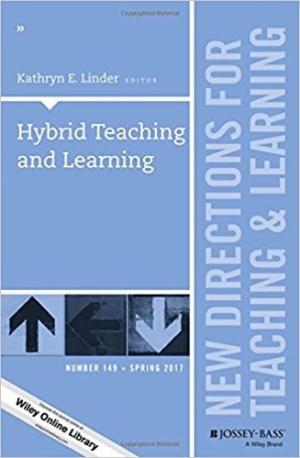
Hybrid Teaching and Learning defines and explains the hybrid approach to teaching and learning by providing answers to questions surrounding this phenomenon. This method of teaching and learning is often referred to as blended pedagogy. Answers to questions and conclusions are arrived at through eleven chapters that together give a strong and comprehensive explanation of hybrid teaching and learning. The authors of the chapters are Kathryn E. Linder, Patsy D. Moskal, Linda S. Bruenjes, Sarah A. Smith, Traci Stromie, Josie G. Baudier, Jason Snart, Faye Haggar, Bruce Kelley, Weichao Chen, Daniel Newman, Michael Dickinson, and Kirsten Behling. Kathryn E. Linder defines hybrid teaching as a pedagogy that utilizes technology to create a variety of learning environments for students (11). This method of teaching and learning reduces the amount of face-to-face encounters between teacher and learner. However, technologically facilitated activities outside of the actual classroom often make the face-to-face meetings more active and meaningful. The teacher of hybrid courses must be intentional in setting up these activities. Each chapter describes its objective clearly and explains it very well for the reader. The pedagogy of hybrid teaching and learning has components similar to other successful pedagogies, including learning outcomes and objectives. A best practice in hybrid pedagogy is to start at the end and work backwards in planning courses. One should know what the desired final outcome is before planning activities. This type of teaching and learning involving backward design requires planning the entire course and may be difficult for teachers who are accustomed to planning classes weekly. This book works well as a framework for understanding hybrid teaching and learning. It is very timely for institutions considering a variety of methods for instruction. The authors suggest ways of keeping the values that come with face-to-face teaching and learning while taking advantage of the many new technologies that enhance teaching and learning. I found chapter 9 to be of particular interest because the author makes a strong argument to teachers about accessibility. Teachers of hybrid courses must ensure that all students can access courses in face-to-face spaces as well as technological spaces. The only weakness that I can identify in this book is that perhaps it could have given more information or insight about the pros and cons of hybrid teaching and learning. This might help others avoid some pitfalls. Overall, I found this book to be a valuable asset. As one who uses hybrid pedagogy I think this book is a helpful tool for all teachers who prepare and plan to teach in this format. Individual chapters or the entire book will help others learn more about hybrid teaching and learning.
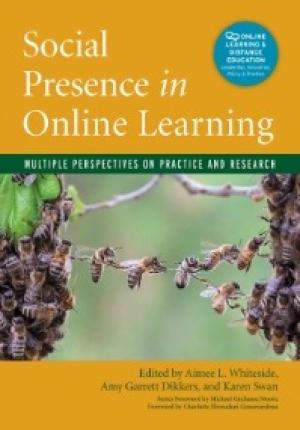
As post-secondary institutions, theological schools continue to participate in various forms of online learning, and the criticism (or question), “It’s not really the same as being in a classroom with a real instructor” is commonly heard. The simple reply to this concern is the concept of social presence. Starting with the initial definition of social presence from Short, Williams, and Christies (1976), this compilation of articles attempts to summarize the historical perspectives and present the current state of discussion, recognizing the constant updating of online course options. The authors successfully present the historical perspectives, grouping them in three broad categories – as technologically facilitated, as learners’ perceptions, and as critical literacy. However, the chronological and developmental approach leaves the reader realizing the earlier chapters have minimal application to current teachers and learners since the understanding of social presence and the technology used have changed so dramatically. The initial discussions about social presence whether through computer-mediated communication or later within the community of inquiry framework were informative, but the reader quickly realizes that the later frameworks and models have improved. Thus the earlier discussions in the book are of little value for today’s teaching-learning environment. In essence, only the last section is relevant, except as historical background. The editors demonstrate their breadth of knowledge of the literature and are involved with and connected to the latest research in social presence. A useful chapter (11), “Cultural Perspectives in Social Presence,” provides valuable guidelines for communicating effectively in a multi-cultural learning context. Multiple examples explain how one subset of students find an online learning activity contributes positively to social presence while those of another culture find it impacts social presence negatively. Variations in anonymity, informal chat, self-disclosure, trust building, and conflict resolution are considered. The chapter concludes with useful tips for monitoring and mediating communication which could be misunderstood because of cultural differences. Likewise, various practices for building social presence into discussions, feedback, and interactions are shared throughout the book. The literature reviewed includes a range of educational levels from K-12 and post-secondary as well as a range of disciplines. The final section provides interesting chapters (17 and 18) about the future of online learning and incorporates social presence into various models of instruction. They suggest social media tools enable instructors to incorporate cohesive and affective elements into courses to enhance social presence. The authors conclude, “Never stop learning because life never stops teaching” (210). The information shared is relevant for any faculty member teaching online, including theological and religious studies professors. While the final chapters contain valuable tips as noted above, I cannot recommend the book as a whole since it is predominantly a historical overview of the concept of social presence. Though it contains various up-to-date strategies in the closing chapters, it was tedious for the reader to sift through the detailed literature for meaningful insights.
Twelve articles clustered in four sections under this ambitious title evince a desire to promise revolutionary changes that have been associated with Massive Open Online Courses (MOOCs: term-based courses available to the mass free of charge via online media). The authors are truthful to this vision, offering vast ranges of topics including distance learning, open learning, innovations, academic administration, business management, and educational technologies. The book includes a detailed table of contents that provides a concise synopsis, and each chapter concludes with an extensive list of references and other resources. Section 3 offers two articles with case studies. The first features a MOOC that deals with the problem of bullying in schools. It reflects on the use of test cases and finds that timely feedback is critical. The second examines LMOOCs (language MOOCs) that facilitate foreign language acquisition with the aid of mobile platforms. In LMOOCs, mobile devices function not only as a portal to the course site but also as a gateway to real-world language environments. The final section, which contains one chapter, outlines a planned course on mechatronics in a hybrid format, combining the benefits of the face to face approach and a MOOC. The major strength of the book is that it provides guidelines for the implementation of MOOCs in practical terms, away from the clichéd terms (such as “revolution,” “hype,” or “innovation”) that are often associated with them. While the MOOCs revolution is rumored to be coming to an end, the authors assign to the movement a role that could still be made to higher education. To this end, the book calls for pedagogical refinements as well as a clear analysis of the financial viability of MOOCs. Parenthetically, most of the authors assembled in this volume hail from social and geographical locations with European hues. It leaves one to wonder whether claims in this book would have been different if it also included North American or other global contexts, where the movement of MOOCs was born and is still growing.
Two root words for education, educare and educere respectively express the complementary principles, to train or mold, and to lead out from. Of the two root words, Karen Gross’s book exemplifies educere, to lead out from, since her basic premise is to meet “students where they are and asks – demands – that institutions do vastly more to understand and respond to the students now enrolled in our educational system” (15). More than a student-centered learning approach to education, Gross suggests that the educational system as a whole should assist students in developing lasticity, a term she uses to describe the quality necessary to enable breakaway students not only to complete their degrees, but also to succeed as adults in the working environment. Gross prefers the term “breakaway learners” rather than “at-risk learners” because it describes more accurately that these students are breaking away from the societal, economic, and familial circumstances that often have hindered their progress in the educational system. She notes that these students have developed the capacity, often overlooked, for lasticity. She defines lasticity as a set of conditions that enables individuals to flourish in education and life. Lasticity is built upon a two-part equation of six qualities (the six Ts) and five building blocks. While she does explain the six Ts (trust, transparency, tranquility, teachers and teaching, tolerance, and temperance), Gross focuses mostly upon the five building blocks of elasticity, plasticity, pivoting right, reciprocity, and belief in self. Within her chapters, she provides clear examples of each of these five building blocks, noting that the first three are centered on the students themselves, whereas the last two require engagement between students and institution. For example, her chapter “Pivoting Right,” while centering on the individual, does describe four ways educators can foster making wise decisions. While Gross addresses developing lasticity in higher education, she also notes that the educational system as a whole, from early childhood to college, requires a re-examination of its purpose and goals. As such, Gross recognizes the challenge of changing the educational pipeline and landscape that would enable the development of lasticity. She identifies both macro and micro challenges that need to be surmounted. Further, she addresses the hurdle of money and provides suggestions as to how to assist students better, even to the recommendation of changing the FAFSA form itself to make it more accessible to all parents and students. Even though her text focuses on changing the educational pipeline, some of her examples can be used now by educators and within institutions. Developing trust, enabling student voices, and encouraging belief in self can be done in many of the ways she suggests as well as through understanding better those whom we help learn along the journey of life. In essence, Gross would probably agree that the process begins with changing the focus of education from educare to educere.
The public arena of the 21st century has become one in which religious intolerance and inflammatory and questionable assertions about religions and specific groups of people are not only acceptable to many persons but are frequently invited and modeled by community leaders at many levels of mainstream American culture. Religious leaders who might model critical public engagement and expose ignorant and dangerous misrepresentations of whole faith communities are rarely represented in media. Meanwhile, current data suggests that more than 25 percent of married couples in America are interfaith. How do seminaries prepare students to minister in a global society where fear, lies, and misunderstandings are rampant and where interreligious understanding and cooperation are so essential to human survival and community? Most seminaries have already recognized one basic assertion of this book -- that seminary teaching is not about pouring stable and unchanging religious content into our students. Healthy seminaries of the 21st century are called instead to help students grow deep and secure roots in their faith tradition such that fear of the Other will be replaced by curiosity and engagement while appreciating, practicing, and honoring their own faith identity. Such secure attachment to their faith identities will help students minister in the multifaith contexts they are likely to encounter while offering pastoral care in any community they serve. Fernandez and his colleagues offer thought-provoking, creative chapters on spiritual formation, curriculum development, multifaith pastoral care, and public ministry in the age of terrorism and over-the-top propaganda, lies, and misunderstandings that have created the fear and isolation of American religious and secular culture. Teaching in a Multifaith World includes chapters that address seminary education from the perspective of theoretical lectures and models to practical guidelines and principles. For example, in chapter 3, Mary Hess asserts that current students benefit from the almost universal experience of video gaming and are more open to collaborative learning, recognition of human fallibility, and acceptance of change than faculty may believe. Today’s students, she believes, are used to learning from experience, reflection, retrying, and developing skills at noticing differences and similarities that provide clues to choices they need to make. Hess advises faculty to build on these skills by exploring in vivo experiences of relationship with those of other faiths. Multifaith learning need not relativize beliefs as having equal truth but should ground students in humility that enables engagement with other faiths while deepening one’s own religious roots and identity. Helping students explore rather than debate the verity of other faiths decreases the fear that comes from ignorance and diminishes the power of fear-based claims and labels propounded in the public sphere. Kujawa-Holbrook’s chapter is the capstone of the volume and begins by asserting that “Interreligious learning emanates from the collective belief that we are all, despite our religious differences, part of one human community” (199). She offers aspirational characteristics of healthy religious communities that can be generalized to most congregations. Communities of faith must first be able to sustain relationships of mutual care and respect that embody belief in the dignity of every human being within their own community. Healthy relationships within one’s home community become indicators of healthy relationship potential with those outside one’s own community. Hospitality is not just a welcome sign on the door, but includes an awareness of food choices, timing of Sabbath, and an open-hearted welcome of strangers. The proliferation of multifaith families presents congregations with opportunities for interreligious understanding (as opposed to conversion possibilities) as the presence of such families unearths hitherto unknown varieties of holiday celebrations, birthing and funeral traditions, premarital counseling needs, and a multitude of other learnings. While many experienced faculty were trained to offer the stable and enduring truths of a given faith perspective, post-modern and post-colonial studies have created recognition of the need for fluency in the changing nature of knowledge and the importance of self-awareness of one’s perspective and experiences such that knowing, honoring, and speaking from one’s specific religious identity involves openness to engagement with others in a spirit of curiosity and respect. Seminaries and their graduates have a role to play in helping to create bridges between different communities (religious and other) rather than walls. Those seminaries moving toward building bridges would do well to assign Teaching in a Multifaith World as required faculty reading.
In Echoes of Insight: Past Perspectives and the Future of Christian Higher Education, co-authors Patrick Allen and Kenneth Badley mine voices from the past for fresh wisdom to assist Christian universities in their efforts to balance programming (glitz), the pursuit of truth (glue), and the goal of being transforming institutions “for the sake of the Kingdom (300)” (hope). The text is a response of hope, intended to refocus the mission, identity, and curriculum of Christian universities on its well-being and its ultimate purpose, which is "to provide a clear and rigorous program of instruction, spiritual formation, and vocational preparation (255).” The text, therefore, proposes a distinct move away from the sometimes exclusive, albeit important, conversations around money, branding, and jobs for graduates. To do this work, the authors examine eleven influential thinkers of education. Using a format that very closely resembles the multiple editions of Daniel L. Pals’s Theories of Religion, each chapter in Echoes of Insight offers a brief biography, a synopsis of classic and relevant works, a discussion of applicable ideas, and questions for reflection. Part One: “The Classroom and the Student Instruction, Formation, and Vocation,” introduces five thinkers and attempts to connect their ideas with the perceived “challenges faced by Christian higher education in the twenty-first century (18).” Part One begins with Alfred North Whitehead, but the works of Dorothy Sayers, Hannah Arendt, Flannery O’Connor, and Maria Montessori, via their respective chapters, come alongside to help to facilitate a larger discussion on the human experience and the current challenges faced by Christian universities. Cooperatively, these works support Whitehead’s claim that “all parts of a student’s education should fit together epistemologically and should connect to the student’s day-to-day life (29).” In other words, how faculty members treat students, how colleagues convey mutual respect, or where the roots of authority lie all contribute to the students’ learning experience. Part Two: “The Faculty and the Administration: Mission, Vision, and Values,” examines the work of John Henry Newman, Abraham Flexner, Thorstein Veblen, Jose Ortega y Gasset, Robert Maynard Hutchins, and Karl Jaspers. Unlike Part One, the thinkers included in Part Two are those who had a vested interest in higher education and maintained distinct ideas about the university and the pursuit of truth. Allen and Badley found that all agreed that a common mission, a strong academic program, an emphasis on learning, and the freedom to pursue truth were essential. Overall, the text is an enjoyable read. In fact, although it is written for a scholarly audience, the authors’ often tongue-in-cheek humor makes the manuscript a rather accessible and entertaining page-turner. More importantly, the authors’ passion and genuine interest in the success of Christian higher education makes Echoes of Insight both engaging and insightful. Echoes of Insight is an important work and a valuable addition to this area of scholarship. Thankfully, the authors are already planning a more inclusive and diverse second edition, because the current text falls short in these areas. Indeed, the glaring absence of writers, theologians, or philosophers of color is problematic. Such an omission not only silences and makes invisible select people groups, but it also disregards the distinct experiences of minority students on predominantly white Christian campuses. Consequently, this text, whose argument is predicated on integration, connection, and the unhindered pursuit of truth, failed to take seriously just how much race and racism in American education and American Christianity unjustly impacts people of color and negatively informs their day-to-day life and learnings experiences. Thereby rendering many of them grossly untouched by Allen and Badley’s vision of a transformational institution. Given the philosophical and theoretical emphases of Echoes of Insight, graduate students and specialists (namely faculty and administrators) with scholarly interests in this subject matter would benefit most from reading this text.

There are at least two uses of the phrase “good enough.” One meaning commonly found in public discourse denotes minimal, less than best effort. The other meaning, a more technical one from psychology, requires a focused discipline of self-awareness that guards against unhealthy perfectionism (“I can and I will be perfect”) or academic narcissism (“I can and I will know it all”). I often hear the more negative meaning in theological education: “I don’t want my students to be good enough,” a colleague said to me after reading my recent blog,[1] “I want them to be better than good enough.” After seeing the course learning goal to “define and give examples of good enough pastoral care,” a student remembered a motivational saying from their childhood that ran “good enough is the enemy of excellence.” These are important concerns if good enough means minimal, irresponsible engagement. However, taken as a discipline of ongoing rigorous self-awareness, good enough teaching and learning is an important part of pedagogical excellence. I believe teaching and learning must be good enough, in this sense, to support thriving.[2] Good enough teaching and learning involves identifying and responding to the predictable misconnections in our craft so that thriving is an available possibility for all teachers and learners. A Mishap in Connecting the Dots I recently made a teaching mistake involving extreme connect-the-dots. While I was familiar with the burgeoning market of adult mindfulness coloring books, a colleague introduced me to “extreme connect-the-dots” at a theory-heavy small academic meeting. The meeting involved wonderful academic papers and a lot of sitting and listening, and the exercise provided a strategy for mindful focusing. I was surprised that connecting the tiny numbered dots from one-to-seven-hundred-and-something to make my own dot-to-dot “Mona Lisa” did help me focus. Later, I decided to try this in my classroom in a week-long intensive course that met from 8:30 am-5:00 pm for five days straight. I am always up for new strategies for focus and energy in such a setting! In addition to trustworthy strategies like varying course activities and scheduling mid-week field work, I purchased an extreme connect-the-dot book called something like “florals and other calming themes.” I tried out a few and then distributed some pages I had not yet completed myself. This turned out to be a mistake. During the mid-morning break the first day, a student came up and said that I might want to take a look at how she had connected the dots. To my surprise, once the dots were connected, one “floral and other calming theme” image depicted a human being in troubling cultural stereotype. Embarrassed, I ended that connect-the-dot opportunity and replaced it with coloring sheets. After processing the mishap with my student, I decided not to use class time to address the event since other students had not worked on the images. In hindsight, not disclosing what had happened to other students was likely a missed teaching and learning moment that could have benefitted the class. While not perfect, the class went well, overall. An Overall, Good Enough Class Overcoming the felt need for pedagogical perfection is a constant struggle. I am increasingly wary of the word “perfect” in my home or classroom. When my son was in preschool, one day he said, “my day was good, overall.” Struck by his use of the word “overall,” I asked what he meant. He said that anyone can make three mess ups and have an overall good day. He proceeded to tell me about his mess ups that day—not listening, not paying attention to his body in space, hurting someone’s feelings. He explained that tomorrow you can do better if you work on these mess ups today. As a pastoral theologian invested in good enough teaching and learning, I find the idea of an overall good enough day to be a helpful assessment tool. I hope to train and learn with budding theologians whose excellence includes (1) being aware that they will inevitably make mistakes and (2) practicing the courage needed to address and learn from mess ups in order to (3) be ever mindful of confessing and minimizing harm in the world. A good enough learning environment is not perfect, but rather thoughtful and open to continued learning. One way to connect the dots before class, metaphorically, is to think about the students and teachers who do not have the luxury of making mistakes, not even one minor mess up in a day not to mention three. Absurd Expectations Academic pressures around perfectionism often have complex aspects. Immigration, poverty, identity politics, the school to prison pipeline, and uneven preparation for graduate education from preschool to PhD contribute additional stress for some students who have to fight for a place at a table that likely was designed without “them” in mind. These same systemic pressures force some students and teachers to have to be perfect in unhealthy ways – no learning curve, no grace in student evaluations, no wiggle room for mistakes. If only we could connect the dots ahead of time, theological educators could better support colleagues and students who live and learn with such heightened anxiety. “Would you rather imagine me be in prison or in school,” asked a DACA recipient who was talking with my class about the fragility of his citizenship status that pressures him to excel in all areas as a student. With a high school GPA above 4.0, multiple leadership experiences in school and extracurricular activities, and a model resume already at a young age, he recognizes the absurd expectations placed on him to be able to have a chance at keeping his family together. “Imagine,” writes bell hooks, “what it is like to be taught by a teacher who does not believe you are fully human [and therefore] really believes [you] are incapable of learning.”[3] It’s not hard for my DACA recipient friend and teacher to imagine. With my citizenship and other privileges, I commit to stretch my imagination to connect the dots so that no one is dehumanized in my classes, so that everyone has a chance to be good enough, to have overall good days, to thrive in their dreams. And yet the learning around that must be on-going rather than a static perfection. Dreaming of an Open Invitation to Good Enough Learning Days I’ve been imagining what it would look like to treat my syllabus, booklists, classroom space arrangements, and use of time, assignments, and discussions as working together to open a pathway for belonging when absurd expectations exclude some students from thriving. What does it feel like when everything is instead working well in a learning environment? For me, on the best good enough learning days (1) I feel prepared enough, (2) students arrive prepared and energetic enough, (3) there is enough of a sense that the subject at hand matters deeply, (4) multiple voices and perspectives are voiced and heard, (5) students and I hear new connections and disconnections verbalized in the learning encounter, (6) unanticipated new insights and questions deepen conversation, (7) we are all still thinking about the class beyond the constraints of our time together in a classroom or online, and (8) something from the class may spill over into coffee conversations, office hours, semester assignments, even program assessment. On your best good enough learning days, what would you add? Indeed, such a day would really be a good enough learning day! I conclude these reflections with some open questions for theological educators teaching religion in a politically challenging time. Are really good days available to all of the students in my class or the colleagues in my school? How about in your context? On each account, what are the avenues of participation for students and faculty? What are the roadblocks? What collaborations, accountabilities, self-reflection habits, and continuing education will help me connect as many dots as possible in advance of the class? How will I identify and respond to predictable misconnections in real time? How can theological educators work strategically in our own classrooms and across institutions to support dreamers’ thriving? [1] This blog follows from a previous blog entitled “The Privilege of Good Enough? Challenges of Radical Hospitality in Theological Education,” published November 9, 2017, at https://www.wabashcenter.wabash.edu/2017/11/privilege-good-enough-challenges-radical-hospitality-theological-education/ [2] I have in mind supporting the thriving dreams of all who embark in teaching and learning in hopes of honing critical tools and collaborative practices to address a suffering world yearning for new ideas and strategies of transformation. I also have in mind Dreamers as the group of students who seek support for more humane immigration reform. I dedicate this blog to the tenacity of the Dreamers who teach me to work for systems that allow good enough teaching and learning to be available to all. For further information in this historical moment, download a toolkit to support Dreamers here: http://www.scholarshipsaz.org/students/educators/. [3] bell hooks, Teaching critical thinking. New York, NY: Routledge, 2010, p. 2.