Resources
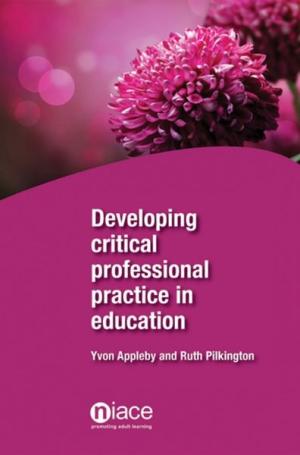
The authors of this volume are intent on promoting the advancement of critical professional development in higher education. They seek to accomplish this by highlighting existing practices and proposing a new model of professional development that is “critical, pragmatic, informed, and flexible” (2). The merits of this new model are said to be its nuance and its attention to the complex and constantly changing landscape of education, particularly higher education. The volume is divided into three parts. Part One focuses on what it means to be a professional, how this term is shaped, and how the discussion surfaces in education. The authors introduce critical professional development as the places where individual growth is shown as a collaboration of individual activity, policy, and institutional and organizational reforms. In support of this model, they advocate the establishment of institutional learning spaces and support structures to achieve their goal. Part Two explores the model’s validity through four case studies. In this section Lynne Barnes and Christine Hough join Appleby and Pilkington in providing examples of the proposed model to enhance teaching and other professional practices. Barnes discusses a training program for deaf teachers, Pilkington explores a framework for professional development, Hough describes her experience in engendering critical thinking in higher education underclassmen, and Appleby discusses her use of writing for professional development. Part Three reflects on these case studies and how they relate to the proposed model. This section also provides recommendations for the implementation of the model and its practice in various organizations. The exploration of professionalism in Part One is dense and jargon heavy, but in this case it is a welcome exception as much of the literature on teaching and learning is filled with clichés and buzz words. The text as a whole is starkly realistic, scholarly, and pragmatic rather than idealistic. As the authors concede, the definition of critical professionalism does not contain any original components; however, it is original in its holistic and practical conceptualization of professionalism in higher education. One limit to the text’s usefulness might be its aim to address both institutional and individual practices. It seems better suited for implementation at an institutional level. Individuals without institutional influence might struggle to implement the model. The text succeeds in providing a model that is not limited by discipline. It provides such a variety of “structures and spaces” (63) that anyone could achieve some benefit from reading the book, while a full implementation of this critical professional practice may be limited. The theory proposed in this volume has wide applicability, and is worthwhile in the fields of theology and religion. Hough’s case study was particularly insightful for those teaching theology and religion. In addition, the entire buffet of professional practices recommended in this text may not be accessible to every reader, but there is certain to be something here for the entire range of practitioners in higher education.
Kate Blanchard Readers, you should close this page right now and not heed another word I say about teaching. The past couple of weeks – despite the fact that one of those weeks was our winter break – I’ve been so utterly preoccupied with a motley collection of issues that...
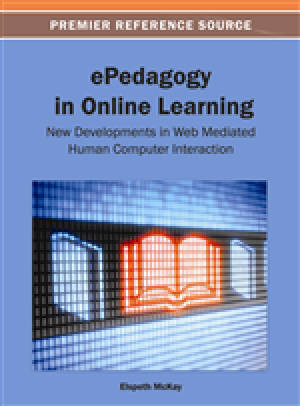
This volume consists of fourteen chapters designed “to provide a useful handbook on adopting interactive Web 2.0 tools that promote effective human-computer interaction (HCI) in ePedagogical practice for education and training” (xv). Each essay presents data for the consideration of educators and administrators who are preparing to be or who are actively involved in virtual education. Primarily, the contributors explore using Web 2.0 tools such as Blackboard/Moodle, Facebook, Twitter, YouTube, wikis, and blogs, but there is much more. The chapters are divided into four sections. The first contains essays to help the reader think clearly about methodology as it relates to the continual evolution of online education. The second section consists of essays focusing on differences between synchronous (everyone must meet at the same time either in physical or virtual space) and asynchronous learning (done on one’s own time, such as watching recorded lectures or using message boards to communicate with other students). The third section focuses on how educators might measure student development in a virtual environment. The final section is the most technical with essays dedicated to the use of software and online systems. This book does not offer quick-and-easy steps for one to follow toward successful ePedagogy. It is dense, heavily technical at points, and it requires readers to set aside time to read attentively. An educator of theological studies will have to creatively search for ways to transfer information to their own setting since none of the essays are directly related to this field. The essays are social-scientific in nature. The testing conditions and criteria are unique to each particular essay, taking place in geopolitical regions as distinct as Australia, Canada, Indonesia, Taiwan, the United States, and Vietnam. The diversity is promising, offering encounters with a wide-array of scenarios wherein Web 2.0 tools function. On the other hand, the principles offered cannot be understood in a vacuum without reference to context. This book may be best used as an occasional reference. In other words, it is not the type of practical book one would read through in a few sessions. The most useful part of each chapter for the casual reader may be the list of works referenced at the end of each study. These short bibliographies invite further exploration. In summary, readers will find insightful academic essays that will assist them in their professional development as educators in a virtual context. The essays are based on data acquired through rigorous research. The uniqueness of each case study requires the reader to actively sift universals from particulars in order to determine what information may assist them in their own work, and the technical nature of the book will require non-experts to familiarize themselves with much of the vocabulary.
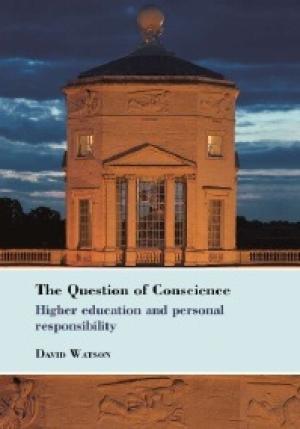
David Watson wades deeply into the various discourses on the state of higher education institutions (HEIs) in the UK (he also examines HEIs in the US and elsewhere), their problems and their prospects, to examine what HEIs say that they do for and to their most important members, award-seeking students. This self-critical look at what he calls “my trade” is for Watson a matter of the “question of conscience” or higher education’s role in shaping students’ moral and civic character. This relatively short book consists of eight dense chapters on Watson’s evaluation of the strengths and weaknesses of the best research literature on what higher education seeks to do through at least five lenses: the “evolutionary” stages of modern university history; the sense participants and observers try to make of them in terms of institutional narratives; the types of “capital” generated by their activities; the chosen pedagogical approaches; and a declared set of “purposes” or intended personal transformations. Titled, “What Does Higher Education Do? A Historical and Philosophical Overview,” the first chapter uses geography as a metaphor to demonstrate that the claims made by the modern universities (post-thirteenth-century) for their existence are previously laid geographical layers, some closer to the surface than others (1). Watson explores one of the earliest layers of university purposes: “that of maintaining, enhancing, and subjecting to supportive criticism the goal of ethical – especially doctrinal instruction” in Chapter 2 where the book gets its title (22). This chapter is arguably the one most relevant for teaching theology and religion. He traces how the university went from being a place for teaching doctrinal allegiances to being a secular place for personal and collective virtue. With the exception of some seminaries, HEIs today have largely eschewed doctrinal allegiances for a more inclusive ethos that embraces those from many faiths or no faiths at all. This does not mean that universities have become completely secular; to the contrary, the former university Chaplain has now become the Student Life Officer (26-27). Watson argues that “wariness about moral education” was replaced with a concern that there had been a decline in ethical behavior in business, professional, and political life (32). Therefore, HEIs evolved to teaching for “character.” The remaining chapters explore the other claims made by HEIs for what they do, including preparing students for vocation (43), rounded or “soft” citizenship (58), capability, and lifelong learning (65). The final chapter, “Higher Education and Personal Responsibility,” is Watson’s theory for what higher education should do: prepare students to exercise personal judgment in difficult circumstances, or “cultivate humanity” (100, 108). If taking this book to heart, it would bode well for those faculty members in theological and religious studies in the liberal arts to look critically at what our institutions exist to do and how we participate in that mission.
Marion Bowl’s Adult Education in Changing Times: Policies, Philosophies, and Professionalism explores the impact of changes in global policy on the field of adult continuing education. She teaches as a Senior Lecturer in the School of Education at the University of Birmingham in the UK. This title is Bowl’s most recent in a long line of publications on adult and continuing education. Bowl states “this book explores how adult educators – their work, their expectations, and the expectations laid upon them – are being affected by the changing political and economic environment” (5). She asks “why, when lifelong learning has been a policy priority for the past 40 years, does publicly funded adult education appear to be fighting for its life? And why do so many qualified, skilled, and experienced adult educators find themselves in an educational landscape that does not recognize or value their contribution?” (1). She begins by tracing the development of neoliberalism and its impact upon adult education specifically in England and New Zealand, examining the scope and definition of adult education and exploring adult educators’ beliefs and values. She then divides the rest of the volume into two sections: “Historical and Political Contexts for Adult Education” and “Adult Educators’ Working Lives Researched.” The first section presents a brief historical overview of adult education, including the impact of the Protestant Reformation, the Enlightenment, colonial expansion, urbanization and industrialization, post-World War II institutions, and globalization. The author pays particular attention to institutions, including UNESCO, OECD, the World Bank, and the European Union. She ends her historical survey by examining the role of professionalism and professionalization in the development of adult education. In the second section, Bowl explores policy and practice using her interviews with sixty-two educators in the field of adult education, evenly split between England and New Zealand. Interviewees were invited to discuss their career histories, their values and philosophies, how the field has changed over their careers, and perceived challenges and opportunities (76). She brings their narratives together to fashion a picture of adult educators’ working lives. Her findings on these educators’ attitudes toward theory, particularly the approaches of Paulo Freire and Carl Rogers, provide some interesting conclusions. In addition, her discussion of the factors impacting career identity are very insightful. Bowl ends her book by offering lessons for changing times (153). This is arguably the strongest chapter of her book and deserves to be expanded. She argues that the shifts in adult education – the growing emphasis on economic ends, marketization, the view that adult education is an individual responsibility, and tighter monitoring of educator standards – have deeply impacted the field. She advocates for a stronger linking of political engagement with pedagogical approaches; argues against hegemony in education, including preordained outcomes; supports more scrutiny of the use of power; and argues in favor of a stronger exercise of agency by educators. Finally, she notes that educators must be more willing to engage theory and politics for a “re-birth of radical education” (166). This book is well written and contains an excellent bibliography which provides a road map to these areas of the professional literature. The historical overview, however, is very limited. For example, the Protestant Reformation receives only one paragraph, and the book’s scope covers only England and New Zealand. Despite these limitations, Bowl’s scholarship provides a great starting point for explorations into these subjects in other contexts. Even though Bowl does not address theological education, adult education remains an important topic for theological education. Theological continuing education needs more discussion about its theoretical foundations and approaches, and Bowl provides a good starting point. Adult Education in Changing Times would make a good addition to progressive theological libraries with strong educational programming and terminal degrees with tracks in religious education.
Henry Giroux’s well-researched Neoliberalism’s War on Higher Education is an unapologetic reminder of what is at stake for institutions of higher education and the academy: “Privatization, commodification, militarization, and deregulation are the new guiding categories through which schools, teachers, pedagogy, and students are defined” (36). Giroux reminds us that education is not politically neutral and that neoliberal ideas are driving how and what professors are allowed to teach. According to Giroux, “This pedagogy of market-driven illiteracy has eviscerated the notion of freedom, turning it largely into the desire to consume and invest exclusively in relationships that serve only one’s individual interests. Losing one’s individuality is now tantamount to losing one’s ability to consume. . . Shallow consumerism coupled with an indifference to the needs and suffering of others has produced a politics of disengagement and a culture of moral irresponsibility”(6). Giroux’s concern is that institutions of higher education have moved away from being places of intellectual and civic development and instead have become market-driven businesses. Students and professors are no longer allowed to engage in the art of democracy and ideas, rather students have come to be seen as consumers and professors as cheap labor. According to Giroux, “What is particularly troubling in US society is the absence of the vital formative cultures necessary to construct questioning persons who are capable of seeing through the consumer come-ons, who can dissent and act collectively in an increasingly imperiled democracy” (70). This book should be read by anyone dedicated to higher education, but it is especially useful for those teaching in the humanities. Many faculty in the humanities have been forced to sell themselves and their programs in business language to deans and presidents who are under constant stress to find funding, some going as far as finding corporate or wealthy sponsors to fund departments. In such an environment, disciplines such as philosophy, religious studies, and theological studies can be seen as irrelevant and unnecessary. Giroux’s response is to develop critical pedagogies and to encourage faculty to reclaim their roles as public intellectuals. “[A]cademics have an ethical and pedagogical responsibility not only to unsettle and oppose all orthodoxies, to make problematic the commonsense assumptions that often shape students’ lives and their understanding of the world, but also to energize them to come to terms with their own power as individual and social agents” (99). Faculty must model this behavior in their teaching and intellectual endeavors and become “border-crossers”(101). For those teaching in religion, theology, and philosophy, Giroux’s book is important because contemporary higher education classes are where students ask critical questions. Many of their questions are moral and ethical and have political implications. Contemporary humanities classrooms may be one of the only places on campus where students are not told what to memorize or the regulations needed to become better pre-professionals. Giroux forces teachers to think about how they teach and why they teach. For him, teachers have the responsibility to ask students to think and act differently for shaping the world. Giroux’s hope is that teachers will raise up a generation of democratically-minded and justice-oriented citizens. Henry Giroux’s Neoliberalism’s War on Higher Education is a welcome resource for faculty facing retrenchment, a loss of democratic value-based curricula, or who want to better understand how policies, politics, and the economy are connected to the future of higher education. The author provides examples of how faculty and students have responded to neoliberalism and a corporate model of higher education.
Women involved or interested in leadership in higher education will find this book to be at turns inspiring and somewhat painful to read. Any woman who has held a position of leadership likely shares similar stories of personal sacrifice and institutional prejudice; indeed, many of the stories in this book paint a picture of academia as hostile, male territory. Tanya Fitzgerald manages to add a twist to this tale in the way she weaves together stories from her ethnographic research with senior women leaders in universities in Australia and New Zealand. Her work focuses primarily on the trials and triumphs of women as they extend themselves mentally, emotionally, and physically in their jobs, but the book manages to offer a sense of hope in part because the author chooses to frame her analysis around the experiences of Indigenous women. This inclusion and focus gives the book leverage in a field flooded with similar studies. Fitzgerald uses the experiences of these women to show that women’s encounters with academic institutions are best described as “continuous struggle and compromise” (25) that nevertheless opens the way for new ways of conceiving of leadership in higher education. Fitzgerald teases out the complexities of the tasks facing women who oversee diverse staff, who are expected to “think big” while handling minutia, and who serve as mentors for women wanting to break into the leadership roles. Women’s lives as academic leaders is, in one word, “messy.” Fitzgerald is also appropriately attentive to disciplinary context and institutional climate, and her subjects come across as real individuals in real circumstances. Her overall goal is to push up against the myths that keep women as institutional housekeepers or otherwise limit their potential as leaders (22) and she manages to do that, albeit in a limited and incomplete way that fits with the stories she includes. She is careful not to advance any “grand narrative,” preferring instead to celebrate the individuality of her subjects as they improvise their lives. The myths being shattered here include the myth of opportunity (which assumes that gender equality is established) and the myth of what leadership ought to look like and how women ought to behave (17). Overall, Fitzgerald paints a picture of academia as a land alien to women and women’s ways of being, so that women who find themselves in position to lead often have to adjust to the rules or courageously make up new rules. Fitzgerald highlights the precarious positions held by women in leadership roles, and she ends on a point of hope that seems a bit of a stretch based on her evidence. Nevertheless, I would recommend this study to any woman (or man) in leadership, either in higher education or the clergy. Although Women Leaders in Higher Education does not focus much on teaching, many women in higher education will find themselves faced with the question of whether to move into administration. This book will shed light on that personal and professional choice.
In this superb book, sociologist Frank F. Furstenberg offers readers a sweeping description of the five stages of an academic’s career from graduate school, to choosing a career in (or outside of) the academy, to tenure review, all the way to retirement. The author, who is an Emeritus Professor of Sociology at the University of Pennsylvania, provides graduate students and professors his personal reflections on the many twists and turns that every PhD will face in his or her career. In today’s difficult economic climate, coupled with the precipitous drop in enrollments in the Humanities across the board, Furstenberg’s realistic explanation of what it takes to succeed while traversing the marathon of graduate studies and then landing either a research or liberal arts teaching faculty position should be mandatory reading for anyone considering a doctorate in religious studies. While an academic career is rightly coveted by many young and ambitious minds coming out of college, this book in many ways provides a much-needed reality check. The book contains five chapters. In Chapter 1, “Entering Graduate School,” the author chronicles the various professional and emotional stages that graduate students experience. He emphasizes the amount of hard work, consistent self-doubt, and high level of competition that students face, and provides information about doctoral exams, writing a dissertation, dealing with faculty, and retaining funding. Chapter 2, “An Academic Career or Not?” delineates the various options, or plan B’s, that a recent PhD has with respect to finding meaningful work, alongside some sobering statistics about the slashing of available positions of tenure-track jobs in today’s market. Furstenberg explains the steps one goes through when searching for an academic position (for example, the application process, postdoctoral fellowships, campus interviews, and contract negotiations). Chapter 3, “Being an Assistant Professor,” describes the many challenges experienced when transitioning from graduate student to professor. Among the important topics the author discusses are acculturating to one’s home department, building a positive rapport with colleagues, choosing how and when to live up to the expectations of service, and managing the often heavy burden of teaching, all while not allowing one’s research to lag. With respect to research, the author includes useful advice on how to circulate one’s work and network at conferences and other venues. The chapter concludes with a helpful ten-page treatment of the nuts and bolts of the tenure process. Chapters 4 and 5 are concerned with the new tests that PhD’s face in the middle and end of their careers, such as avoiding complacency, grappling with intensified responsibilities of university and disciplinary service, training graduate students, and considering retirement. As the author himself notes, most of the publications on academic careers center on the beginning stages of one’s career, so these two chapters represent a unique contribution to the literature. In sum, Behind the Academic Curtain is an excellent summation of the stages, rewards, and challenges that every PhD in religious studies will face in his or her career. Tenured professors will be less likely to pick up this book to find new revelations or affirm what they already experience, but they should nevertheless know about it and may want to assign it as mandatory reading for undergraduates interested in graduate school, or graduate students working under their tutelage, who remain unclear about the path ahead of them.
Written from an Australian higher education perspective, the information in this volume could be useful to anyone engaged in teaching, supporting, or recruiting prospective students in tertiary institutions (xi). It is a worthwhile (beneficial) resource for educators desiring to transform classroom pedagogical practices and approaches into ones that are user friendly, foster social inclusion and academic excellence, and are convergent with the pluralistic student population they serve. Drawing on the expertise of multiple authors and a carefully constructed critical educational methodology, the book is divided into three sections. The first section introduces readers to the key terms and conceptual reasoning that underpin the participatory research used throughout the text. The second section (chapters 2 through 6) consists of selected student stories or case studies that provide windows of understanding about issues students face as they engage higher education and the educational and social factors that contribute to academic success. The authors contend that student voices serve as “organic educational theorists,” and thereby reinforce the authors’ claims that inclusive pedagogies must reflect the active involvement of the learner in achieving their own learning goals. The case studies themselves were “developed over the course of a longitudinal research project that investigated how students from diverse backgrounds succeed in higher education” (20). The students represent Australia’s multicultural population and include both on-campus and distance education students. They also represent varied social-economic, ethnic, gender, and age groups. The authors state, “While participants’ backgrounds and experiences differed, they shared interrupted educational biographies with no clear pathways into higher education” (20). The authors state that “students from diverse backgrounds require more time to fully comprehend course material, to integrate new knowledge into their existing frameworks and make sense of it”(120). Other insights provide food for thought for anyone working with students facing both academic and cultural challenges. For example, higher education approaches in Australia often demand more classroom participation and discussion than what students may be accustomed to in their countries of origin. Hence, a degree of adjustment by students is required for success. Other case studies highlight the experience of nontraditional age students who began their studies in their forties. These case studies provide insights about the role of social obligation and self-reliance in their own learning goals. As one student stated, “I was never going to give up right from the start, because I wanted a good solid qualification that would get me a job” (213). Additional factors mentioned by students in support of their academic success included family support and encouragement, mentoring, stable finances, internships, and the usefulness of student services. The discussion questions found at the end of every chapter are a welcome resource for educators. These questions are insightful and could easily be used in a variety of university forums to conscientize faculty. In addressing mature students, the authors raise the following question: “How do you currently support adult learners while respecting their adultness? What changes could you make in your current practice to assist mature age students to cope with study and the demands of on their time and energy from other life responsibilities and situations?” (159). In the final chapter the authors discuss the implications of the cases for university staff and conclude with a summary of suggested strategies for managing and supporting student diversity and higher education. What make this book significant is that it not only sensitizes educators to the challenges faced by students coming from non-traditional backgrounds, but it also incorporates solid methodologies to highlight needed improvements in the classroom. Having read and experimented with the book’s ideas in my own teaching I can attest to its usefulness.

As a non-Latina author, I was moved and enlightened by this compilation of twenty-two writings, weaving complex narratives from across the Americas with heritage(s) in US-American, Cuban, Mexican, Colombian, Guatemalan, Panamanian, black, Dominican Republic strands and more. Jennifer de Leon states her purposes: to dispel stereotypes of Latinas, fend off their isolation in higher education, invite activism toward social justice, and offer opportunity for each contributor to share her unique voice and wisdom (4-5). I myself stand in a line of women writing for change – Women Writing for (a) Change, located in Cincinnati, Ohio, with affiliate sites across the country – so these stories drew me all the way in. The book contributes well toward its aims, though the challenge remains for the reader to make the necessary transitions from authors’ narratives into concrete action for change. This is a liberationist text for cultural and women’s studies, college freshman seminars, educational ministries, and various creative and essay writing courses in postsecondary education. Wise Latinas locates itself well within feminist, mujerista, and liberationist reflections on higher education, specifically in the areas of pedagogy and narrative. I was reminded of True Confessions: Feminist Professors Tell Stories Out of School, edited by Susan Gubar (W.W. Norton, 2011), though de Leon’s compilation expands horizons by attending to “rooms of their own.” The organization of the work into four sections holds the reader’s attention in a persuasive arc – Worlds Apart, Rooms of Our Own, Inside These Academic Walls, and In Tribute, In Time. Each section touches themes of voice (lost and found), body, family (especially daughter norms), virtue, worth, intellect, belonging (and socialization away from belonging), hospitality (often unwelcome or misunderstood in fragmented, highly mobile US contexts), gender, orientation, race, and more. Unable to do justice to each essay, I offer only a couple observations. Celeste Guzman Mendoza offers a bold, integrative writing in bilingual prose – “Las Otras” – relating her surprise at the commonalities across ethnic identities while holding to her own distinctive communicative medium, a mix of English and untranslated Spanish. I loved the demand to confront Spanish (or ignorance of it) in the reader. In “Rapunzel’s Ladder,” Julia Alvarez offers a stinging summary of higher education’s disempowerment of cultural traditioning (by schooling) and asks crucial pedagogical questions for social justice education. Chantel Acevedo’s reflections name the difficulty for a woman leaving home for school before marriage – Cuban ‘exile trauma,’ she calls it – which prefigures a difficult journey in the often nomadic academic life. One painful paradox arose in several writings: substantial parental pressure to succeed in school simultaneous with their great displeasure upon daughters leaving home to pursue said education. Throughout, the strengths of Latina wisdom arise out of hard won experience and culturally-rooted heritage awash in a world that can overwhelm. Wise Latinas is a good read, with narrative essays, poetic dialogues, and creative expression of the journeys many Latinas in higher education have travelled. One intention was to combat the isolation Latinas face there. A happy side effect is that outsiders are invited to listen and learn, attuned to this distinct expression of an existential isolation that higher education – as currently configured – seems to insure.
Wabash Center Staff Contact
Rachelle Green, Ph.D.
Associate Director
Wabash Center
greenr@wabash.edu