Resources

Molly Bassett Associate Professor of Religious Studies Georgia State University In her introduction to Animals in the Four Worlds: Sculptures from India (1989), Wendy Doniger observes that animals and gods inhabit the borderlands of human communities, and as I mention in a piece for Religious Studies News, this notion frames...
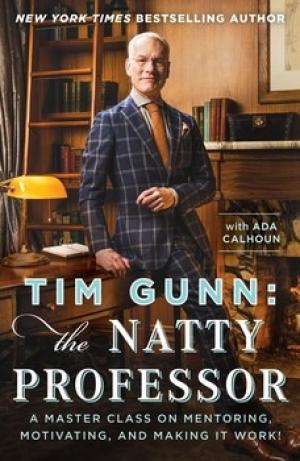
We are used to seeing Tim Gunn as the mentor on Project Runway, forgetting that Gunn is a teacher and chair at The New School’s Parsons School of Design where he also was a dean. The Natty Professor is part memoir, part reflection in which Gunn explains his T.E.A.C.H. philosophy, which involves: Truth-telling: “Injecting reality into situations” (xviii) . . . “because the world certainly will” (xvii). Empathy: Compassionate understanding of students’ experiences (75). Teachers evaluate the strengths and weaknesses of each student to help her become who she is as a thinker, not to shape a “mini-me.” Asking: Presenting insightful, tough questions, but also listening to help students ask and translate questions into practical application. For Gunn, good questions are the key to teaching, signaling creative curiosity. Questions also lead to cultivating and being in community: locating oneself where one is so as to open new paths in learning (178). Gunn urges us to keep curiosity supple by reading, traveling, and going, for example, to museums. Cheerleading: Supporting our students and helping them achieve their visions, even if we would do things otherwise (189); but also Hoping for the Best: Letting go because, in the end, it is up to them (223). Teachers cannot do the work for students. Gunn discusses difficult issues here, like discipline and grades. Gunn explains his principles through positive experiences, as well as through problems that teachers face, from making sure students read the syllabus to curriculum development. He also analyzes bad teaching: the bullies, the authority abusers, and the “drones,” the burnt-out and bored (156), saying that if you do not love it, leave. Interspersed through the book are testimonies from a variety of people about their most influential teachers. Three elements struck me strongly. First, perhaps because his is partly a practical field, Gunn offers powerful insights about mentoring, helping a student to reach her vision (13), which uses creatively, and sometimes transgressively, the skills and knowledge we teach. Second, Gunn cannot abide “preciousness.” Work will be shared with audiences: students become professionals in the world. Finally, Gunn argues that all and a variety of knowledge is important because, “Nothing . . . is ever wasted” (xv). Knowing generates capacities to adapt and to draw on knowledge so as to work effectively with challenges at hand. This is a good response to those who question the humanities’ demands for reading and writing with care within traditions and conventions. Diversity is also knowledge, serving us all as we work with a variety of persons, experience their knowledge and practices, and learn from them. I will watch Tim Gunn on Project Runway and Under the Gunn differently after reading his book. He is a wise master teacher in love with all classrooms. “Love your work!” above all (245). Gunn, as an administrator, teacher, and human being has much to teach us. I will be stealing shamelessly from his wisdom.
Increasing skepticism regarding the value of traditional grading, mounting student debt, and low degree completion rates has led to escalating pressure on North American universities to provide evidence of assessment of student learning. Beyond standard letter grades, it is claimed, there are methods that can provide tangible proof that students are – or are not – learning (Astin, “The Promise and Peril of Outcomes Assessment,” The Chronicle of Higher Education). Ideally this information assists universities in shaping the “new normal” of higher education (2). This new normal, the authors argue, often imposes assessment from above; as a result, many university faculty are either apart from assessment-measuring or are excluded from the conversation regarding why additional assessment measures might be needed and how to use the information once it is gained. This latter point is the focus of this collection of essays, Using Evidence of Student Learning to Improve Higher Education. Written with various assessors in mind – from faculty to governing boards (12-17) – the essays are all rooted in the authors’ collective desire to make assessments consequential (20); only by putting assessment data to work for the institution will the data be made meaningful. Kuh and Ikenberry, the principle co-investigators of the project (xiv), organize the topic of student assessment as a tool for the advancement of higher education into three helpful modules. After an introductory chapter that highlights the need for university campuses to move from compliance to active ownership in the assessment process (1-26), the collection is divided into three parts, each of which contains articles that pertain specifically to the various constituencies. “Part One: Making Assessment Work” (27-96) is comprised of three chapters. Hutchings, Kinzie, and Kuh’s “Evidence of Student Learning: What Counts and What Matters for Improvement” (27-50) highlights the variety of assessment methods as well as their respective strengths and limitations. This chapter reminds the reader that whether or not the vocabulary of “assessment” is employed, faculty are always engaged in the process of assessing student learning through assignments, surveys, exams, rubrics, and portfolios, even if not all recipients of this data consider it as such. This is a helpful chapter for religion faculty who might struggle with questions about how to assess student learning in a subject often fraught with individual meaning and significance and that stands quite far, by comparison, from a student’s relationship with other subjects (such as algebra or physical education). According to Kinzie, Hutchings, and Jankowski, an essential – and often neglected – second step in the assessment process is making use of the data. In “Fostering Greater Use of Assessment Results: Principles for Effective Practice” (51-72) and “Making Assessment Consequential: Organizing to Yield Results” (73-91), the authors carefully distinguish between “doing” assessment and “using” assessment; beginning with a brief history of the process, they trace effective use from the microcosm of a single course to the macrocosm of an entire institution. In particular, they emphasize that the collection of assessment data and its use must ultimately fold back on itself, closing the continuous loop of evaluation that ends with the next question: “What was the impact of the change?” (71). Methodically similar to the first section, “Part Two: Who Cares? Key Stakeholders” (95-182), draws a valuable line in assessment-use analysis through four chapters. Casting their net quite widely, authors Cain, Hutchings, Ewell, Ikenberry, Jankowski, and Kinzie collectively affirm that faculty assessment is at the heart of educational development, assessment impetus must shift from exterior motivation to interior, and that assessment must be supported at all levels of the institution. For the past three decades, Kinzie, Ikenberry, and Ewell conclude in “The Bigger Picture: Student Learning Outcomes, Assessment and External Entities” (160-82), external bodies have been imposing assessment data collection, much of which has consisted of a bare minimum of electronic catalogues; while this external interest is warranted, those who benefit most by harnessing evidence of student learning are those who stand closest to those being assessed: faculty. The final section, “Part Three: What Now? Focusing Assessment on Learning” (183-236), addresses two noteworthy elements of assessment projects: the weariness that plagues faculty who often face overwhelming demands for greater and more evaluation of their profession, and ways in which assessment results can be shared with appropriate constituencies. While Kuh and Hutchings’ “Assessment and Initiative Fatigue: Keeping the Focus on Learning” (183-200) highlights strategies to avoiding the inevitable fatigue by suggesting that faculty share the burden of assessment, that short-term projects be considered, that clear links to campus learning goals be identified prior to the work beginning, and that the work of assessment be balanced by scaling back other tasks. While the final chapter, Jankowski and Cain’s “From Compliance Reporting to Effective Communication” (201-19), focuses on the definitions and use of transparency in the successful relation of assessment data, the multi-authored conclusion, “Making Assessment Matter” (220-36), both summarizes the current context of assessment in North America, and offers thoughts regarding emerging trends and forces in higher education. The American Academy of Religion White Paper, “The Religion Major and Liberal Education,” rightly claims that assessment in religion, religious studies, and theology is challenging due to a variety of important factors, including the constantly evolving nature of the discipline, the interdisciplinarity of religious studies, the lack of accrediting bodies to supervise content, and the ambiguity regarding career paths for graduates in the field (https://www.aarweb.org/AARMBR/AARMBR/Publications-and-News-/Data-and-Studies-/Teagle-Study.aspx). Nevertheless, religion, religious studies, and theology departments must face the challenge of assessment initiatives the same as any department; on a purely pragmatic level, it would be helpful to face the challenge of assessment with the valuable essays provided in Kuh and Ikenberry’s collection.
In Academic Freedom at American Universities,Philip Lee presents a convincing case for transforming higher education with respect to protecting and encouraging true academic freedom of professors – in both public and private university settings. In six chapters, Lee discusses: the crisis of academic freedom in modern universities and the American Association of Universities Professors (chapter 1), the AAUP’s first policy declaration in 1915 and its struggle to defend academic freedom (chapter 2), the AAUP’s seminal 1940 statement and judicially defined academic freedom during the McCarthy era (chapter 3), modern constitutional conceptions of academic freedom (chapter 4), the limitations of constitutionally-based professorial freedom (chapter 5), and contract law as an alternative and better professorial academic freedom (chapter 6), an expounding of the author’s central proposal. Lee chronicles the shortcomings of constitutionally-based academic freedom and appealing to the First Amendment alone, which he seeks to demonstrate has failed to sufficiently protect public institution professors, while not even applying to private university faculty. Thus, Lee proposes an alternative remedy: “developing a body of contractually based academic freedom case law,” which will “greatly expand the ways that courts protect aggrieved professors when their interests diverge with their employers’” while also allowing for “the proper consideration of the custom and usage of the academic community as either expressed or implied contract terms in resolving disputes between universities and professors” (145-46). The author adds that this contract law approach would also entail the courts giving greater attention to specific campus contexts rather than seeking to create universal remedies that inevitably fall short of fitting certain campus settings. Professor Lee’s research demonstrates substantial mastery of the subject matter and relevant materials – no less for matters dating from the pre-AAUP period through its founding and early years of development to its expanding influence and most recent iterations. Lee’s work evidences careful scholarship that includes extensive collecting, scrutinizing, and evaluating of various crucial events, court cases and findings, written opinions, and other relevant materials spanning the AAUP’s organizational history. Particularly insightful is the author’s discussion of the 1918 report on academic freedom in wartime and the report’s multiple contradictions to the 1915 declaration’s principles, culminating in actual “retreat from professional self-identification in deference to the government’s claimed needs during wartime” (33). Also instructive is Lee’s examination of the shift in focus and language between the 1925 and 1940 Conference Statements – mainly from a prescriptive list of university “don’ts” to descriptive university teachers’ rights with the latter’s garnering of widespread acceptance (47) and approval within the bounds of most religious schools as well (64). The author’s writing style is consistently clear and engaging – no mean feat considering the rather technical and procedural materials encompassing much of this book. Philip Lee’s Academic Freedom at American Universities presents an important argument for an alternative – contract law – foundation for professorial freedom in the academy. I recommend the book as a valuable resource for all public and private higher education institutions, particularly their faculty and executive administration.
This book is meant to be put into someone’s hands in the months before they begin college, but it also serves as a useful tool for anyone contemplating returning to school after time away – adults getting ready to begin seminary, for example, after years in first or second careers – or for anyone wishing to become a “life-long learner,” whether in formal academic circles or in private life. Written in accessible language and peppered with illustrative examples, this slim volume blends common sense – such as eat a healthy, balanced diet, make time for regular exercise, get enough sleep, don’t cram – with a wide array of insights from neuroscience research and learning theory of the last fifteen years. Both authors have extensive experience and publications focused on the integration of cognitive research, biology, and learner-centered teaching: Doyle at Ferris State University and Zakrajsek in the Department of Family Medicine at UNC-Chapel Hill. The topics covered in the eight main chapters focus on learning and: sleep, exercise, the use of multiple senses, discovering and utilizing patterns, memory, “fixed” versus “growth” mindsets, and paying attention. Each chapter quickly sets forth recent pertinent research, then concludes with five to ten summary points. Much of the material in the early chapters confirms common sense: getting enough sleep and exercising regularly are necessary for both learning and memory. The brain needs “down” time to process new information. Because sleep and exercise are so foundational for learning, these topics pop up repeatedly in subsequent chapters, especially in the discussions of memory and paying attention. The discussions in chapters 4 through 8 take up facets of cognitive and learning research that move beyond common sense. Where two or more senses are put to use both learning and memory increase: for example, listening and reading, or reading aloud, or sight and touch. Even studying near the scent of roses has a positive impact. Elaboration is another key: the more routes one takes to the goal – such as via concept maps or annotating the pages of books – the stronger the learning. One chapter describes many ways of discerning patterns and “chunking” blocks of information to help make learning easier and faster. The chapter on memory reminds us that cramming is not nearly as effective as “distributed practice,” processing material in smaller bites over a longer period of time, which gives the brain time – it needs at least an hour – to do its work. This means that taking classes back-to-back, with little or no break in between, is nearly always a bad idea, especially in regard to the material in the first class. Resting between classes or learning activities, as well as taking short naps and breaks, daydreaming, or going for a walk or run, turn out to be essential for effective learning. Many students are told in elementary school how smart they are, as if learning is a fixed attribute, rather than being praised for the hard work they are doing, which affirms their learning as a process of steady “growth.” As a result, they often have difficult transitions in middle school and beyond, where the material demands more and more effort. Long-term success is a result of steady work and effective learning strategies, not intelligence. The New Science of Learning’s extensive use of citations provides lots of trails to follow if the reader is inclined to go deeper, but also makes the book choppier and less engaging than if the authors had rephrased the information in their own words. But this is a minor quibble. I plan to give a copy of this book to my son, who will start college next year, as well as my daughter, a high school sophomore, mostly because I learned so much about how to learn that I wish I had known long ago.

Nancy Lynne Westfield Associate Professor of Religious Education Drew Theological School Though this particular meeting of the Academic Standing Committee was five or six years ago, my memory of a request as filed by a student yet lingers. Bonnie, not her real name, was petitioning for a grade change from..
Dr. Molly Bassett Associate Professor of Religious StudiesGeorgia State University “Timeliness is next to cleanliness and godliness; we don’t want to waste a minute. Plus, I’ve been looking forward to this moment since at least January, and it was hard to sleep a week ago.” That’s how we began..

One of my favorite cartoons depicts a bowling pin on a psychiatrist's coach. There is a diploma on the wall, a plant in the corner, and a therapist with notepad sitting behind the disconcerted bowling pin character. The caption has...
Nancy Lynne Westfield Associate Professor of Religious Education Drew Theological School Baby Suggs, holy, is an enslaved, woman in the novel Beloved, by Toni Morrison. In the passage cited below, Baby Suggs, holy is preaching in the woods on a Saturday afternoon. Baby Suggs, holy stands on a huge flat-sided.

Wil Gafney Associate Professor of Hebrew Bible Brite Divinity School When and where I enter, in the quiet, undisputed dignity of my womanhood, without violence and without suing or special patronage, then and there the whole Negro race enters with me. Anna Julia Cooper Student enters. Looks at me, looks at other students, looks back at me. Is this room 101? Looks at me, looks at other students, looks back at me. Is this Hebrew? Looks at me, looks at other students, looks back at me. Are you teaching it? There is no place that race is not present and...
Wabash Center Staff Contact
Rachelle Green, Ph.D.
Associate Director
Wabash Center
greenr@wabash.edu