Resources
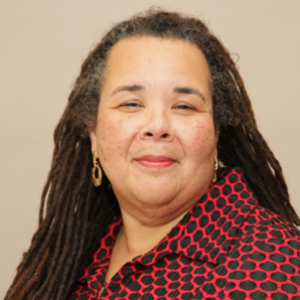
Have you ever thought you knew something, only to discover, with the passing of time and the acquisition of experience, that there was more depth, breath, and nuance to the idea or situation than you had previously thought? Or, worse yet, have you ever found out that something you thought you knew was simply – inaccurate, outmoded, or outdated? Physicists are still working to understand the nature of light as well as the nature of gravity. Every 100 years or so there is a break-through which brings new clarity, more scientific accuracy, a better grasp of the basic concepts of light and gravity. Each time there is a new discovery, fellow scientists work to refute, amend and/or build upon the fresh claim. The intricacies of the universe are still being uncovered, discovered, created. I want my students to approach their work of ministry like these physicists. I want them to work at contesting the current conventions of church/theology/faith as an obligation of discipleship. I want them, as part of their role and responsibility of religious leadership, to work toward new approaches, perspectives, and worldviews which will evidence the profound complexity of praising God and serving neighbor for such a time as this. Alas, too often my students simply want me to tell them what to think – “just tell us the truth/the recipe/the formula” …. as if truth and theology are static, or even knowable. I am trying to get my students “to think new thoughts about old ideas” (an Emilie Townes phrase). I am trying to get my students to think as if the context of the digital age has made us pioneers in a new social and religious experiment – because I actually think it has. I want my students to yearn to know better. Re-examining what we thought we knew, nurturing curiosities for what others say is important, realizing that multiple, even opposing perspectives are likely simultaneously “right” while other tried-and-true perspectives need to be abandoned often leaves students flustered – especially those who came looking for the one true truth and the one true religion to match their own one call to ministry. Defending “one” in the age of multiplicity is like lashing yourself to the ship’s mast in a high-tide thunderstorm. I am aware that my students quickly learn rote answers to deep questions. They quickly read the culture and politics of the academy and substitute their churchified answers for answers provided by faculty. This is not increasing their knowing better. This is simply trading the milk cow for the bag of magic beans. Knowing better demands a suspicion that all there is to know has not yet been interrogated. It leans heavily upon the notion that God is mystery and God reveals God’s self in God’s own pace and rhythm. Students talk about God as if “he” is the uncle in the attic; as if all we need to know about God is known; as if the repertoire of God has been performed. Save us oh God from our lack of curiosity about you and your ways. Knowing better is important to me, in part, because of my mentor Charles Foster. I am a womanist, an outspoken, unorthodox, sometimes Christian scholar shaped and influenced by a reserved, white, man who passionately believes in the redemption of the world through the gospel of Jesus. People who do not understand the racial identity politics of the USA or of the racist/sexist academy are surprised to know my beloved mentor is a white man. My knowing better about speaking out against racism, sexism - the hegemonic forces of the US society is possible, in part, because of the loving and steadfast nurturing I received from Chuck. A man of his convictions, he believed the New Testament writers who envisioned the Kin-dom of God as something other than a land of patriarchy and white supremacy. Even though he is not a womanist, Chuck gave birth to a womanist. The ways of God are remarkable – a holy mystery! During the first session of Introduction to Educational Ministries Chuck was on my mind. I thought of this quote. Charles Foster said, “…the most serious threat to any community’s future occurs when its education can no longer maintain its heritage into the present or renew its identity or vocation for its changing circumstances.” More than anything, I want my students to be able to maintain the changed and changing Christian heritage while finding new and needed ways to renew its identities and vocations all the while surviving in the unprecedented liminality of the 21stcentury. If we are to be Christian in the future, we need to pay attention to Chuck’s wisdom in the present. I want my students to be more than lukewarm church bureaucrats whose primary question of ministry is “Do the people like me.” Knowing better entails having an urgency about the relevance of a Christian vision for a pluralistic and technological global village – I learned this from Chuck.
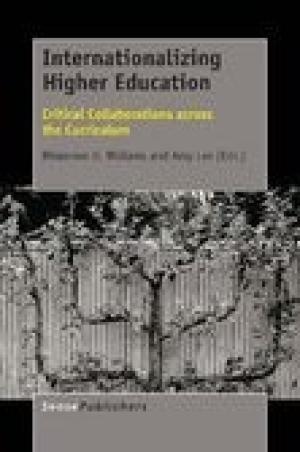
This collection showcases a wide range of approaches to the problems and promises of internationalizing higher education in meaningful and sustainable ways. The essays recognize that these efforts take place in a rapidly changing world, with new technologies and changes in funding and student enrollment patterns affecting efforts to internationalize curricula and campuses. In recognizing these systemic issues, the editors and authors note that many internationalization efforts are undertaken on an ad hoc or case-by-case basis with little effort to systematize and broaden support for internationalization initiatives. These essays together aim to “investigate, to better understand, and to inform intercultural pedagogy that supports the development of mindful global citizenship” (xii). One of the salient findings of the collection is that successful efforts tend to embrace uncertainty rather than tight strictures and rules. Another is that institutional support is necessary for any internationalization efforts to permeate campuses and become integral parts of undergraduate experience. Authors from across the globe and from very different institutional contexts contributed to this volume, with the University of Minnesota very well represented. The book is helpfully divided into three sections. The first, “Mindful Global Citizenship: Critical Concepts and Current Contexts” takes a bird’s-eye view of undergraduate education through the lens of internationalization. The second section, “Developing Intercultural Programs and Practitioners,” focuses more on faculty development and institutional infrastructure that can support internationalization. The third section, “Critical Reflections from Across the Curriculum,” focuses more narrowly on particular disciplines or courses with faculty development and graduate education in the mix. This section provides insight into the ways courses and curricula integrate internationalization in varying ways, and these essays provide the most detail about course and classroom experience. The most relevant essays for readers of this journal are in this third section. These include Solheim et al.’s “Illuminating a Course Transformation Journey”; Gibson et al.’s “Social Media and Intercultural Competence: Using Each to Explore the Other”; Hammell et al.’s “On Becoming a Global Citizen: Critical Pedagogy and Crossing Borders in and out of the University Classroom”; and Jackson’s “ ‘Unpacking’ International Experience through Blended Intercultural Praxis.” Each of these essays relies on meaningful data (mostly qualitative) and contains sufficient detail about process and product to make some of their work replicable. Each also embraces a call to reflection, which helps each essay feel more complete. Perhaps most valuable here is the recognition that internationalization does not just mean study abroad or international student exchange. Rather, internationalization can happen through, for instance, social media, films, and learning communities on campus. In short, internationalization can be anywhere and everywhere. Overall, the essays in this collection are of varying quality, and several contain grammatical or typographical errors. That aside, the subject matter is likely appealing to many who teach religious studies or theology in higher education, as international perspectives are often the bread and butter of classroom experience. This book will appeal most particularly to those who are interested in building programs or courses that intersect with institutional internationalization efforts.
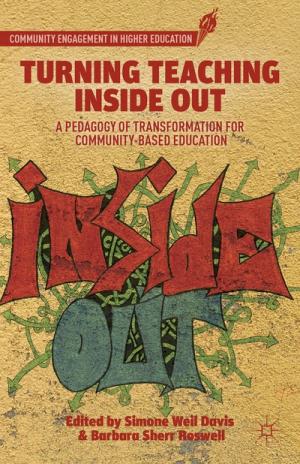
Debates about the purpose and quality of education tend to center on evaluative tools and the number of persons successfully completing courses of study. The assumption being that education’s primary purpose is to prepare a workforce for a competitive market place. These and several other assumptions about the process and goals of education are challenged in the encouraging text Turning Teaching Inside Out: A Pedagogy of Transformation. This collection of essays written by participants in the Inside Out Prison Exchange Program describe and analyze a pedagogy that in form, content, and process reflects the educational goals of developing critical thinking skills, integrative learning for comprehensive application, and empowerment. For those who value education as the forming of persons who can positively contribute to and impact society, this program is an affirmation of the promise and power of liberative pedagogies and service education programs. The Inside Out Prison Exchange program brings together students from universities and prisons to study and learn, initially about the criminal justice system and its social implications, but now encompassing a wide range of subjects: sociology, philosophy, performance art, social work, literature, and law. A liberative model based on the seminal work of Paolo Freire, students and teachers come together across multiple lines of difference to critically reflect on the social issues that impact and contribute to this nation’s alarming incarceration rate, especially of people of color. Utilizing a dialogical methodology, questions are raised, not only about the content of issues, but also about the very process of learning. A space of respect and mutuality is created through icebreakers and small group work, the negotiation of norms, and expectations. Learning is engaged with the basic assumption that all present are both teacher and student. Questions and dialogue lead to strategies for change and when the semester is over, many commit to the ongoing work of community education through projects that expand their experience to incorporate institutional decision makers, politicians, family members, and community organizations dedicated to improving the criminal justice and educational systems. These think tanks and policy development groups lead to praxis, concrete engagement of the systems that impact and contribute to the violence, and social integration explored in the class setting. The ripple effect moves beyond the prison walls and even the collaboration necessary to run this program and expand it internationally are a product of the mutual and collaborative relationships formed through this Inside Out transformational pedagogy. The essays include historical analysis of the current prison industrial complex, the personal transformation that humanizes social service professionals, the community and political organizing of alumni and the different contexts in which this model has been successfully applied, as well as articles about research methodologies and variations and outgrowths of the original program. The appendices helpful, offering models of the activities and frameworks utilized by the program. These first hand reflections provide rich material for analysis and application useful for all educators. I was left wanting more detail about the setbacks and challenges, especially as the program was replicated and expanded to different contexts. Some strategies are suggested (for example, start the collaboration with people on the ground not necessarily administration [30]) that suggest lessons learned through hard experience and I can only imagine the number of obstacles overcome given the stringent limits set by this particular context. This text invites educators to reconsider or renew their commitment to personal and social transformation. It is an important resource for those seeking to strengthen and improve education everywhere from the inside out.

In the quest for understanding the dynamics of Muslim societies, understanding Islam is not always the key. This was the theme of my last post on Islam and Decolonization. I would like to offer more thoughts on a related topic: racism, or at least racial and ethnic prejudice, in the Muslim societies of West and Central Asia that I focus on in modern history classes I teach. (To be clear, I most often focus on Afghanistan, Egypt, Iran, Turkey, and Soviet Central Asia.) My purpose is to demonstrate that Muslim societies are in several respects not so very different from our own. I’m sure I’m not alone in finding that some of the students, especially undergraduates, arrive in the classroom with a spoon-fed narrative about Islam that is disturbingly unitary: Islam, which is a tangible thing, has certain characteristics wherever it has spread, including shari’a (also a tangible thing), oppression of women, rejection of modernity (another thing!), and, probably, violence. This uniformity is so resolute that it sometimes even elicits admiration. Whatever differences exist across the Muslim world are not as important as these commonalities. Talking about ethnic conflict, and the very real ethnic hatreds, prejudice, and stereotyping that I have encountered in every Muslim society I’ve lived in or visited, is a valuable endeavor in its own right as a tool of historical inquiry, and also a helpful way to complicate the unitary Islam narrative. The problem is the vast majority of my students understand ethnic conflict through one prism, “racism,” which cannot be avoided in the classroom. To say the least, “racism” is a loaded term, one that, for many students at my university, carries all kinds of historical baggage with little direct relevance for the societies I deal with in class. To eschew the term entirely, however, would represent a missed pedagogical opportunity. It is true that ethnic conflict in many Muslim countries lacks the characteristics of racism in North Carolina. However, many of my students have no other frame of reference for understanding a different society (aside from the framework of unitary Islam). My goal is to help students relate to the countries whose history we are studying in terms that are understandable and familiar. An example: one topic that comes up frequently in my classes is the relationship between Turks and Kurds in post-Ottoman Turkey. After students have done the assigned readings, my starting point is to ask: what is a Turk, what is a Kurd, and why is there tension today between these groups? In a dynamic session, several themes begin to emerge in discussion: language, region, culture, rural/urban origin, religion, and class. After exploring these themes in detail, it is possible to talk about the role of ethnic nationalism, the Turkish state’s language and education policies, and the social impact of rural-urban migration. The fact that region and class attract the lion’s share of attention in our discussions is meaningful. These are two themes that all of my students understand. My approach resembles that of my hero Miss Marple, who tackled every new case by framing it in terms of the characters living in her home village. It can be risky to ask students to learn about different societies through the frames they are most familiar with. But I almost always find that, if nothing else, students come out of my classes disabused of the fantasy of unitary Islam. In an insightful recent post, Sufia Uddin wrote about the implications of the “racing” of Islam in media and politics. I am interested in the possibilities and pitfalls of talking about race, and racism, among Muslims in the Islamic world. Where does our understanding of racism apply, and where does it not? How can American frames of reference be harnessed for students’ benefit, without reducing the complexity of other societies in their eyes? I welcome your suggestions and ideas.
Not too long ago I was invited to join a panel with the ambitious aim of putting into context for the campus community the rising tide of anti-Muslim sentiment and the Islamophobia industry behind it. I was specifically requested to open the gathering with a 10-minute Islam 101 in order to dispel common misconceptions of Islam and Muslims. The event was well-intentioned, but the initial framing of the event and my role in specific, I realized, would only serve to reinforce that religion and Muslim religiosity somehow lie at the heart of the problem. The part that was asked of me implied that there exists a mainstream, normative, conventional understanding of Islam that did not warrant prejudice. As this line of thinking goes, anti-Muslim sentiments would surely subside if only more people knew about this safe, good, and moderate Islam. According to this narrative, there is a right kind of Islam out there and the burden of responsibility lies with those right-thinking Muslims to push back and make themselves heard. What this narrative leaves unaddressed is the complicity and accountability of the larger majoritarian society in uncritically perpetuating anti-Muslim sentiments. Instead, religion is foregrounded as what matters most. This line of thinking eerily echoes the deeply problematic expectation that race issues in America are a “black problem” in which the burden of change lies with black communities. In both cases, the larger systemic social, political, legal, and economic issues are overlooked or worse, exonerated. My argument is not that Islam or religion is altogether irrelevant or unimportant in conversations like these. What is problematic is the continual recourse to find answers (and false comfort) in explanations centered on religious motive and identity when conflicts, crises, and tragedies transpire. When a discussion is framed narrowly around Islam or religion, we end up missing the bigger picture. The above event I described, which was eventually productively reframed, brings to the fore a particular pedagogical challenge that many scholars of Islam face. In the few minutes I was granted, how could I speak beyond the lens of religion to highlight other structural problems of greater significance? Part of the dilemma is one of time. When I think of my role as a teacher, I often take for granted the generous amount of time I have with my students each semester. Instead of a mere fifteen minutes, my students and I engage in conversation and critical inquiry on a wide array of topics related to Islam and Muslims over the course of fifteen weeks. With each class meeting we progressively build our knowledge base, nuance our language, and continually circle back to thorny issues with keener questions and alternative perspectives. When we are invited to speak we remain committed teachers, but we must carry out our work without the benefits that a semester of engagement affords. Moreover, we do not have the ability to slowly build a thoughtful base of knowledge. Speaking opportunities are typically topical and the range of topics we are asked to speak on can be dizzying, if not outright perplexing. We are invited to speak on the deeply problematic categories of terrorism and radicalization. We are asked to provide background and context to wars and conflicts in Muslim majority countries. We are asked to weigh in or explain headline issues like the refugee crisis, the position of presidential candidates, anti-Muslim hate crimes, and most recently the burkini ban across Southern France. Because of our place and position, our “expertise” on Islam is sought – never mind what our areas of specialization actually are. Time and again, we are deployed, both intentionally and unintentionally, to reinforce religion – especially Islam – as the primary frame of reference. While respecting the request and good intentions of event organizers, there are several ways we can work to change or better the discourse. Structural Reframing: Whether speaking individually or on a panel, the typical expectation is that we will say our part and then field a handful of questions. I have found it useful to collaborate with organizers well in advance in imagining alternative models of engagement. Might colleagues in other disciplines be invited in addition to or in place of ourselves? Would a roundtable or town hall style conversation be better suited for a larger audience? When faced with a smaller and more intimate group, could participants be engaged through a service experience or could the discussion be facilitated around a more reflective and participatory fishbowl dialogue? Interventions like these at the organizational level can be used to introduce a different horizon of understanding, one that extends beyond religious reductionism, by simply changing the angle of approach or the terms of the conversation. Engaging the Audience: At one-off events it is often difficult to gauge where an audience is coming from. It can be worthwhile to quickly poll or even pose direct questions to those in attendance to better understand their expectations and concerns. At times it can even be helpful to even call into question problematic premises or assumptions about the role and significance of religion. For example, questions of scriptural interpretation arise frequently at many events, especially those concerning violence. The assumption is that somehow the Qur’an directs the actions of its readers. Of course, human behavior is hardly driven by such a crude correlation of text to action. Moreover, texts, even scriptural ones, are incredibly malleable and open to interpretation. By simply spotlighting erroneous assumptions, the audience can be prompted to explore the many other factors and influences at play. Speak Beyond Religion: For a variety of reasons, strategic planning is not always possible. In fact, more often than not, I only have at my disposal the speaking time I am given and the content I choose to convey. In these situations, I believe it is still important to push past an exclusively religious frame of reference. Religion is only one identity marker that inflects the realities we face today, and yet the singular attention to religion in our attempts to understand these realities serves to obfuscate more pressing systemic problems that underlie them. We may be scholars of religion, but as our research and work in the field continually demonstrates there are many other intersecting power structures shaping the persons, societies, and ideas that we study. What structural inequalities are peoples responding to? What role do state actors and colonial histories have in creating, perpetuating, and worsening the situation in question? How is religion or Islam being coopted or instrumentalized? What are the identity politics at stake that continue to draw religion or Islam into suspicion? Speaking about religion and Islam is not just a matter of content, but also one of context. By drawing connections to wider cultural, social, political, and economic questions we can raise the level of discussion and deepen the narratives at work in the public discourse.

edicatopm“[I]f we can shift our way of thinking from isolated interests to collaborative goals and ultimately to collective impact, we can change the world,” writes Jason E. Lane in his introduction to Higher Education Reconsidered (6). Changing the world is an ambitious goal for a book of essays, but the authors and editor are convinced that the systemic economic and social inequality in our society can be addressed through systemic fixes to higher education attainment with practical tools that address the pathway from cradle to career (107). Read on their own, some of the essays seem to promote the idea that gathering and crunching data is a cornerstone of educational improvement. The book does not offer a direct critique of the present educational trend of data-driven assessment. However, the book may help teachers move beyond the rush to find quick fixes to education. The collective impact strategy it promotes is not easy or quick: bringing together a diverse group of leaders from various sectors to solve a common problem may be difficult and may involve finding unique strategies to address the problems at hand (12-13). The essay on change management by Scott Keller and Carolyn Aiken likewise moves beyond conventional wisdom and provides practical tips for successful organizational change (27-60). This collection of essays emerged from a conference at the State University of New York. In many ways, it reflects the context of a large public university system. At first blush, this seems rather different from the typical smaller private institutions where many religious and theological studies programs are housed. However, educators and administrators in religious and theological studies face many of the same challenges outlined in the book. They may particularly resonate with the need for systemic change to resolve issues of inequality. Religious and theological studies programs are often plagued by a lack of diversity among those who attain degrees, despite institutional goals that point in more inclusive directions. Adapting the insights of collective impact may be a helpful strategy for religious and theological education programs as they work toward identifying and promoting effective solutions to thorny educational problems in religious and theological studies. Undergraduate and graduate programs in religion and theology might work together across institutional boundaries to identify common educational strategies that contribute to student success. Faculty from various sub-disciplines of religion and theology might work together to identify ways to build students’ core knowledge. The book suffers slightly from the uneven quality and topical range of its essays, but that is nothing new for books that are the products of conferences. Readers may need to exercise some patience with examples and parlance drawn from business, healthcare, and large higher education systems. Altogether, it is a helpful book. I recommend it to educators and administrators looking for tools to lead change in religious and theological higher education.
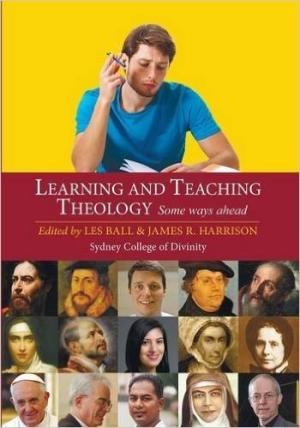
The genesis of this book was a Learning and Teaching conference held at the Sydney College of Divinity that focused on issues and practices in theological education from the perspective of Australia and New Zealand. The aim of the book is to “generate further impetus in charting effective ways to make progress along the important journey of delivering relevant contemporary educational experiences for the learners of theology” (7). For the most part the book succeeds in doing this. It contains seven sections. Section 1, and in particular the essay “Where are We Going,” sets the stage well for the other essays and sections of the book. This essay argues that the philosophical starting point for theological education is student-centered learning and teaching. This pedagogical philosophy then answers the questions about what shall be taught (content of theological learning and teaching), how it will be taught (methods of learning and teaching), and how the curriculum is built. Section 2 gives a biblical road map, using the apostle Paul as a model of a theological educator, that centers on learning communities and their effects on the immediate context and implications for theological education today. Section 3 constitutes a strength of the book since it brings together the philosophical, curricular, and theological theories about learning and teaching into an integrative whole connected to formational assessment. The various essays are informed by the works of David Ford and Walter Brueggemann, integrative and transformative learning theories, and multiple intelligences, to name a few. The book transitions in Sections 4 and 5 to a more practical focus that brings theory and practice together from the medical and health science disciplines to enhance theological education, and the use of technology. The two essays in Section 4 look at lessons that theological education can learn from medical education; they challenge theological education to move from an emphasis on competencies to a focus on capabilities that adapt to contextual changes that in turn improve ministerial practice. The essays in Section 5 center on e-learning technologies and its impact on the learner from formational, instructional design, gamification, and embodiment perspectives. The last two sections continue to emphasize practice and give creative examples of innovative practices from theological practitioners around teaching and learning methodologies. These include problem-based learning, transformative pedagogy in the context of cross-cultural experiences and traditional courses, and workplace formation. The last two essays feature teaching and learning from a non-Western context. The editors laid out the direction of the book well in that it generally moves from a theological, philosophical, and pedagogical core to learning and teaching practices. However, in a book of this nature with multiple authors, there is an unevenness in the depths of the essays. That is, some essays give excellent theoretical depth and description, fresh analysis of data, creative accounts of practice that oftentimes challenges the theological status quo, or thoughtful theological and pedagogical integration, while other essays do not. Having said this, the book does present fresh thinking and offers innovative practices about the theological education enterprise and as a result urges continual and effective development.
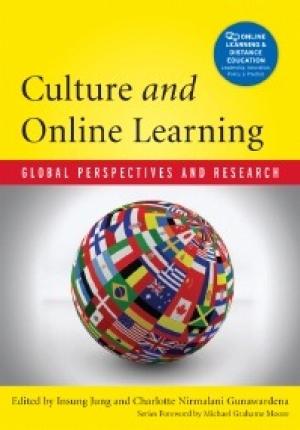
This helpful collection of seventeen essays addresses two important concerns within religious and theological studies: culture and online learning. Scholars of religion are giving increasing consideration to culture. (A search of Amazon for books on “religion and culture” yielded a hundred pages of “hits.” The first four books were simply entitled Religion and Culture.) Furthermore, more and more courses in religion and theology are offered online. Surprisingly, little research has been done in culture and online learning, and this book seeks to address this lack. Authors in this collection hail from Europe, North and South America, Asia, and Australia. (Unfortunately, none are from Africa.) The book appears as the third in a series, Online Learning and Distance Education. Editors Jung (from Japan) and Gunawardena (from Sri Lanka, teaching in the U.S.) write solely or collaboratively in eleven of the seven essays. The essays are grouped around eight themes: (1) learners, learning, and learner support, (2) non-native speakers, (3) facilitating learning, mentoring, and professional development, (4) learning design, identity, gender, and technology, (5) visual culture, (6) leadership, (7) quality, and (8) research. Many of the authors wrestle with a definition of culture. In the first essay, “Perspectives on Culture and Online Learning,” the editors write, “Culture impacts every facet of online learning, from course to interface design, to communication in a socio-cultural space, and to the negotiation of meaning and social construction of knowledge; thus a definition of culture that is flexible, dynamic, and negotiable is more appropriate to understand the online learning context” (1). Interesting insights are scattered through this collection. In “Online Identity and Interaction,” Gunawardena notes that students from Sri Lanka and Morocco “look to the online medium as a liberating environment that equalizes status differences” (35). In “Emerging Visual Culture in Online Learning Environments,” Ilju Rha (South Korea) urges online educators to integrate more visuals in their online courses. In “Accounting for Culture in Instructional Design,” Gunawardena, Casey Frechette (US), and Lumila Layne (Venezuela) introduce the Wisdom Communities instructional design model (WisCom), which “was developed to inform the design of collaborative online learning experiences” (57). (For more about WisCom, see https://prezi.com/1unppl6dh2a-/new-model-new-strategiesinstructional-design-for-buildingonline-wisdom-communities/.) In “Transformative Learning through Cultural Exchanges in Online Foreign Language Teaching,” Kerrin Ann Barrett (US) includes tips for instructors, such as “remember to breathe,” and tips for learners, such as “show your creative side in activities (asynchronous and synchronous)” (146). In “International Interpretations of Icons and Images Used in North American Academic Websites,” Eliot Knight (US), Gunawardena, Elena Barberà (Spain), and Cengiz Hakan Aydin (Turkey) write, “Many of the images and icons used in online environments depend on the meanings, concepts, metaphors, objects, and so on that are bound to the particular cultural context in which they were designed” (149). Just as neither religion nor culture is monolithic, neither is online learning. This stimulating collection from around the world will help online teachers to negotiate better the various cultural divides and thus offer our students better online learning experiences.
This book brings together faculty reflections on pedagogy and inter-professional collaboration from a broad range of disciplines within a single institution in Toronto: Ryerson University. While a single institution may appear to provide only a limited contextual perspective, the nature of the varied disciplines represented here provides a diverse set of resources, drawing from early childhood studies, nursing, disability studies, social work, sociology, city planning, and midwifery. Though the fields of theology and religion are not represented among the contributors, educators in theological and religious education will resonate with the need to better equip students for inter-professional engagement. Though all contributors are from the same institution, the commonality or coherence among chapters ends with the institutional affiliation of the authors. The editors note the book’s lack of coherence, and justify this by saying that the “frontiers” of community-services-related learning “are not neat, formulaic, or easy to navigate” (5). For this reason, reading this text cover-to-cover can be a disappointment, since the chapters are not of equal quality, nor do they create any obvious structure or overall argument. That said, there are gems in particular contributions for those interested in learning about teaching techniques and reflections that draw from critical pedagogies and integrative approaches, bringing the best of new theories in education. For instance, in “Drawing Close: Critical Nurturing as Pedagogical Practice,” authors May Friedman and Jennifer Poole bring together insights from Indigenous studies, Black feminist thought, maternal pedagogies, and mad studies to argue for a way of being in the classroom that promotes a nurturing relationship between student and teacher, challenging the Enlightenment and Western ideals of independence as a goal of education. These authors call for a suspension on neoliberal concerns for risk and lack of efficiency, instead arguing that an interdependence approach requires the risk of blurring the distinction between teachers and students (96). If a reader of this book were to choose one chapter to read from among the many contributions, this would be the chapter to focus on, and the bibliography provides additional resources to pursue. Other chapters included interesting suggestions and interventions in education, such as “Educating for Social Action among Future Health Care Professionals” which focused on a learner-centered model for course creation. This chapter includes appendices for how the authors Jacqui Gingras and Erin Rudolph were able to craft a course with considerable input from students regarding course themes, which assignments they would have to complete, and what grading rubrics would entail. Other chapters (3, 8) draw from narrative theory and describe the way students are taught to listen to the narratives of clients as well as to their own personal narratives. While this book’s chapters are not equally helpful, the insights available in a few choice chapters are worth the read.
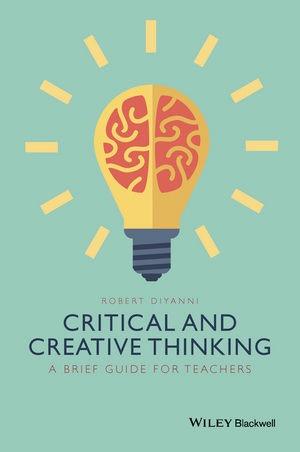
As teachers in religious studies and theology departments, one of our principal pedagogical claims is that we teach students to think critically and creatively, but we are not always clear on what this means in practical terms. This readable book by Robert DiYanni helpfully gathers research and writing from a wide variety of disciplines to help teachers define and apply critical and creative thinking for themselves. The book’s organization makes sense as it leads the reader through concepts, practical concerns, and application. Brief “interchapters” unite the flow of the book around one master of critical and creative thinking, Leonardo da Vinci. Each chapter ends with a well-crafted list of writing prompts to help the reader – both teachers and students – to apply the chapter’s concepts. For example, chapter 4 focuses on strategies and applications of critical thinking, and so the end-of-chapter prompts call on the reader to analyze arguments, evaluate scenarios, and deploy specific critical thinking strategies. Chapter 5, which examines approaches to creative thinking, provides prompts that invite imagination, innovation, and inventive solutions to problems. Essentials of critical thinking such as asking questions, seeking clarification, gathering evidence, evaluation, and reflection are discussed at length with colorful examples from notable historical events and popular culture. For instance, one chapter features a collection of headlines and other snippets of news coverage of the murder of Kitty Genovese. DiYanni invites the reader to consider what sorts of inferences and judgments various news sources made in response to this famous case (71-74). Another section examines the methods that Sherlock Holmes used in his legendary detective work (109-112). DiYanni argues, however, that critical thinking is not sufficient by itself and can even be reductive and dangerous (xi) if it is not joined by robust creative thinking. He persuasively shows that creative thinking is a necessary adjunct to critical thinking and leads to innovation and whole-minded approaches to problems. DiYanni’s coverage of creative thinking likewise draws on a wealth of examples from creative people such as choreographer Twyla Tharp and checklist-innovator Atul Gawande. DiYanni’s book thoroughly covers critical and creative thinking, but it may not live up completely to its subtitle, A Brief Guide for Teachers. There is not much by way of specific advice to teachers on how to teach students to be more critical and creative thinkers. Rather, the book reads like a textbook for a class whose subject matter is creative thinking itself. As such, the exercises in the book would have to be adjusted for application to religious studies and theology courses. Another small critique is that DiYanni argues early in the book that cultural forms and social locations, including religion, are “blocks” to critical thinking (10). While we can agree that people’s contexts can limit and define their worldview, religion professors know that it is not particularly helpful to consider religion as a hamper to thoughtfulness. These criticisms aside, this book is a helpful addition to the literature on critical and creative thinking, and its focus on application – even if not explicitly linked to pedagogical advice – provides welcome tools to promote critical and creative thinking in ourselves and our students.
Wabash Center Staff Contact
Rachelle Green, Ph.D.
Associate Director
Wabash Center
greenr@wabash.edu