Resources
Helen Cowrie and Carrie-Anne Myers’ Bullying Among University Students studies bullying in universities worldwide, with contributors from educational psychology, criminology, counseling, media, and other disciplines. One insight of the volume is that we tend to address bullying as a relationship between the bully and the victim without addressing bullying’s social and institutional contexts. The introduction reminds us that university students occupy an ambiguous position, neither protected children nor employees. In the university, therefore, bullied students feel lost, reporting “that they do not know of any policies, systems, or avenues to help them” (3). The essays begin with the student experience, move to the nature of bullying, look at social context, suggest interventions and policies, and end with reflections, suggesting that universities might address bullying by coordinating communications between the students, staff, administrators, and student services and by using research on workplace bullying as a resource. The corporatization of higher education, valuing individualism and competition, may unconsciously generate a context for bullying, meaning that systems must be put in place to address bullying, including strong counseling. The writers align bullying with what they call “laddish” behavior – indeed, boys bully more frequently than girls – which Toni Pearce defines as a “‘pack’ mentality evident in activities, such as sport and heavy alcohol consumption and ‘banter,’ which were often sexist, misogynist and homophobic” (17-18). It includes sexualizing behavior toward women and intolerance of gay and transgender students and racial ethnic students, all vulnerable, which leads to harassment and violence. The essays examine multiple forms of bullying, including stalking and cyber-aggression, which occurs as “invisible” bullying (113). Drawing lines in these cases is a key, but difficult, act: when, for example, is online activity conversation, teasing, or bullying? One finding is that bullies tend to bully throughout their lives (36). Osman Tolga Aricak’s essay explores genetic and environmental causes of bullying and the impact on the bullies themselves. Aggression is an outward sign of complex issues like poor self- and impulse-control and narcissism. The bully and the victim can experience ongoing mental health disorders, including anxiety, depression, and isolation. “The Research Student Experience” chapter is informative for those of us supervising graduate students, unveiling the sometimes unconscious bullying in the power-laden supervisor-student relationship. Graduate students also occupy an ambiguous position, being students and teachers or workers, making them vulnerable. Graduate supervisors must be mindful of power, avoiding actions like giving excessive or unauthorized work to teaching assistants and using their research as the supervisor’s own. This collection offers immense insight into an understudied subject. One article on “Cross-Cultural Comparisons” reminds American universities that we have “some of the highest rates [of bullying] among the developed world” (135). Our cultural and economic diversity, insistence on free speech, and desensitizing media violence confuse notions regarding appropriate behaviors (135). Since there is not clear data on what works against bullying, a system-wide response is necessary.
James Lang has written yet another immensely valuable book for post-secondary faculty. Using the analogy of “small ball” from baseball, the author provides classroom activities requiring only a few minutes that can easily be incorporated into a course sporadically or regularly to improve learning. Each strategy is based on the latest research about the human brain, and Lang has witnessed their “positive impact in real-educational environments” (7). The strengths of the book are numerous. First and foremost, it accomplishes the stated purpose. In each of the nine chapters, Lang explains the theory behind the learning principle, describes how the theory has been carried out in classroom models, and then summarizes the principles common in each model. Within the models, the reader finds activities that teachers can incorporate into any class and use randomly or repeatedly that enableing students to learn effectively. Second, each learning activity is transferable across academic disciplines. For example, while discussing “predicting,” the initial research example is from the field of language learning. Lang then applies the principles to his discipline of teaching literature, before concluding with a kinesthetic example of learning an athletic skill. Additionally, Lang recognizes the increasing frequency of teaching and learning online. He also notes students’ access to social media and suggests ways to use the principles and activities of online teaching and social media in a non-traditional classroom format. Finally, while the focus is on in-class actions that take minimal time, he does identify how specific teaching concepts can be incorporated into course planning and the syllabus. The book is well-organized, not only in its presentation but in the ordering of learning from knowledge acquisition to understanding to learning inspiration (motivation), with three strategies explained in each section. Each concept and activity is well-supported by research noted in a full bibliography. For example, in discussing retrieving, Lang gives examples of opening or closing questions an instructor can use in the first or last five minutes of class that will prove effective for short-term and long-term recall, in light of a variety of studies. Where there are questions about the validity of an idea or activity, Lang acknowledges the issues and interacts fairly with contrary opinion. In short, it is hard to find a negative with this book. Because each chapter is follows the pattern of theory, model, then principles, a theology or religious studies teacher can easily take the knowledge or concepts they desire to teach and adapt them to any of the teaching strategies. From a rookie faculty member experiencing challenges midway through a course to an experienced professor looking to improve student learning in a well-developed curriculum, there is something in Small Teaching for everyone. If your college cannot attend one of Lang’s professional development sessions, I would recommend academic deans purchase the book for faculty and together they could work through each chapter.

For those of us who teach on the semester system, we face the daunting task of presenting our course in about 15 weeks (and for those of us on quarter systems, about 10!). Among the greatest challenges given this context is to, therefore, decide what can and cannot be left out of a course. If one teaches “Introduction to Islam,” perhaps one aims for a semi-comprehensive historical survey where students learn a bit about hadith, law, Qur’an, theology, dynasties, mysticism—and maybe science, Islamism, and art depending on some variables. Indeed, many textbooks on Islam (books devoted to introducing college students to Islam) treat their topic like this. A fundamental question, therefore: What is the goal for a short undergraduate course on Islam? It’s perhaps a blessing and curse that any given instructor will answer this differently—based on training, institutional context, and personal taste—but I think mostly a blessing because the menagerie of reasonable answers reflects a freedom to make up our minds about approach and content. In this post, I’ll discuss a few outside-the-box approaches that reflect my ongoing struggle with making the best of a short semester. Education as freedom In his article “Liberal Education: Its Conditions and Ends,” David Corey argues that the goal of liberal education is to set us free, to achieve “intellectual freedom or, in a certain quaint sense of the word, ‘spiritual’ freedom” (2014: 195). I can jive with this, and taking a cue from JZ Smith, “there is nothing that must be taught, there is nothing that cannot be left out” of a religious studies course (2012: 13)—which seems to point to freedom as a pedagogical strategy as well. What I interpret from Smith’s prescription is that courses are short, so comprehensive surveys are false gods, in a sense. In an intro to Islam course, why, for example, would attention to a scholarly monograph on the Qur’an, prove more valuable than focusing on episodes from “Little Mosque on the Prairie”? In terms of textbooks, at least, I’m not aware, unfortunately, of any that give attention to “Little Mosque on the Prairie,” so an overreliance on textbooks could also limit the freedom of the instructor to substantively explore outside-the-box sorts of topics. Carl Ernst even notes in Following Muhammad that he hates textbooks for similar reasons; I wouldn’t go that far, in part given my distaste for the H-word, but I strongly sympathize with the sentiment. So if instructors wish freedom for their students, and hope to enjoy a comparable freedom through course design, are we talking about nothing more than a whimsical selection of material? No. It’s not whimsical because I presume, for the sake of argument, that most Islamic studies professors have reasonable training in their respective subfields. On top of that, Islamic studies is not a compartmental, marketable skill, generally speaking—which is why I’ve become increasingly persuaded by Smith’s emphasis on the nothing that cannot be left out. I actually don’t think that’s entirely true: if my course, entitled “Islam,” focused on, say, the question of whether Obama is Muslim (a totally reasonable thing to focus on in said course) to the exclusion of studying Qur’an or hadith, then I should expect to run into some legitimate problems of credibility—from students, colleagues, and my institution. But one should also note that drawing attention to Obama’s religion in light of political realities could uniquely intrigue and teach students. Freedom to surprise students Although I do spend more time in my courses focusing on the Qur’an than on Obama’s public commitment to Christianity, I can’t be sure what will impress students more, years after the class is over—that the story of Khidr is super interesting and weird, that Thomas Jefferson may have read it in Arabic, or that 30% of Americans actually think Obama is a Muslim. Questions of Obama’s religion (or attention to “Little Mosque on the Prairie”), moreover, address critical contemporary questions of Islamophobia, racism, and immigration—topics that could take a bit more creativity to excavate from Moses and Khidr. But can we have it both ways, focusing on Muslim sitcoms as well as the Qur’an? Absolutely, but we still have to prioritize, and if we include one thing we’ll probably have to exclude something else. It’s a balancing act at the end of the day and each of us will rightly navigate things differently. As much as students may find reason to take interest in Obama’s religion—and the story of Khidr—the topic of drugs usually catches their attention as well. And the histories of coffee, alcohol, and qat all squarely tie into broad global discourses such as the consequences of intoxication, state law and sharia, and capitalism. Because I spent a summer in Yemen, and because college students already have a stake in coffee and alcohol, these three substances make regular appearances in a weeklong unit on drugs in Islam. After reading an entire book about the subject—Tripping with Allah, by Michael Muhammad Knight—I ran into a compelling erotic scene involving a vision of Ali and Fatima during Knight’s experience with ayahuasca-DMT (one of the most powerful psychedelics known to science). So I included the excerpt in my “Islamic Mysticism” course last semester. One student memorably lamented her foreseen absence on the day we would discuss Knight’s chapter, writing, “I am disappointed I will be missing today’s discussion of our very weird reading.” Beyond the edutainment factor, the chapter with the erotic scene, like much of Knight’s writing, points clearly to other big questions about Islam, such as Sunni-Shi‘i divides and the boundaries of orthodoxy. So as much fun as it would be to assign the excerpt to students for shock value alone, my pedagogical justification lurks steadily under the surface. Conclusions In my own context, I teach religious studies courses at a college with very few RS majors (currently two, to be precise). As part of the core curriculum, however, students must take at least two courses in my department. Although I always welcomed the challenge of teaching students who are there “because they have to be,” and similarly always valued a liberal arts education, it was not always clear to me how to implement my vision of the liberal arts into my courses. I’ve felt stuck in the ostensibly impossible expectation to teach a survey. What I have increasingly come to ask, though, is what kind of impression my course will leave on students years down the road. And as I continue to ask this question, I become increasingly convinced there’s precious little that cannot be left out of curricula in my courses on Islam. If the goal of learning in my courses is to cultivate intellectual freedom, then is it not only appropriate but even desirable to reflect my own engagement with intellectual freedom, synthesis, and experimentation (cue the DMT jokes) in the syllabus and curriculum itself?
Graduate schools produce a good number of well-educated women who then go on to become successful professors, published authors, and administrators in institutions of higher learning. Women in academe are expected to do it all, do it well, and have well-balanced lives outside the work place. Graduate schools do not prepare women for the numerous challenges they encounter in the various facets of academic life. This book identifies challenges and issues related to women’s lives in academe and suggests practical and studied tactics to help women thrive in the academic world and in their own lives. Rena Seltzer has extensive experience as an academic coach and has gathered a compelling amount of data and first-hand experiences from women professors. She acknowledges that surviving in academia is not easy, especially for women and under-represented minorities. Oftentimes, women feel isolated and are not aware that some of the challenges they face are not uniquely their own. By identifying such challenges, Rena Seltzer achieves the goal of bringing awareness to these common experiences. In addition to identifying these challenges at the different stages of academic life, the book offers a deeper analysis of the issues and obstacles of academic life as well as provides practical advice on how to overcome them. In ten chapters, Seltzer addresses the following topics: How to have more time; Establishing a productive writing practice; Teaching; Work-life balance; Networking and social support; Tenure, promotion, and the academic job market; Authority, voice, and influence; Negotiation; Life after tenure; and Leadership. The book includes numerous practical tactics, from how to phrase effective emails to how to say no to attractive projects and roles that would overtax an already crowded schedule. This ability to say “no” when appropriate leads to a more productive and balanced life, thereby reducing stress. Each chapter offers a variety of further sources the reader may wish to investigate. The author’s style is engaging and friendly, and her voice comes through as wise and reassuring. Chapters can conveniently be read independently, as fits the reader’s interest. While the book addresses topics shared by most women across academic disciplines, it can be particularly useful for faculty who teach religious studies or theology since these fields rely heavily on self-reflection and self-giving. The balance between such theologically and pastorally motivated attitudes and the demands of academic and non-academic life is especially challenging. Anecdotally, all female academics I have shared this book with have expressed great interest in it and admitted they would like or need to read it. One said, “I wish this book was around when I started out!” The book is recommended to all women in academia but also to any faculty at any stage in her or his career who is experiencing some of the same challenges.
Whenever I’m asked, “How are your classes going?” my answer traditionally has been, “Ask the students.” As more faculty members shift their pedagogy to a student-centered learning, their focus must include not only delivering the content but also inviting students to explore the why of education. The articles in Finding the Why: Personalizing Learning in Higher Education edited by margit misangyi watts (sic), identify key ways to encourage students to discover the purpose of higher education as more than training for a career. While many of the articles describe institutional changes that have been developed to address the student success beyond the university, the principles behind such designs can be incorporated by individual faculty members in approaching how to present their courses’ content. One of the key principles is to encourage students to identify the applicability of a liberal-arts education to professional courses. One means by which this can be accomplished is described in “Integrative Learning: Making Liberal Education Purposeful, Personal, and Practical.” Ann Ferren and Chad Anderson describe several examples from various colleges that integrate learning across curricula and are adaptable even for larger institutions, such as designing opportunities for students to integrate curricula using collaborative projects, partnerships with the local community for service-learning, and making connections among disciplines. Furthermore, in “Project-Based Learning in Colleges of Business: Is It Enough to Develop Educated Graduates?” Penny Smith and Lindsey Gibbon note that business leaders are seeking qualities such as critical thinking skills, identifying and using creative problem solving, and communicating effectively. They note that “for business schools to graduate ‘well-educated’ students, they must forge and engage entire academic villages” (43) in preparing business students for their careers. Another important component of finding the why requires understanding the challenges in culture that affect the attitudes impacting student-centered education. Several of the chapters incorporate strategies to change the culture at institutions themselves to meet the ongoing challenges to student success. Among such recommendations are faculty “talking to students in a way that is supportive and encouraging” (29) or engaging in the six “P’s” of place, preparation, pathways, plan, purpose, and personal connection as explained by Sanford Shugart in “Why Higher Education: Lessons Learned in a Learner-Centered College.” While many of the articles describe specific activities involving changes within the entire institution, such as integrative classes or designing a community college’s plan from its inception, the authors do challenge individual faculty to incorporate helping students find the why within their particular courses. The key to student success in many of the articles involves engaging students individually, not just collectively. Therefore, some of the strategies discussed can be applied by individual faculty on a smaller scale. While my answer to “How are your classes going?” may be the same, my intentionality within my course itself should have students answering in the positive.
2016-17 Teaching Workshop for Early Career Theological School Faculty Designed for faculty members who are in their first years of teaching, this workshop will explore 21st century challenges in theological education, innovative teaching practices, and complex institutional ecologies. We invite applicants who are interested in joining a community of collaborative inquiry to wrestle with questions such as: What does it mean to teach disciplines differently? What does it mean to teach in ways that generate new learning? What does it take to (re)imagine pedagogies and curricula for responsible teaching in changing local/global situations and contexts? What does it take to navigate institutional cultures and realities in ways that are liberative and bring about wellness? The workshop will gather 14 faculty members for a week in two successive summers and a weekend winter retreat in Corpus Christi, Texas. There will be a balance of plenary sessions, small group discussions, workshop sessions, structured and unstructured social time, and time for relaxation, exercise, meditation, discovery, laughter, and lots of good food and drink. Goals To cultivate imagination for teaching that affirms the particularities of traditions, expand ways of knowing, and embrace the vitality of global perspectives To explore pedagogical practices that foster self-reflexive discovery, honor authenticity of voice and authority, bolster creativity and innovation, and yield potential for liberative change To sharpen personal capacity to navigate institutional cultures and realities in ways that integrate passion and ability, proactive agency, and strategic alliances for academic flourishing and advancement Honorarium Participants will receive an honorarium of $3400 for full participation in the three workshop sessions, plus local expenses and travel. Read More about Payment of Participants Read about our Policy on Full Participation Fellowships Participants are eligible to apply for a $5000 workshopfellowship.These awards are for projects that emerge from the conversation and ideas of the workshop, in consultation with the leadership team, and are conducted during the year following the workshop. Participants Front Row: *Gay Byron (Howard University School of Divinity), Carlos Cardoza-Orlandi (Perkins School of Theology, SMU), *Mai-Anh Le Tran (Eden Theological Seminary), *Dwight Hopkins (University of Chicago Divinity School). Second Row: Angela Parker (The Seattle School of Theology & Psychology), Carolyn Browning Helsel (Austin Presbyterian Theological Seminary), Sharon Jacob (Phillips Theological Seminary), Leanna Fuller (Pittsburgh Theological Seminary), Sophia Park (Neumann University), Timothy Hartman (Columbia Theological Seminary), Deanna Ferree Womack (Candler School of Theology – Emory University). Third Row: Julián Gonzalez Holguin (Church Divinity School of the Pacific), Danjuma Gibson (Calvin Theological Seminary), Adam Ghali (Fresno Pacific University), Michael Chan (Luther Seminary), Peter Anthony Mena (Phillips Theological Seminary), Lisa Bowens (Princeton Theological Seminary), Daniel Shin (Interdenominational Theological Center), Paul Myhre (Wabash Center). *leadership/staff APPLICATIONS CLOSED Workshop Information Dates First Session: July 11-16, 2016, Wabash College Second Session: January 19-22, 2017, Corpus Christi, Texas Third Session: June 12-17, 2017, Wabash College Policy on Full Participation Leadership Team Mai-Anh Le Tran, Eden Theological Seminary, Director Gay L. Byron, Howard University School of Divinity Carlos F. Cardoza-Orlandi, Perkins School of Theology, SMU Dwight N. Hopkins, University of Chicago Divinity School Paul O. Myhre, Wabash Center Important Information Policy on Full Participation Map of Wabash College Campus Travel Reimbursement Form (pdf) Foreign National Information Form (pdf) Payment of Participants Fellowship Program (2016-17) For More Information, Please Contact: Paul O. Myhre, Associate Director Wabash Center 301 West Wabash Ave. Crawfordsville, IN 47933 800-655-7117 myhrep@wabash.edu

The central aim of this edited monograph is to present new techniques for dealing with methodological challenges to sociological research on student learning. The book is organized into a brief preface, seven chapters that each deal with distinct methodological approaches to student learning research, and an eighth chapter that provides an outline for how the preceding chapters can be applied to or help shape future research. Each chapter presents various solutions to distinct methodological challenges through concrete case studies. Chapter one provides an overview and case study of how structural equation modeling (SEM) can be used to conduct empirical research that tests hypothesized influences on student learning. The authors contend that previous research has not been able to fully address the complex multi-variable character of students’ approaches to learning. The strength of SEM is not only its ability to test for multiple variables such as these, but also to examine the pattern and strength of the relationships between these variables. Chapter two explores challenges to research on students in dual programs composed of both university classes and internships. The goal of such research is to take into account the different perspectives, discourses, and research instruments (for example, focused in-depth research and large scale qualitative research) used to study dual program student learning, including workplace learning and the transitions between contexts of learning, learning in higher education and its specific learning activities and patterns, and longitudinal professional development. To study such complexity, the authors propose the use of multilevel analysis for dealing with nested data and methodological triangulation for testing the use of the multiple research instruments. Chapter three outlines a method for using neural network analysis techniques for assessing the predictability of how much influence cognition, motivation, and learning approaches have on academic performance. Chapter four provides a model for addressing the failure of previous research to address implicit preferences for specific types of learning environments by using conjoint analysis, a method developed and employed in marketing research. Chapter five proposes exploratory-grounded research as a way of developing theories rather than solely testing them. The first case study provided in this chapter analyzes data from semi-structured interviews on students’ motivational orientation through various processes for identifying, verifying, and revising themes in the data. The second study then analyzes another set of interviews using the categories developed from the first study. A strength of this approach is its ability to develop innovative theories that are not limited to any pre-established or hypothesized number of categories. Chapter six addresses emotional dimensions and their measurement in research on teacher education. In addition to providing a thorough rationale, outline of theoretical perspectives, overview of the phenomenological method in social science research, identifying themes in the data, and discussing methodological challenges, the chapter provides a helpful survey in the form of a table of previous research articles that address emotional dimensions. Chapter seven explores challenges to longitudinal studies and provides a model and short list of best practices. Though interesting conclusions and/or corroboration and challenges to previous theories regarding student learning are discussed throughout the book’s varied chapters, the overarching focus is indeed on methodological challenges and proposed solutions to these.

After teaching an introductory course on Islam for over ten years I still am fascinated that most students are unaware of what Sufism is and how Sufism has influenced Islamic metaphysics, societies, cultures, histories, arts, sciences, and trade. In addition to asking myself “Why is there such a lack of knowledge about Islam and Muslim societies?” I have also often asked myself, “Why is there such a disconnect in the minds of students when it comes to Sufism and Islam?” For this current blog and the two that will follow in the Autumn months, I will share some thoughts about teaching Sufism and contemporary Sufism. As readers of the Teaching Islam blog can attest, teaching and writing are interconnected. Many of us write books and articles to use as tools for our classes. Just this past summer, I completed with my co-author, Dr. William Rory Dickson, an introductory textbook on Sufism entitled Unveiling Sufism: From Manhattan to Mecca (available next year through Equinox Publishers). I also am currently writing with my co-authors Dr. William Rory Dickson and Dr. Merin Shobhana Xavier a manuscript entitled Contemporary Sufism: Piety, Politics, and Popular Culture (available next year through Routledge Publishers). The structure, approach and content of these books have influenced my teaching on Sufism, and my experiences in the classroom have influenced my writing. When teaching on Sufism, I find it helpful to “meet students where they are” with Islam, which means starting with the here and now. One way of doing this is to utilize a genealogical framework, in which the student begins to learn not with the historical past, but with the contemporary present: with the diversity of living Sufism in North America today, and ways in which Sufis feel pressure from “both sides” – from non-Muslims and Muslims alike, albeit for different reasons. Taking this approach enables the teacher to explore the growing anti-Muslim, post-9/11 sentiment among North Americans, as well as the intensification of anti-Sufi sentiments among some Muslims (explaining, for example, why Muslim extremists are destroying Sufi shrines). Students then can also examine the different interpretive tendencies emerging among Sufi communities in North America, including universalist tendencies that understand Sufism as something not limited to Islam, as well as more traditionalist perspectives that assert Sufism’s necessary connection to Islamic practices and laws. In addition, the students can learn Sufism’s remarkable influence on North American art and culture, notably through the 13th century Sufi personality, Jalal al-Din Rumi, whose poetry has inspired a variety of different tributes and interpretive expressions, in visual art, yoga, social activism, dance, music, and even in the restaurant and café business. By beginning with issues and themes found in the 21st and 20th centuries, students are then offered the complexities of Sufism as we collectively move deeper through time and space, journeying through a variety of historical, religious, political, and cultural contexts, further delving into the past, and closer to the “origin” of Sufism. This genealogical framework enables the student to understand the patterns of connection between contemporary manifestations of Sufism and past realities from, the bustling metropolis of 21st century Manhattan, to colonial Algeria, through medieval Delhi and Istanbul, back to Baghdad and ultimately Mecca – the birthplace of Islam and its mystical tradition. In addition to using a genealogical framework, it is important to help students explore Sufism as a multidimensional phenomenon. Sufism has influenced Muslim philosophy and metaphysics, but also politics, art, and culture in each historical period. Utilizing particular Sufi figures, movements, places, artistic expressions, or philosophical views, the student develops a richly contextualized appreciation of Sufism. For example, one teaching exercise that I have used is to compare the tradition of wandering mendicants or dervishes of Islam to the leaders of the medieval imperial courts. In such a comparison, I like to share with students the symbolic significance of specific items from material culture. For example, I like to bring to class a very elaborate kashkul from Lahore, Pakistan, as well as miniature paintings of medieval dervishes from Turkey and Iran. Another consideration when teaching on Sufism is to consciously integrate the contributions of women to Sufism, as well as the diversity of Sufism in different regions of the world. In order to avoid reducing the role of women to a subject for one class session, it is important to use women as examples in each historical era, drawing out numerous examples of Sufi women who have been engaged in politics, philosophy, arts, etc. Additionally, it is easy to use illustrations and case studies from the Middle East and South Asia, but it also is essential to help students explore Sufism in all regions of the world, especially Africa and Southeast Asia. There are many different ways to enliven the teaching of Sufism and to make the subject speak to contemporary students who enter the classroom with diverse interests and preconceptions. By engaging current concerns as well as pop culture manifestations of Sufism and then working backward in time toward the point of origin, it is possible to enable new ways of connecting with the subject matter. Such an approach also facilitates the introduction of perennial debates about Islam and Sufism in relation to current controversies, demonstrating continuity as well as change and diversity in Sufism throughout the centuries and opening student’s minds to Islam’s rich and varied cultural, intellectual, and spiritual heritage.
The University of Chicago made news recently because of a letter sent by its Dean of Students to inform its incoming class of freshmen that the University, given its commitment to “freedom of inquiry and expression,” does not support “trigger warnings,” cancel controversial speakers, or condone creation of “safe spaces.” Responses to this letter run the whole gamut from celebratory cheers to condemnatory curses. Some see this as the University’s honorable refusal to shut down difficult discussions of sensitive subjects; others see it as the University’s hypocritical and covert attempt to forestall student activism on campus to challenge conservative speakers or oppressive rhetoric. I have no way of knowing the “real” motivations or intentions of this letter. I do notice, however, that subsequent conversations, whether in support or in protest of the University of Chicago’s letter, tend to assume that “free speech” will necessarily trump or preclude “safe space” or “trigger warnings” without clarifying what those terms may mean or how they may be put into practice. As an educator who likes to encourage and enable students as well as myself to think again and think differently, I am all for free speech; free speech is, in fact, indispensable to classroom discussion and learning. We do not learn well if we feel like our thoughts and ideas are being suppressed; we also cannot learn if we are not allowed to make mistakes. Nobody’s commitment to Black Lives Matter, neither mine or any of my student’s, should keep white students in my class from articulating their disagreements with or dislike of James Cone’s Black Theology and Black Power. Similarly, advocates for LGBTQ rights, including myself, cannot silence students who want to push back against Marcella Althaus-Reid’s Indecent Theology. Every student in my classroom should have the space and time to express their thoughts and views, even if I think they are dead wrong; to deprive students of such is to take away from them an opportunity to hear and learn through feedbacks and responses. We must also not forget that persons from traditionally marginalized groups do make mistakes and can also be misguided in their thinking. Whether this commitment to free speech and the idea of the classroom being a safe space can coexist depends on what one means by the latter. I cannot guarantee that no one will feel uncomfortable, unsafe, or threatened in my classroom since I cannot control how one feels or deny what someone is feeling. Hearing new ideas that you have not considered before, especially if it contradicts or challenges what you have held dear deep down and for very long, can indeed be very alarming. I have also heard faculty of color and female professors saying that they themselves did not feel safe at times with their students. When students are even allowed to carry guns legally on some campuses, how can I feign the power or ability to keep everybody safe in my class? I can, however, promise that students in my courses will have a safe space to speak freely, meaning only that they will be able to say what is on their mind and in their heart, including saying, “I am feeling rather threatened!” or “I feel under attack and unsafe right now.” This kind of safe space is not one that shields students from being challenged, feeling offended, or experiencing wound or harm; it is, however, one that does not frame “free speech” and “safe space” as mutually exclusive by definition. Having a safe space to speak freely also does not, in my view and practice, necessarily cancel out the desire or the need for trigger warnings. A person does not have to run over other people verbally just because she or he has something important to say that others may find difficult to hear. I am not able to verify if it is true that persons of color, because of all the discrimination and marginalization, have developed thicker skins than average Whites, I will only say that some experiences, including oppressive and unjust ones, may also make someone more sensitive to other people’s feelings and she may hence become more thoughtful and more gracious about giving trigger warnings. Trigger warnings, when given clearly and concisely by a teacher on her own initiative in the classroom, do not function to shield students from but prepare students for difficult topics or challenging ideas. After giving a trigger warning, I have never once asked my students, “Is it okay to talk about this now?” or said to them, “You may leave the class if you do not want to hear or think any more about this.” More importantly, those of us who are teachers should remember that we have the responsibility to guide and guard the tone and the emotion of a classroom even or especially when we push for honest and genuine exchange of views and opinions. Let’s remember also that what we do may become models for our students to emulate. They, like us, need to learn how to disagree, debate, and argue passionately, thoughtfully, and respectfully. Instead of following or (even in dispute) allowing the University of Chicago’s letter to set the terms of the conversation, I see the possibility for “free speech,” “safe space,” and “trigger warnings” to exist alongside each other in my classroom and in my universe. Oh, one more thing: While a school can—and should—refuse to cancel an invited speaker with controversial viewpoints (whether the speaker is Ann Coulter or Jeremiah Wright), students and teachers can also continue their activism to speak freely against what they understand to be unjust or unacceptable. The point of activism is not to shut people up or shut people down, but to push for rethinking, reexamination, and further conversation. After all, is this not what teaching and learning is about?
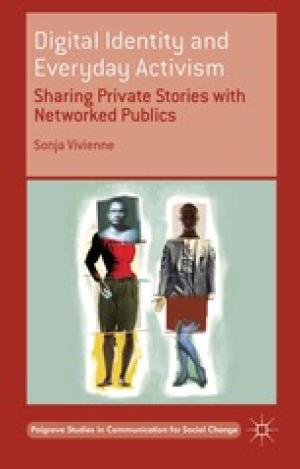
This small book is a brilliant example of grounded research that is thoroughly infused with theoretical insight and practical engagement. At first glance people looking for pedagogical wisdom might not be attracted by the title, but at the center of the book are questions of identity and everyday activism – topics that are vitally important in the midst of higher education contexts permeated with fears of “coddling students” and arguments over the value of “trigger warnings.” Vivienne is based at Flinders University of South Australia. This book draws on her background in media production and working with marginalized communities towards social change, and focuses on research she did with GLBTQ communities learning how to create in a specific form of digital storytelling: Digital stories are short (3-5 minutes) rich media autobiographical videos, combining personal photographs and /or artworks, narration, and music. They are traditionally created in a workshop context that takes place over 3-4 days and includes a story circle, technical instruction, and celebratory screening for fellow storytellers and invited guests. (3) Because persons within GLBTQ communities must constantly negotiate how they represent themselves, when and how they claim specific forms of identity, and in what ways they make these claims publicly, digital storytelling offered a compelling medium for a research project interested in exploring the challenges of sharing private stories with networked publics. The book is full of descriptions of how these stories emerged, with links to specific videos referenced available online. Vivienne’s work is both participatory and activist in methodology, drawing on the theoretical work of scholars such as Benhabib, Butler, Young, boyd, Jenkins, Bahktin, and Foucault. She ensures that the complexity of these theoretical interventions are made vividly accessible by using them to attend to the conundrums of claiming identity in the midst of highly contested spaces. She highlights the capacity of digital storytelling for reaching across various forms of difference: bridge building is reflected in the capacity to negotiate one’s position as a part of or apart from networked publics – including familiar, intimate, counter, and unknown. Digital storytelling creates opportunities to ‘bring things up,’ to broach difficult discussions ‘out in the open.’ Ownership of one’s position in society (as represented in a digital story) is reflected in the capacity to receive and give affirmation. Further, public expression of marginalized voices opens space for others to speak as they also negotiate how and where they fit in the world. As a medium that facilitates speaking across difference and bridge building, digital storytelling evokes the profound significance of participatory media as a widespread global phenomenon. (196-197) Along the way she defines and describes digital storytelling, everyday activism, erosive social change, and a concept she names “Intimate Citizenship 3.0,” as well as exploring issues of identity, nominalization, authenticity, coherence, and congruence in such media. Her research concludes with four specific findings: Institutions and facilitators can be transparent in actively acknowledging their discursive mediating influence upon the construction of individual and collective identities. [A]wareness of networked identity work provides an opportunity to sculpt congruent rather than coherent narratives and this labour can have both personal value and constitutive cultural value. [A]ctive consideration of distribution of private stories amplifies personal and social benefits, especially as a tool for everyday activism. [I]nitiatives benefit from reflective analysis of cross-disciplinary community engagement strategies, social movement theory, and strategic listening across difference. (205-206) While this book does not directly highlight pedagogies for religious studies or theology classrooms, it is full of stories in which workshop participants confront and contest religious claims their families, their communities, and broader “imagined” publics are making. By offering compelling descriptions of ways to engage such meaning-making that invite people into dialogue across various divides, this book embodies transformative adult learning and offers a rich collection of pragmatic advice for nurturing such learning.
Wabash Center Staff Contact
Rachelle Green, Ph.D.
Associate Director
Wabash Center
greenr@wabash.edu