Resources

Laughter is an important ingredient in my classroom. I bank on my ability to make students laugh with my often-droll sense of humor, but I also frequently rely on professional comedians through the magic of the Internet. The status of Islam and Muslims in political satire, specifically in the genre of comedy news, provides ample fodder for this need, through projects like The Onion, The Daily Show, The Colbert Report, and Full Frontal (and as much as I cherish Last Week Tonight, John Oliver rarely explores the topic of religion). Indeed, humor also has a long tradition in Islamicate history as well—ranging from the likes of Joha/Nasreddin Hodja to Azhar Usman—but in this blog post, I want to focus on the portrayal of Islam and Muslims in Western satire, sometimes called “fake news.” For better or for worse (often for worse), moreover, the appetite for fake news stories (which at times genuinely fool people!) may also be on the rise. Although this trend can have dire consequences, it renders the genre all the more fertile for generating understanding in the classroom. Lots of learning takes place through the slow, careful, and sometimes tedious (even boring) study of details, but cathartic moments can have a uniquely lasting impact on students. I often seize the moment to employ humor in the classroom not only as a way to keep students interested, but also as a means of transformation. Indeed, things are often funny because they are subversive, because they surprise us—kind of like being tickled. It doesn’t work so well to tickle yourself; because you expect it, there’s no surprise. This element of surprise works particularly well, I find, when combined and contrasted with more traditional modes of pedagogy, such as textual analysis, historical inquiry, and site visits. Accordingly, I select short video clips that I use in class bearing in mind what questions they may generate about a given issue. Some of my favorite examples follow: One of the few Last Week Tonight segments that deals with Islam focuses on a Supreme Court case about the permissibility of inmates growing beards in federal prisons. The clip portrays the Supreme Court Justices as talking animals, as a way to self-consciously heighten interest in the Supreme Court—which not only induces at least a few chuckles, but also offers a meaningful opportunity to discuss First Amendment issues in the context of American religion. Why oh why don’t the “moderate” and “peaceful” Muslims speak up? This clip from Full Frontal with Samantha Bee explores this question as well as myths that Muslims don’t cooperate with law enforcement, or that they hate the United States. The Daily Show’s “Senior Muslim Correspondent,” Hasan Minhaj, has a smart bit about Southwest Airlines’ removal of a Muslim passenger for allegedly speaking Arabic. That Minhaj himself is a brown Muslim speaks to the rhetorical role of his character as well, and he offers a semi-comical but mostly sober reaction to Trump’s election victory. This segment raises an important chicken or the egg question about the nature of political satire: do political motivations inform comedy news or is comedy a way to express political messages? Regarding hysteria over Muslims conspiratorially taking over the United States with their “shari‘a law,” this clip from The Daily Show about mosques and this clip from The Colbert Report about “radical Muslim snacks” (i.e., halal food) have proven successful and provocative in the classroom, by effectively positioning the level of public paranoia in relation to what kinds of practices Muslims actually promote. Clips like these allow me to ask a real but also rhetorical question to my students (who are formally studying Islam): would any of you feel pretty comfortable and informed about defining “shari‘a” on a national news program in front of millions of viewers (who haven’t formally studied Islam)? (Routinely, no one volunteers.) Where do you think the “real news” anchors get their information about this stuff? They probably Google it, I suggest, as food for thought. And people always interpret Google results with wisdom and measure, right? Is Obama a Muslim? No, he’s not. And never was. He even jokes about this, for example, during his remarks at the White House Correspondence Dinner. One of my all-star comedy news clips to use in class comes from the archives of The Colbert Report. It focuses on the aftermath of the 2011 massacre committed by Norwegian Anders Breivik, whom many media outlets quickly identified as a Middle Eastern Muslim, despite coherent evidence. To quote Colbert, “Just because the confessed murderer is a blonde, blue-eyed, Norwegian-born, anti-Muslim Crusader…does not mean he’s not a swarthy ululating Middle Eastern madman.” I find this clip particularly effective as a teaching tool because it not only highlights the absurdity of how sensation-driven journalists reacted to the event, with flamboyantly transparent anti-Muslim bias, but it also pushes the envelope past what the viewer might expect, by presenting a sequence of awkwardly cathartic punch lines. On the unmeasured way in which mainstream media covers religion and violence, this segment on “decoy Muslims” from “The Onion News Network” pushes the envelope by suggesting baby Muslims should be murdered for fear of their possible ties to terrorist attacks. In my experience as a teacher, this kind of humor, which rides the line between grotesque offense and revealing reflection of popular perceptions, can open doors for frank dialogue about complex issues that even engaged students may otherwise find unapproachable because of political sensitivity. Finally, as a spoof on TSA terrorism prevention, this Key & Peele skit offers an ridiculous but lucid critique of airport theater in which a bunch of would-be “Muslim terrorists” in a cave plot to deceive security officials but find themselves stymied by restricting themselves to a 3.4-ounce bottle of toothpaste, as opposed to the 3.5-ounce bottle on which they modeled their attack. Importantly, this flagrantly flippant skit doesn’t downplay the important of national security, but rather invites inquiry: How might the nation achieve this security? Where does one draw the line between personal liberty and public safety? What about non-Muslim terrorists? In conclusion, I have always found humor an effective pedagogical tool in the classroom. And as the onslaught of violently misleading media attention to Islam and Muslims, consumed by our neighbors and students alike, appears to be speeding up, I think the right combination of satire, subversion, and laughing out loud can provide a uniquely powerful classroom presence and learning experience. What are your favorite comedy news clips? Please share them in the comments section below.

Countless hate crimes since Election Day already show the widespread effect of the President-Elect’s unpredictable nature and his death-inducing ideologies: racism, islamophobia, heteropatriarchy, xenophobia, anti-Semitism. What do we as higher educators do when our global context is unstable, the future is uncertain, and the local context is even dangerous for our students? The first matter is safety. We need to make sure that our students are safe. If they are not, we need to point them to resources for protection and help. As teachers in a divided nation, we cannot add to the authoritative calls for unity, which serve only to silence the cries of the oppressed further. Advising victims to be in union with their oppressors is dangerous. What we can do is signal to our students—especially those who are immigrants, people of color, LGBT, Muslim, Jewish—that our classroom is a safe zone. Wearing a safety-pin may offer them a palpable sign, but that’s just the tip of the iceberg. A much deeper and more credible sign is committed to work to fixing these systemic injustices, both inside and outside of the classroom. For example, as a white professor, I could claim that I’m not racist, or I could actively engage in anti-racist work. The difference is critical for our students given the current political climate, wherein silence signals complicity. As higher educators, writing and teaching are the areas in which we can give ourselves the most effectively because this is where we are trained and have expertise. Yet perhaps like many of you, I have felt the need lately to re-evaluate everything I’ve ever done. The current context of global oppression demands this. It is urgent that we remove any curriculum and practice that reinforces systems of domination. It is also time, if we have not already done so, to heed bell hooks’ call to “take the risks that engaged pedagogy requires” and make our very “teaching practices a site of resistance.”[1] Practically speaking, in terms of content and curriculum, it should be a given that we include in our reading lists those groups often underrepresented intellectually. What we “progressive” professors are often unaware of, however, is how we use such readings. As Stephen Ray warns, we cannot keep placing the “texts of historically marginalized communities” at the “margins of conversation” (e.g., using Hildegard of Bingen as a “counterfoil” to Anselm's atonement theory or James Cones as a critique of the white American theological tradition). Such usage results in our students experiencing “these thinkers as primarily kibitzers and only vaguely as primary contributors to the tradition.”[2] Given that white nationalists are rising to cabinet level authority in our current political context, it is imperative that we stop centering the work of European male thinkers. This also relates to how we manage the space/time given to marginalized students within our classroom. hooks suggests “an inversion of hierarchal structures,” wherein the professor uses her/his authority to decenter the voices of the privileged.[3] One pedagogical strategy, for instance, would be to begin each class of an entire semester with a reading from the Quran. This not only resists islamophobia but also signifies to the class the privileging of Muslim students’ voices. As hooks reminds us, we professors too often critique domination from an intellectual perspective, emphasizing “an understanding of the politics of difference, of race, class gender, even though classroom dynamics remain conventional, business as usual.”[4] As election exit polls have shown, our white students have a long way to come in understanding intersectionality; maybe this is why. Furthermore, in this post-election aftermath, teachers of religion and theology need to be asking ourselves an obvious and basic question: Do our students have the ability to recognize that their political stances rely on particular theological or philosophical assumptions? In more general terms, no matter which topic we teach, we need to consider the degree to which our pedagogies reinforce the dualistic separation of the public and private spheres and the mind/body split.[5] Do we craft assignments that require students to make connections between their life experiences and course material? As teachers, do we model these connections for our students? I invite discussion in the comment boxes below. What pedagogical strategies of resistance have you used effectively? Please be specific. [1] bell hooks, Teaching to Transgress: Education as the Practice of Freedom (New York: Routledge, 1994), 21. [2] Stephen Ray, “E-Racing While Black,” in Being Black, Teaching Black: Politics and Pedagogy in Religious Studies, ed. Nancy Lynne Westfield (Nashville: Abingdon Press, 2008), 52. [3] hooks, 188. [4] Ibid., 180. [5] Ibid., 16.
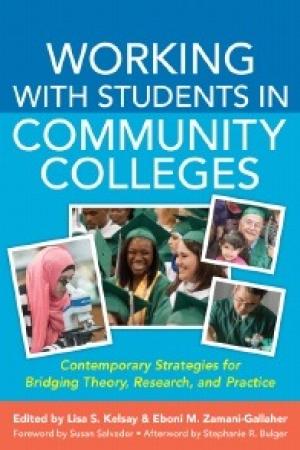
Community Colleges have historically faced numerous challenges, many generated by the very nature of their missions. The three parts of this text flesh out the theory, research, and practice most germane to the history, current state, and future of the American community college, as well as the various student populations community colleges now serve. The three sections ask readers to understand (Part I: “Understanding Today’s Community College Campuses”), support (Part II: “Welcome to Campus: Supporting Today’s Community College Learners”), and look closer at populations often underrepresented in higher education literature (Part III: “A Closer Look: Specialized Populations and Communities on Two-Year Campuses”). Understanding today’s community college campuses requires a review of the evolution of community colleges since their inception in 1900. Kelsay and Oudenhoven, in “Junior Grows Up: A Brief History of Community Colleges,” trace the origin of the American community college back to Joliet Junior College which is “now recognized as the oldest community college in the nation” (5). With a decade-by-decade overview of education in the community college setting, these authors document the vicissitudes of the life of the community college. From the GI Bill in 1944, increased enrollments of women and minorities in the 1960s, the return of Vietnam Vets, the career-focused students of the 1980s, to reduced financial support from state governments, Kelsay and Oudenhoven explicate how community colleges have risen up to meet the needs of their communities. However, these same schools face increasing pressures and challenges today and in the future. John L. Jamrogowicz illuminates these challenges in his chapter, “Community College Economic Climate, Policy Landscape, and the American Graduation Initiative.” The AGI (American Graduation Initiative) spearheaded by President Obama “showcased community colleges as potential engines to drive the recovery from the Great Recession and a return of American dominance by increasing the proportion of the population with a college education” (19). Attempting to shoulder such a heavy ideological burden and with only $2 billion of the desired $12 billion for grants allocated, it is not difficult to surmise why community colleges continue to struggle to meet federal expectations. Other chapters in Part I, such as “College Readiness and the Open-Door Mission” suggest readers look to the issues involved in the open-door mission: primarily, the need for remedial education and helping students persist to the completion of their programs. These authors cite the National Center for Education Statistics from 2011 which found that “more than 70 percent of students who first enroll in community colleges possess at least one factor and 50 percent possess two or more factors that are known to place a student at risk of not succeeding in college” (34). Procter and Uranis’s chapter on the role of technology on the community college campus also demonstrates how these institutions face a variety of resource challenges because they serve more students who may “lack a home computer and rely on the college for access to hardware, software, and Internet connectivity” (48). Financial woes, the necessity of remedial education courses, the challenge of student persistence, and students’ heavy dependence on college resources are just some of the realties those working with and inside community colleges must come to understand. The authors contributing to Part II demonstrate how imperative it is that faculty and staff know their students and contribute to and foster collaboration between academics, student affairs, and advising professionals, as well as residence life staff. The chapter “Who are Our Students?” presents a fascinating, albeit brief, overview of the diversity of students attending community colleges. Some striking statistics indicate that the average age of a community college student is 28 and, according to the American Association of Community Colleges in 2013, “59 percent of full-time community college students were employed part-time” and “40 percent of part-time community college students were employed full-time” (57-58). Support is a recurring theme in McFadden and Mazeika’s chapter on the collaboration between academic and student affairs. These authors utilize Student Development Theory (SDT) as a theoretical foundation that assists members of various sectors of the college to collaborate for student success. This chapter addresses how a theoretical foundation, facilitation of student engagement, and a model of shared responsibility among academic and student affairs professionals all contribute to assisting students. Many community colleges are instituting mandatory orientation sessions. Jessica Hale’s chapter links theories of psychosocial development of students and environmental factors known to influence development with various elements of orientation. While Hale describes the large disparity between various community colleges’ orientation programs (number of sessions, mandatory or voluntary, online or face-to-face), the author also affirms that there is evidence to suggest “that participation in orientation increases persistence from term to term” (86). While residence life may be more commonplace on four-year campuses, Barber and Phelan note that, as of 2013, nearly 25 percent of community colleges “offer on-campus housing” (95). This number is astounding considering the diverse student populations community colleges typically serve. These authors emphasize how much informal learning takes place in communal spaces like campus housing, and suggest ways in which formal learning can be integrated into residence halls (such as “inviting faculty and staff to participate in student life activities”) (97). In order to assist community college students, professionals working with them must know who they are, collaborate with other professional groups on campus, and think creatively about how to help students succeed. The final part of this text is “A Closer Look: Specialized Populations and Communities on Two-Year Campuses.” This section of the book exemplifies just how varied and complex the community college population truly is. A growing number of older adults are returning to school, especially to community colleges. Some of these “third age” learners are enticed by free tuition, motivated to stay busy and active, interested in an “encore career,” or desire to stay connected to a larger community (115-117). The chapter by Fagan and Dunklin on military veterans presents some unsettling statistics, especially regarding female veterans. One such statistic is that while “female veterans have to deal with the residuals of war” like their male counterparts, “23 to 30 percent of female veterans reported military sexual trauma while on active duty” (130). Dimpal Jain’s chapter challenges the limited scope of previous research involving Student Involvement Theory by expanding on what “leadership” means among nontraditional students, especially among women-of-color who take on leadership roles in the context of community colleges (145-147). The concluding chapter utilizes Bourdieu’s concepts of cultural and social capital to explore the complex ways in which particular student populations (adult immigrant ESL learners, student athletes, LGBTQ students, and veteran students) may be marginalized within the normative power structure of higher education. This book sheds light on multiple areas in which America’s community colleges are being shaped by the multitude of missions (academic, political, social, economic) continually assigned to them. Administrators, faculty, and professional staff at any institution of higher education as well as city, county, state, and federal officials who are invested in higher education in their locale would do well to read this book to learn how to understand, support, and look closer at students in their community.
Changing demographics in Norway offer new challenges and great opportunities for the field of education. Today Norwegians find themselves living in an interconnected world where the individual that one might consider to be “strange” because of cultural differences is no longer someone that is only viewed from a distance. In many cases, yesterday’s stranger is now one’s next door neighbor or cohort in the classroom (5). How should an instructor approach cultural differences that exist between teacher and student? How does he or she navigate cultural differences between students? These are among the issues that are carefully examined in The Intercultural Dialogue: Preparing Teachers for Diversity. Chapter One introduces readers to the concept of intercultural dialogue (ID). At its core, ID is a constructive and positive interaction between persons or groups which are culturally different from each other (12). One of the central reasons for educators to embrace ID is the need to alter the dominance of monocultural education that exists in many European countries (16). Chapter Two considers ID from a transcultural perspective. A transcultural (as distinguished from a multicultural) perspective is one which seeks to articulate today’s contemporary and altered cultural constitution, thus abandoning conventional views of cultural formations that are no longer viable (13-14). Chapter Three identifies some of the fundamental features of religion including transreligiosity, and discusses the centrality of religion in culture (53). In Chapter Four we find a selection of influential theoretical perspectives on communicative interaction which are offered as frameworks for the understanding of dialogue (69). Next the author examines the Norwegian government’s curriculum framework for teacher education and cites the preconditions for ID in the context of cultural diversity educational policies (109). In Chapter Six, readers discover that ID is most effective because of its unsettled and vulnerable qualities. For an intercultural dialogue to emerge, instability and uncertainty must be part of one’s understanding of ID because “the power of dialogue is located in its weakness”(136). For this reviewer Skrefsrud’s closing references to the dichotomy between power and weakness evoke images of Christian scripture. There is a core Biblical passage wherein the apostle Paul reflects upon a life-changing encounter between himself and Jesus Christ. The text speaks of the redemptive and often paradoxical power of God’s grace. In the midst of Paul’s affliction Christ provides words of comfort: “My grace is sufficient for you, for My strength is made perfect in weakness.” Paul is therefore encouraged to embrace his hardship rather than reject it when he states, “For when I am weak, then I am strong” (2 Cor 12:7-10 [NKJV]). I submit that it is Skrefsrud who prophetically wades into the often turbulent waters of cultural diversity and offers his own words of grace for today’s educators. Some readers will be challenged to embrace a new paradigm for educating both present and future teachers. It is no longer adequate for teachers to develop and maintain academic proficiency alone; Educators must also receive training to become interculturally competent (11). Skrefsrud implores educators to reject the adoption of cultural stereotypes and instead model behaviors that convey a sense of authentic respect for those students who are culturally different. A pedagogy that is aware of what it really means to have an affirming view of students’ complex backgrounds is thus a pedagogy that all students will benefit from (5). Despite its European roots, the underlying message of this book will resonate with many American educators because of our respective experiences of difficulties coping with racial and cultural pluralism. It is well documented that the American educational system, like Norway’s, has not always responded to diversity in positive or constructive ways. We are reminded that the forced enslavement of Africans and African-Americans in the U.S. began around 1619 and ended in 1865. But the sting of xenophobia in many American schools did not stop there. For almost ninety years following the abolition of slavery, America continued to embrace state-sanctioned racial segregation and cultural hegemony in public education. In 1896, the U.S. Supreme Court affirmed the notion that “separate but equal” schools were not only legally permissible but socially desirable (see Plessy v. Ferguson [1896] 163 U.S. 537). “Separate but equal” segregated schools remained lawfully in existence until 1954 when the Supreme Court finally proclaimed that every individual, regardless of race, is entitled to equal protection under the law. In short, “separate but equal” is inherently unequal and therefore unconstitutional (see Brown v. Board of Education [1954] 347 U.S. 483). While Skrefsrud makes no direct reference to the issue of race in America, I think it is fair to assume that he was in some measure influenced by this nation’s story. The Intercultural Dialogue also serves to remind us that culture strongly influences the political landscape. America recently elected its 45th President of the United States. The 2016 presidential campaign was punctuated by heated rhetoric concerning U.S. immigration policy. One candidate rose to prominence by advocating “building a wall” to separate the American border with Mexico, and endorsing the imposition of a temporary ban on the immigration of any Muslim into the U.S. These initiatives were proposed under the campaign banner “Make America Great Again.” Some commentators believed that these ideas reflected an intense desire to draw a bright line of demarcation between so-called traditional American cultural values and the cultures and ethnic groups that the candidate found to be alien and therefore socially inferior. In contrast, Skrefsrud advocates in favor of extending respect and preserving the dignity of those immigrants who are culturally different: The hermeneutical challenge is therefore to maintain the fact that an understanding of the stranger and the strange actually is possible, while at the same time recognize and respect the stranger as the other….The challenge is to approach otherness in a way that allows for distance and closeness at the same time. (49) If questioned about America’s immigration debate, Skrefsrud would likely reject the propositions highlighted above as intellectually unsound, unworkable, and antithetical to prevailing Western notions of democracy and social justice. The broad concept of “preparing teachers for diversity,” especially with respect to college professors, has already been met with some resistance. There are American educators who raise legitimate concerns about (a) the extent to which multiculturalism and cultural awareness impact one’s ability to effectively teach adults, and (b) whether college educators will be asked to alter or adjust their thinking and behavior as they interact with students whose cultural identities differ from theirs. Others may question whether ID is perhaps yet another “political correctness” educational policy initiative that may be incompatible with the instructor’s personal views. Skrefsrud anticipates criticism by offering a cogent rationale for his thesis. Norway, like America, is no longer a static cultural melting pot. It is now a crucible, that is, a dynamic situation involving “culturally other” immigrants in which concentrated and sometimes volatile forces interact to cause or influence change. The arcane notion that immigrants to the United States must completely purge themselves of their cultural identities, and by assimilation adopt the majority’s dominant cultural norms, is simply no longer workable (38-39; 138). In the spirit of King, Gandhi, Mandela, and others, Skrefsrud joins the call for people of goodwill to move beyond mere tolerance of those who are culturally different. Toleration, like accommodation, is beneficial but ultimately inadequate. We must elevate our sights to higher ground which seeks mutual respect, authenticity, and understanding. An average book informs but an outstanding book sparks self-reflection and may even compel the reader to act in new and bold ways. The Intercultural Dialogue: Preparing Teachers for Diversity is an outstanding read that I recommend for any educator or educational policy-maker. The analysis offered by Skrefsrud has the potential to move educational discourse a significant step closer towards the day when all humanity realizes a beloved world community.
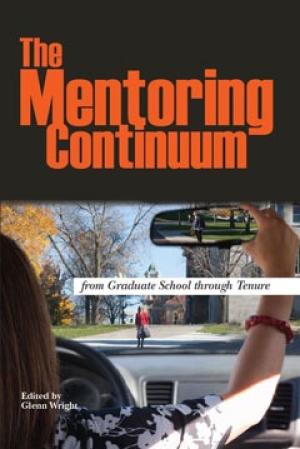
An unfortunate font choice limits the value of this otherwise helpful anthology. The font gives the text a strobe-like effect that resulted in my inability to read it in more than short intervals. On one hand, this is fine. The Mentoring Continuum consists of fifteen essays each of which stands independent of the others. This allows the reader to dip in and out of the collection at will. On the other hand, however, doing so reduces the benefit of reading the essays within the three sections (Origins, Transitions, Dialogues and Reflections) into which they have been arranged. It is especially instructive to read the first two sections as a set of essays on a common theme: “Origins” treats mentoring relationships in graduate school and “Transitions” addresses the period from associate professor to tenure. As “Dialogues and Reflections” is not associated with a particular career phase, this section suffers less from the impact of the font choice. Glenn Wright, editor and contributor, rightly points to “Graduate Student ISO a Mentor: A Dialogue about Mentoring” by Jan Allen and Kevin Johnson, as a quasi-summation of “many of the book’s main preoccupations, including mentee agency and responsibility, the virtue of peer mentoring, non-academic career preparation, teaching as a critical area of focus, and the key role of administration in providing the impetus, initial frameworks, and ongoing supports for mentoring efforts.” For those new to the conversation about mentoring, this chapter provides a nice introduction to the topic and associated interests. I expected The Mentoring Continuum to be of interest to faculty, and it is, but I was pleasantly surprised by how appealing this book will be to graduate students. A number of the authors offer detailed counsel to students on how to get the most out of a relationship with a mentor and how to set up different types of peer mentoring programs within their institutions. In the new market reality, many faculty members will find Paula Chambers’ essay, “Subject Matter Plus: Mentoring for Nonacademic Careers,” particularly valuable. Chambers reassures faculty that they need not be experts in multiple career paths outside academia. She challenges them, however, to follow any one, or better all three, of her recommendations for serving their students well in the current environment. First, “Manage Your Messaging”: Chambers explains why particular academic clichés need to be abandoned or rethought so students will be encouraged to consider nonacademic careers. Second, “Assess the Career Climate in Your Department”; Towards this end, she supplies a multiple-choice questionnaire that can be used to gather actionable information. Third, “Make Referrals to Available Resources”; Chambers provides an ample list to keep at hand. This chapter, “Subject Matter Plus,” exemplifies one of the distinctive strengths of this collection – the blend of the personal, the practical, and the theoretical dimensions of mentoring. A notoriously difficult concept to define, “mentoring” is given substance as it comes to life through conversations between mentors and mentees, charts and tables, and ample bibliographies.

In my last two blogs, I have been sharing some thoughts on teaching Sufism and contemporary Sufism, giving special consideration to the importance of helping students actively explore different elements of Sufi tradition and culture in the different Islamic periods. For this blog, I would like to point out opportunities to teach about Islamic arts from Sufi perspectives in order to provide a taste of Sufism’s impact on Islamic cultures and societies. Focusing on the arts allows the student to learn that Sufis frequently sought more artistic means of expression, including poetry, architecture, music, and calligraphy, in order to transcend the conventional language of theology and philosophy which too often fails to prove an adequate means of communicating higher truths. From Sufi perspectives, the arts embody metaphysical principles in visual and auditory forms, communicating these principles with an immediacy difficult if not impossible to achieve within the discursive confines of prose. Additionally, the arts have further functioned as a means to express the simultaneous unity and diversity of Islamic civilizations, as they communicate principles shared by all Muslims, and yet these principles are expressed through diverse cultural themes and motifs, illustrating the confounding array of cultural forms found within Islam. The profound influence of Sufi poetry, whether it be in Persian, Arabic, Somali, Urdu, or Turkish to name a few languages, is essential to discuss with students. For many Sufis (e.g., Rumi, Ibn al-Farid, al-Hallaj) poetry was the peak of eloquence and culture for expressing the vicissitudes of human life. By evoking perennial realities such as death, time, and change, poetry brings us into contact with our own existential limitations. In particular, by exploring the poetic works of different Sufi personalities, the student becomes familiar with a variety of Sufi themes, principles, practices and experiences. Studying Sufi poetry and the many poetic techniques (metaphorical language, rhythmical patterns, etc.) then helps the student to understand Sufi symbolism and the idea that the Sufi poet was endowed with the ability to penetrate the veil of appearances in order to depict the essential character of the image being portrayed. In other words, poetry becomes a vehicle to decipher the signs of the Divine. Architecture is also another artistic tradition that can help students consider how the sacred principles of Sufism took material form in structure, with the shrines of saints and Sufi lodges as well as mosques. These architectural wonders would define the great Islamic cities, while also leaving imprints on the surrounding, expansive countrysides. Students appreciate exploring how these structures were carefully constructed utilizing sacred geometrical principles, symbolic forms and ornamentation, color theory, and sacred calligraphy. Ultimately, many of these structures were created to communicate higher realities and Sufi cosmologies. These sites within the built environment were also the places where one of Sufism’s most iconic artistic forms took shape, the various sorts of chant and music developed by different Sufi orders. Each order would develop its own liturgy of chant, with particular formulas, breathing techniques, musical accompaniment, and even dance, reflecting the particular lineage and ethos of the order. By focusing on the significance of architecture, students learn that Sufi shrines and lodges and mosques of Muslim societies were pivotal sites around which Muslim culture revolved and evolved, where dervishes and sultans, devotees and those seeking healing, all came to participate in the presence of the sacred atmosphere they encountered at these sites. In many cases structures built for trade and residence would radiate outward from centrally located sacred spaces, visually representing the concept of the qutb, the Muslim saint who watches over a particular region. Shrines and lodges integrated local cultural architectural forms, making African and Asian as well as Arab and Persian architectural styles (to name just a few) integral parts of Islamic architecture more broadly. Finally, exploring the world of Quranic calligraphy and its influence on Sufism also helps students appreciate some very abstract metaphysical understandings. For many Sufis this practice of writing the sacred word took on added levels of significance, encouraging them to play a very active role in the development of Quranic calligraphy. They experienced calligraphy as an attempt to communicate spiritual truths and realities. In their pursuit of calligraphy, Sufis emulated the broader norm within Islamic culture to give deep respect to the capacity of the written word to convey revealed truths. They regarded Quranic calligraphy as a holy art that offers baraka (blessing) to the recipient of its beauty and wisdom. They contemplated not just the divine words and chapters in themselves, but also the Arabic letters as constituent elements of divine speech. The practice of calligraphy thereby became integrated with other methods of Sufi practice and included reflection on sacred and symbolic qualities of Quranic words. When sharing the significance of Sufism and the arts, it is important to emphasize how this deeply aesthetic orientation of Islamic culture is rooted in the Qur’an itself, which expressed ethical and metaphysical principles with rhythm and rhyme. This divine beautification of the word would be emulated by Muslims, for whom the word was central to artistic expression. The Quranic word then was beautified aurally in recitation, and visually in architecture, calligraphy, and crafts. This beautiful expression of the word further functioned to inspire divine remembrance, as the linguistic signs of God surrounded Muslim daily living. For many Sufis then any artistic expression, like poetry, architecture, and calligraphy, was a contemplative discipline, the practice of which was a form of dhikr, the art of remembering the Divine. 1. ‘I believe in the religion of love’ This calligraphic piece by Hassan Massoudy is a saying by Ibn al-‘Arabi from his book of poetry, Interpreter of Desires: ‘I believe in the religion of love, wherever its stages may go, love is my religion and faith.’ Hassan Massoudy, a native of Najef, Iraq, is a world-renowned master of contemporary Arabic calligraphy whose works bring light to a variety of classical Sufi personalities and their well-known sayings. To see more of Hassan Massoudy’s artwork visit http://www.massoudy.net. 2. Darou Khoudoss in Touba, Senegal Darou Khoudoss, “the Abode of the Holy,” is a mosque that was built in the place where Ahmadu Bamba, leader of the Muridiya Sufi order, experienced spiritual retreats and received mystical visions. This photo was taken by Dr. Eric Ross. For more about Ross’ research see https://ericrossacademic.wordpress.com/. 3. Sema A watercolor painting in the Shirazi style (c. 1582) depicting a sema. This picture is notable in that four women and a child are part of the Sufi circle, suggesting their initiation into the practices of the order. Source credit: https://the.ismaili/ismaili/fr/london-exhibition-provides-insight-life-and-legacy-prominent-persian-ruler

In this blog, I want to continue with the theme that animated my last post “Genealogically Attuned teaching in an Introductory Course on Islam.” To remind, the question I had engaged had to do with the problem of presenting in an undergraduate amenable fashion theoretical insights from the study of religion and the broader humanities. My investment in this question derives from the problem of how one might make in an introductory course on Islam theoretical arguments commonly advanced in humanistic scholarship through strategies that bypass the density of scholarly theoretical discourse. In other words, how to do theory in an introductory course without subjecting students to theory pressure? The last blog dealt with some challenges and prospects for the first day of an Introduction to Islam class by way of some reflections on interrogating the category of religion. Here I wish to briefly think about this problem in relation to more specific thematic units of such a course. First a brief description of the conceptual problem I want to think through here. One recurrent tendency I have observed among students is to regard phenomena such as colonialism and orientalism as historical events consigned to a safely distant past, as belonging to the 19th century neatly separated from their own present. How could this problem of assumed shelter from the violence of colonial pasts and their attached knowledge legacies be addressed in an Introduction to Islam course? How could the persistence of the shadows of colonial power be impressed upon students? The first day of a unit on Sufism presents a potentially profitable moment for such a task. The unit on Sufism (for thematically organized introductory courses) represents a highly rewarding yet challenging stop on the pedagogical itinerary. While providing excellent possibilities of close primary source reading, use of narrative, textual and audio-visual analysis, the danger that students will fall prey to the temptation of viewing Sufism as the stereotypical exotic or eccentric variety of Islam is always all too ripe. The first day of the unit on Sufism can also do some important conceptual work on the interaction of colonialism, orientalism, and Islam precisely by tackling major commonplace stereotypes about the Sufi tradition. As an illustration, let me share some highlights from a lesson plan for this day that I have frequently employed in my intro course. The goal of this class session is to make students think critically about the legacy of colonial knowledge production and Orientalism in the study of Sufism and Islam more broadly. This we try doing by focusing on 19th century Orientalist stereotypes about Sufism and their continuation in contemporary popular discourses on the subject. In a nutshell, some of these stereotypes include: 1) that Sufism is foreign to Islam with Greek, Indic, or Persian origins, 2) that Sufism is opposed to Islamic law and that Sufis don’t care about normative legal obligations, and concomitantly 3) that while Sufism is the exotic, soft, and liberal brand of Islam, Islamic law or the Shari‘a is its harsh, puritan, illiberal other. One can fruitfully show the effects of these Orientalist stereotypes in the present by juxtaposing film with text. More specifically, for this day, I combine discussion on the first chapter of Carl Ernst’s Shambala Guide to Sufism (which they read before class) with the in-class viewing of the first twenty minutes or so of the 1994 documentary I am a Sufi, I am a Muslim. The more recent documentary Sufi Soul by popular writer William Dalrymple is also a good alternative that serves the purpose. In small group discussions, I have students identify and make a list of stereotypes about Sufism in the works of various 18th and 19th-century European Orientalists and colonial officials (such as Tholuck, Elphinstone, Graham) as presented in the Ernst text. As student discussions are winding down, I pop in the documentary. I then ask them to make a note and a running list of any overlap between the Orientalist stereotypes they just discussed and ways in which the narrator of the documentary describes Sufism. The overlap is astonishing. Almost all Orientalist depictions (Sufism has non-Arab origins, it is opposed to ‘orthodox’ Islam, Sufis don’t prioritize ritual practices etc.) are repeated almost verbatim in the documentary. This conglomeration of textual and visual evidence invites students to reflect on traces of powerful 19th century discursive regimes on a popular and seemingly sympathetic documentary a century later. Film and text complement each other, the former amplifying the argument of the latter about the Orientalist reformulation of Sufism. But this much is not enough. In addition to uncovering the problems and persistence of Orientalist narratives about Islam and Sufism, it is also important to have students address the question of how Sufis themselves understand their tradition, especially in regards to Sufism’s relationship with Islamic law. For this, we again turn to the Ernst chapter, especially page 26 that details Sufis’ self-imagination of their tradition in clear, concise, and singularly productive ways. By reading relevant passages aloud in class, we establish the point that in contrast to 19th century Orientalist and contemporary popular stereotypes, the relationship between Sufism and law within the tradition is hardly understood in the form of an oppositional binary. Rather, this relationship is imagined as a hierarchy whereby abiding by the law and its limits represents a prerequisite to progress on the path to divine reality. This hierarchical arrangement is reflected in the rhyming progressive (in a literal sense) formula Shari‘a (divine normative order)-Tariqa (the Sufi path)-Haqiqa (divine reality). Put simply, Sufis do not reject the law and its imperatives. They instead consider it a first step towards higher spiritual refinement. A hierarchy is not the same as a binary. Through this class session, some highlights of which I have outlined above, students in an introductory course can be equipped to interrogate the afterlives of colonial power and Orientalist discourse in the present without being burdened with the weight of prohibitive theory talk. It can also attune them to ways in which a more careful consideration of the logics and textual resources within a tradition can disrupt popular stereotypes and representations about it. Genealogical skepticism is thus usefully complemented with discursive analysis.
As a womanist biblical scholar working in the context of a theological institution, Christian Practical Wisdom: What It Is, Why It Matters helps me understand my role as a theological educator. Authored by Dorothy Bass, Kathleen A. Cahalan, Bonnie J. Miller-McLemore, James Nieman, and Christian B. Scharen, this volume takes seriously the concept of Christian practical wisdom (the ability to “render a proper assessment of a situation and to act rightly as a result”) (4). Theological educators are called to instill this virtue within students. Divided into three parts, the largest sections (Part One and Part Two) loosely interrogate embodied knowing with interdisciplinary conversations. Part Three serves as an invitation to collaboration and experimentation and expresses gratitude for the gift of collaboration that the authors experienced while working on this project. Indeed, collaborative work is rare within the academy of religious scholarship and makes me wonder what theological schools would look like if faculty from across disciplines gathered together to collaborate in their own contextual spaces. Here are brief highlights of a few essays. In “How Bodies Shape Knowledge,” Miller-McLemore engages the modern biases that separate bodily practices from our modern practices of worship. Thinking across denominational differences, Miller-McLemore ponders a theology of sensory movement that, while seemingly easy for children, becomes more difficult as we age. Realizing that we have a long history of “damning the body and its temptations” (29), Miller-McLemore uses the apt metaphor of “spooning” within the marital context to illustrate “everyday body wisdom” (30). Spooning serves as part of a discussion around how a body knows, enacts, and evokes love even in a state of unconscious sleep. As bodies lead, oftentimes thoughts follow. Miller-McLemore argues that the wisdom of God is bodily wisdom gained through everyday reminders of death and love together. Since sleep is like death as it mirrors the body’s vulnerability, the act of spooning while sleeping serves as a reminder of the love within the context of death. Miller-McLemore argues that there is disconnect between the spooning that we experience in relationship with God and how we traditionally teach within a theological context. I found two essays particularly edifying as a woman and a scholar of color. First, Scharen’s essay entitled “The Loss and Recovery of Practical Wisdom in the Modern West” evidences the need for a kind of knowing that is both concrete and universal, timely and timeless, practical and abstract (174). To highlight his point, Scharen engages the feminist history of the Bohemian Princess Elisabeth of the Palatinate and her letters to French philosopher Rene Descartes. Even though the mind-body dualistic legacy of Descartes ruled for a time in Western philosophy, Elisabeth’s recovered feminine voice rightly pushed Descartes to discuss his maxims for public life instead of relating his pontifications only to himself (160). For Elisabeth, practical wisdom had to relate to the practical ethics of public life and duty. Attention to the feminist revisionist history and philosophical debates behind these letters allows Scharen to converse with contemporary theologians such as Fergus Kerr and Sarah Coakley and the “taken-for-granted notions we live by” (166). In the essay “Biblical Imagination as a Dimension of Christian Practical Wisdom,” Bass rightly argues for the concept of biblical imagination as “a knowledge of, which cannot be had without life-shaping embodied participation” (236). As a womanist biblical scholar within a theological context, I am constantly advising students to embrace the “both/and” nature of academic biblical scholarship in combination with their embodied participation with the biblical text. Indeed, we need both. While I thoroughly enjoyed reading and pondering deeply the issue of Christian practical wisdom, please allow one critique. I wonder how the conversation and collaboration would have changed if there were a visibly identified religious scholar of color working on the volume. While each of the scholars involved are esteemed in their own right, I am left wondering how Christian practical wisdom looks different from other perspective such as, but not limited to, global South, African American, Latino/a, or Asian Christian perspectives. Nonetheless, I enjoyed reviewing such an important volume.
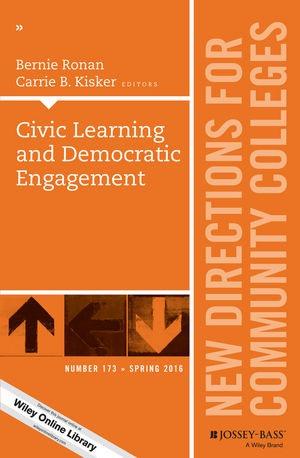
New Directions in Community Colleges, may be an unfamiliar journal to many scholars in theology and religion, but growing interest in community colleges as transformational contexts warrants attention. This edition presents scholarship on ethical and pedagogical issues of civic engagement in higher education. Recording workshops at the Kettering Foundation convened by Derek Barker collaborating with editors, Ronan and Kisker, these authors share the conviction that higher education should promote democratic values. Without fully acknowledging controversial aspects of that claim, they explore common ground working for social mobility, civic agency, and democratic practices such as voting, public discourse, and advocacy. Contributors reflect on two reports, both published in 2012: “Advancing Civic Learning,” representing the work of the U.S. Department of Education, and “A Crucible Moment,” written by the National Task Force on Civic Learning and Democratic Engagement, work of the American Association of Colleges and Universities. Both reports address educational goals of preparing engaged citizens who transfer civic skills like capacities for communicating, leading, organizing, and advocating from the classroom to workplace, public, and personal settings. Furthermore, the integration and assessment of civic learning and democratic engagement across educational programs from formal curriculum to extracurricular opportunities offered insight for building institutional support or resources for others innovative programs. For instance, Carrie Kisker surveyed sixty community colleges asking whether civic engagement was a goal stated in missions or strategic plans with dedicated infrastructure and incentives in tenure or advancement process. She found diversity of approaches but high level of integration in curriculum and encouragement in extracurricular programs. However, her findings document a lack of a standardized instrument to assess civic engagement and the need for more study of institutionalized support. Other highlights include David Matthews’s proposed deliberative pedagogy which he linked to timely questions about authority and legitimacy in the public mandate for institutions of higher education. For example, John J. Theis cited the problems of people losing confidence in each other and in institutions, drawing on Carcasson’s work noting that the “expert model” usually dominates higher education in ways that disempowers collective action (43). The authors connect their work as educators with enduring questions of ethics, cultural identities, and inequality. Significant numbers of students learning about religious studies and theology are enrolled in classes at community colleges with more racial and economic diversity than most seminary or elite college and university classes. Despite the lack of prestige or attraction these settings may have for many faculty, community colleges are rich in ability to shape citizens and hence the future of our communities. Furthermore, although many seminaries and religious studies departments compete fiercely and perpetuate bitter rivalries to attract students, community colleges seem better able to collaborate with each other and learn together in ways institutions for teaching religion and theology would do well to study. Since religious institutions also need leaders with civic competencies, theological educators concerned with the future will find the journal provocative. Especially those educators committed to promoting the common good, social justice, and public engagement will benefit from reading this book.
The ten chapters in this volume first appeared as a special issue of Teaching in Higher Education (2013). Each author is situated in particular classroom and institutional contexts ranging from South Africa to Australia, from Denmark to China and Canada, from the United Kingdom to the United States. Their expertise is far reaching. Although none of the contributors are in the areas of theology or religious studies, the questions raised and addressed in this volume center on strategies for effective teaching and learning. Collectively, these chapters supply a snapshot of the challenges and promises facing instructors of higher education. As a result, there are several potentially relevant sites for reflection and application. Grouped thematically, student-centered chapters highlight raising awareness of White Privilege (chapter 1) and of global citizenship through on-campus threshold-crossing experiences (chapter 3), undergraduate research (chapter 4), and social justice (chapter 8). More instructor-centered chapters confront the role of self-reflective practices (chapter 2), and of online education (chapter 10). Curricular chapters focus on inter-disciplinarity in an engineering curriculum (chapter 5), on the impact of problem-based learning on Chinese students undertaking higher education outside of their homeland (chapter 6), and on assessment practices (chapter 9). Of all of the chapters in this volume, “Reframing teaching relationships: from student-centered to subject-centered teaching,” would be the most suitable starting point for the reader of the Wabash Center’s online reviews. Although this chapter is situated at the center of the volume (chapter 7), it serves as the organizing chapter because it tackles an issue raised more specifically in the other chapters. Employing frame theory, the authors respond to questions of self-identity and the teaching relationship by advocating subject-centered learning. The strength of the volume rests with the particular contribution of each individual chapter. Offering a specific perspective in a local context, each author works within cleanly defined theoretical boundaries and approaches, and presents an argument worthy of further consideration and discussion. Despite this strength, however, the overall coherence of the volume suffers from the lack of a formal, introductory chapter and a final, concluding chapter. An additional chapter at the fore could justify the order of presentation of the collection (thematically topically, or through some other means) and facilitate the act of reading by explaining criteria for selection and inclusion; a closing chapter might indicate possible applications of the issues in other contexts and introduce new approaches or questions moving forward. The lack of these critical organizing chapters at the opening and closing of the volume requires the reader to determine the contours of coherence across the chapters and to impose frameworks for interpretation.
Wabash Center Staff Contact
Rachelle Green, Ph.D.
Associate Director
Wabash Center
greenr@wabash.edu