Resources

Peter Elbow's widely acclaimed and original theories on the writing process, set forth in Writing Without Teachers and Writing With Power, have earned him a reputation as a leading educational innovator. Now Elbow has drawn together twelve of his essays on the nature of learning and teaching to suggest a comprehensive philosophy of education. At once theoretical and down-to-earth, this collection will appeal not only to teachers, adminitrators and students, but to anyone with a love of learning. Elbow explores the "contraries" in the educational process, in particular his theory that clear thinking can be enhanced by inviting indecision, incoherence, and paradoxical thinking. The essays, written over a period of twenty-five years, are engaged in a single enterprise: to arrive at insights or conclusions about learning and teaching while still doing justice to the "rich messiness" of intellectual inquiry. Drawing his conclusions from his own perplexities as a student and as a teacher, Elbow discusses the value of interdisciplinary teaching, his theory of "cooking" (an interaction of conflicting ideas), the authority relationship in teaching and the value of specifying learning objectives. A full section is devoted to evaluation and feedback, both of students and faculty. Finally, Elbow focuses on the need to move beyond the skepticism of critical thinking to what he calls "methodological belief" -- an ability to embrace more than one point of view. (From the Publisher)

This book identifies optimal practices or "benchmarks" for creating a quality learning environment within higher education and outlines steps faculty and administrators can take to improve student learning. Author Janet Donald integrates extensive research on teaching and learning with findings from her in-depth interviews with faculty and administrators at four of America's premier research institutions. She focuses on key factors influencing learning, identifies practices and policies central to effectiveness, and offers timely and feasible solutions for meeting student learning challenges. Using the voices of faculty, administrators, and members of higher education centers, Donald investigates institutional missions and priorities. She examines how learning goals vary across the disciplines and what this means in terms of student outcomes. She also describes practices that support the improvement of teaching and she discusses classroom assessment techniques that measure learning and teaching. Donald examines student selection and access - especially questions of quality and diversity - and discusses how to foster motivation for learning. In addition, she provides strategies for recognizing teaching in tenure and reward systems and points out the importance of academic leadership. (From the Publisher)

Designing and Assessing Courses and Curricula reflects the best current knowledge and practice in course and curriculum design and connects this knowledge with the critical task of assessing and learning outcomes at both course and curricular levels. Tested and refined through long-term use and study, the change model presented in this book shows how to move from concept to actualization, from theory to practice. (From the Publisher)

Learning Was Never Like This ! Take control of your life... free your natural genius to perform to its true potential. Quantum Learning features a revolutionary new format that introduces the reader to a world of learning unlike any other. Never before has a guide been designed to accomodate the unique learning style of the individual. Whether you're a professional, a student, or a person who simply wants to improve his or her learning capacity, this extraordinary guide will increase your personal power, help you learn more, earn more, and take you where you want to go. Inside you will learn: -How to spark your motivation. -How to master high-tech note-taking techniques. -How to discover your own personal learning style and cultivate a winning attitude. - How to work your own memory miracles, how to write with confidence, and much, much more! (From the Publisher)
This guide to supervising doctoral research is a practical handbook for both the novice and the experienced higher degree supervisor. It looks at how to get students to produce good PhD theses on time, and how to prevent failed theses. (From the Publisher)
Brings together two related topics: the practice of ethics in the university, and the teaching of practical or applied ethics in the university. Surveys practical ethics, offering an explanation of its recent emergence as a university subject, and identifies some problems that the subject generates for universities. Examines research ethics, including the problem of plagiarism, and discusses how ethics can be integrated into the university curriculum and what part particular cases should play in teaching of ethics. Also looks at sexual ethics. (From the Publisher)

This book is as much, perhaps more, an exhortation to action than a piece of social science research. In an age when the idols of the tribe or the centrality of self are aggrandized, is it possible to restore a sense of human purpose that extends beyond place or person? To answer this question a core of 100 people, determined as "capable of sustaining commitment to the common good in the face of global complexity," were interviewed, not so much to "prove hypotheses" but to develop "fertile insights" for further research and action in order to "kindle a common fire and forge a new synthesis of practical wisdom." This requires people who can regard space as hospitable, inhabited by mentors and others capable of demonstrating that one can and ought to make a difference in the world; people who can develop habits of mind to engage others and a symbolic world, including the world of story and faith, capable of sustaining a committed consciousness. Two "interludes" describe those who exhibit that concern for the commons, and an epilogue suggests an individual and collective strategy to nourish the sense of the collective. (From the Publisher)
This unusual book begins each chapter by posing a question with which college and university teachers can be expected to identify; and then goes on to answer the question by presenting a series of examples; finally, each chapter closes with 'second thoughts', presenting a viewpoint somewhat distinct from that taken by John Cowan. This book will assist university teachers to plan and run innovative activities to enable their students to engage in effective reflective learning; it will help them adapt other teachers' work for use with their own students; and will give them a rationale for the place of reflective teaching and learning in higher education. (From the Publisher)
Everyday Knowledge and Uncommon Truths: Women of the Academy draws on the life experience and varied backgrounds of academic women from the United States, Australia, New Zealand, and Canada. To provide diverse perspectives on women's experiences of being and knowing in and outside the academy, contributors draw on a range of critical approaches derived from feminism, post-structuralism, postmodernism, critical education theory, discourse theory and analysis, narrative inquiry, and life histories. (From the Publisher)
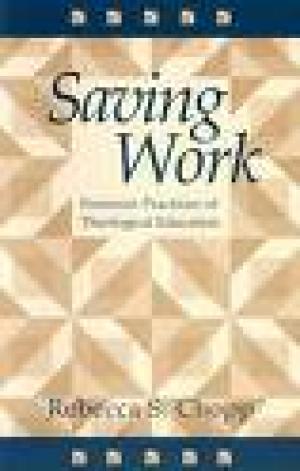
One of the most significant changes in theological education during the past two decades has been a dramatic rise in the enrollment of women in the seminaries. In this ground-breaking book, Rebecca Chopp explores the impact these new voices are having on theological education. She looks at how women and men are actually forming a new Christian praxis through their engagement with feminist practices and thought that often exist outside the sphere of official recognition. This important book will be a starting point for dialogue about the role theological education will play as this new Christian praxis emerges. (From the Publisher)
Wabash Center Staff Contact
Rachelle Green, Ph.D.
Associate Director
Wabash Center
greenr@wabash.edu