Resources
When you think about legal issues and field education, how do you feel? What thoughts come to mind when you think of culture in this context? What stories and teachings from our faith tradition can inform the interface between legal issues and field education? (From the Publisher)
Globalising Education is a systematic and thoroughly researched study of how technologies have altered the delivery and reception of education. Mason examines how global education is actually delivered in practice, case studies which investigate current developments and applications in the USA, Europe, the UK and Australia, and conclusions drawn from the issues covered. She studies the huge impact of the World Wide Web on current educational practice, exploring the implications for students, teachers and the larger institutional framework, and provides an important overview of the current technology and the technologies to come. (From the Publisher)

Journal Issue.

Drawing on experiences from a range of fields, including public administration, policy analysis, law, teacher training, ethics, and undergraduate education, this book is intended to be a practical, process-oriented guide to teaching, writing, and learning with cases. The guide is organized into four parts: (1) "Teaching with Cases: Principles" (concerned with the different meanings of the term "case method" in various domains of teaching, with sources of resistance to case teaching, and with strategic issues teachers face in deciding what and how to teach); (2) "Teaching with Cases: Techniques" (concerned with the practice of case teaching ranging from the basics to the more advanced "tricks of the trade" practiced by experienced instructors; content could be covered in a case teaching workshop of three to five days in length); (3) "Curriculum Planning" (describes the types of cases available and provides guidelines for selecting appropriate cases to use for teaching); (4) "Case Writing" (approaches case writing as the subject might be handled in a case writing workshop designed to produce usable new cases). An appendix contains a teaching case, a teaching note, and a case analysis. References include a selected bibliography of case teaching and case learning guides and literature, case catalogs, and on-line resources. (From the Publisher)

Journal Issue.
In question-and-answer form, Ms. Mentor advises academic women about issues they daren't discuss openly, such as: How does one really clamber onto the tenure track when the job market is so nasty, brutish, and small? Is there such a thing as the perfectly marketable dissertation topic? How does a meek young woman become a tiger of an authority figure in the classroom and get stupendous teaching evaluations? How does one cope with sexual harassment, grandiosity, and bizarre behavior from entrenched colleagues? Ms. Mentor's readers will find answers to the secret queries they were afraid to ask anyone else. They'll discover what it really takes to get tenure; what to wear to academic occasions; when to snicker, when to hide, what to eat, and when to sue. They'll find out how to get firmly planted in the rich red earth of tenure. Ms. Mentor's wisdom grows out of many a real-life experience: she guarantees that some readers will squirm. She lavishly dispenses witty advice, and valuable information, while despising psychobabble, postcomprehensible jargon, and pontification by anyone other than herself. She also insists that sisterhood is, and must be, powerful. Readers of Ms. Mentor's Impeccable Advice for Women in Academia are in for an unusual treat. (From the Publisher)

College students and graduates have fond memories of campus events such as commencement, founder's days, convocations, and baccalaureate. These events, defined as rites of passage, secular ceremonies, or cultural performances, create a special feel to a campus remembered for years to come. Borrowing from interpretive anthropology, the author spotlights the following ideas: culture is revealed and forms of life are expressed through the actions and words of community members; human communities are dynamic, complex, and ever-changing environments revealed through analysis of cultural events; and commonplace rituals and ceremonies play a central role in the cultural work of human meaning. The purpose of the book is to explore campus culture as revealed through rituals and ceremonies. (From the Publisher)
With the concept of a global village now a reality, institutions of higher learning must broaden their thinking beyond American social, cultural, and economic borders. Reforming the Higher Education Curriculum is a collection of papers that explores how a college or university can plan and implement a systemwide program for internationalizing the curriculum throughout the entire university. The contributors argue that a thorough overhaul of the higher education curriculum is necessary to turn out graduates with true international skills and perspectives. Among the strategies recommended are courses and programs that involve study abroad, intensive study of foreign languages, and opportunities to cultivate intellectual, professional, and personal associations with people from other cultures. (From the Publisher)
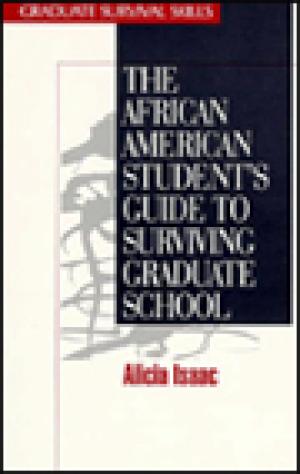
What does it take to get into and through graduate school? What special challenges, opportunities, and issues face an African American graduate student? The African American Student's Guide to Surviving Graduate School offers a practical roadmap to help African American students get the most out of their graduate school experience. The book covers a number of issues, including creating a program of study, financial aid, and the dissertation process. Author Alicia Isaac thoroughly covers the entire graduate process, offering case studies, anecdotes, words of wisdom from prominent African Americans, checklists, and self-assessment scales to provide a useful guide for students involved in or considering graduate study. (From the Publisher)
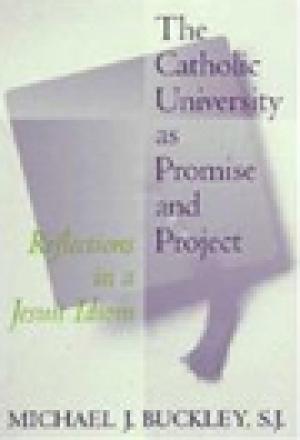
The remarkable development of the Catholic university in the United States has raised questions about its continued identity, its promise, and its academic constituents. Michael J. Buckley, S.J., explores these issues, especially as they have been experienced in the history and contemporary commitments of Jesuit higher education. (From the Publisher)
Wabash Center Staff Contact
Rachelle Green, Ph.D.
Associate Director
Wabash Center
greenr@wabash.edu