Resources
Designed as a resource for persons interested in improving the quality of teaching and student learning, this book covers aspects of the teaching-learning process that can be altered with relative ease. Practical suggestions are given in chapters focusing on concepts known to have a strong influence on student learning. The chapters include: (1) new ideas on teaching and learning in higher education; (2) exceptionally effective college teachers (identifying and interviewing them, feedback, etc.); (3) learning and evaluation (traditional and alternative uses, critical elements, subject area differences, etc.); (4) mastery learning; (5) motivation and early success (predicting college success, importance of first semester and first test, etc.); (6) time use and student involvement (John Carroll's model, Benjamin Bloom's ideas on learning rate, allocated versus engaged time, etc.); (7) student support services (faculty contact, tutorial services, computer-assisted instruction, etc.); and (8) staff development (collegial sharing, program characteristics, etc.).
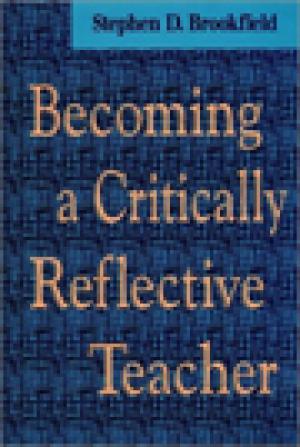
Building on the insights of his highly acclaimed earlier work, The Skillful Teacher, Stephen D. Brookfield offers a very personal and accessible guide to how faculty at any level and across all disciplines can improve their teaching. Applying the principles of adult learning, Brookfield thoughtfully guides teachers through the processes of becoming critically reflective about teaching, confronting the contradictions involved in creating democratic classrooms, and using critical reflection as a tool for continuous personal and professional development. (From the Publisher)
Adult educators are increasingly faced with the task of creating and facilitating learning activities for participants from diverse backgrounds. They need to take into account the needs of both male and female learners, learners of different ethnic and racial groups, and learners from different social backgrounds in creating an inclusive adult learning environment. The developing body of literature on multicultural concerns in adult education, on feminist theory and on critical and feminist pedagogies offer some insights in this regard. This publication aims to: (1) synthesise some of the work related to inclusivity and diversity that has already been done in the field of adult education; and (2) examine aspects of the wider literature base on multicultural education and feminist theory and pedagogy that can offer insights specifically for creating inclusive adult learning environments. (From the Publisher)
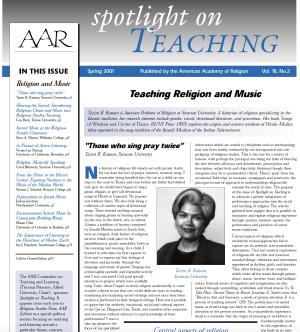
Journal issue. Full text is available online.
The work of faculty is stressful, yet most stress studies focus on faculty's research rather than teaching. This study examined the experience of nine tenured professors in search of answers to these questions: What classroom interactions do faculty find stressful? Why do faculty find these activities stressful? How do faculty explain, perform, and organize classroom practices to cope with these stresses?
Discusses information technology in theological schools. Challenges in the implementation of technology; Sample of theological resources; Factors that drive the creation of virtual seminaries.
Explains that diversification of the faculty brings intellectual diversity in scholarship. Importance of ethnic diversity in colleges and universities to the viability of higher education in the United States (U.S.); Status of the recruitment and retention of faculty of color in the U.S.; Advantages of diverse faculty in the academic community; Effects of affirmative actions in higher education to colored people.
Elizabeth Ellsworth finds that critical pedagogy, as represented in her review of the literature, has developed along a highly abstract and Utopian line which does not necessarily sustain the daily workings of the education its supporters advocate. The author maintains that the discourse of critical pedagogy is based on rationalist assumptions that give rise to repressive myths. Ellsworth argues that if these assumptions, goals, implicit power dynamics, and issues of who produces valid knowledge remain untheorized and untouched, critical pedagogues will continue to perpetuate relations of domination in their classrooms. The author paints a complex portrait of the practice of teaching for liberation. She reflects on her own role as a White middle-class woman and professor engaged with a diverse group of students developing an antiracist course. Grounded in a clearly articulated political agenda and her experience as a feminist teacher, Ellsworth provides a critique of "empowerment," "student voice," "dialogue," and "critical reflection" and raises provocative issues about the nature of action for social change and knowledge.
Discusses the fact that despite a decade of changing ideas about student learning and instruction based on learner-centered education, most faculty still rely on lectures. Identifies individual and group dynamics that impede collaborative learning, considers the moral base of collaborative learning, and offers some guiding principles of growth-oriented learning.
Ask yourself key questions about the proposed group activity, be certain that the activity furthers course objects, allow for team building, encourage students to monitor group processing, promote individual accountability, etc.
Wabash Center Staff Contact
Rachelle Green, Ph.D.
Associate Director
Wabash Center
greenr@wabash.edu