Resources
This book emerges from the Carnegie Foundation for the Advancement of Teachings study of the most pressing concerns involved in preparation of clergy across all faiths and denominations. Working with accrediting bodies and professional associations as well as the educational institutions themselves, the findings reported in this book can be used to improve the quality of education for future ministers, priests and rabbis. (From the Publisher)

Journal Issue.
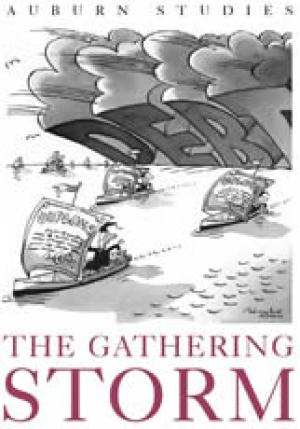
This issue on the educational debt of theological students revisits a topic first studied ten years ago by the Auburn Center for the Study of Theological Education. The 1995 report found that debt was indeed becoming a problem for a significant, although small, proportion of students. A majority of students now carry educational debt, and they are borrowing larger amounts than in the past. As a result, many theological school graduates report that their level of debt is affecting their career choices, holding them back from purchasing homes, preventing them from saving for their children’s education, limiting their retirement savings, causing them to delay health care needs, and creating stress in their personal and professional lives. Some students, schools, denominations and congregations have, in response to the signs of impending trouble, found ways to keep debt under control. All resources of the church—educational, institutional, theological, financial—need to be brought to bear to avoid the gathering storm of debt that threatens the next generation of clergy and lay church professionals. (From the Publisher)
This book provides a basic road map for addressing the critical ethical issues in service-learning in order to prepare students, faculty, and administrators for the sometimes difficult ethical dilemmas that arise during the service-learning process. Included is a synopsis of the theoretical context of moral decision-making and a proposed code of ethics for students, faculty, and administrators and a model of ethical decision-making, as well as a review of current literature on formative and summative assessment in service-learning and an overview of risk management. The book also offers examples of hypothetical dilemmas that consider several perspectives, followed by a set of questions to guide the reader through the model of ethical decision-making. (From the Publisher)

Journal Issue.
This collection reflects the experiences of librarians, teaching faculty and library directors, whose perspectives range from cynicism to cautious optimism and idealism when it comes to working with teaching faculty. The volume includes case studies, surveys, sample questionnaires, statistics and a toolkit for establishing an effective library liaison program. The essays examine the teaching and learning environment, course growth and maintenance, and the "professor librarian" model. (From the Publisher)

This volume addresses the limitations of an instrumental perspective on collaboration and explores why stakeholders in higher education should refocus attention on collaboration as a source of faculty learning. The chapters establish a theoretical basis for thinking about faculty learning and then use case studies to explore this topic in the context of service or outreach, research, and teaching. Included as well are a meta-analysis of the cases to demonstrate what they teach about contexts that promote faculty learning and a discussion of the implications of the analysis for higher education policy and practice, including the evaluation of collaboratively produced work. The framework and cases are useful to an audience of academic leaders committed to faculty development and to creating hiring, promotion, and tenure policies that reward the full range of scholarly pursuits. They should also prove instructive to faculty embarking on interdisciplinary teaching, research, or outreach activities. This is the 102nd issue of the Jossey-Bass quarterly report series New Directions for Teaching and Learning. (From the Publisher)
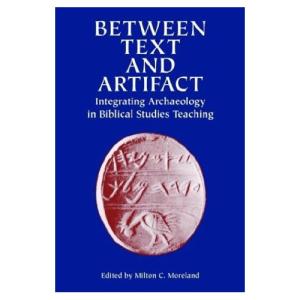
Though researchers in both Biblical studies and archaeology have finally recognized the contributions they can make to each others' disciplines, the integration has been difficult to transfer to teaching, so that future scholars will not have to keep climbing over the same wall every generation. Teachers of history and religious studies share some of the approaches they have used to solve the problem. (From the Publisher)
"In Teaching as a Sacramental Act, Moore asserts that Christian vocation, and the teaching vocation in particular, can be best understood as sacramental, mediating the grace of God through ordinary creation for the sanctification of human life and the well-being of all creation. She develops her argument through three important factors: a historical-theological analysis of the Christian sacraments and sacramentality; a phenomenological study of teaching events; and a description of six sacramental movements and corresponding teaching practices as informed by Jewish-Christian traditions and Eucharistic practices." Teaching as a Sacramental Act is ideal for students, pastors, Christian educators, spiritual directors, and pastoral caregivers who want to rethink and reshape the teaching ministry of the church. (From the Publisher)
Wabash Center Staff Contact
Rachelle Green, Ph.D.
Associate Director
Wabash Center
greenr@wabash.edu