Resources
In this important resource, leading figures in the field of student affairs examine the key issue of student expectations of college, then contrast them with the real experiences of students. The book identifies strategies for addressing the disjunctions between expectation and experience. Sponsored by the National Association of Student Personnel Administrators, the book is intended as the starting point for campus discussions and will undoubtedly spark similar conversations across higher education leadership, and perhaps even among parents and students as well. (From the Publisher)
This important resource describes how higher education contributes to the public good and offers suggestions for how leaders can enhance their contribution through new policies and practices. Higher Education for the Public Good draws on the experiences of individuals and groups from a wide-variety of campuses throughout the country. The information was gathered at various dialogues hosted by the Kellogg Forum on Higher Education for the Public Good. In addition the book suggest ways that leaders can constructively engage in a debate about the pubic good with the public, legislators, and among institutional members of high education. (From the Publisher)
Although new forms of learning call for new forms of assessment, many faculty struggle to find different ways of testing their students' achievements. This issue introduces readers to both theory and practical examples of innovations in assessment in the college classroom. Examples include authentic testing, testing with multimedia, portfolios, visual synthesis, and performance-based testing, among others. Contributors also argue that student performance on exams can be improved by techniques that can be implemented both before and after the exam to make the students better learners. (From the Publisher)
The Power of Critical Theory makes a powerful case for how the work of leading critical theorists can help adult educators and learners make sense of the pressing dilemmas, contradictions and frustrations they experience in their work. Stephen Brookfield guides the readers through a number of concepts and the theorists most identified with each concept. He also examines critical theory from writers who critique the theories using the lenses of gender and race. (From the Publisher)
Educating Leaders for Ministry names four overarching challenges that students, faculty, and administrators face in theological education: theological differences, learning differences, integration, and assessment. The six-year program, known popularly as the Keystone Conferences (1996-2001), tapped the experience of nearly 150 educators and administrators as it identified and proposed responses to the particularly problematic issues that surface in the teaching and learning endeavor in Roman Catholic theological education in the United States. (From the Publisher)
This practical, best-selling book has guided thousands of faculty through the promotion and tenure process since its publication in 1995. This new edition has been significantly revised and expanded, but has also kept its focus on process—what faculty can do to make a better case for why they should be promoted or tenured. This new edition of Preparing for Promotion, Tenure, and Annual Review contains a number of additional resources not included in the previous version—materials that are designed to help faculty prepare for a major professional review—such as post-tenure review, teaching with technology, dealing with changing guidelines and policies, and suggestions on how annual review materials can be used as a foundation for the promotion and tenure portfolio. In addition to updated references and resources, there are also expanded sections on scholarship, on teaching and on advising, on how to best document faculty role and impact as part of a team, and on collegiality. (From the Publisher)
"Degrees of Choice provides a sophisticated account of the overlapping effects of social class, ethnicity and gender in the process of choosing which university to attend. The shift from an elite to a mass system has been accompanied by much political rhetoric about widening access, achievement-for-all and meritocratic equalisation." This book gives a full and different picture, drawing on qualitative and quantitative data to show how the welcome expansion of higher education has also deepened social stratification, generating new and different inequalities. While gender inequalities have reduced, those of social class remain and are now reinforced by racial inequalities in access. Employing perspectives from the sociology of education and particularly Bourdieu's work on distinction and judgement, the book links school (institutional habitus) and family (class habitus) with individual choice making in a socially informed dynamic. (From the Publisher)
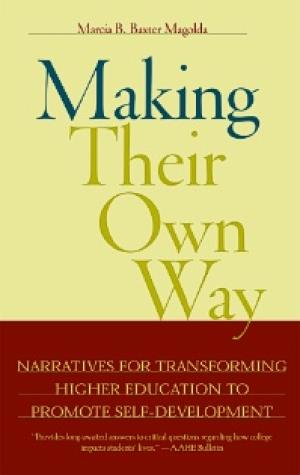
What impact does a college education have on students' careers and personal lives after they graduate? Do they consider themselves well prepared for the complexities, demands and ambiguities of contemporary society? What can we learn from their stories to improve the college learning experience? This ground-breaking book extends a unique longitudinal study of 101 male and female college students started by the author in 1986, and reported in her highly successful and influential book, Knowing and Reasoning in College (1992). This book follows the journeys of the young adults remaining in the study -- drawing on over 300 new interviews -- from graduation to their early thirties. Through the students' own stories, Marcia Baxter Magolda allows us to follow their journeys to an internally-authored sense of identity and belief systems, and in many cases to witness the development of the complex ways of making meaning that are needed for fulfilling participation in modern society. From her observation and analysis, she derives a new framework for higher education to achieve better stewarding and fostering of its students' crucial journeys of transformation. She develops the concept of providing "good company" -- through the shaping of curriculum and co-curriculum, advising, leadership opportunities, campus work settings, collaboration, diversity and community building -- that young adults need along the way to finding and to taking their place as citizens and leaders in the twenty-first century. This is an important book for all teachers and leaders in higher education who are concerned with the holistic development of students, and with higher education's responsibility to foster critical thinking, citizenship and leadership. It has particular relevance for student affairs educators and professionals; as well as for graduate, professional school and continuing education faculty who seek insight into young adult development. (From the Publisher)
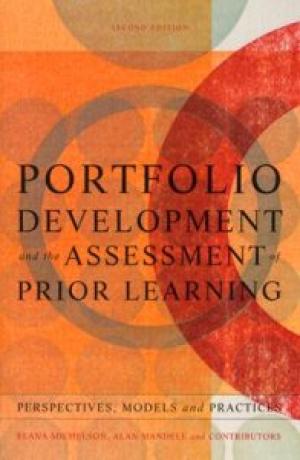
For over thirty years, portfolios have been used to help adult learners gain recognition for their prior learning and take greater control of their educational experiences. The portfolio has become a distinctive means of assessing such learning, serving as a meaningful alternative to conventional papers and standardized testing. Portfolio Development and the Assessment of Prior Learning: Perspectives, Models, and Practices provides a primer of flexible approaches to shaping and conducting portfolio-development courses. It offers practitioners in the field an extensive range of model assignments, readings, and classroom activities, each organized around a specific theme: Academic Orientation, The Meaning of Education, Personal Exploration, Learning from the Outsider Within, The World of Work and Careers, and Dimensions of Expertise. Twelve case studies by practitioners in the field then show how academics in the US and around the English-speaking world have adapted the portfolio to changing circumstances in order to deliver academically rich educational services for adults. These case studies highlight portfolio development in the context of web-based instruction, changing institutional imperatives, service to historically disenfranchised groups, partnerships with industry, and cross-institutional cooperation. In addition to serving as a valuable hands-on resource for practitioners, Portfolio Development and the Assessment of Prior Learning locates portfolios and assessment in a broad social and intellectual context. Thus, the authors also offer an historical overview of the usefulness of portfolios in the assessment of prior learning and then consider their use inthe future, given current trends in higher education for adults. The book explores the implications of a changing educational landscape, in which new student populations, budgetary pressures, and understandings of knowledge both enrich and challenge student-centered approaches such as portfolios. The approaches and case studies are not only valuable to adult educators but, equally, to faculty in higher education concerned with the development of competency- and outcomes-based assessment. (From the Publisher)
Wabash Center Staff Contact
Rachelle Green, Ph.D.
Associate Director
Wabash Center
greenr@wabash.edu