Resources
This study investigated the impact of the Christian college educational environment, both academic and nonacademic, on student spirituality. Nine hundred fifty-three self-reported surveys, representing 18 U.S. Christian colleges and universities, were used. The typical respondent was female, Caucasian, and a resident upperclassman. For the purposes of this exploratory study, spirituality was operationally defined as “spiritual formation,” referring to one’s growth towards spiritual maturity, which is reflected in one’s relationships with God, self, and others. Findings reveal interesting trends about factors associated with spirituality on campus, and relate student perceptions of spirituality and the Christian college experience. Results indicate that students perceived many factors of their Christian college experience as positive. In particular, the nonacademic aspects of college life were perceived to be more influential on spiritual formation than the academic. For example, students rated their peer relationships as being most significant to their spiritual growth. Results also illustrate demographic differences in perceptions of the various aspects of the Christian college experience. Practical applications suggest assessing the existing range of college academic and nonacademic offerings and training for faculty development in class assessments. Other applications include providing programs for students experiencing emotional crises or pain. Recommendations for further research include studying other factors such as sports, counseling services, church involvement, family support, maturation factors, and the impact of computers. Research may also benefit from focusing on certain survey items more specifically, such as various kinds of peer relationships and cultural diversity. (From the Publisher)
The purpose of the study reported in this paper was to develop a working definition of service-learning, identify the best practices of service-learning in the context of Christian colleges and universities and, based upon that information, develop a model for replication. The study undertaken included: (a) examination of the findings of unpublished data from a survey on service-learning at 90 Christian colleges and universities and notes from a conference on service-learning at faith-based institutions; (b) a thorough review of the literature on service-learning and the mission and purpose of Christian higher education; and (c) interviews with practitioners from seven Christian colleges or universities that met prescribed criteria for best practices in service-learning, A content analysis resulted in a comprehensive definition of service-learning, key elements of best practices in service-learning, and a model which incorporates guidelines for Christian colleges and universities to use when developing service-learning programs. The comprehensive definition incorporates characteristics from previous definitions, but includes an added component of institutional support for service-learning. The best practices in service-learning in Christian higher education corroborate this finding and include key elements. The model for designing a service-learning program at a Christian college builds further upon the definition and best practices and includes eight guidelines. The model guidelines are meant to address the philosophical and practical implications in designing an effective service-learning course and program in Christian institutions of learning. The data from this study strongly suggest that Christian colleges and universities should implement service-learning as a means of furthering their faith-based missions through their curricula. (From the Publisher)
This paper explores the place of religion within the assumptions of the modern research university. The issue for Christianity is essentially epistemic: Given the criteria for truth or plausibility that prevail in advanced academic communities, what are the warrants for Christian belief? Are the prevailing criteria defined such that Christian claims can have no epistemic standing? The modern-day clash between Christianity and academic discourse go to the heart of the differing projects. For the academy, issues are admitted at arm's length, while Christianity moves beyond discussion to decision, to trust and to faith. This paper is not another screed against the modern university. Instead, the author regards the modern university as one of the great inventions of the human mind, and the university today can boast of its humanistic ideology. The author considers the sciences and arts as marvels of human ingenuity and emotional insight. The place of Christian belief within academic humanism is pondered. (From the Publisher)
Prayer is a primary spiritual discipline for Christians. Nonetheless, few contemporary scholarly discussions have ventured into exploring the role of prayer in college teaching. This paper extends the conversation by reviving three themes in writings about prayer and academics and making application of those themes to teaching and learning today. (From the Publisher)
Over the years, thousands of students have left Africa to pursue theological doctorates in Christian institutions of higher learning around the world. The study reported in this paper endeavored to understand their experiences and articulate their needs and aspirations. Data were collected through semistructured interviews with 23 African students and were analyzed using grounded theory procedures. The emerging profile revealed African students in pursuit of theological doctorates to be mature in age and experience with rich and variegated backgrounds. While a desire for increased competence, access to employment opportunities, and a greater voice in church and society were motivating factors in their educational quests, the dominant motivation expressed by research participants was a passion to help Africa and the African church. Students viewed increased competence and access as enhancing usefulness. Consequently, students preferred doctoral programs perceived as Africa-relevant and internationally credible. Nevertheless, they demonstrated a readiness to compromise the ideal in favor of the achievable, particularly in terms of program affordability. (From the Publisher)

Journal Issue.
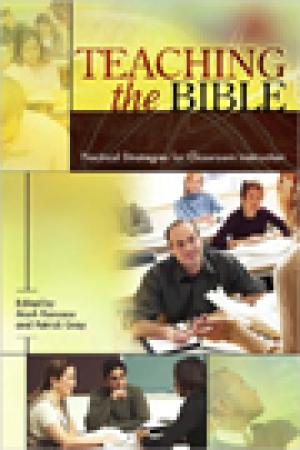
While books on pedagogy in a theoretical mode have proliferated in recent years, there have been few that offer practical, specific ideas for teaching particular biblical texts. To address this need, Teaching the Bible, a collection of ideas and activities written by dozens of innovative college and seminary professors, outlines effective classroom strategies -with a focus on active learning - for the new teacher and veteran professor alike. It includes everything from ways to incorporate film, literature, art, and music to classroom writing assignments and exercises for groups and individuals. The book assumes an academic approach to the Bible but represents a wide range of methodological, theological, and ideological perspectives. This volume is an indispensable resource for anyone who teaches classes on the Bible. (From the Publisher)

Newly revised and expanded, this ever-popular title serves equally well as a course text or as a professional development tool. Integrating new material, Bertrand has updated and reorganized the text for a more interrelated and functional format. Theories of education and theories of learning abound. Making sense of these theories and comparing them to one another is an important but difficult task. Here, Bertrand has developed a model for program planning and sound pedagogy which is informed by a deep understanding of the myriad approaches available today. This book will help you analyze your practice and/or assist your students in developing a coherent theoretical foundation of their own. (From the Publisher)

Building a sense of community in the classroom is key to fostering a safe and supportive environment for learning. Icebreakers are designed specifically for this purpose – to create that sense of a community of learners, working together. If you are considering using icebreakers for the first time, these tips offer convincing reasons for using them and suggest specific icebreakers for specific situations. If you already use icebreakers, these tips will expand your repertoire and provide thought-provoking insights into other situations in which you could include community-building activities. You’ll find tips and icebreakers that will: * Help your students feel more comfortable *Introduce you *Get a sense of your students in general *Make it easier for your students to know each other * Encourage your students to share and explore differences *Generate interest in your course *Encourage your students to be interested in each other * Bring out students' feelings about the subject and the course * Foster confidence and comfort in a virtual community (From the Publisher)
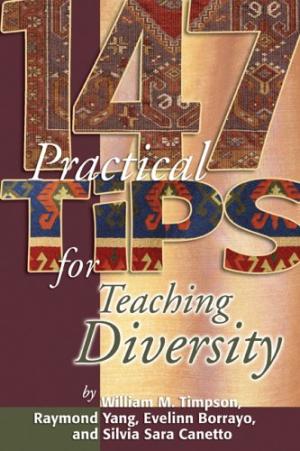
Diversity is vitally important to today's classroom, but many college teachers remain uncertain as to how to handle this sensitive subject. Compiled from the real-life experiences of over a dozen professors and experts, 147 Practical Tips for Teaching Diversity tackles this question head on. Taking you from the classroom to the committee meeting to the the community at large, this book offers hands-on advice for improving diversity discussions all through the semester. Some of what you'll find inside: Safe space: How to create a safe and welcoming learning environment Prejudice: How both you and your students can work together to unlearn stereotypes Challenges: How to address taboo subjects and handle conflicts preemptively Curriculum: How to broaden the subject matter and address current events Community: How to deepen your institution's commitment to diversity Whatever your past experiences with teaching diversity, this book is sure to help both you and your students expand your thinking and understanding, both inside and outside of the classroom. (From the Publisher)
Wabash Center Staff Contact
Rachelle Green, Ph.D.
Associate Director
Wabash Center
greenr@wabash.edu