Resources

Journal Issue.
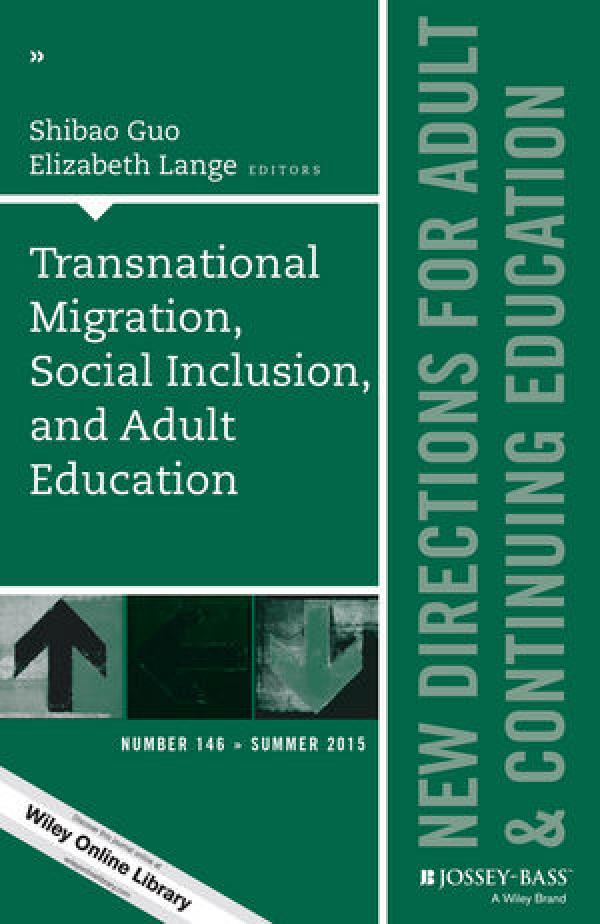
Click Here for Book Review Abstract: As a result of transnational migration, many countries are becoming increasingly ethnoculturally diverse, creating both new opportunities and challenges for practices of adult education. This volume examines the changing nature of adult education in the age of increased transnational migration and: • synthesize the latest research, policies, and practices in transnational migration and adult education, • examines the larger historical and structural issues of race and gender in immigration and newer theories, such as diaspora studies, in relation to adult education, and • provides examples and recommendations for enhancing socially just and inclusive adult education environments for newcomers. Transborder injustices and multiple dimensions of social justice permeate immigration dynamics and challenge adult educators to rethink social justice in a transnational age. This is the 146th volume of the Jossey Bass series New Directions for Adult and Continuing Education. Noted for its depth of coverage, it explores issues of common interest to instructors, administrators, counselors, and policymakers in a broad range of education settings, such as colleges and universities, extension programs, businesses, libraries, and museums. (From the Publisher)
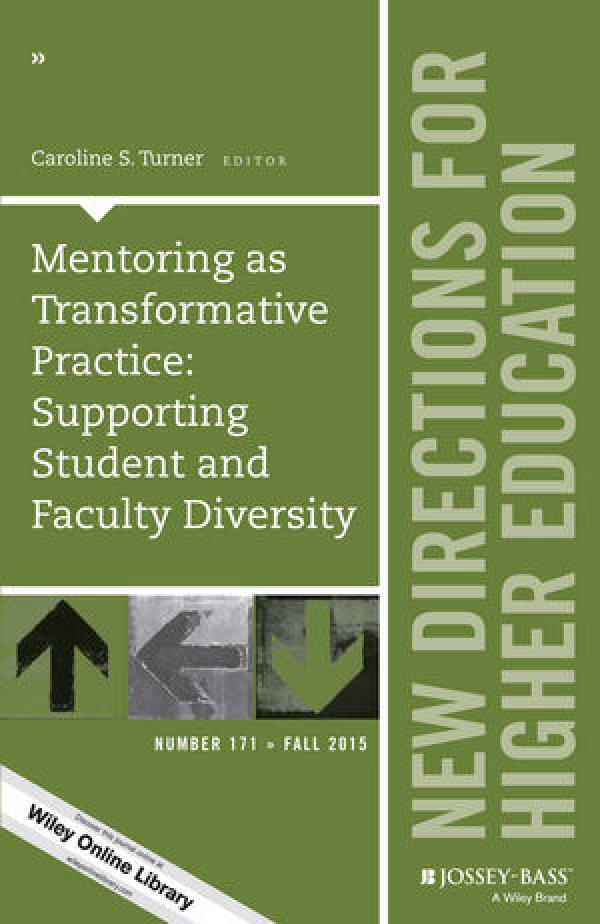
Click Here for Book Review Abstract: Scholars examining how women and people of color advance in academia invariably cite mentorship as one of the most important factors in facilitating student and faculty success. Contributors to this volume underscore the importance of supporting one another, within and across differences, as critical to the development of a diverse professoriate. This volume emphasizes and highlights: - the importance of mentorship; - policies, processes, and practices that result in successful mentoring relationships; - real life mentoring experiences to inform students, beginning faculty, and those who would be mentors; - evidence for policy makers about what works in the development of supportive and nurturing higher education learning environments. The guiding principles underlying successful mentorships, interpersonally and programmatically, presented here can have the potential to transform higher education to better serve the needs of all its members. This is the 171st volume of the Jossey-Bass quarterly report series New Directions for Higher Education. Addressed to presidents, vice presidents, deans, and other higher education decision makers on all kinds of campuses, it provides timely information and authoritative advice about major issues and administrative problems confronting every institution. (From the Publisher)
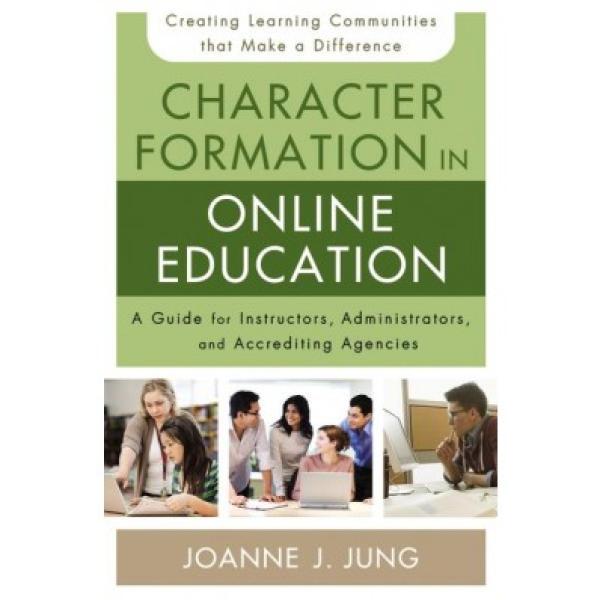
Click Here for Book Review Abstract: The unfortunate reputation of online education today is one of little or no effort on the professor's part and little or no learning on the student's part. A missing element in much online education is the kind of mutual engagement between student and instructor that provides not only a higher level of learning but also lasting character formation within the student. Character Formation in Online Education stems from author Joanne Jung's years of experience teaching online courses with the aim of improving the teaching environment for professors and the learning environment for students. By replicating, customizing, and incorporating the best and most effective practices of what a great professor does in on-campus classes, reimagined for an online delivery system, Jung shows how a higher level of learning and transformation can be achieved through online learning communities. Handy and practical, this user-friendly book provides guidance, helpful tools, and effective suggestions for growing learning communities in online courses that are marked by character growth in students—the kind of growth that is central to the mission of Christian higher education. (From the Publisher)

This book breaks down the sometimes overwhelming and difficult task of creating a successful grant winning proposal into a series of clear and definable steps that lead to grant success. The implementation of these pro-active grant steps results in government, foundation and corporate grants success. Whether you are with a non-profit organization, a school district, or an institution of higher education, this step-by-step process will demystify the grants process and help you become a confident and knowledgeable grantseeker. Researching the grantor, reviewing previously funded proposals, and making pre-proposal contact with the funding source are just a few of the pro-active steps that will help to assure you that what you propose is right for the grantor and that the grantor should therefore select you to fund. The exhibits/worksheets in The “How To” Grants Manual further support this successful system. Revisions to grant-seeking strategies have caused the author, working with grantors and advisory groups, to retool the manual's worksheets and communications templates. These extremely useful supplementary materials are available to students and instructors, contact textbooks@rowman.com for details. If your organization or institution wants to increase your success in attracting grants, this book if for you. From operating grants to technology to research, this book will help you outline your plan for success. (From the Publisher)
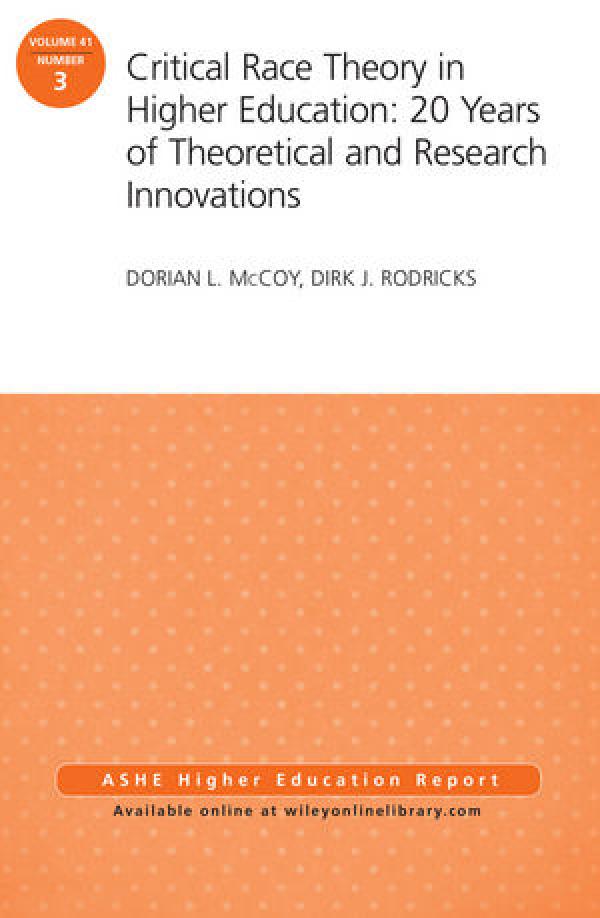
">Click Here for Book Review Abstract: Critical race theory (CRT) was introduced in 1995 and for almost twenty years, the theory has been used as a tool to examine People of Color’s experiences with racism in higher education. This monograph reviews the critical race literature with a focus on race and racism’s continued role and presence in higher education, including: • legal studies and history, • methodology and student development theory, • the use of storytelling and counterstories, and • the types of and research on microaggressions. The goal of the editors is to illuminate CRT as a theoretical framework, analytical tool, and research methodology in higher education. As part of critical race theory, scholars and educators are called upon to extend their commitment to social justice and to the eradication of racism and other forms of oppression. This is the 3rd issue of the 41st volume of the Jossey-Bass series ASHE Higher Education Report. Each monograph is the definitive analysis of a tough higher education issue, based on thorough research of pertinent literature and institutional experiences. Topics are identified by a national survey. Noted practitioners and scholars are then commissioned to write the reports, with experts providing critical reviews of each manuscript before publication. (From the Publisher)

Click Here for Book Review Abstract: Leadership Case Studies in Education looks at leadership through the eyes of educators. The text examines how the major theories and models of leadership apply to education. Taking a clear, concise, and informative approach, Peter G. Northouse, Marie Lee, and contributors from all levels of the education discipline provide readers with real-world case studies that illustrate the complex leadership challenges and issues facing educators today. Engaging, practical, and relevant, Leadership Case Studies in Education is the perfect companion for educational leadership courses. (From the Publisher)

This report shares data related to readiness, student engagement, performance, and the achievement gap. The experience of stereotype threat is addressed and heard from the voices of students.  
Indicators of the processes that enhance GTA teaching and professional development: the use of reflective practice, feedback, mentorship, and engagement in teaching practice. Including: online environment,  role-play activity, micro-teaching, and  independent course instruction.

Click Here for Book Review Abstract: What does diversity do? What are we doing when we use the language of diversity? Sara Ahmed offers an account of the diversity world based on interviews with diversity practitioners in higher education, as well as her own experience of doing diversity work. Diversity is an ordinary, even unremarkable, feature of institutional life. Yet diversity practitioners often experience institutions as resistant to their work, as captured through their use of the metaphor of the "brick wall." On Being Included offers an explanation of this apparent paradox. It explores the gap between symbolic commitments to diversity and the experience of those who embody diversity. Commitments to diversity are understood as "non-performatives" that do not bring about what they name. The book provides an account of institutional whiteness and shows how racism can be obscured by the institutionalization of diversity. Diversity is used as evidence that institutions do not have a problem with racism. On Being Included offers a critique of what happens when diversity is offered as a solution. It also shows how diversity workers generate knowledge of institutions in attempting to transform them. (From the Publisher)