Resources

Najeeba Syeed-Miller Assistant Professor Claremont School of Theology In my last entry, I made curricular suggestions on teaching Islam and pluralism. The curricular suggestions continue as follows: Juristic Approaches to Diversity Ethics of Disagreement: This method is an internal modality for dissent for scholars of Islam who developed a systematized..

Nancy Lynne Westfield Associate Professor of Religious Education Drew Theological School Imagine this scenario: “YOU TOOK MY JESUS!” said the first-semester student who is feeling displaced, disoriented, disappointed and enraged while being overwhelmed, even defeated, by the unexpected convergence of seminary courses’ too dense readings along with the absence of.

Youshaa PatelAssistant Professor of Religious Studies Lafayette College Today, Islam is paired with violence so often that these two concepts have become virtually synonymous. Conversations are often wedged between criticisms that Muslims are doing too much violence or not doing enough to stop it. Jihad, the Islamic keyword that.

Cláudio Carvalhaes Associate Professor McCormick Theological Seminary Last time we talked about the body in the classroom. Our body, my body, the bodies of my students, are all shaped by institutional bodies that carry values, marks, love, deceptions, commitments and history. Just as our bodies carry constructions of race, gender,
Edward E. Curtis, IV Millennium Chair of the Liberal Arts & Professor of Religious Studies Indiana University School of Liberal Arts at IUPUI (Indiana University - Purdue University, Indianapolis)For the past fifteen years I have tried to teach about Islam as a religiously diverse tradition practiced by communities around

Tat-siong Benny Liew Class of 1956 Professor in New Testament Studies College of the Holy Cross It is that time of the year. After weeks and months of class sessions and office hours, the spring semester is now over. There is, of course, something left for us teachers to do
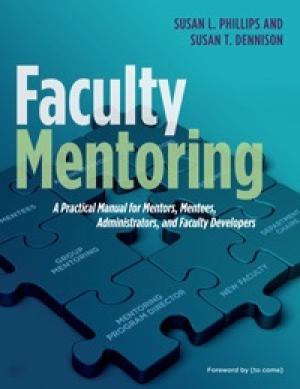
Faculty Mentoring offers a wealth of resources for justifying, planning, implementing, and evaluating faculty mentoring in one-on-one and group settings. Phillips and Dennison, faculty members at the University of North Carolina, Greensboro, ground their suggestions in decades of experience directing and consulting with the Faculty Mentoring Program at UNCG and in a comprehensive review of literature about the value of mentoring. The volume makes clear the benefits of mentoring to all involved: faculty mentees, faculty mentors, administrators, and institutions. Thoughtful mentoring programs aid in the recruitment and retention of pre-tenure faculty, connecting them more deeply to institutional life, orienting them to “the university’s mission and identity,” and helping them shape productive and sustainable attention to teaching, scholarship, and service (35). The authors demonstrate why formal mentoring relationships prove especially important to retain “diverse faculty, including minority and international faculty members” (35). When well executed, faculty mentoring helps “develop an academic atmosphere that mutually nurtures, supports, and further develops all faculty members’ teaching and research skills and assists them so that they feel part of a university/college community” (1). The book’s first chapter offers guidance to mentors, including logistics of meetings, topics for discussion, and insight about the experiences of new faculty members. Chapter two presents guidelines for establishing mentoring groups for new faculty and includes advice for group facilitators. Chapter three speaks directly to new faculty members and provides tips for having a successful mentoring experience, including selecting an appropriate mentor, setting meaningful and reasonable expectations for the relationship, and “self-assessment of the mentoring experience” (24). Chapters four, five, and six weigh in programmatically with suggestions for mentoring within departments, guidelines for institutional administrators, and wisdom for directors of faculty mentoring programs. Chapter seven combs higher educational literature and provides an overview of the benefits of, and rationale for, faculty mentoring. A list of references at the end of each chapter is supplemented by an inventory of books and Internet resources in the Appendix. In total, the book’s appendices span sixty-five pages (nearly half the volume) and provide resources easily modifiable to fit specific institutional contexts. The templates, worksheets, checklists, and evaluation tools provided will not only help new programs launch more quickly but also offer existing programs resources for assessing and improving current practices. This text speaks to a wide audience. The full volume will be useful for planners and directors of mentoring programs; individual chapters form stand-alone resources for their target readers (mentors, mentees, and administrators.) Faculty and administrators at institutions of all sizes will find usable insight in the text for mentoring programs funded at a variety of levels. Though geared toward the mentoring of early career faculty, the tools provided in Phillips and Dennison’s text may benefit even mid-career mentees. Finally, though written with mentoring efforts that are supported by institutions in mind, the volume also offers insight for those seeking or offering mentoring outside of formally run programs.
I have a confession to make: I have flipped my courses and agree with Waldrop and Bowdon that using lecture classes as a control in future experiments is probably unethical. On one hand, lectures are ethically questionable. On the other, lectures are essential. So much depends on the details. Personal style, class size, topic du jour, student readiness to explore topics, and so forth. A lecture is necessary in order to deliver particular skills and concepts. In the flipped learning model, educators are more important than ever and teaching can be even more demanding. This is where Best Practices for Flipping the College Classroom speaks to instructors in higher education. The editors have gathered strategies “across a broad spectrum of academic disciplines, physical environments, and student populations…. [in the] hope that this book will inspire further research in other disciplines” (12). Chapters are case studies, with each course described in terms of format, enrollment, instructor’s strategies, and research methods. Each chapter ends with practical suggestions. The disciplines include chemistry and calculus (chapters 2, 3), nursing and psychology (chapters 4, 6), history and economics (chapters 5, 8). A marketing course is covered in chapter 7 and a creativity class in chapter 9. The case studies are bookended by a helpful Introduction, “Joining the Flipped Classroom Conversation” (chapter 1), and two closing chapters: “Student Practices and Perceptions” (chapter 10) and “Conclusion: Reflecting on the Flipping Experience” (chapter 11). Katherine Sauer’s description of her work in her microeconomics classroom (chapter 8) is of particular interest. What she does in her discipline informs and echoes much of what I do as a professor of religious studies. Her fundamental question is simply this: “In order to help my students learn, what is the best use of my face-to-face time with them?” (112). Sauer provides a worksheet to help instructors identify course learning outcomes, intermediate objectives, key terms, and ideas. She also notes the importance of reading guides and careful development of “pre-class materials” (homework assignments in its many forms, from readings to videos to screencasts). Students come to class prepared for work. It is her contention that prepared students are incentivized; students use their completed reading guides (notes!) for success with short quizzes at the very beginning of class. While she does not explicitly reference Bloom’s Taxonomy, she pushes lower levels of the taxonomy (such as quiz content) outside the classroom. She uses class time for activity that is identified by upper levels of the taxonomy: application, analysis, evaluation, and creation. The result is that more material gets covered. Students spend more time outside of class with the material, students arrive prepared, and the class as a whole is ready for work. The classroom becomes a lab (my word, not hers) for active learning through critical thinking, collaboration, and reflection. Students are “primed,” instruction is spontaneous and relevant, and instructors think on their feet. The conclusion (chapter 11) provides the authors’ perspectives on key issues: (1) motivations for flipping, (2) favorite techniques and strategies, (3) motivating students to prepare for class, (4) benefits, challenges, and rewards, and (5) types of support needed. The editors wrap up with final words of advice (151-154). This could serve as both a helpful reference and “go to” guide for flipping a classroom. They write, “prepare to be impressed with what your students produce” (154). Flipping a classroom is not for the faint of heart, but it will enliven your teaching and put you in good company.
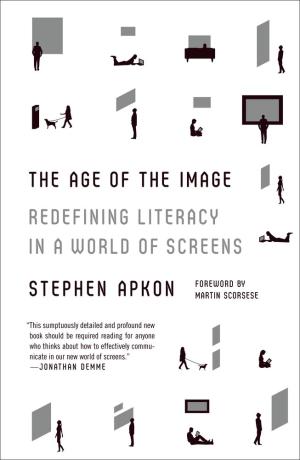
Teachers routinely complain that students do not read well or enough. What they mean by this is that students do not know how to analyze written texts, in part because they fail to engage regularly with written texts. Stephen Apkon’s book challenges this traditional focus on verbal literacy to advocate strongly for visual literacy, particularly in K-12 education. In a world saturated with screens and images to be decoded, Apkon, the founder and executive director of the Jacob Burns Film Center, argues that we ignore visual literacy at our peril. Few would argue with Apkon that we live in “the age of the image,” and in response to our situation Apkon argues for the importance of understanding the grammar of the visual. He does so by examining several interrelated perspectives on images and visual storytelling, such as brain science, advertising, and film techniques. He also provides a history of visual literacy that parallels in many ways the development of visual literacy. Rather than buy into the common parental and academic moral panic over “screen time” used by digital native “screenagers,” he encourages his readers to embrace screens and images by learning intimately how they work. This will benefit both producers and watchers, he argues, and can help classrooms function more seamlessly in our screen-obsessed culture. This book will be useful to teachers who want food for thought but not direct guidance. Apkon notes early on that “As new literacies emerge, they don’t negate more traditional forms of literacy, but rather embrace them wholly” (10) but then goes on to champion what sound like fairly vapid if contextually apt viral videos as examples of visual literacy achieved. Apkon’s bias is understandable, but it seems to leave other literacies in the dust, despite the author’s claims that he’s not doing just that. The chapter devoted to teaching is full of information, including a sketch of the history of technologies in education, but it does not detail how one might go about this in a classroom or curriculum. In Apkon’s favor, he calls for a high school graduation requirement of a five-minute film that illustrates key visual grammatical skills and incorporates written work as well. That kind of balance seems appropriate and necessary. This review will be published in the traditional written format (although if I were to follow Apkon’s prescription I should probably submit a well-edited video). I am wary of Apkon’s overwhelming enthusiasm for visual storytelling, placed in his analysis as top of the hierarchy of types of communication. Phrases such as “the unstoppable rise of visual expression as a popular means of conveying truth” seems remarkably optimistic: images, like words, can be used for powerfully negative propaganda as much as they can for “truth.” In sum, this book would have been more useful had it presented a more balanced view of the many literacies and illiteracies made possible by today’s technologies.
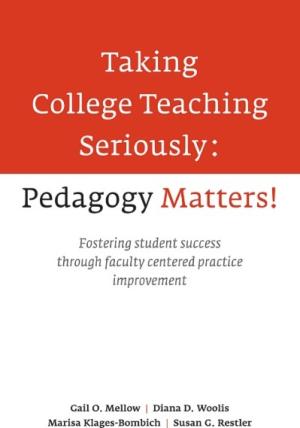
The Global Skills for College Completion (GSCC) initiative, funded by the Bill and Melinda Gates Foundation, is one of many efforts targeting the advancement of community college students, faculty, and institutions across the United States. Faculty selected to participate in the initiative taught developmental courses, documenting and analyzing pedagogical practices using Web 2.0 tools in order to facilitate communication and collaboration around teaching and learning. Regular and consistent forms of peer feedback, coaching, and reflection required participants to learn with, and from, one another. Primarily intended for college instructors, Taking College Teaching Seriously promises to broaden the impact of their faculty practice improvement model by encouraging the application of these processes by instructors of all types of courses in all institutional contexts of higher education. The value of this book for faculty lies in its accessibility and in its applicability: any faculty member, or group of faculty members of the same institution or across institutions, can easily replicate one or more of the processes described and explained in this book and so heighten their potential for acquiring some of the lessons learned. Although there are many useful components in this engaging book, it should be recognized that in the larger context of scholarship on teaching and learning the book contributes to that body of work focused on the significance of reflection as a faculty practice. While faculty assessment is a built-in feature of college courses through peer visits and course evaluations, and a standard requirement in faculty review processes over the course of a career, faculty reflection on teaching and learning is often underemphasized and much less institutionalized. Furthermore, when faculty reflection on teaching and learning does occur, it often is an isolated practice intended to address a particular issue or recurring problem experienced in a specific course. However, the movement toward institutionalizing faculty reflection practices appears to be growing steadily and assuming a variety of forms. One form highlighted in this book is the formation of an online community of practice (24-26). Put simply, a community of practice typically serves a small group of faculty with a shared interest who agree to organize themselves around work on a common issue or goal. In some cases, the formation of a community of practice may be connected to teaching and learning initiatives at a particular institution. However, as technological practices continue to become more embedded in college curricula and teaching, the design and implementation of online communities of practice may prove more practical and more beneficial to faculty development and support. Furthermore, communities of practice may transcend disciplinary boundaries; while the faculty participating in this initiative had primary expertise in mathematics and English, such practice readily extends to those in other disciplines as well.
Wabash Center Staff Contact
Sarah Farmer, Ph.D.
Associate Director
Wabash Center
farmers@wabash.edu