Resources
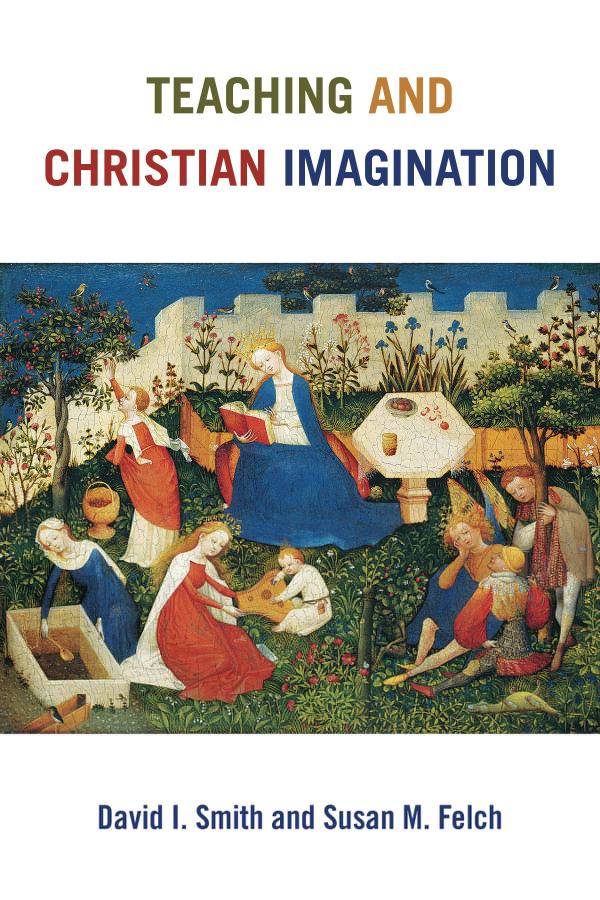
David I. Smith and Susan M. Felch remind their readers that they are offering “not a ‘how-to’ manual or collection of tips” but “lenses . . . opening possibilities” for effective “learning and teaching” (2). Teaching is not a transaction to dispense knowledge but a multivalent art that should not be reduced to gimmicks. As Smith and Felch conceive of it, teaching is a living process shaped by the imagination of both teacher and student – an experience directed by “visions, not just beliefs and techniques” (1). It is an organic life shaped by theological journeying, farming, and building metaphors. To bolster their argument, Smith and Felch carry their readers through a three-dimensional rubric that reimagines teaching as a biblical hermeneutic – a teaching life that undulates between “journeys and pilgrimages,” “gardens and wildernesses,” and “buildings and walls.” Reading this book as a teacher, I was drawn into the teaching world the authors invite all instructors to enter – it is a world where one hears, sees, thinks, and reimagines inexhaustible possibilities of shaping minds. The authors draw examples from biblical characters and Christian leaders to illustrate the multifaceted and meandrous journey each of their teaching metaphors conveys. First as pilgrim, the teacher is advised to rely on God, the divine GPS, for the journey (84) – an act that includes rest but does not preclude imagination on the part of the pilgrim. Second, insights and actionable ideas are not caught in vacuum. They are caught in surprising places like gardens, deserts, and classrooms where both teacher and students, like the first humans and liberated communities (Gen 1-3; Exod 1:1-15:27), learned to rethink, develop new perceptions, and take new steps as they journeyed with God. Third, edifices and walls speak about the role and construction of space. Though both building and walls may have a positive role as a course syllabus might (168), one is reminded that spaces delineated by the twin metaphor, buildings and walls, are often vigorously contested in the Bible, as is evidenced in the Household Codes (Eph 5:11-6:11; Col 3:18-4:1; 1 Peter 2:13-3:33) – a reality that did much to reduce many women to a subservient status and silence in the church to this day. As a Senegalese transnational biblical scholar shaped by African, Islamic, and Christian faith traditions, I find the journeying, farming, and building metaphors that Smith and Felch apply to teaching in not just Christian, but in every faith tradition. In spite of my reservations about limiting such powerful metaphors to only the Christian imagination, this book makes an invaluable contribution for educators. I agree with Smith and Felch, that Teaching and Christian Imagination is indeed an invitation to focus on what kind of person (and therefore what kind of teacher) we are gradually becoming and the place our vision of the world plays in the process . . . to wonder what teaching and learning might look like by those who know that they live in a world created by God who has filled it with beauty and story and song and who talks with us through the vale of tears and draws us toward future glory. (206) Put differently, Christian educators, and I would add all instructors of any discipline, are invited to take seriously their function as learners and teachers whose growth is inextricably bound to the growth of those they teach. In spite of my minor objection, this book should be in the library or office of any serious teacher, educator, or leader committed to the future of humanity.
In The Grace of Playing, Courtney Goto offers a project in practical theology for Christian religious education that uses the notion of playing to better understand teaching and learning. Goto distinguishes her project from a formal practical theology of play, where play could be explored as a universal category of human existence. Instead, she works in the line of Paulo Freire’s search to move beyond a traditional schooling model of education towards learning that is more integrated, experiential, and creative. Specifically, Goto reflects critically on the notion of revelatory experiencing through the language and pedagogies of playing. Her focus is on playing as it relates to adult learning, and her investigation demonstrates – both conceptually and through case studies – how playing cultivates faith formation. Goto is an Assistant Professor of Religious Education at the Boston University School of Theology and a co-Director of the Center for Practical Theology. She writes as a third generation Japanese American United Methodist primarily for an audience of theorists, students, and practitioners who are liberal mainline Protestants. She invites Roman Catholic, Orthodox, and Charismatic Christians into the conversation as well, but notes that her advocacy of revelatory experiencing is to be understood in terms of the contextualized perspectives encountered in mainline Protestant churches. This is an important caveat. Theologically conservative readers will take issue with her concept of revelatory experiencing, whereby revelation happens in between persons as they relate to one another (as opposed to approaching Christian revelation as a totalizing meta-narrative). That Goto makes her theological liberalism so clear and defined, particularly in terms of her understanding of revelation, is a great service to readers. The Grace of Playing investigates playing from social scientific, theological, and historical perspectives and offers two case studies for application. After a preface and introduction, Chapter 2 explores psychoanalytical and psychological concepts of playing, relying particularly on D. W. Winnicott to articulate sociologically what occurs in revelatory experiencing. In Chapter 3, Goto turns to theology to build a theory and constructive proposal of play by appropriating insights from Jürgen Moltmann’s Theology of Play. Chapter 4 is a historical accounting of medieval practices of play, including the use of devotional dolls by fourteenth century nuns in the Rheinland, Germany and the practice of holy foolery by those in both Western and Eastern Church traditions. The final two chapters contain case studies of grace-filled play. The first describes the creation of a pretend garden at a Japanese American church for the purpose of congregational reconciliation, and the second briefly recounts a practice of playing with inmates in a juvenile detention center.To conclude, Goto demonstrates that the grace of playing leads a world in need towards God’s new creation. The Grace of Playing skillfully navigates insights from sociology, theology, and history to make a compelling case for the theological practice of play as a mediating, revelatory experience within Christian religious education. The book is readily accessible for students and practitioners, without neglecting the more technical needs of theorists. For the case studies, Goto deliberately refrains from providing much, if any, direct data; this effectively condenses the reading, but also leaves a sense of wanting to know more about how the grace of playing works itself into and through these unique settings. Overall, the book is a warm invitation for all to play in the fullness of God’s grace.

Theological school deans are not just theological leaders for their institution, they must be EDUCATIONAL leaders. That is, they must implement sound educational practices related to curriculum, instruction, supervision, assessment, and administration. There is a variety of ways to assess...
Theological school deans are not just theological leaders for their institution, they must be EDUCATIONAL leaders. That is, they must implement sound educational practices related to curriculum, instruction, supervision, assessment, and administration. There is a variety of ways to assess...
Theological school deans are not just theological leaders for their institution, they must be EDUCATIONAL leaders. That is, they must implement sound educational practices related to curriculum, instruction, supervision, assessment, and administration. There is a variety of ways to assess...
Better Worlds: Education, Art, and Utopia does not immediately relate to theological education. However, it does cover interesting and thought-provoking topics of potential use for those working in the theological school classroom. Yearnings for utopia express a desire akin to awaiting the Kingdom of God. Therefore, looking at ways the trope of utopia is formulated in the fields of education and the arts can provide interesting parallels for the theological school classroom. The core question is what would a better world look like? Roberts and Freeman-Moir take the reader through a sweeping survey of topics. In one section, John Dewey and William Morris’s utopian philosophies provide a backdrop for the discussion of utopias as places where each person can practice skilled craftsmanship, developing a craft to the point where it becomes artisanal. In chapter 2, visual art as a dystopian tool is regarded as something that can evoke true sympathy. The authors invite readers into various imaginative spaces to consider how imaginative sympathy can propel us into action, or at least into moral discomfort caused by the difference between the present world and imagined utopian dreams. Chapter 4 discusses the role of images, showing their power as pathways to action that open the imagination to craft a space of deciding and reflecting. This is similar to the praxis-theory-praxis loop championed by many theologians and seminary educators. For the theological educator, perhaps the most à propos chapters are those concerned with the liberation pedagogy of Paulo Freire and the literature of Fyodor Dostoevsky and Hermann Hesse. The chapter on Freire’s liberation framework provides a useful overview of his life and work with a focus on his utopian realism. The chapters on Dostoevsky and Hesse provide interesting analyses of their theologies and philosophies. I have two main critiques of this text. First, the authors spotlight too few female utopian visionaries. Chapter 3 focuses on writer and philosopher Iris Murdoch, but this is by far the weakest chapter in the book. The authors are clearly aware of feminist (or at least female scholars’) viewpoints in the various fields they describe. The book would have been stronger had they chosen at least one compelling female figure’s utopian or dystopian vision to unpack and describe. My second criticism is that the chapters are fairly disjointed, each chapter representing a different topic and field, and there is no final conclusion that draws all the themes together. The authors put forth education as “utopian curiosity” (107), where each opportunity for knowledge-building provides entry into a world larger, more spacious, and more creative than the one in which the student previously lived. Allowing these alternate worlds to wash over faculty imagination may provide ways to take critical looks at the contemporary roles of theological educators and to invite questions such as: What are the aims and purposes of theological education and how do they compare to utopian and dystopian visionary aims and purposes? What is the role of the theological educator in this process? What does pedagogy look like if faculty seek to go beyond simple information sharing to something more complex and critically reflective?

Nancy Lynne Westfield Associate Professor of Religious Education Drew Theological School Phil Salter, a current student and muse of this Blog, in describing himself as a seminarian, said, “I am learning on the fly.” Intrigued by this notion, I have been thinkalating … Habakkuk has come to mind…. Recorded in..
One of the biggest liabilities for leaders in any system, including deans, is blind spots. Blind spots can be the result of personal bias, or of having inaccurate or insufficient information. When leaders fail to have a systemic perspective, 360...
One of my favorite cartoons depicts a bowling pin on a psychiatrist's coach. There is a diploma on the wall, a plant in the corner, and a therapist with notepad sitting behind the disconcerted bowling pin character. The caption has...
During a recent webinar on the topic of leadership I offered a list of important skills related to the topic at hand. The list included something along the lines of the need for a leader to be "politically astute." That...