Resources
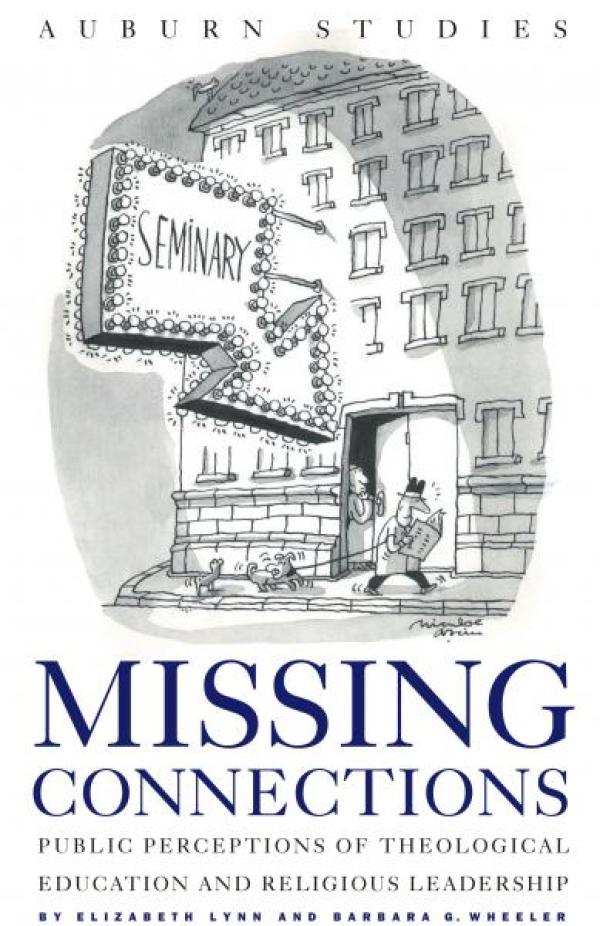
Three themes guide Auburn Center studies of theological education: practices in teaching and learning, the management of institutional resources, and the role of theological education in religious and public life. With this issue of Auburn Studies, we present our first report related to the critical, but complex, reality labeled by our third guiding theme. In the spring of 1998, a research team visited four cities to interview leaders in all sectors of society--business, politics, education, religion, community service, philanthropy, and others--about perceptions of religious leaders and their training. What does the public think about theological education and the religious leaders that seminaries train? People interviewed for this study consider seminaries invisible institutions that produce leaders who offer little civic or public leadership. Most thought this lack of public involvement a missed opportunity, but we heard no consensus about what an increased religious presence in public life would mean. (From the Publisher)
Drawing on his wealth of experience as both a seminary professor and minister, John Leith identifies and confronts the contemporary crisis in theological education. He argues that the crisis in the seminaries is interwoven with the crisis in the church, and that the secularization of educational institutions has led seminaries to move away from their primary responsibility - preparing pastors for ministry. (From the Publisher)

In 1986, 43 percent of Disciples clergy were between fifty and sixty. Where will their replacements come from, and how can we help them recognize and respond to their call? (From the Publisher)
Higher education today suffers from lack of a clearly articulated purpose-a deficiency particularly challenging to religious-affiliated institutions. What is the relationship of secular learning to the faith that originally undergirded these institutions? This book offers the reader answers to this and other major questions currently facing denomination-affiliated institutions of higher education. Following a chapter on civil government's relationships to these institutions, 24 chapters survey the colleges, universities, and seminaries associated with denominations. Each chapter begins with an historical essay followed by annotated bibliographic entries covering primary and secondary sources dating back to 1986 on various denomination-connected institutions. There are 614 bibliographic entries, an epilogue on critical issues covered throughout the book, as well as a subject and author index. (From the Publisher)
The purpose of this volume, according to the editors, "is to provide historical perspective necessary for measuring the strength, vitality, and character as well as the weaknesses and failures of evangelical theological institutions." This study accomplishes this goal by examining the origins, distinctive contributions, and tensions within theological education in the evangelical tradition. The essays are organized by themes: a historical survey of theological training in various theological traditions, the place of spiritual formation, the role of women in theological education, the relationship between the academy and the church, and perspectives on the future of evangelical theological education. (From the Publisher)
Blends the best contemporary biblical scholarship, theology, and theories of education to give a coherent account of the nature, purpose, context, method, stages, and role of teachers in Christian education. (From the Publisher)

The long-awaited masterwork from the author of Christian Religious Education in which he applies the "shared praxis" approach to the whole of religious education and pastoral ministry. (From the Publisher)

At a time of widespread perplexity about the social role of humanistic scholarship, few disciplines are as anxious about their nature and purposes as academic theology. In this important work, W. Clark Gilpin, dean of the University of Chicago Divinity School, proposes that American theological scholarship become responsible to a threefold public: the churches, the academic community, and civil society. Gilpin approaches this goal indirectly, by investigating the historic social roles of Protestant theologians and the educational institutions in which they have pursued their scholarship and teaching. Ranging from analyses of the New England Puritan Cotton Mather to contemporary theologians as "public intellectuals," Gilpin proposes that we find out what theology is by asking what theologians do. By showing how particular cultural problems have always shaped the work of theologians, Gilpin's work profoundly illuminates the foundations of American academic theology, providing insights that will help guide its future. (From the Publisher)
In this new volume, theologians reflect on sociological methods, explore social theories of the human agent, and offer a theological transformation of sociology. Spanning such developments as local, non-stipendiary ministries, the identification of the roots of church growth, and giving voice to gay and lesbian Christians, this collection of innovative essays provides a fascinating and important dialogue on how the seemingly disparate fields of sociology and theology can illuminate and enrich one other. This is essential reading for anyone concerned with the shifting dynamics of these two disciplines. (From the Publisher)