Resources
Deborah Core offers practical guidance for beginning seminary students who feel overwhelmed and under-prepared to write the number and quality of papers their courses require. The book begins with reflections on writing as a sacred action, then addresses such practical matters as choosing and researching a topic; outlining, drafting, and polishing a paper; and using the proper format for footnotes and bibliography. Also included are sample papers in MLA and Chicago styles and an overview of grammar and usage. (From the Publisher)
Strategies for teaching writing across the curriculum. Idea Paper no. 25, from the series developed by the Center for Faculty Evaluation and Development, Kansas State University.
This volume provides instructors who teach writing with an array of strategies and philosophies about the way writing is learned, both in the context of a discipline and as an independent skill. Focusing primarily on the best ways to give feedback about written work, the authors describe a host of alternatives that have a solid foundation in research. This is the 69th issue of the journal New Directions for Teaching and Learning. (From the Publisher)
A practical nuts and bolts guide for teachers from any discipline who want to design interest-provoking writing and critical thinking activities and incorporate them into their courses in a way that encourages inquiry, exploration, discussion and debate. (From the Publisher)
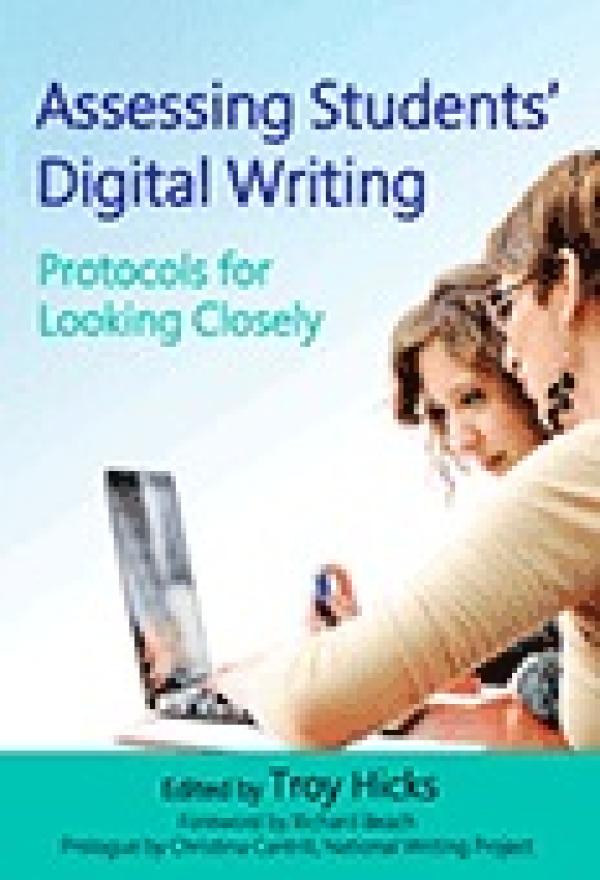
Assessing Students’ Digital Writing: Protocols for Looking Closely collaboratively addresses teachers who want to know about how to give feedback on digital writing. The book provides six digital writing protocols used to give feedback to teachers about student learning. The authors of the protocols are teachers themselves; Erin Klein, Julie Johnson, Jeremy Hyler, Bonnie Kaplan, Jack Zangerie, Christina Puntel and Stephanie West-Puckett wrote this book as a part of the National Writing Project in Berkley, California. Each teacher in this project uses a digital format to teach a specific lesson. At the end of each chapter the teacher discusses the implications of the digital process for instruction and assessment. At the end of the book the editor discusses broad themes and issues about curriculum, instruction, and assessment. This discussion is based on the study of student work in the writing as shared through conversations among the various authors and teachers of the project. As stated earlier, this book is a collaborative work and evidence of this is seen throughout each chapter. A weakness of the book is that it may be difficult for those who are just entering into digital writing because of the use of many technical terms associated with web-based learning. Although in general I find this book very valuable for gaining a better understanding about digital learning, I would like to see more information about the students who were part of the writing. The book is intriguing because of its focus on youth and their learning through digital writing methods. It is also timely in that it gives rise to more conversation about the remnants of the No Child Left Behind era and the very present views on Common Core State Standards that are sweeping across K-12 public education in the United States. Additionally, the rise of many digital formats for classroom teaching gives one reason to take the book seriously. As the author points out, this conversation is even more in vogue because of the accessibility of teachers and students to web-based services such as Google Docs, Wikispaces, and Voicethread. All of these services can be accessed on digital devices that are mobile. I can personally relate to what the authors are saying because I am presently teaching in an online platform that pushes me to look at digital writing very seriously. Furthermore, the book is interesting because the voices of the teachers in conversation about student learning are present throughout the book. I find this to be important in a time when much effort is made to assess student achievement where it seems student learning is not at the core of the assessment concern, although on the surface it may seem to be. Overall, this book is a valuable asset especially for those interested in assessment and digital writing.
This book is an invitation, and is itself a somewhat circuitous reflection on teaching and learning. Directed at writing teachers, much of Danberg’s advice applies to teaching in general, and not just because faculty teach forms of writing in class. The title borrows an image from a famous rabbinic story in which Rabbi Hillel was asked by a nonbeliever to teach the whole of Torah in the time the nonbeliever could stand on one foot. “That which is hateful to you do not do to others,” Hillel instructed, “The rest is commentary; go and learn it” (13). Danberg reminds us that standing on one foot is a posture of instability, the position of both teachers and learners. He encourages teachers to remember their own difficulties in learning. Following Rosenzweig, Danberg suggests that Hillel did not mean “the rest is only commentary… To know Torah is to know the lesson, but also to participate in an ongoing conversation… into the lesson’s value” (14). Students often seek facts, principles, or methods that they can then apply, but good teachers are able to set them on a path of lifelong inquiry. A series of autobiographical vignettes in prose and poetry, the book is punctuated by reflection prompts, or “commentary.” The author employs several metaphors, but cooking images dominate. A good cook has learned not just to follow a recipe but knows how to see the possibility of a meal in the ingredients on hand; a good cook knows what a dish needs and when it is done. The implied parallel perhaps works best with the craft of writing but the larger point is about what Danberg calls “enfolded knowledge.” Teaching involves confronting the tension “between what we must tell students and what they can only know for themselves” (71). He offers a compelling description of his own learning disability – his struggles, the strategies he developed, and how teachers reacted to him along the way (47). Danberg laments that schools often define gifts narrowly and he suggests the following exercise: “Spend a couple of days observing the people around you and see how many gifts you can identify… Think of yourself as a zoologist whose great pleasure it is to wait for a butterfly they’ve never seen before” (58). Later, he describes class as “an invitation to inhabit forms of attention and attunement, patterns of caution and regard… If all goes well, it is no more mysterious than the heart and mind, that tangle we are always entangled in” (73). Danberg invokes the kabbalistic concept of tzimtzum, the contraction of the divine making space for creation. (This comes in a piece entitled “Four Principles and a Fifth” – but I counted six!). A good teacher knows when to get out of the way in order to make space for learning: “You can shape the problems and anticipate the obstacles. You can decide what a student encounters and the time it takes. But in the end, you simply must get out of the way, and leave them to do the work of learning” (98-99). Reading this book is a bit like ruminating on a Zen koan. Danberg contradicts himself and revels in paradox. The bizarre organization and genre shifts can be frustrating. This is a quirky book, but one with many moments of glittering insight into the difficult joys of learning and teaching.
Jonathan Roach and Gricel Dominguez helpfully remind us that theological writing should be beautiful, compelling, and engaging, but I am not quite sure that I am ready to join their writing revolution. Expressing Theology addresses a broad audience. Epistles to undergraduate students in theology, graduate students, dissertation writers, and “authors in training” dot the text. And the book certainly offers sound advice to writers of theology at any stage in their careers. Chapters five through seven fill the writers toolbox. Here the reader finds the usual contents of a writing primer. Roach and Dominguez introduce the writing process and discuss each step along the way: from drafting to writing techniques, to grammar, and the all-important revision and editing stages. I like that advice from Strunk and White is mixed with wisdom from Gustavo Gutiérrez and examples come from Martin Luther King Jr. and Qoheleth. Perhaps the best things about these chapters are the pacing and style. The authors move through these technical pieces without becoming nearly as dry as many writing guides. The more expressly theological material comes in chapters one through four. I think the authors are really smart to begin talking about engaged theology with a chapter on the writer’s identity and location. Writers are encouraged to own their unique perspectives and to write out of their own experiences. The section on sources somewhat predictably uses an only slightly modified version of Wesley’s quadrilateral, but it is not unhelpful. The chapter on audience prescribes writing theology as a conversation rather than a preachment and I could not agree with this sentiment more. I am convinced! Theological writing should be beautiful and compelling. But I remain a little wary of the revolution that Roach and Dominguez have asked me to join. Throughout the text, the authors attack abstract and “boring” theology as they often repeat the mantra, “keep your feet on the ground.” The theologians among those most often cited are Anne Lamott, Kathleen Norris, and Thomas Merton, all of whom are beautiful writers to be sure and certainly theologians of a sort, but not really shapers of the history of thinking about God. Of course, I do not want to advocate that theology be ungrounded, but I repeatedly wondered if the sort of exacting, often dense, and sometimes technical theology that I read and write would be excised in this revolution. As I read Expressing Theology, I remembered myself reading Tillich and Whitehead for the first time and pondering the world anew as I read sentence by sentence at a painfully slow pace. I thought of Rosemary Radford Ruether so meticulously uprooting essentialisms and utopias, page after page. I relived the moment that tears came to my eyes, when after two hundred pages of groundwork, Jürgen Moltmann declared “Ecce Deus! Behold God on the cross!” (Moltmann, The Crucified God [Minneapolis: Fortress Press, 1993] 205) as God became the godforsaken. I hope that Roach and Dominguez would agree that these too are beautiful and compelling theologies. Perhaps their advice will lead some authors to engaging, elegant, yet complex and careful writing like these.
This second edition, like the first, is part of a series of volumes directed towards beginning college students. Margot Northey is the first author of each volume, including the eighth edition of the general Making Sense: A Student’s Guide to Research and Writing, and there is considerable overlap among the different volumes that focus on specific subject areas. Distinctive to this book is a short chapter, “Getting to Know Religious Studies,” and the incorporation of examples from the study of religion into many of the other nineteen chapters. Nonetheless, the focus is primarily on those general processes of thinking and self-expression that are common to many college courses. Because it does not focus narrowly on a specific area of the undergraduate study of religion, this book could easily be recommended, or even required, reading in virtually any course. Some instructors might find some of the advice to be too elementary, but there is helpful material for almost any student, including chapters on “Common Errors in Grammar and Usage,” “Punctuation,” and “Misused Words and Phrases,” as well as a glossary. Since scholarship on religion uses a variety of ways of documenting research, the chapter that outlines the requirements of the Chicago, MLA, and APA systems of reference and charts the differences among them could be especially helpful to beginning students. Throughout the book, the authors urge students to think of themselves as “engaged learners” who aim to make the most of their education by taking careful notes, seeking out their teachers, preparing for writing assignments well in advance, and using feedback on their work to identify both strengths on which they can capitalize and weaknesses that need to be remedied. Consequently, the portrait of the ideal students to whom the book is addressed may strike some as insufficiently tempered by the harsh realities of sporadic attendance, bored indifference, and atrocious time management with which so many teachers in higher education are familiar. Nevertheless, the authors offer concrete advice and some step-by-step procedures that can help any student move towards becoming the type of engaged learner that they envisage and who many would love to have in their classes. The focus of this volume is squarely on writing, with more than half of the chapters devoted to some aspect of the writing process, including writing essays (with a separate chapter on comparative essays), writing book reports and book and article reviews, writing essays for tests, and “Writing with Style.” Complementary chapters address finding and using appropriate sources and documenting them properly. Although the book briefly discusses reading religious texts, teachers who are looking for guidelines about how to introduce students to the kind of careful, patient, analytical reading of texts, objects, films, field observations, and other sources frequently used in the study of religion will need to look elsewhere. Nonetheless, this is a book that could be helpful to many teachers of religious studies.