Resources

Although it is not immediately apparent from the title this is a book on pedagogy, and it contains many useful ideas for the teaching of religion and theology. Each of the chapters in this volume suggests a way in which teachers in secondary and university education can use popular works of Fantasy Literature to teach critical literacy. Fantasy Literature is difficult to define, but it is hard to deny the enormous influence it has had on popular culture. Rather than dismiss this literature as mere genre fiction, the authors of this book see the popularity of Fantasy Literature as an opportunity to reach and engage a variety of students in serious questions about race, gender, class, and privilege. The book begins with a brief introduction that defines critical literacy broadly, noting that as a blanket term it encompasses Marxist, feminist, postmodern, and other critical theoretical discourses. Following this, most of the chapters in the volume focus on one or two works of Fantasy Literature, demonstrating how they can be used to teach an important concept in critical discourse. Here I will mention a few examples. In the first chapter Neil McGarry and Daniel Ravipinto assess the conservative, patriarchal, and heterosexist autocratic ideology at play in the works of J. R. R. Tolkien and George R. R. Martin. Given the current popularity of the latter’s works, this chapter could inspire a variety of pedagogical interventions. Martha Johnson-Olin reads a current text using historical example in her chapter, “Strong Women in Fairy Tales Existed Before Frozen: Teaching Gender Studies Via Folklore.” Several other chapters use the Harry Potter series: Editor Mark Fabrizi’s chapter uses Harry Potter to teach Machiavelli, while Claire Davanzo uses the actions of Dolores Umbridge and Cornelius Fudge, especially in Harry Potter and the Order of the Phoenix, to teach Marxist ideas about oppression and resistance. While most of the chapters in the book examine one or a few works in light of one critical concept, Nathan Frederickson’s chapter follows a different approach, and is the chapter that would likely be of greatest interest to the readers of this site. In his chapter, Frederickson lays out his plan for a course on religion and Fantasy Literature that focuses on critical pedagogy. This course is divided into eight sections: (1) defining key terms, (2) colonialism, (3) capitalism, (4) perspectivism and pragmatism, (5) feminism and queer theory, (6) interrogating the self, (7) royal ideology and the monomyth, and (8) critical pedagogy and reflexivity. Frederickson provides annotated lists of suggested texts for each of these sections. He also helpfully breaks these lists into those works that are best suited for high school, undergraduate, and graduate classrooms, making this syllabus useful for a wide range of educators. The syllabus chapter is particularly useful, but given its broad scope, it is likely that many teachers of religion will find helpful ideas and suggestions in this book for weaving popular culture and critical literacy into their courses.
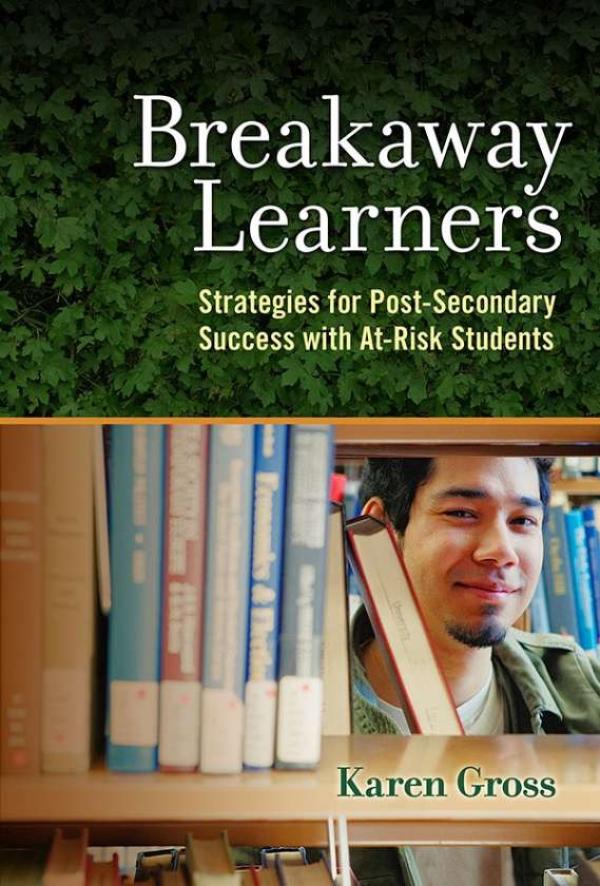
Two root words for education, educare and educere respectively express the complementary principles, to train or mold, and to lead out from. Of the two root words, Karen Gross’s book exemplifies educere, to lead out from, since her basic premise is to meet “students where they are and asks – demands – that institutions do vastly more to understand and respond to the students now enrolled in our educational system” (15). More than a student-centered learning approach to education, Gross suggests that the educational system as a whole should assist students in developing lasticity, a term she uses to describe the quality necessary to enable breakaway students not only to complete their degrees, but also to succeed as adults in the working environment. Gross prefers the term “breakaway learners” rather than “at-risk learners” because it describes more accurately that these students are breaking away from the societal, economic, and familial circumstances that often have hindered their progress in the educational system. She notes that these students have developed the capacity, often overlooked, for lasticity. She defines lasticity as a set of conditions that enables individuals to flourish in education and life. Lasticity is built upon a two-part equation of six qualities (the six Ts) and five building blocks. While she does explain the six Ts (trust, transparency, tranquility, teachers and teaching, tolerance, and temperance), Gross focuses mostly upon the five building blocks of elasticity, plasticity, pivoting right, reciprocity, and belief in self. Within her chapters, she provides clear examples of each of these five building blocks, noting that the first three are centered on the students themselves, whereas the last two require engagement between students and institution. For example, her chapter “Pivoting Right,” while centering on the individual, does describe four ways educators can foster making wise decisions. While Gross addresses developing lasticity in higher education, she also notes that the educational system as a whole, from early childhood to college, requires a re-examination of its purpose and goals. As such, Gross recognizes the challenge of changing the educational pipeline and landscape that would enable the development of lasticity. She identifies both macro and micro challenges that need to be surmounted. Further, she addresses the hurdle of money and provides suggestions as to how to assist students better, even to the recommendation of changing the FAFSA form itself to make it more accessible to all parents and students. Even though her text focuses on changing the educational pipeline, some of her examples can be used now by educators and within institutions. Developing trust, enabling student voices, and encouraging belief in self can be done in many of the ways she suggests as well as through understanding better those whom we help learn along the journey of life. In essence, Gross would probably agree that the process begins with changing the focus of education from educare to educere.
Mr. Sosnow, my fourth-grade teacher, interrupted the class as we copied our homework assignments into our black-and-white marble composition books from the chalkboard. With a sly look in his eye, Mr. Sosnow informed the class that he had a special homework assignment for us. He instructed us that by tomorrow, we were to find out how air is made. I ran home, burst through the front door and blurted out the question as soon as I saw my mother: “Mom! Where does air come from?” She looked puzzled. She said, “You mean the air we breathe?” “Yes!,” I replied impatiently, “It’s our homework assignment.” Mom explained that the air we breathe is made by plants. I stopped in my tracks. “Made by plants?????,” I asked. She said that it is called photosynthesis. I thought for sure this was one of those rare times when my mother was mistaken. I thought for sure this could not be correct because we had lots of plants in our house and in our yard and I never once saw a plant make any oxygen. She saw my doubt, my disbelief, and my suspicion. She said, “If you don’t believe me – look it up.” In our house “look it up” meant the Oxford dictionary or our beloved set of World Book Encyclopedias. I ran to the bookshelves and returned to the dining room table with the “E-F” book of the encyclopedia – to look up fotosinthesis. My mother informed me I needed the “P” book. I thought if I needed the “P,” then surely she did not know what she was talking about. I would likely, I told myself, have to wait until my dad got home from work - he would know about oxygen since my mom was, clearly, uninformed. My mom sat at the table with me and helped me find photosynthesis in the “P” volume of the encyclopedia. I was amazed! Oxygen comes from plants – it was in the book! I wrote up the findings from my investigation. When my dad got home, I regaled him with my vast knowledge of the way green leaves take carbon dioxide, water, and sunlight and turn them into oxygen. The next morning Mr. Sosnow created a panel of students to present their findings. Each child, in turn, offered his/her explanation of the production of oxygen. I heard several creative, and one outlandish, notions. I was the final student to speak. I explained photosynthesis and showed a concept map my mom helped me copy from the encyclopedia. At the end of the panel presentations, each student in the class cast a vote for the best explanation of the origin of oxygen. Photosynthesis and I won in a landslide. The beauty of this fourth-grade learning exercise was that Mr. Sosnow knew his students did not know about photosynthesis. The aim of the assignment was discovery. So often in adult classrooms, teachers pose questions, create learning assignments, and craft assignments for grading which presuppose that our students possess certain kinds of knowledge. But what are adult students supposed to know? And if it is so clear, why do so many learners not know? So much of the ecology of higher education communicates that learning is for adults who already know. My fear is that students spend more time pretending to know than they do in discovery, investigation, encounter, and wonder. Our adult students have learned to create strategies against being blamed, punished, embarrassed, and shamed for not knowing what they are supposed to already know. Their charade comes in many forms: asking shallow questions at the beginning of the class to get air time, belligerent silence during classroom discussions, physically hiding behind computers or, to my personal annoyance, talking over people to prove they know what they do not know. Students will also filibuster or attempt to derail the conversation for a conversation set by their own agenda to exhaust the time of the session. All of these behaviors are defensive tactics to survive classrooms where the supposed-to-know knowledge is simply not known. The intense pressure to perform knowing often stifles inquiry. What knowledge should teachers of adults be able to expect? I can honestly say I do not know. It is the same “I do not know” when asked what kinds of jobs adult learners will have in a society in such flux that current jobs are folding and new jobs are not yet conceived. Education cannot meet the needs of a world that is changing at breakneck speed. The enterprise of education does not know what it is supposed to know – just like our students. I confess, when I think of what my students do not know, I am, more often than not, judging persons as remedial, mis-educated, and under-prepared. If I/we shed our arcane notions of stagnate cognitive standards which are already out-of-step with the world, focus upon the learner’s curiosity, and aim at giving the needed tools for investigation, discovery, and inquiry, perhaps we would, together, create more meaningful learning. Adults who make it into a classroom in higher education know a lot, they know enough. How much trust would it take to work with a student to find out what he/she does not know so learning would be more meaningful? How many discovery assignments are needed to support students who do not know? In the fourth-grade exercise, I experienced amazement because what I did not know was not held against me. Instead, what I did not know was my point of inquiry and consequently amazement. My successful inquiry convinced me that the world was a mysterious place and a place where the mystery could be interrogated and understood – at least a little bit. I want my adult learners to be amazed as they learn new ideas, as they encounter new perspectives, as they discover the new complexities of old thoughts, beliefs, and traditions – even if the discovery is about what I think is basic.

Is my teaching good enough? Is your teaching good enough? I believe that good enough teaching and learning are practices of radical hospitality that are needed more than ever today in a political climate of American exceptionalism, increasingly divisive civil discourse, and passionate if conflicting longings to be “great.” While I hope to promote excellence in my work, I don’t ask students for greatness over and above their peers in my classroom; rather, I aim for a learning environment in which every student believes they are good enough to be there. I believe that learning in a group is more possible and probable when the learner experiences themselves not as necessarily better or less than other learners, but rather as good enough, believing that they belong and therefore can participate in learning. However, many students and teachers do not believe they are good enough – a fear that has been communicated through previous learning experiences from pre-school to Ph.D. processes. Believing oneself to be good enough – a requirement for teaching and learning in my opinion – functions like other privileges, available to some more than others and laced with relative power and opportunity. Good Enough? What exactly is good enough? With multiple connotations, this phrase “good enough” is easily misunderstood. In my field of pastoral theology, good enough is a practice of radical hospitality that opens participants to relationships of appropriate support and challenge. D.W. Winnicott, a leading thinker in object-relations psychological theory, imagined good enough practice as responsible and responsive, neither rigidly perfectionistic not negligently unmotivated. Here’s how I explain the concept in my pastoral theology syllabus: “Pastoral theology continues to view the modern psychologies as offering tools for understanding care. One of the most helpful metaphors that pastoral theology has adopted is that of the good enough participant in caregiving. This is not to say that care involves minimal effort. Rather, pastoral theologians have recognized that it is more helpful to aspire to be a good enough pastoral caregiver than a perfect one. This stance requires more effort, attention, and courageous habits of self and communal reflection.” Good enough is also a helpful concept for pedagogical reflection beyond my academic discipline. By good enough, I mean to indicate a deep sense of value, a seat at the table, a voice considered a worthy conversation partner, a belief in oneself as belonging. Is this possible in classrooms today? For students who do not experience believing themselves to be good enough, both perfectionism and apathy are rational responses. However, neither of these responses is healthy for the learning environment not to mention for the learner. Bracketing admissions, financial aid, curricula, hiring policies, tension between institutional traditions and commitments, and more for the moment, when I focus on the students eligible to enroll in my class, if I am committed to good enough teaching, I need to ask how hospitable my teaching is to different learners—especially in this politically divisive moment. Have I designed a class in which students are able to believe they belong? Can each willing participant be good enough? What are some challenges to this kind of radical hospitality in theological education? Which boundaries are required for this kind of radical hospitality and which boundaries must be released? Three Challenges of Radical Hospitality in Theological Education: Room, Representation, and Respect In my teaching, I am confronting challenges to radical hospitality whether newly awakened in this political era, as is the case for many of my white colleagues and students in theological education, or held as longstanding concerns, as is the case for colleagues and students who represent and/or are committed to be in relationship with communities with histories of exclusion from theological education. Specific practices of radical hospitality, such as room, representation, and respect, can dismantle good enough as a privilege in order to invite all students to believe in themselves as good enough participants in learning. I think of these practices as disciplines of inquiry and courageous self and communal reflection. Room: Where is the breathing room in my course design? Is there room in my syllabus for multiple avenues of earning a course grade? Do students have an opportunity to learn how to succeed in the class through assignments that build over the semester? Have I woven enough practice into course time? Is there room in assignments for students to make connections between the course content and what matters deeply to them? Representation: What voices and epistemologies are represented in the course texts and in what order? How might different students feel invited into a conversation (imagined or real) with the authors of these texts? Will all students have to stretch in relation to some readings and feel more at home with other readings? How do I represent, include, and compensate epistemologies, voices, and communities deeply relevant to the course of study but that don’t have access to academic publishing? Respect: Does my syllabus avoid unintentional dehumanization? Do I account for the word “we” and define my authoritative access to speak for groups of people from seminary students to human beings to women? Do I coach students in accounting for their use of pronouns? What structures of accountability have I included in the planning, unfolding, and debriefing of my teaching? Now What? I need to wrestle with the limits of belonging in my pedagogy to consider how to move more deeply into good enough teaching and learning. I do not think that good enough teaching and learning ought to be a privilege restricted to a small group of learners, professors, and learning environments. Good enough teaching and learning are practices of radical hospitality that swing open wide the opportunities of learning. If I want to embrace a good enough pedagogy, I will need to become more aware of and willing to address the challenges of radical hospitality in theological education, especially in my classrooms. I believe theological educators can begin to cultivate pedagogies where all learners have access to being good enough by first recognizing challenges to radical hospitality in theological education. In my next blog, I wonder about dreams, commitments, and strategic practices that invite all learners to believe in themselves as good enough. How have you tried to embody and inspire good enough teaching and learning?
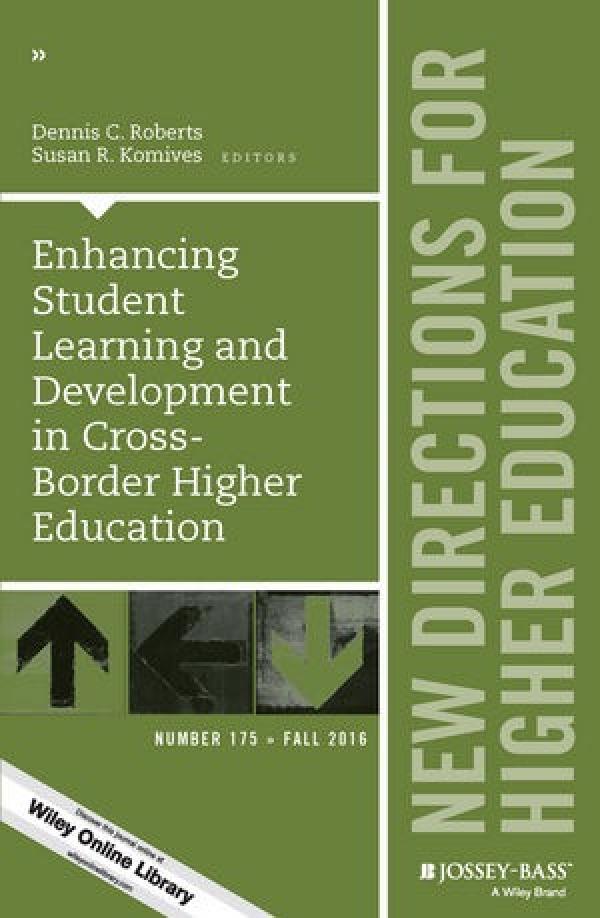
This volume is dedicated to cross-border education, a type of internationalization focused on education strategies that move across national and regional lines. Editors Roberts and Komives cite J. Knight’s description of internationalization as “the process of integrating an international, intercultural, or global dimension into the purpose, functions, or delivery of postsecondary education” (10). Internationalization, at first blush, may appear but a mere euphemism for globalization, a rather deleterious concept especially when partnered with education. Roberts and Komives, however, are quick to point out how internationalization differs from globalization in both purpose and process. Globalization promotes rampant product production, increased uniformity, the ubiquity of certain products and hegemonic narratives, and is often associated with the pernicious effects of the exploitation of vulnerable populations around the world. In contrast, “internationalization is a process of infusing international ideas across a variety of functions and experiences” in which “distinct attributes of identity are accorded value” (10). Internationalization, according to Roberts, “embraces the inevitable – a shrinking planet with growing shared reliance on each other” but also seeks to preserve culture (10). Cross-border education (CBE) goes beyond the traditional study abroad mindset; it requires “infusing international, cultural, or comparative perspectives in existing courses,” “modifying teaching and learning processes through virtual experiences,” and incorporating scholarship from other cultural settings to bring the world “home” to students within their own schools (16). It also encourages fluidity of people, programs, projects, and policies across national and regional lines and places a high premium on critical analysis of the cross-cultural application of educational practices. Section one addresses how to systematically study educational practices and evaluate their transferability to a different context. Darbi Roberts’ contribution requires readers to address how and why educational systems choose from which programs to borrow. Section two illustrates examples of student learning and development programs around the world (South Africa, China, UK, Mexico, and more) created to address specific populations and needs within their own cultural and national boundaries but which may prove incredibly useful for others throughout the world. Previously, much research on student learning and development originated in the United States, but this volume highlights the growing programs in other parts of the globe. McGlory Speckman writes about first-year village programs in South Africa, where this program was developed, and the need of many students from backgrounds of “economic, social, and political deprivation” for a communal and supportive environment as they transition to a university setting (34). Wong’s chapter is a fascinating foray into a unique population in China, students born under China’s 1979 One Child Policy, whose disruptive adjustment to university life requires universities to set up programs addressing this population’s lack of compromising skills and enhance their resiliency and self-reliance. These programs include everything from complicated team work, physical training, and mentorship to a simulation activity called the “city challenge” in which “students are given very limited pocket money and they have to earn their food by selling products they invent” (45). Chapter 5 focuses on a specific program at the University of Sheffield, UK, dedicated to “looked-after children” and “care leavers” (49). Encouraging this population towards higher education is a real challenge, as “only around 6% of English care leavers enter higher education at the age of 19, compared to 48% of a similar age in the general population” (53). Mexico’s legacy of political corruption, financial disparity between rich and poor, and a general lack of civically engaged citizens have created a challenging environment for local universities trying to educate their students to become leaders, according to Alicia Canton’s chapter. The Universidad de Monterrey (UDEM) has invested in numerous initiatives to encourage students to become involved in their communities such as implementing active pedagogies “connecting the student to current problems within the local community,” requiring every student to complete an internship at a local organization, offering cocurricular courses to develop leadership competencies, and mandating “every student perform 480 hours of service” (59-60). Section III moves readers back into the realm of theory, providing analytical tools for exploring data produced in specific student learning and development environments like those described in Section II. This section exemplifies how those designing initiatives to enhance student learning and development, especially in the arena of cross-border education (CBE), must explore the significance of context as well as content. Readers are prompted to explore prevalent cultural assumptions, national agendas, and various socio-political discourses which have informed and shaped their own definitions of learning and development, as well as those of the programs they wish to adopt or adapt. Broido and Schreiber’s chapter presents social justice frameworks for student learning and development as well as concise renderings of various pertinent dimensions of student development theories (identity development, cognitive-structural development, and self-authorship theories). Drawing on the work of Hofer and Weinstock, Broido and Schreiber note how “patterns of epistological development vary among cultures” and how cultural assumptions about knowledge, truth, and authority, can profoundly affect how students learn and develop (70). The general values of a culture “as well as the role of the family, religion, and social identity enhances a critical perspective on designing appropriate strategies for student learning and development” (75). Chapter 8 applies an ecological systems view to Singapore, a culture that highly values formal education, an attribute likely stemming from a belief among families that education is a passport out of poverty. Deference to elders and authority, possibly arising from a Confucian root in the culture, are attributes which lead to a particular learning environment, not unique to Singapore but definitely significant when considering program adoption across borders. Chen’s and Mathies’ contribution looks at increased interest in assessment and evaluation in the halls of higher education, in the U.S. and around the world, over the last few decades. The fact that college admission in many Asian cultures is controlled by the government via a national entrance exam, exemplifies just another way in which U.S., European, and Asian institutions approach education differently (89). Formerly faculty and now on staff as an academic advisor, I fully concur with the authors of chapter 10 that “in a cross-border educational paradigm, it is increasingly important for faculty and staff to orient their work and self-understanding of their roles to be that of educators” (93). The need for internationally competent staff will only become more critical in the future. Roberts and Komives close their volume with a look at how partnerships can enhance student learning and development by taking into consideration institutional motivations for transferring, adapting, hedging, or even avoiding certain programs or policies. Some aspects of student learning and development programs (such as career decision making, counseling, intercollegiate sports, student governance, fraternities and sororities, coed housing, and so forth) may work well in the “home” country but prove disastrous when transplanted into another environment. This volume will prove illuminating to any student affairs professional, academic advisor, study abroad or exchange coordinator, faculty, or administer within higher education today but it is especially germane to those directly or even tangentially involved with policy adoption across borders.
Editors Khine and Areepattamannil contribute to the series Contemporary Approaches to Research in Learning Innovations with volume nine, Non-cognitive Skills and Factors in Educational Attainment. The premise for the volume is that non-cognitive skills are equally important, or are even more important, than cognitive skills for effective educative processes and student success (3). Examples of non-cognitive skills include resilience (grit or toughness), well-being, social awareness, curiosity, creativity, work ethic, self-evaluation, collaboration, self-regulation, self-confidence, and motivation (16). The book is organized in three parts: I – Introduction, II – Conceptual and Theoretical Underpinnings (on non-cognitive factors), and III – Evidence from Empirical Research Studies. In Part II, six chapters are devoted to the relationship between non-cognitive success in learning and the educational process. A key question is: “Why are non-cognitive constructs important?” (17). Research shows that the cognitive development of persons should be accompanied by intentional non-cognitive development for positive democratic citizenship and personal and social well-being. Authors call for teachers and policy-makers to be aware of the research that clearly shows the significance of non-cognitive learning, thereby challenging current curricula, teaching methods, disciplinary policies, student evaluations, activities, and utilization of assessments (chapter 3). Subsequent chapters in Part II focus on understanding roles of self-efficacy and emotional intelligence, a repertoire for educators based on their attention to non-cognitive factors, attitudinal changes regarding assessment and correlating interventions, and non-cognitive learning tied to academic performance. Part III provides evidence from empirical research studies that support non-cognitive factors being highly significant for student success both in school and after graduation. For example, self-confidence is a greater predictor of achievement than measures of socio-economic status (166). Passion, perseverance, and self-control contribute significantly to success as well (chapter 9). Chapter 13 provides recommendations for greater student success: provide self-regulation knowledge support for students to improve their preparedness; provide information about available supportive environments; evaluate creativity and practical skill sets equally to cognitive ability; and redesign education from a “fixed intelligence” foundation to a dynamic intelligence focus (311). Chapters 14 and 15 initiate a tested “mental toughness” curriculum for students, and analyze attributes required for such toughness. In contrast, the next chapter recommends socialization through school in early childhood that educates children in social norms and mores through the lens of justice, beneficence, faith, hope, and love rather than with fear, negativity, and external control (370). Issues of future wellness, performance in mathematics, and the impact of culture on non-cognitive skill sets follow in the final chapters. This volume provides exhaustive evidence for its premise. Yet, these studies challenge educators to think pedagogically about what we expect in the classroom and how we intend to educate the whole person in a dynamic learning conversation rather than in a “fixed” curriculum. This book is worthy of attention, and is likely best suited for faculty exploration in broad strokes rather than an essential read for all teachers.

My most recent post for “Teaching Islam” deals with some of the stakes in teaching and studying religion at a Catholic college. My colleagues Shabana Mir and Sherali Tareen have also provocatively and sharply addressed related topics of “confessional” and “secular” curricular methodologies, so I’d like to continue the thread by focusing on student experience in the great debate on distinctions between religious studies and theology. I touch on the fluid boundaries of allegedly dispassionate approaches to the study of religion in my article “Normative Readings of the Qur’an,” in the Journal of the American Academy of Religion as part of a roundtable, “Normativity in Islamic Studies.” This roundtable focuses on scholarship; I would like to focus on teaching in this essay. Distinctions Aren’t Always Clear Notably, my own Department of Religious Studies at my Jesuit Catholic institution, Le Moyne College, offers courses in religious studies as well as theology. According to institutional parameters, theology courses differ from religious studies courses insofar as the former must give significant attention to Catholicism, either on its own or in relation to other traditions. Among the professors who teach theology courses at Le Moyne, some are Catholic and some aren’t. So what does it mean to engage (in) Catholic theology when it’s not limited to Catholics? I think this is at once a relevant field-wide query and also departmentally specific. However one answers the question, though, if a Catholic school is paying non-Catholics to teach Catholic theology—and my Catholic institution isn’t the only one doing this—in a religious studies department, then at the very least the distinctions between religious studies and theology aren’t black and white. As for student engagement with such matters, I find that students aren’t so interested in abstract theoretical distinctions between religious studies and theology, but are quite interested in making sense of such contours on the ground. In my first couple of years of full-time teaching, I attempted to formally introduce students to distinctions between religious studies and theology in the first days of class, but as the years go by, I find a better approach is to largely leave the debate in the background and to teach through examples instead, e.g., encouraging reflection on field trips to mosques or on challenges of teaching religion at a public high school full of disgruntled parents who think Islam is a devil religion. Teaching Students New Vocabulary As an undergraduate religious studies major myself, I was excited to learn about epoché (suspension, bracketing), both as a concept and as a disciplinary key term. Thanks to my colleague Darryl Caterine’s suggestion, I have begun making sure that students know the word epoché in the first week of classes, and without doubt, students find this helpful. What’s more, introducing students to the term gives them implicit permission to decide which approaches to studying religion ignite their interests most. To this extent, in a student-centered classroom—which in my case involves a lot of in-class discussion, often led by students themselves—it’s counterproductive to police the boundaries of conversation too much. If students want to talk about what a “true Christian” is, for example—based on their subjective, even myopic view of Christianity—that’s fine. Although the students shouldn’t expect me to chime in with my own partisan position, or corroborate theirs for that matter. Experimenting with Theological Inquiry One of my favorite writing assignments in recent years was in my course “Islamic Mysticism.” I posed in a prompt: Are Islam and mysticism inherently connected or could one reasonably separate the two? This prompt takes place in a context where we read, for example, William James’ categories of mysticism, while also giving attention to Muhammad’s role as a medium for divine Revelation, in addition to a variety of films, texts, and art that point toward the significance of first-hand numinous experiences. The prompt invites synthesis and reflection on course material, but is it an academic question or a theological question? I think it’s both. It’s academic because it requires students to synthesize evidence based on a careful examination of course material. But it’s theological, too, I think, because there is no single correct answer to the question and the stakes are significant in terms of how one’s answer might provide commentary on course material. How might student responses to the question incite them to go beyond epoché and perform their own creative process, or poeisis, with course material? In many ways students answer the question depending on personal sensibilities toward categories they understand as “Islam” and “mysticism.” The essay prompt, moreover, produced some really thoughtful essays, many of which included disclosures on how the students struggled with the question and changed their minds as they wrote; some students even referenced the question weeks later in the course. My sense is that giving students formal opportunities to personalize course material, while engaging in relatively free reflection, helps them perform better on a variety of levels. Conclusions: How Much Should Students Care? When speaking with colleagues across the country—with a particular Facebook thread in mind, I will admit—I sometimes get the impression that some of us don’t always want students to indulge their deepest interests in religion, at least not in our religious studies courses. This is understandable to the extent that many of us, including me, don’t want to put ourselves in positions of evaluating the veracity of a theological claim or spiritual experience. But I think one can largely assuage this concern by relying on low stakes assignments (e.g., short writing assignments, journal entries, in-class activities) that allow students to mine their own theological, spiritual, or metaphysical curiosities. Without this freedom, I think we risk signaling to students that they can’t learn as holistic beings. Ironically, many institutions require religious studies courses precisely so that students learn about the world beyond their classes in engineering, biology, business, or what have you. Perhaps as instructors we would do well to more carefully bracket our own disciplinary dogmas when they might impede the creativity, imagination, and even effort from our students. How do you navigate the boundaries between religious studies and theology in your pedagogical practices?
Dewey in Our Time is a volume of collected essays that provides an overview of Deweyan scholarship since the original publication of John Dewey’s Democracy and Education in 1916. Recognizing the continuing influence of Dewey’s works, the Philosophy of Education Society of Great Britain and the History of Education Society, UK invited scholars of education, philosophy, history, educational policy, and cultural studies to contribute to this volume. The volume is composed of an introduction and two main parts. In Part I, “Dewey in Changing Cultural Contexts,” the authors critically reinterpret Dewey’s wisdom and apply it to the educational contexts of Finland, Singapore, Spain, Japan, the UK, Australia, and the US. The diverse essays in this section engage with Dewey’s work on a philosophical level while also accounting for the histories that affect its reception in different national contexts. Taken together, the perspectives of authors from a variety of disciplines shed important light on the ways “science and epistemology, religion and politics” interact in the domain of education (3). Part 2 is titled “Dewey, Pedagogy, and Practice in Our Time.” “Our time” here refers to the first decades of the twenty-first century, seen in relation to and even under the shadow of the past and future. Hence, Part 2 treats the world in which teachers and educators work, live, and research as a space in constant flux. Each contributor to this section discusses Dewey’s relevance to a particular challenge in contemporary education. The essays make connections between “educative experience and experimentation; experience and moral judgment; doubt, difficulty, and struggle; and … action research” (4). Part 2 concludes with a call to replace current models of “citizenship education” with Dewey’s “democratic education.” The most valuable aspect of this book is the discussion of the wide range of Deweyan influences on contemporary education. For example, in Chapter 6, Javier Sáenz Obregón maintains that Dewey’s concept of educational experience has influenced contemporary education in terms of “self-reflection and self-creation” (96). Arguing that teachers, like students, are the “subjects of educational experience,” Obregón asserts that we must learn to apply to teachers the same aspirations we have for students (96). In particular, pedagogical practices should promote “inter-subjective transformation” for teachers and students alike (96). Andres English argues in Chapter 8 that Dewey’s concept of “struggle in learning” has influenced definitions of learning and of learning’s beginning point in contemporary education. Connecting Dewey’s concept of learning to historical and contemporary concepts of philosophical education (Plato, Rousseau, and J.F. Herbart), English distinguishes between productive and destructive forms of struggle and discusses how these conceptual distinctions can inform educational practice, based on the idea of the “in-between of learning” (129) – a condition of being beyond ignorance but not yet in possession of full knowledge. This condition is uncomfortable and difficult, but it offers rich possibilities for reflective thinking. Overall, Dewey in Our Time successfully demonstrates Dewey’s ongoing legacy in educational practice, policy making, and curriculum development and illuminates the ongoing Dewey-inspired research on historical and philosophical education. Teachers and educators will greatly benefit from this volume when undertaking the daunting task of pedagogical reconstruction in the face of changing realities. Researchers will gain deeper insight into the historical and philosophical underpinnings behind educational practice.
Empowering Learners with Mobile Open-Access Learning Initiatives is a well-designed book giving an overview and awareness to mobile activities as they can be provided in an educational setting. The anthology was compiled by Michael Mills and Donna Wake, both from the University of Central Arkansas. Most of the studies are North American, but there is ample diversity of circumstances in the populations studied and techniques showcased. The book is separated into four parts: practice, curriculum, assessment, and theory. This book will likely become a historic piece of educational observation on today’s environment, but just as importantly, it is future-looking. So how is the future looking? The authors are clearly optimistic about the future of higher education. The evidence shows the effectiveness of mobile technologies to provide a more equal and motivated voice in society. Considering the Wabash Center for Teaching in Learning in Theology and Religion’s audience, this book would be most effective for those in curriculum development and assessment. It is easy to read, but scientifically formatted. Each chapter constitutes a separate study contributing to the overall discussion, and new vocabulary is introduced and defined at the conclusion of each chapter. The publisher, IGI Global, is an established publisher of Information Science and this text could be useful even as a textbook for courses in Information Science and Technology. The book could have been enhanced through a greater diversity of authorship and a wider distribution of geographical locations. Mobile technology is world-reaching, but much of this book’s arguments were grounded in a Western cultural understanding of the world. It would have been helpful for that to have been disclosed in the preface as a both a limitation of this volume and a signal for further study about student learning in online open-access models of education. There was some effort by the authors to attend to issues related to physical and learning disabilities and learning needs of underprivileged communities. However, the only examples the authors provide outside of the United States were Kenya and Portugal. The real value of the book is its comprehensive structure of presentation and approach to mobile technology as a discipline. It does not make light of the common lay person’s experience with mobile technology. Rather, there is a sense of power behind today’s and the future’s possibilities for reducing social barriers in education. Empowering Learners with Mobile Open-Access Learning Initiatives would be an excellent contribution to a higher education library, and that is said without hesitancy even when the examples of technology in the book could be somewhat fleeting given the rapid changes in technology and online learning.
Not a pedagogical tool, “This book provides a detailed look at the current state of Latino/a theological education in the United States” (26). A compilation of research, it begins and ends using data to logically demonstrate the importance of theological education beyond denominations: (1) churches are anchor institutions in areas of poverty that provide critical services which are cost effective; (2) these churches partner to build social capital and personal relationships; (3) seminary educated religious leaders are better prepared to lead such vital churches. However, this is also an issue vital to denominations because demographic and religious adherence data suggest “Hispanic peoples are the future of Christianity” (469). Finally, it is an important issue for seminaries which not only wish to participate in that greater good beyond denomination by addressing diversity, but also wish to attract and retain faculty who are: comparatively young yet experienced, likely to hold more graduate degrees than required and speak more than one language, love teaching and excel as educators, are hard-working and open-minded, view their academic work as a vocation and persevere in their denominational affiliation, and who have a natural proclivity to span divides among races, partisan politics, languages, ethnicities as well as between seminaries and local churches. These are all descriptors of Latina/o faculty. Though lengthy, the book is an easy read due to its helpful introduction and chapters that both provide both an opening summary and concluding recommendations. Chapter ten is the most challenging because it moves the discussion beyond inclusion to justice: “push against tokenism, stereotyping, monocultural curricula….recognizing scholarship and teaching….[push for] greater transparency…” (326). Two chapters provide case studies on seminaries that are models of this inclusive justice. Another chapter describes the worthy efforts of the Hispanic Summer Program and the Hispanic Theological Initiative, both important partners for schools serious about increasing the number of their Latino/a faculty, which is a key take-away because “Latino/as beget more Latino/as” (445). Every positive outcome documented appears predicated on the presence of Latina/o faculty. Chapter thirteen is a groundbreaking study of Bible Institutes. Among the most important recommendations is a kind of mutual mentoring. Latina/o faculty need and want to be mentored; non-Latino/a deans and presidents with good will but poor skills concerning diversity would profit by listening to those faculty. If they do, everyone benefits. Another urgent need is continual training on diversity for faculty, students, staff, administrators, and board members. “Through Hispanic Eyes” (chapter fourteen) serves as an example. Although not exhaustive, the bibliography is comprehensive. An index would have been helpful, and given the repeated assertion that Catholic seminaries compare well to their Protestant counterparts, a case study of a Catholic seminary seems missing. Nonetheless, this is not a book to be shelved or filed, but rather one to spark necessary debate and urgent action.