Resources

Why do so few Hispanic males enroll in and graduate from institutions of higher learning? Why are Latinas, by contrast, enjoying so much more success than Latinos? Moreover, why is there a dearth of research addressing these questions? This book, which includes twelve chapters written by leading Latin@ scholars, addresses these questions with the goal of broadening readers’ contextual understanding, deepening their comprehension of the specific challenges faced by Hispanic males in higher education, and securing their commitment to Latino success. The book’s contributors adroitly explore the complex challenges that Latino males face in the context of American society and higher education. The book’s first two chapters discuss many of the socio-economic factors contributing to the current Latino “crisis” in higher education. They carefully examine the Hispanic gender gap and the ways in which it is manifested along the educational pipeline, alternate life pathways for Latino males (such as military, low-paying labor, prison), and factors that frequently hinder Latinos from enrolling in college (such as lack of financial aid literacy and inadequate academic preparation). Multiple chapters investigate key cultural factors that significantly impact Latino experiences in higher education. Chapters Four, Five, and Eleven, for example, focus on Latino identity and intersectionality, probing complicated issues (for example, relationships between caballerismo, Latino persistence, and high attrition rates) and introducing humanizing nuances (such as the Latino male privilege paradox). Chapters Two, Seven, Eight, and Nine pose critical questions about the role that familismo plays in hindering and promoting Latino academic success. Those chapters also address other relevant topics such as the unique features of Mexican sub-culture and various forms of Latin@ cultural wealth. The final section of the book calls on academics to more thoroughly research the crisis pertaining to Latinos in higher education. Chapter Ten describes research on college administrators’ levels of awareness about the challenges faced by Latinos in academia. Their findings, namely that administrators’ awareness not only varied widely, but also that some administrators resisted acknowledging problem areas altogether, underscore the urgent need for more research. Chapter Eleven suggests that studies which compare and contrast the experiences of Latinos and Latinas might yield much fruit, while the authors of Chapter Twelve advocate for a strengths-based, data rich, interdisciplinary approach to research on Latinos, an approach which is successfully modelled throughout the book. In conclusion, educational leaders and researchers are sure to find this book – and especially the new research that it presents – a valuable and generative resource. The book’s contributors helpfully shift the research focus from Latino students’ resiliency and deficits to exploration of the social and cultural factors that shape their educational experiences. While the authors do not offer many substantive recommendations for educational programming and practice or directly address issues pertaining to Latinos in graduate education, they do make a strong case for “ensuring that the success of Latino males in higher education” becomes a national imperative. After reading the book, one also hopes that educators will wholeheartedly embrace Latino success as a moral imperative.
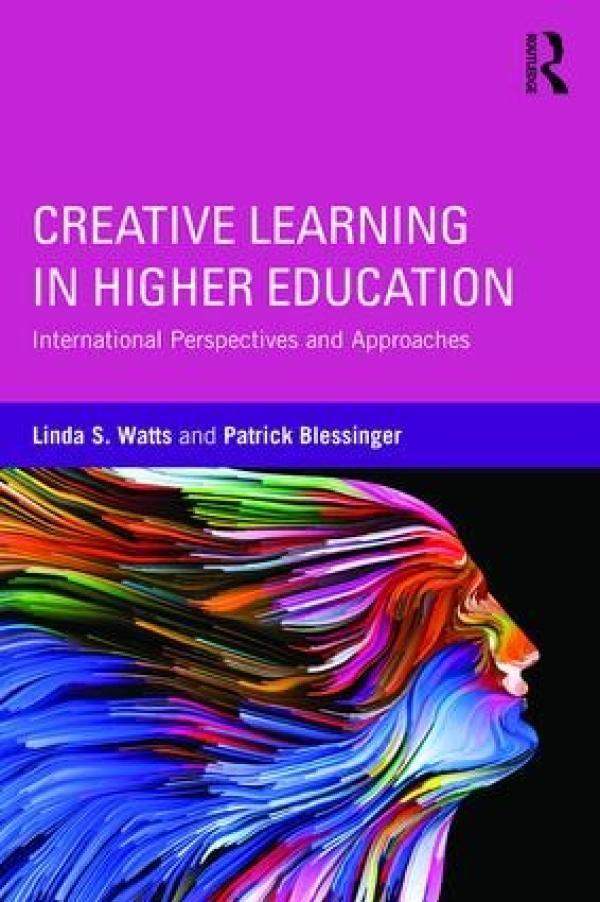
Creativity in higher education is oftentimes pigeonholed to certain academic disciplines or perceived as the property of select individuals with an artistic flair. Watts and Blessinger, through their well-crafted anthology, demythologize these and other constructs, by providing readers with a more comprehensive understanding of creativity as an accessible and proactive agent in higher education – past, present, and future According to Watts and Blessinger, “creative learning transcends individual capacities, disciplinary constraints, national boundaries, and institutional barriers” (217). Nonetheless, they also caution against assuming that it can be understood or practiced the same across cultures. Creativity in the classroom demands particularistic pedagogic approaches that reflect the institutional and cultural settings of those served (xvi). With a primary focus on higher education, the assembled chapter authors reflect different international and interdisciplinary perspectives and bring teaching techniques based on extensive research and experience. A central theme found throughout this book is that “If all students possess the potential for creativity, then teachers do well to consider how their instructional objectives, curricular designs, learning assessments, and institutional structures reflect that fact” (214). Within this anthology, the reader is provided with case studies and essays that cover a full range of subject content and pedagogic approaches in varied cultural settings – including “Play and 3D Enquiry for Stimulating Learning,” “A Case Study in Best Practices in Public Higher Learning,” “Creative Approaches to Stimulate Classroom Discussions,” and “Configuring Interdisciplinarity: The Common Core at the University of Hong Kong.” As a book, it exhibits a dynamic interplay between convention and innovation and reminds the reader throughout how creativity is deeply rooted in the pedagogic theory of all disciplines. It also challenges educators to “foster a climate and culture in which creative learning and teaching are promoted, supported, and valued; a culture that allows experimentation, new ideas, even failure – for what is failure if not an opportunity to learn?” (199). This book would be a useful resource for any educator regardless of their respective discipline. It helps us to remember that “learning creativity happens when inventive, imaginative, and physical methods are used to explore a subject and harness its practices to new partners” (120). And although the reader may not find each chapter as pertinent as the next, they are given access throughout to seminal texts and issues relating to creativity in higher education. The mantra of this book is – creativity is an activity in which anyone may engage in.

Every once in a while, integration becomes the golden fleece in curriculum design, teaching, and assessment. Deans can feel pressured to identify the way the curriculum, and the Faculty, integrates subjects and learning in the curriculum and its course of study. They may feel frustrated when called upon to find ways to demonstrate, through assessment, that integration is taking place: what it looks like, to what degree, for what outcome. This points to a fundamental challenge: in what ways and to what extent are the things learned in seminary transferable (applicable) to ministry contexts? Novice deans often wrestle with some basic questions. What are we trying to integrate--subjects, fields of study, concepts, skills----all of them? Who is supposed to do the integration--faculty? Students? How do we assess integration? What evidence do we look for? How do you grade it? What does it look like, anyway?! Attempts to engage the faculty in how to integrate the curriculum become frustrating and ultimately futile. If you are frustrated trying to integrate, maybe you're focusing on the wrong thing. Transference of learning. A more helpful framework to focus on may be transference of learning. Transference of learning is a powerful indicator of higher order learning. It denotes the ability of a student to take something learned in one context or a particular field of study, and apply it in a different context or field of study. Transference of learning provides evidence of higher order learning: synthesis, imagination, application, innovation, and creativity. Focusing on transference of learning keeps the focus where it belongs: the student's attainment and mastery of learning. One common attempt among faculty is to focus on integrating content learning---concepts from distinct and diverse fields of study. While that is possible, in reality, it rarely happens by intent or design, and more often than not by serendipity, if at all. Busy faculty members rarely spend enough time in conversation among themselves about their own scholarship, fields of expertise or even discuss their own teaching and courses to creatively design integration in a course of study. Focusing on transference of learning can be a more effective framework for faculty discussion about teaching and learning and its outcomes. Ask a professor "How do you strive to integrate what you teach in your course with what students are learning in a course in a different field of study?" and you'll likely succeed in merely stumping the teacher. Ask, however, "What are those things in your course you want to see your students use or apply in other courses as they continue their courses of study?" and you'll likely get a clear and confident response---and a hint about what to look for. While the concept of transfer of learning is easier to grasp than the vague "integration," it must nevertheless be applied with informed rigor in order to be effective as a framework for teaching and learning in the curriculum. Dale H. Schunk provides a list of types and characteristics of transfers of learning from the literature of educational research. The summary below can serve as a guide to develop program level goals, craft course learning outcomes to align with those goals, and point to evidence for assessment. Types and Characteristics of Transfer of Learning Overlap of learning between situations and contexts: the original and transfer contexts are similar ("near") What is learned in one context enhances learning in a different setting ("positive") Knowledge of a previous topic is essential to acquire new knowledge ("vertical") Knowledge of a previous concept is not essential but helpful to learn a new concept ("horizontal") Explicit new knowledge transfers to new task ("literal") Use some aspect of general knowledge to think or learn about a novel problem ("figural") Transfer of learning involves abstraction requiring conscious formulations of connections between contexts ("high road") Abstracting situations from one learning context to a potential transfer context ("forward reaching") Abstracting in the transfer context features of a previous situation where new skills and knowledge were learned ("backward reaching"). Engaging the Teaching Faculty in conversation about transfer of learning can re-shape its thinking about course methodology and learning outcomes. Using transfer of learning as a framework for assessment may make evaluation of "integration" a less stressful and more effective way to measure student learning. Starting Questions What evidence do you have that students use what they learn in one cognate field of study as applied in another? What evidence do you have that students are able to apply what they learn in academic courses in their ministry contexts? What evidence do you have that students are able to apply what they learn in core courses in their field-based studies and supervised ministry experiences? What transference of learning do you wish to see in what students are learning in basic Bible courses to homiletic courses? What transference of learning do you wish to see between acquired academic skills and ministry context competencies? SOURCE: Schunk, D. (2004). Learning theories: An educational perspective (4th ed.). Upper Saddle River, NJ, USA: Pearson, p. 220.

There can be no question that understanding (implicit or explicit) learning theory undergirds effective teaching. This is especially true when instructional topics become confusing or diverge from the common experience of students. Many of the topics students encounter as they study theology and religion fall into this category, and it is for this reason that the collection of Knud Illeris’s works, Learning, Development and Education, has value for teachers of theology and religion. Illeris has spent his career figuring out how learning works and determining how to create authentic, transformative learning experiences. This collection of essays demonstrates the way in which Illeris’s theories developed over time, and shows the breadth of topics that come to bear on the understanding of student learning. Illeris categorizes his selected works into five parts, containing essays that were originally published between the late 1990s and 2015. Some of the essays have not previously appeared in English. The first two sections have the most bearing on the teaching of theology and religion, so they will be the focus of this review. The three essays in Part One succinctly describe Illeris’s comprehensive theory of learning, articulated more fully in his 2007 monograph How We Learn (New York: Routledge). In brief, Illeris argues that learning has two fundamental processes and three dimensions. The processes are “an external interaction process between the learner and his or her social, cultural, or material environment, and an internal psychological process of elaboration and acquisition” (10). Illeris also identifies three dimensions of learning: the content dimension deals with the material being learned, the incentive dimension considers the motivation and energy necessary for learning, and the interaction dimension categorizes dispositions that provide the genesis of learning. Illeris further identifies several barriers to learning (15-17) after recognizing that education is rife with “non-learning and mislearning” (15). According to Illeris, there are four types of learning: cumulative, assimilative, accommodative, and significant/transformational learning. Each of these types of learning is connected to a phase in psycho-social development in Part Two, where Illeris lays out his understanding of lifelong learning (48-55) and gives extended treatment to the function of learning at the youth and adult stages. He argues that education during the phase of youth is typified by a quest for what he calls “self-orientation,” which means the “process where one orients oneself with a view to finding oneself, one’s options, ways of functioning, and preferences” (69). In his view, all educational experiences (inside and outside of the classroom) contribute to and are undergirded by the youth’s quest for self-orientation. The situation is different with adult learners, who have already found their orientation, and so accept responsibility for their actions and their learning. In Illeris’ estimation, this different approach to learning requires different foundations for adult education. Part Three, “Special Learning Issues,” is a compilation of chapters that do not fit in the other sections but provide a theoretical grounding for the arguments Illeris makes in parts one and two. Part Four, “Various Approaches to Education,” includes the oldest of the selected articles, and describes how some of Illeris’s theories were put into practice at Danish universities in the 1970s. The final part concerns learning in working life. Here Illeris applies his comprehensive theory of learning (articulated in Part One) to the workplace. While there is certainly room for criticism of Illeris’s understanding of learning, and in particular, his connections of types of learning with phases of psycho-social development, Illeris’s comprehensive theory of learning is helpful as a foundation for effective theological education. Three observations, in particular, deserve mention. First, his contention that learning is not merely knowledge transfer, or skills acquisition, but includes a variety of psychological, biological, and social factors is worth keeping in mind as we construct learning experiences for our students. Second, Illeris’s observation that youth and adults have a different foundation for learning is significant, especially as there are now more adults students enrolling in college than ever. Finally, it is incredibly important to consider the various barriers students face as they try to learn. While it is certainly the case that students are responsible for their education, Illeris is right to argue that teachers both create and tear down barriers.
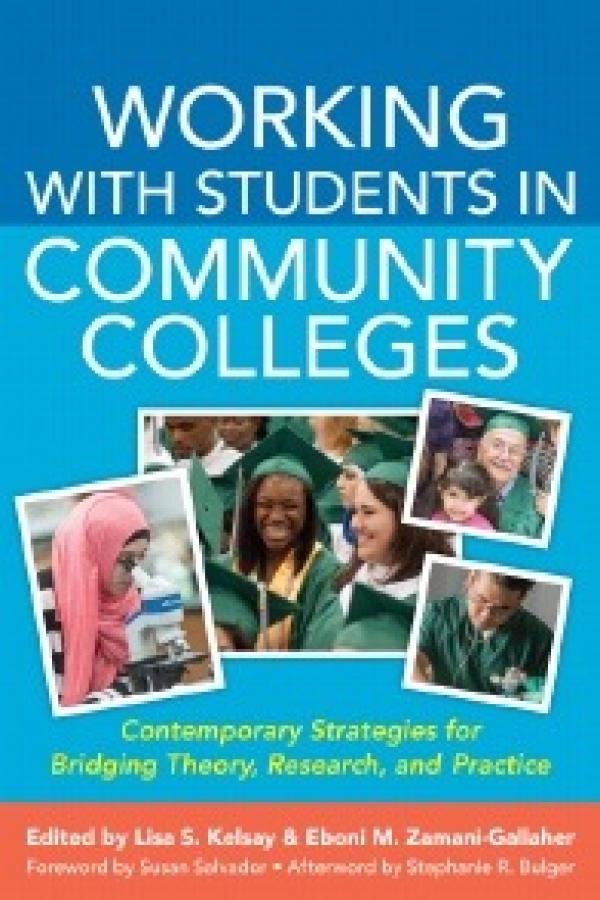
Community Colleges have historically faced numerous challenges, many generated by the very nature of their missions. The three parts of this text flesh out the theory, research, and practice most germane to the history, current state, and future of the American community college, as well as the various student populations community colleges now serve. The three sections ask readers to understand (Part I: “Understanding Today’s Community College Campuses”), support (Part II: “Welcome to Campus: Supporting Today’s Community College Learners”), and look closer at populations often underrepresented in higher education literature (Part III: “A Closer Look: Specialized Populations and Communities on Two-Year Campuses”). Understanding today’s community college campuses requires a review of the evolution of community colleges since their inception in 1900. Kelsay and Oudenhoven, in “Junior Grows Up: A Brief History of Community Colleges,” trace the origin of the American community college back to Joliet Junior College which is “now recognized as the oldest community college in the nation” (5). With a decade-by-decade overview of education in the community college setting, these authors document the vicissitudes of the life of the community college. From the GI Bill in 1944, increased enrollments of women and minorities in the 1960s, the return of Vietnam Vets, the career-focused students of the 1980s, to reduced financial support from state governments, Kelsay and Oudenhoven explicate how community colleges have risen up to meet the needs of their communities. However, these same schools face increasing pressures and challenges today and in the future. John L. Jamrogowicz illuminates these challenges in his chapter, “Community College Economic Climate, Policy Landscape, and the American Graduation Initiative.” The AGI (American Graduation Initiative) spearheaded by President Obama “showcased community colleges as potential engines to drive the recovery from the Great Recession and a return of American dominance by increasing the proportion of the population with a college education” (19). Attempting to shoulder such a heavy ideological burden and with only $2 billion of the desired $12 billion for grants allocated, it is not difficult to surmise why community colleges continue to struggle to meet federal expectations. Other chapters in Part I, such as “College Readiness and the Open-Door Mission” suggest readers look to the issues involved in the open-door mission: primarily, the need for remedial education and helping students persist to the completion of their programs. These authors cite the National Center for Education Statistics from 2011 which found that “more than 70 percent of students who first enroll in community colleges possess at least one factor and 50 percent possess two or more factors that are known to place a student at risk of not succeeding in college” (34). Procter and Uranis’s chapter on the role of technology on the community college campus also demonstrates how these institutions face a variety of resource challenges because they serve more students who may “lack a home computer and rely on the college for access to hardware, software, and Internet connectivity” (48). Financial woes, the necessity of remedial education courses, the challenge of student persistence, and students’ heavy dependence on college resources are just some of the realties those working with and inside community colleges must come to understand. The authors contributing to Part II demonstrate how imperative it is that faculty and staff know their students and contribute to and foster collaboration between academics, student affairs, and advising professionals, as well as residence life staff. The chapter “Who are Our Students?” presents a fascinating, albeit brief, overview of the diversity of students attending community colleges. Some striking statistics indicate that the average age of a community college student is 28 and, according to the American Association of Community Colleges in 2013, “59 percent of full-time community college students were employed part-time” and “40 percent of part-time community college students were employed full-time” (57-58). Support is a recurring theme in McFadden and Mazeika’s chapter on the collaboration between academic and student affairs. These authors utilize Student Development Theory (SDT) as a theoretical foundation that assists members of various sectors of the college to collaborate for student success. This chapter addresses how a theoretical foundation, facilitation of student engagement, and a model of shared responsibility among academic and student affairs professionals all contribute to assisting students. Many community colleges are instituting mandatory orientation sessions. Jessica Hale’s chapter links theories of psychosocial development of students and environmental factors known to influence development with various elements of orientation. While Hale describes the large disparity between various community colleges’ orientation programs (number of sessions, mandatory or voluntary, online or face-to-face), the author also affirms that there is evidence to suggest “that participation in orientation increases persistence from term to term” (86). While residence life may be more commonplace on four-year campuses, Barber and Phelan note that, as of 2013, nearly 25 percent of community colleges “offer on-campus housing” (95). This number is astounding considering the diverse student populations community colleges typically serve. These authors emphasize how much informal learning takes place in communal spaces like campus housing, and suggest ways in which formal learning can be integrated into residence halls (such as “inviting faculty and staff to participate in student life activities”) (97). In order to assist community college students, professionals working with them must know who they are, collaborate with other professional groups on campus, and think creatively about how to help students succeed. The final part of this text is “A Closer Look: Specialized Populations and Communities on Two-Year Campuses.” This section of the book exemplifies just how varied and complex the community college population truly is. A growing number of older adults are returning to school, especially to community colleges. Some of these “third age” learners are enticed by free tuition, motivated to stay busy and active, interested in an “encore career,” or desire to stay connected to a larger community (115-117). The chapter by Fagan and Dunklin on military veterans presents some unsettling statistics, especially regarding female veterans. One such statistic is that while “female veterans have to deal with the residuals of war” like their male counterparts, “23 to 30 percent of female veterans reported military sexual trauma while on active duty” (130). Dimpal Jain’s chapter challenges the limited scope of previous research involving Student Involvement Theory by expanding on what “leadership” means among nontraditional students, especially among women-of-color who take on leadership roles in the context of community colleges (145-147). The concluding chapter utilizes Bourdieu’s concepts of cultural and social capital to explore the complex ways in which particular student populations (adult immigrant ESL learners, student athletes, LGBTQ students, and veteran students) may be marginalized within the normative power structure of higher education. This book sheds light on multiple areas in which America’s community colleges are being shaped by the multitude of missions (academic, political, social, economic) continually assigned to them. Administrators, faculty, and professional staff at any institution of higher education as well as city, county, state, and federal officials who are invested in higher education in their locale would do well to read this book to learn how to understand, support, and look closer at students in their community.
David Mathew introduces Fragile Learning: The Influence of Anxiety as a “book about barriers to learning.” He adds: “as a selection of what grew to be an interrelated body of published papers, Fragile Learning asks the reader to consider a wide variety of factors that might test a learner’s resilience or make the process of learning precarious and problematic.” These obstacles include “technology, environment, culture, age, disease, and incarceration. . . The book examines anxiety – both learner anxiety and educator anxiety – as both an inevitable and important pedagogic tool” (xv). In the chapters of the book, Mathew offers case studies of “fragile learners”: learners for whom obstacles like those presented above threaten to derail the learning process entirely. However, the definition of learner and learning is extremely broad, encompassing incarcerated youth engaged in face-to-face learning, diverse learners in online courses, a colleague struggling with physical pain, and workers in a horse stable. The wide range of subjects reminds us that many human behaviors, including academic study, work, and navigation of the medical system, are all examples of learning. However, the diversity of subjects dilutes the degree to which Mathew’s insights are useful for educators engaged with learning in a more traditional sense. While the range of subjects is very broad, Mathew’s fundamental approach is consistent. In each case, he explores the psychological dimensions of the learners’ experiences and their affects on the learners’ behavior. For example, one case study centers on an adult student in an online course who was situated in a traditional cultural context in which age, maleness, and social status were privileged categories. Mathews describes how assuming the role of student, in a context in which these factors did not automatically convey status or demand respect, was challenging and anxiety-producing for the student. This anxiety was an obstacle to his learning. In another essay, Mathew and his colleague, Susan Sapsed, describe the psychological effects of Sapsed’s ongoing experience of physical pain and unsuccessful medical treatment and the ways in which both the physical and psychic pain impacted her professional and personal life. In his discussions of the cases, Mathew’s brings first-person accounts of the learners’ experiences or his observations of them into conversation with psychoanalytic theory, primarily, but not exclusively, about anxiety. In the short space of the essays, the introduction of psychoanalytic theory serves to reframe the individual cases as examples of more general psychological experiences. In some of the essays, Mathew describes or proposes pedagogical approaches that help learners tolerate and address the obstacles to their learning. In keeping with his psychoanalytic orientation, the approaches he advocates cast the educator in a therapeutic role – either as pastoral caregiver or as an object of transference for the fragile learner. Mathew’s fundamental argument is an important one. Educators and educational systems need to be attentive to the ways in which the life experiences of many learners catalyze a range of psychological conditions, including anxiety, low self-esteem, inability to trust, and depression, that are often significant obstacles to learning. A psychoanalytic perspective of these obstacles can be a useful element in designing systemic and individual pedagogical supports for these learners. However, the anthological format of the book, and Mathew’s tendency to focus more on the psychoanalytic theory in itself rather than on the cases he presents limit the utility of the book for practitioners dedicated to supporting fragile learners in educational settings.
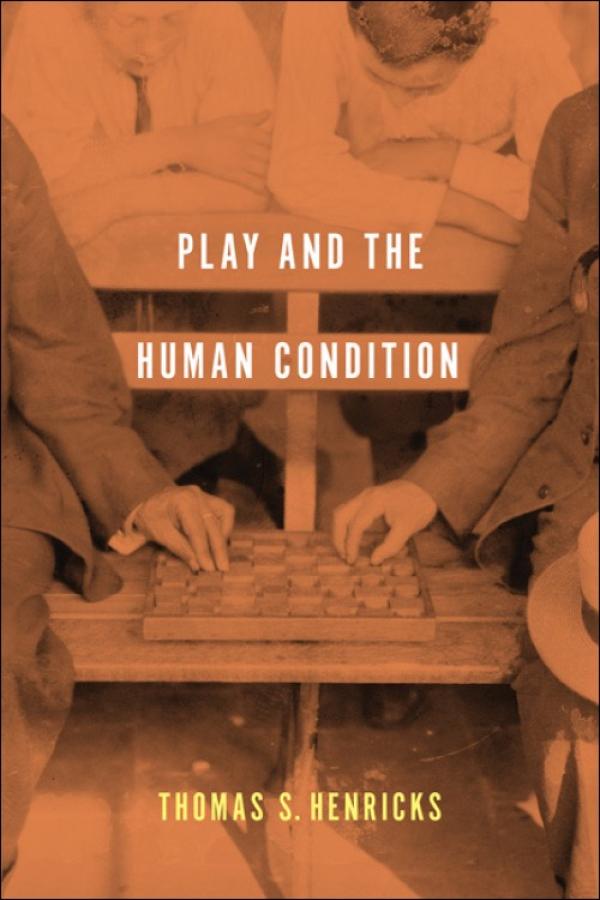
Thomas Henricks’ Play and the Human Condition provides a valuable guide to the academic study of human play. Henricks has been teaching at Elon University since 1977 as a sociologist. He has been studying human play since his PhD dissertation, which explored the relationship between sports and social stratification, and he has over thirty years of academic publications in play studies. In this volume, Henricks attempts to advance his thesis that “play is fundamentally a sense-making activity and that the broader goal of this process is to construct the subjectively inhabited sphere of operations and understandings called the self” (209). Henricks organizes this book into an introduction and nine chapters. He begins the introduction with three questions that guide his work: “How do we discover who we are? How do we determine the character of the world in which we live? And how do we decide what we can do in a world so configured?” (1). The introduction provides a rationale for studying play as well as an overview of the book. The first three chapters explore general models of play. In Chapter I, Henricks explores the difficulties around establishing a definition for play as he reviews several modern definitions. He presents six ways of understanding play: as action, as disposition, as experience, as context, as interaction, and as activity while he connects each model to their major theorists. The next chapter presents how play is different from other patterns of human behaviors including ritual, work, and communitas. The final chapter in this section develops a theory of play that centers upon self-realization. Henricks notes that “play best teaches people how to conceive self-directed lines of action and to mobilize varieties of resources to realize these ambitions” (89). In the middle of the book, Henricks devotes five chapters to various aspects of play including psychology, the human body, physical environment, social life, and culture. After focusing on the mind in his chapter on the psychology of play, Henricks turns to the human body and play in Chapter Five. While examining animal play, he concludes “play integrates symbolic and physically based meaning systems. . . play is a form of consultation between matters manifest and latent, known and unknown. In consequences, players extend and secure their understanding of themselves” (137). Next, he engages the physical environment and social aspects of play, because as he explains, “play is complicated by the presence of more than one player” (161). Chapter Eight builds upon the foundation of the earlier chapters to explore culture and play. This is an important chapter that engages the work of Geertz, Deerida, and Gadamer to list a few. Henricks’ final chapter weaves the various themes of the earlier chapters together to support his thesis. He examines the relationship between play and freedom. He concludes that “if play has a legacy, it is its continuing challenge to people of every age to express themselves openly and considerately in the widest human contexts” (227). Play and the Human Condition is a well-developed and scholarly text. Henricks engages a wide range of disciplines and carefully builds his arguments. The book offers a detailed road map to professional play literature that will be very useful to any scholar researching in this field. Except for a few terms, like communitas, this volume is accessible for the non-specialist. Theologians and graduate students should have no problem understanding and engaging this text in fruitful dialogue. This volume would be a good addition to major theological libraries. It is especially important for scholars and programs that explore ritual studies and hermeneutics. Chapter Four, on play as therapy, gives a foundation for this important approach to clergy who want to explore this avenue of pastoral care and counseling.
James Lang has written yet another immensely valuable book for post-secondary faculty. Using the analogy of “small ball” from baseball, the author provides classroom activities requiring only a few minutes that can easily be incorporated into a course sporadically or regularly to improve learning. Each strategy is based on the latest research about the human brain, and Lang has witnessed their “positive impact in real-educational environments” (7). The strengths of the book are numerous. First and foremost, it accomplishes the stated purpose. In each of the nine chapters, Lang explains the theory behind the learning principle, describes how the theory has been carried out in classroom models, and then summarizes the principles common in each model. Within the models, the reader finds activities that teachers can incorporate into any class and use randomly or repeatedly that enableing students to learn effectively. Second, each learning activity is transferable across academic disciplines. For example, while discussing “predicting,” the initial research example is from the field of language learning. Lang then applies the principles to his discipline of teaching literature, before concluding with a kinesthetic example of learning an athletic skill. Additionally, Lang recognizes the increasing frequency of teaching and learning online. He also notes students’ access to social media and suggests ways to use the principles and activities of online teaching and social media in a non-traditional classroom format. Finally, while the focus is on in-class actions that take minimal time, he does identify how specific teaching concepts can be incorporated into course planning and the syllabus. The book is well-organized, not only in its presentation but in the ordering of learning from knowledge acquisition to understanding to learning inspiration (motivation), with three strategies explained in each section. Each concept and activity is well-supported by research noted in a full bibliography. For example, in discussing retrieving, Lang gives examples of opening or closing questions an instructor can use in the first or last five minutes of class that will prove effective for short-term and long-term recall, in light of a variety of studies. Where there are questions about the validity of an idea or activity, Lang acknowledges the issues and interacts fairly with contrary opinion. In short, it is hard to find a negative with this book. Because each chapter is follows the pattern of theory, model, then principles, a theology or religious studies teacher can easily take the knowledge or concepts they desire to teach and adapt them to any of the teaching strategies. From a rookie faculty member experiencing challenges midway through a course to an experienced professor looking to improve student learning in a well-developed curriculum, there is something in Small Teaching for everyone. If your college cannot attend one of Lang’s professional development sessions, I would recommend academic deans purchase the book for faculty and together they could work through each chapter.
Whenever I’m asked, “How are your classes going?” my answer traditionally has been, “Ask the students.” As more faculty members shift their pedagogy to a student-centered learning, their focus must include not only delivering the content but also inviting students to explore the why of education. The articles in Finding the Why: Personalizing Learning in Higher Education edited by margit misangyi watts (sic), identify key ways to encourage students to discover the purpose of higher education as more than training for a career. While many of the articles describe institutional changes that have been developed to address the student success beyond the university, the principles behind such designs can be incorporated by individual faculty members in approaching how to present their courses’ content. One of the key principles is to encourage students to identify the applicability of a liberal-arts education to professional courses. One means by which this can be accomplished is described in “Integrative Learning: Making Liberal Education Purposeful, Personal, and Practical.” Ann Ferren and Chad Anderson describe several examples from various colleges that integrate learning across curricula and are adaptable even for larger institutions, such as designing opportunities for students to integrate curricula using collaborative projects, partnerships with the local community for service-learning, and making connections among disciplines. Furthermore, in “Project-Based Learning in Colleges of Business: Is It Enough to Develop Educated Graduates?” Penny Smith and Lindsey Gibbon note that business leaders are seeking qualities such as critical thinking skills, identifying and using creative problem solving, and communicating effectively. They note that “for business schools to graduate ‘well-educated’ students, they must forge and engage entire academic villages” (43) in preparing business students for their careers. Another important component of finding the why requires understanding the challenges in culture that affect the attitudes impacting student-centered education. Several of the chapters incorporate strategies to change the culture at institutions themselves to meet the ongoing challenges to student success. Among such recommendations are faculty “talking to students in a way that is supportive and encouraging” (29) or engaging in the six “P’s” of place, preparation, pathways, plan, purpose, and personal connection as explained by Sanford Shugart in “Why Higher Education: Lessons Learned in a Learner-Centered College.” While many of the articles describe specific activities involving changes within the entire institution, such as integrative classes or designing a community college’s plan from its inception, the authors do challenge individual faculty to incorporate helping students find the why within their particular courses. The key to student success in many of the articles involves engaging students individually, not just collectively. Therefore, some of the strategies discussed can be applied by individual faculty on a smaller scale. While my answer to “How are your classes going?” may be the same, my intentionality within my course itself should have students answering in the positive.
The central aim of this edited monograph is to present new techniques for dealing with methodological challenges to sociological research on student learning. The book is organized into a brief preface, seven chapters that each deal with distinct methodological approaches to student learning research, and an eighth chapter that provides an outline for how the preceding chapters can be applied to or help shape future research. Each chapter presents various solutions to distinct methodological challenges through concrete case studies. Chapter one provides an overview and case study of how structural equation modeling (SEM) can be used to conduct empirical research that tests hypothesized influences on student learning. The authors contend that previous research has not been able to fully address the complex multi-variable character of students’ approaches to learning. The strength of SEM is not only its ability to test for multiple variables such as these, but also to examine the pattern and strength of the relationships between these variables. Chapter two explores challenges to research on students in dual programs composed of both university classes and internships. The goal of such research is to take into account the different perspectives, discourses, and research instruments (for example, focused in-depth research and large scale qualitative research) used to study dual program student learning, including workplace learning and the transitions between contexts of learning, learning in higher education and its specific learning activities and patterns, and longitudinal professional development. To study such complexity, the authors propose the use of multilevel analysis for dealing with nested data and methodological triangulation for testing the use of the multiple research instruments. Chapter three outlines a method for using neural network analysis techniques for assessing the predictability of how much influence cognition, motivation, and learning approaches have on academic performance. Chapter four provides a model for addressing the failure of previous research to address implicit preferences for specific types of learning environments by using conjoint analysis, a method developed and employed in marketing research. Chapter five proposes exploratory-grounded research as a way of developing theories rather than solely testing them. The first case study provided in this chapter analyzes data from semi-structured interviews on students’ motivational orientation through various processes for identifying, verifying, and revising themes in the data. The second study then analyzes another set of interviews using the categories developed from the first study. A strength of this approach is its ability to develop innovative theories that are not limited to any pre-established or hypothesized number of categories. Chapter six addresses emotional dimensions and their measurement in research on teacher education. In addition to providing a thorough rationale, outline of theoretical perspectives, overview of the phenomenological method in social science research, identifying themes in the data, and discussing methodological challenges, the chapter provides a helpful survey in the form of a table of previous research articles that address emotional dimensions. Chapter seven explores challenges to longitudinal studies and provides a model and short list of best practices. Though interesting conclusions and/or corroboration and challenges to previous theories regarding student learning are discussed throughout the book’s varied chapters, the overarching focus is indeed on methodological challenges and proposed solutions to these.