Resources

Kate Blanchard Last Monday I wore a suit to work, an occurrence rare enough that my students felt led to comment upon it. “You look so nice today!” exclaimed one, to which another quickly retorted, “That makes it sound like she doesn’t usually look nice!” A couple of others joined.
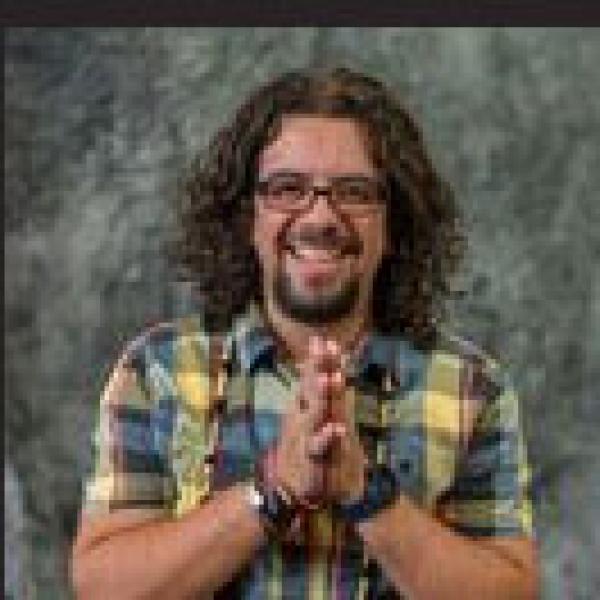
Cláudio Carvalhaes Associate Professor McCormick Theological Seminary The classroom is a microcosm of theological education. It changes and perpetuates ideas, behaviors and ideologies. But the classroom is a result and consequence of a larger scheme of structural practices and worldviews. What I have seen in these 8 years of teaching is that everything in theological education is so interconnected. Leadership; faculty composition; faculty meetings; public policies; by-laws; conferences; worship services; syllabi and chosen pedagogies; composition of students’ races; social classes and theological backgrounds, chapels, everything composes a temporary mosaic of what and who schools are and want to be. While patriarchalism, sexism, cultural/identity differences, and
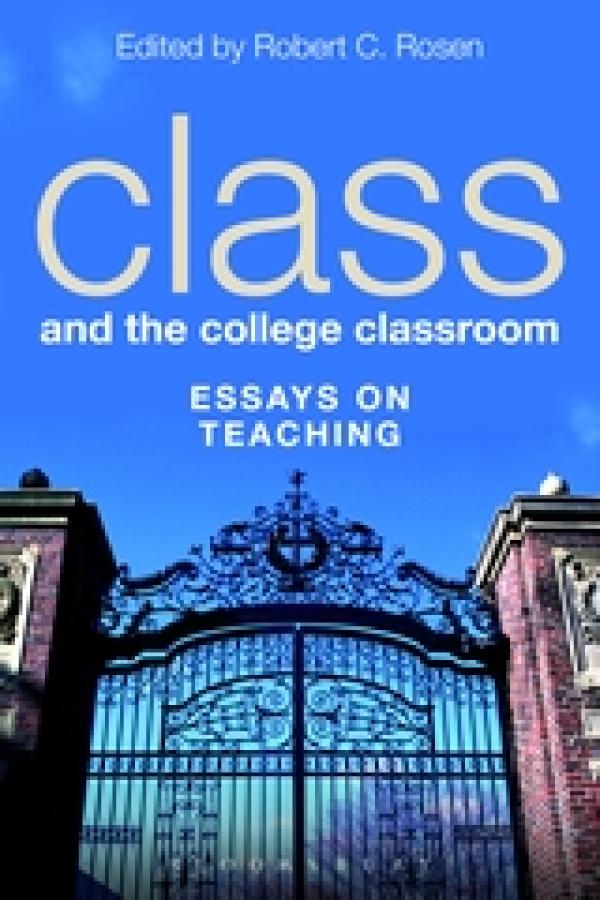
These essays, reprinted from Radical Teacher, analyze class in the classroom. Editor Robert Rosen recognizes that, in teaching about race, class, and gender, class often receives the least nuanced attention. With the 2008 economic downturn, class reemerged strongly: in the extreme inequalities in capitalist society; in the recognition that college is no longer the guaranteed “path to upward mobility” (1); and, in recognizing the functions of class in education’s many facets, from colleges to for-profits. Often, for poor (30-39) and immigrant, particularly undocumented (19-29), students, we are failing. This is true, as Susan Jhirad points out, even in community colleges, which have been the open door to college for many “non-traditional” students (40-48; 67-71). The book also gives voice to the working poor in the academy itself: alienated adjuncts (67-71; 78-86). We perform class as well as live it. Richard Ohmann writes about his students’ arguments against Jane Austen’s sense that one should strive to marry according to or up in class. His students, nevertheless, will enact her class vision. They come from the “professional-managerial class (PMC)” (12), and college, Ohmann suggests, lets them engage diversity, “for a while” (13), as they move back to the PMC. Class, he argues, is complex and powerful: an identity, “a script you act out daily, a bundle of habits and feelings and ways of relating lodged deep in your psyche and broadcast by your talk and conduct…[that] is [neither] easy to revise [nor to] conceal” (13). Erin Smith demonstrates this truth as she tells her current, less privileged, students about a white, male student from an elite university who refused to accept inclusive language, announcing “that when he was out in the real world, he would make all of those women and minorities working for him write the way he told them to” (113, emphases mine). While her less privileged students thought the young man was wrong, his example did not lead them to analyze class as a factor. Smith suggests, “a reliance on experience can effectively locate individuals in history, but it cannot – by itself – enable individuals to see history in themselves” (115-116): how they perform class. This book offers many teaching strategies, framed by the awareness that a classroom encounter with otherness often “‘substitutes’” for the real thing (147), “sanctioning,” as Ohmann writes, “all kinds of nonthreatening nonconformity” (147). The strategies unsettle class assumptions, such as Janet Casey’s teaching literature in terms of how it is marketed and Ohmann’s having his students write about their “imagined” best and worst jobs and whom they imagine works those jobs. This volume is valuable for its unflinching look at the current academy and for its warning that higher education, even as it works to be inclusive, can reproduce “class structures and relations” (146) appropriating “lower” class artifacts and making students confront class only within safe boundaries, changing nothing but the items on our syllabi.
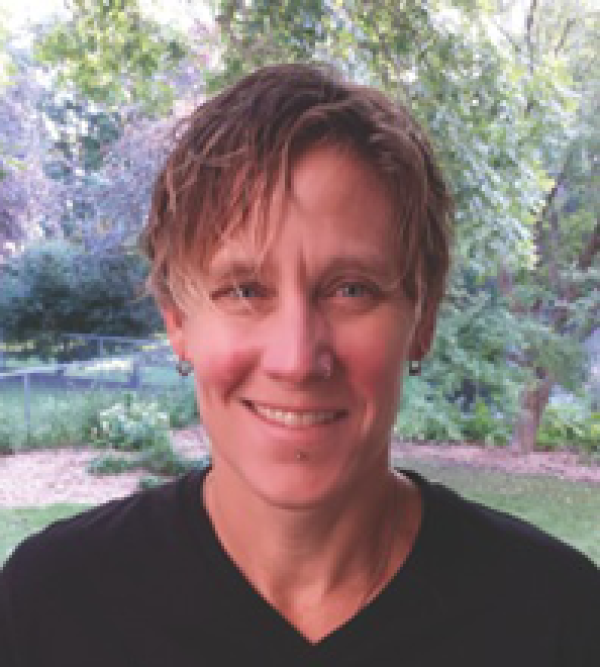
Jennifer Harvey Associate Professor Drake University In some ways it’s really simple. If we had genuinely multi-racial classrooms in the U.S. the challenge of race in those same rooms would be much less of one. We so quickly find ourselves embroiled in an oh-so-familiar conversation when the pedagogical question becomes how to best teach race, privilege, U.S. religious history, ethics, and justice in the religion and theology classroom. How do we keep white students from shutting down? How do we get them to understand? How do we enable them to recognize their stake in such learning when so few of them have had to..
Kate Blanchard It’s a new year! Perhaps some of you, like me, have just spent a large chunk of time celebrating a holiday (or two) with your families of origin. And perhaps some of you, like me, have recently been pondering the distinct and all-encompassing weirdness that is being middle-aged...
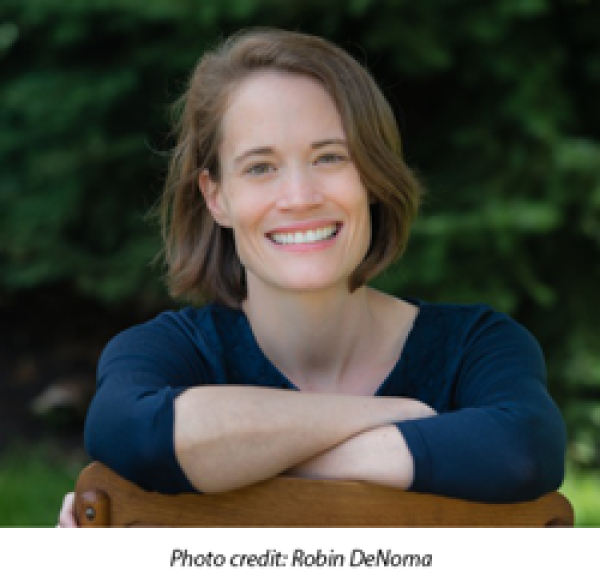
Elisabeth T. Vasko Ph.D. Assistant Professor of Theology Duquesne University In recent years, I have taught an upper-level Christology course in which we examine race, gender, and power. Sometimes my students register their dissatisfaction with reading Christology from the margins (James Cone, Kelly Brown Douglas, and Marcella Althaus-Reid) instead of the center (Anselm, Barth, von Balthasar, and Rahner). I can understand their frustration and discomfort. In the classroom, I make an effort to accept it and to take it seriously. I should also note that I teach at a university where the student population is mostly white. By and large,
Robert C. Fennell, Th.D. Associate Professor of Historical and Systematic Theology Atlantic School of Theology The most uncomfortable thing I ever say among professional colleagues is that when I was a child I was taught that we are all racist. In 1970s Western Canada, where I grew up, racism was real but often obscured by polite indifference and feigned ignorance. Yet our public school system urged us to see that within most of us there is an element that fears and reacts to difference. The terms for this dynamic were probably different then, but that was the heart of the...
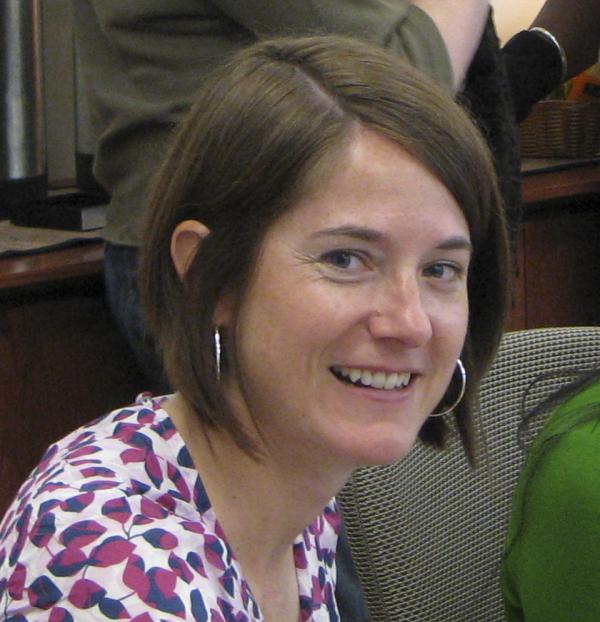
Maureen H. O'Connell, Ph.D. Associate Professor of Theology & Chair of Department of Religion LaSalle University If there is one thing I’ve learned from my 20 students in a new course, “Religion and Racism in America” this semester it’s this: how we go about engaging racism in the classroom may be just as important, if not more, than what sources we use to do so. 1. Racism is not an intellectual reality, but an experiential one. Critical race theorist George Yancy is right (not that I ever doubted him!). Racism is an embodied experience and not simply a sociological phenomenon, no...
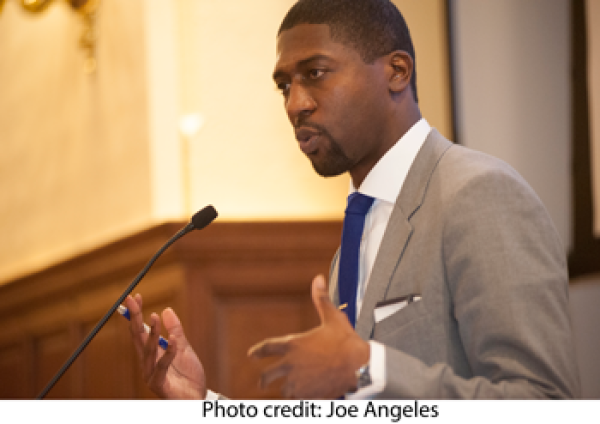
Lerone A. Martin, Ph.D. Assistant Professor of religion and politics in the John C. Danforth Center on Religion and Politics Washington University I have heard much talk about Ferguson and racial segregation in my personal life, as well as in the classroom. Conversations about Ferguson abound in my Civil Rights class this semester as well as in the broader university community. It could hardly be otherwise. We are just fifteen miles away from Canfield Drive. As a historian, I aim to help my students understand Ferguson, racial segregation, and all concomitant issues in a broader historical framework. How did we...

Miguel A. De La Torre, Ph.D. Professor of Social Ethics and Latino/a Studies Iliff School of Theology While teaching at the University of Johannesburg in South Africa, I was traveling with a local colleague to an engagement. Along the way, I ribbed him concerning some native cultural idiosyncrasy; at which point he turned to me in jest calling me “just another imperial gringo.” Although a humorous retort in our banter, I confess that I was taken aback. Of all the things I have been called throughout my life, this was the very first time I was ever called a gringo.... Read