Resources
Teaching portfolios: formatively, the portfolio helps you reflect systematically and regularly upon your teaching; summatively, portfolios provide a much more comprehensive and accurate picture of your teaching than any other single device.
Personal reflection on the importance of informal moments in the education of students, and the implications for our metaphor of teaching.
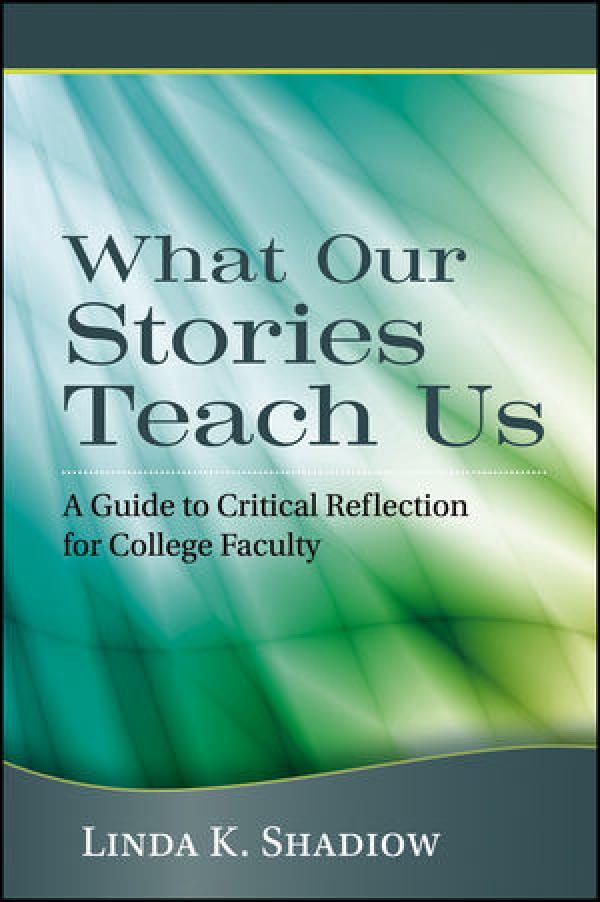
This book encourages and enables faculty to deeply examine their teaching experiences, stories, and choices so real insight results. The author invites faculty to recall stories from their own biographies, demonstrates how to view these stories as critical incidents instead of mere reminiscences, and introduces an approach faculty can undertake to analyze then interpret these stories for the benefit of professional growth in teaching. (From the Publisher)
From the Publlisher A Curriculum of Imagination in an Era of Standardization In A Curriculum of Imagination in an Era of Standardization: An Imaginative Dialogue with Maxine Greene and Paulo Freire, explores with the reader what is meant by imagination in the work of Maxine Greene and Paulo Freire and their relevance in an era of increasingly standardized and highly scripted practices in the field of education. The author explores how imagination permeates every aspect of life with the intent to develop capacity with the readers to look beyond the taken-for-granted, to question the normal, to develop various ways of knowing, seeing, feeling, and to imagine and act upon possibilities for positive social and educational change. The principal aspect of the work illustrated in this book that distinguishes it from other work is that an “imaginary” dialogue between Maxine Greene and Paulo Freire runs through the book using actual citations from their work. Each chapter starts with such a dialogue interspersed with the works of others and the author’s critical autobiographical reflections. With a brief overview of the socio-cultural evolution of imagination from pre-literate times to the present, the author explores some of the current iterations of imagination including the eugenics movement and “dark” imagination, sensing gaps and creative/critical imagination, metaphors as the language of imagination and empathy as social imagination. Reflecting upon emerging tensions, challenges, and possibilities curriculum workers face in such an era of standardization, the author calls for a curriculum of imagination. After providing a brief overview of the socio-cultural evolution of imagination from pre-literate times to the present, the author looks at some of the current iterations of imagination, including the eugenics movement and “dark” imagination, sensing gaps and creative/critical imagination, metaphors as the language of the imagination, and empathy as social imagination. All of these ideas are then incorporated in a curriculum of imagination that is envisioned through Joseph Schwab’s four commonplaces of curriculum followed by a discussion of emerging tensions, issues and possibilities for praxis and scholarship in present and future inquiry.
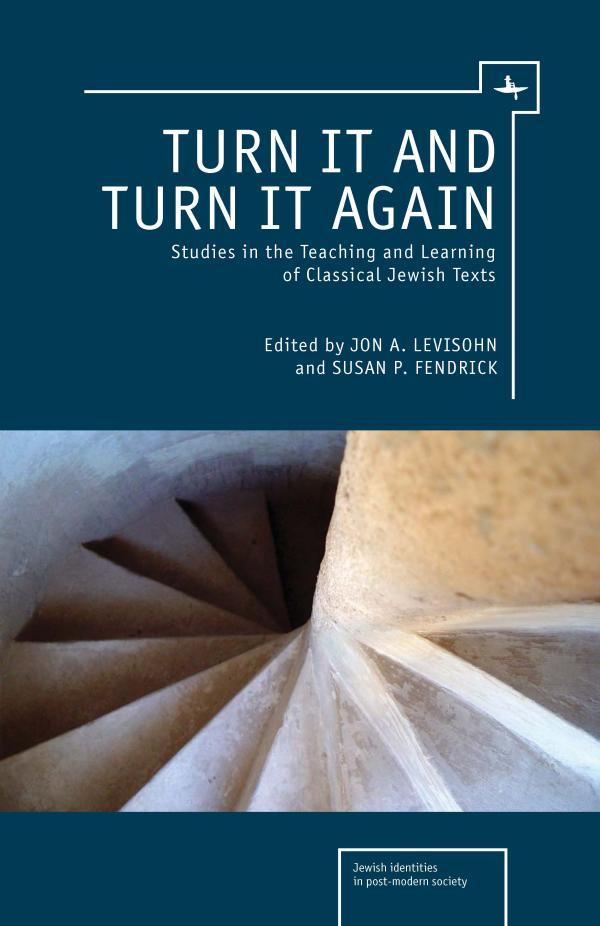
The study of classical Jewish texts is flourishing in day schools and adult education, synagogues and summer camps, universities and yeshivot. But serious inquiry into the practices and purposes of such study is far rarer. In this book, a diverse collection of empirical and conceptual studies illuminates particular aspects of the teaching of Bible and rabbinic literature to, and the learning of, children and adults. In addition to providing specific insights into the pedagogy of Jewish texts, these studies serve as models of what the disciplined study of pedagogy can look like. This book will be of interest to teachers of Jewish texts in all contexts, and will be particularly valuable for the professional development of Jewish educators. (From the Publisher)
This article elucidates theoretical underpinnings for the use of one’s self in the pastoral theological classroom. The contemplative bow is developed as a capacious metaphor to describe appropriate self use and its necessary importance in the teaching and learning of pastoral arts in a theological curriculum. Central to the argument is the assumption that effective teaching and learning in pastoral care emerges from awareness and knowledge of self as well as letting go of self in beneficial service with others. Analytical engagement of educational, theological, and psychological theory informs practice for the professional school classroom.