Resources
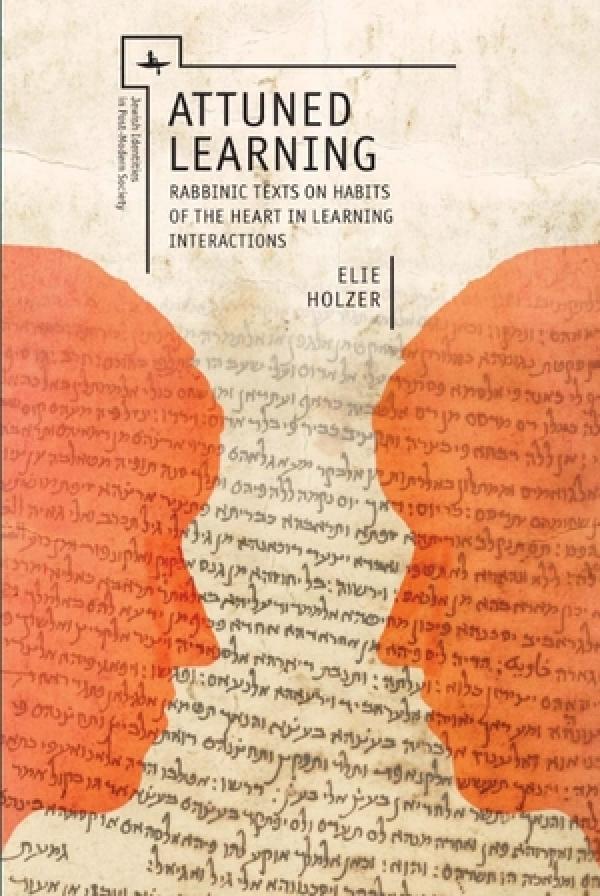
Click Here for Book Review Practice-oriented educational philosopher Elie Holzer invites readers to grow as teachers, students, or co-learners through “attuned learning,” a new paradigm of mindfulness. Groundbreaking interpretations of classical rabbinic texts sharpen attention to our own mental, emotional, and physical workings as well as awareness of others within the complexities of learning interactions. Holzer integrates pedagogical pathways with ethical elements of transformative teaching and learning, the repair of educational disruptions, the role of the human visage, and the dynamics of argumentative and collaborative learning. Literary analyses reveal that deliberate self-cultivation not only leads to ethical and spiritual growth, but also offers a corrective for the pitfalls of the contemporary calculative modalities in educational thinking. The author speaks to the existential, humanizing art of learning and of teaching. This book can serve as a companion volume for A Philosophy of Havruta: Understanding and Teaching the Art of Text Study in Pairs, adding a new dimension of its model of joint learning. (From the Publisher)
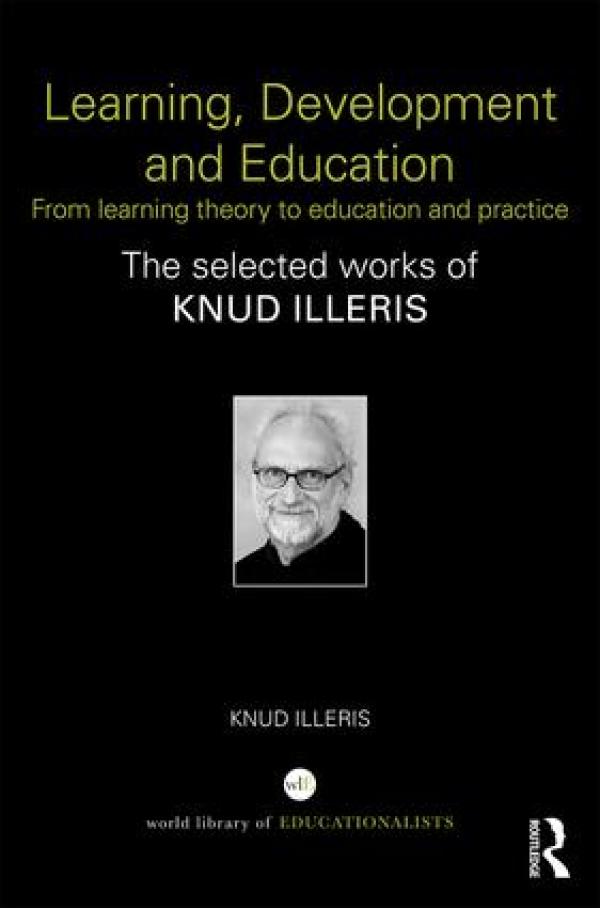
Click Here for Book Review Abstract: In the World Library of Educationalists, international experts themselves compile career-long collections of what they judge to be their finest pieces – extracts from books, key articles, salient research findings, major theoretical and practical contributions – so the world can read them in a single manageable volume. Readers will be able to follow the themes and strands and see how their work contributes to the development of the field. This volume brings together the selected works of Knud Illeris. Leaving a promising business career at age 27 to begin his higher education, Knud Illeris exemplifies the true spirit of youth and adult education that has resulted in him having published in almost twenty countries, including the UK, Germany, China, Korea and Brazil. Knud Illeris’ work revolves around the way learning takes place and in some cases does not take palce. Split into five parts; - Learning Theory - Lifelong Learning as a Psychological Process - Special Learning Issues - Various Learning Approaches to Education - Learning in Working Life Learning, Development and Education: From learning theory to education and practice is arranged thematically and examines youth and adult learning through Illeris’ model based on three dimensions of learning and competence development– emotional, cognitive and social, and four kinds of learning. In this collection of his papers, written over a period of almost five decades, and published in multiple languages, spanning from Faroese to Chinese, some of his most important works are chronicled. This compelling overview of Illeris’ contribution to educational thinking and theory charts the challenges and obstacles faced by disciplination and selection, and offers a genuine impression and understanding of an almost lifelong engagement with a wide range of topics in the field of learning – an engagement which has been the central area of Illeris’ academic life. (From the Publisher)
A renowned child psychoanalyst, Erik H. Erikson (1902–1994) is perhaps best known for his work on developmental theory (Childhood and Society, 1950) and his studies of the lives of Martin Luther (Young Man Luther, 1958) and Gandhi (Gandhi's Truth, 1969). Twice he found himself intensely engaged in the role of teacher – once as a young artist who had been called by a friend to help in the progressive school formed for the children of Sigmund and Anna Freud's patients in Vienna (1927–1932), and years later (1960–1970) as a tenured professor at Harvard. This essay describes Erickson's teaching experience in both settings and suggests some of the reasons he was honored by Harvard in 1980 as a “humane teacher.” Implications from Erikson's educational practice are drawn that demonstrate how Erikson moved beyond the rote memorization and authoritarian educational practice he experienced as a youth. The essay suggests Erikson's teaching stance at Harvard fits the author's theological tradition's use of the term “teaching elder.”
Based on a real teaching experience in the classroom, the author reflects on the dynamics of gender, race/ethnicity, power, and privilege in the context of an undergraduate course in Christian sexual ethics. Through this analysis of pedagogical style and process initiated by a challenging moment at the midpoint of the semester, the author develops ten guiding principles for good teaching, using the metaphor that “good teaching is like good sex,” which emphasize the necessary elements and outcomes of a positive learning environment: intimacy, flexibility, creativity, satisfaction, care and attentiveness, vulnerability, fun and playfulness, reciprocity, full engagement, and risk-taking. This experience provided the foundation for planning and assessment for the author's courses since.
The article is a response to this journal's call for papers on metaphors for teaching, and also draws from a previous publication in which Kent Eilers developed a methodology for teaching global theologies. In this methodology, the ultimate goal was the development of “hermeneutical dispositions of empathy, hospitality, and receptivity toward culturally diverse voices” (2014, 165). This article considers the goals of Eilers' methodology, and others like his, and how it is that the metaphors of “leaving home” and “communal imagination” highlight the importance of the ambient and interpersonal features of a classroom and their effect on the attainment of the above goals. In so doing, it extends the conversation beyond content and methodology in teaching theology and religion into the realms of philosophy of education, as well as the fields of moral and values education. It is contended that the metaphors informed by these areas of study facilitate the attainment of such goals, and similar ones, by demonstrating that the cultivation of an ambience of care, trust, and compassion within the classroom constitutes an essential foundation for learning in which students “leave home” and cultivate “communal imagination.” The article finishes with practical suggestions for educators in theology and religion.
This essay examines the gap between the dominant ethical frameworks for education and ideas about subjectivity, and proposes an ethic of hospitality as a framework that assumes a decentered subjectivity. First, I provide a brief overview of the ethics of autonomy, virtue, and care and highlight the conception of the subject that informs each of them. Second, I outline some philosophical critiques of the subject, as well as misunderstandings about the “death” of the subject. It should then be clear that there is a tension between new ideas about subjectivity and the ethical frameworks of autonomy, virtue, and care. Finally, I propose an ethic of hospitality and make suggestions for how this ethic might inform educational practice. 
This essay presents Moses, the protagonist of the biblical books of Exodus and Deuteronomy in the Hebrew Bible, as a playful but generative metaphor for current teaching practices and experiences in higher education, including my own. Among numerous similarities (such as the fact that Moses, other teachers, and I are all bound by context), the most humbling insights come from Moses's role as a mediator or intermediary. It is a role that we also inhabit – standing, as it were, between our students and the knowledge of our discipline – and that we might consider further, particularly in terms of our responsibilities.
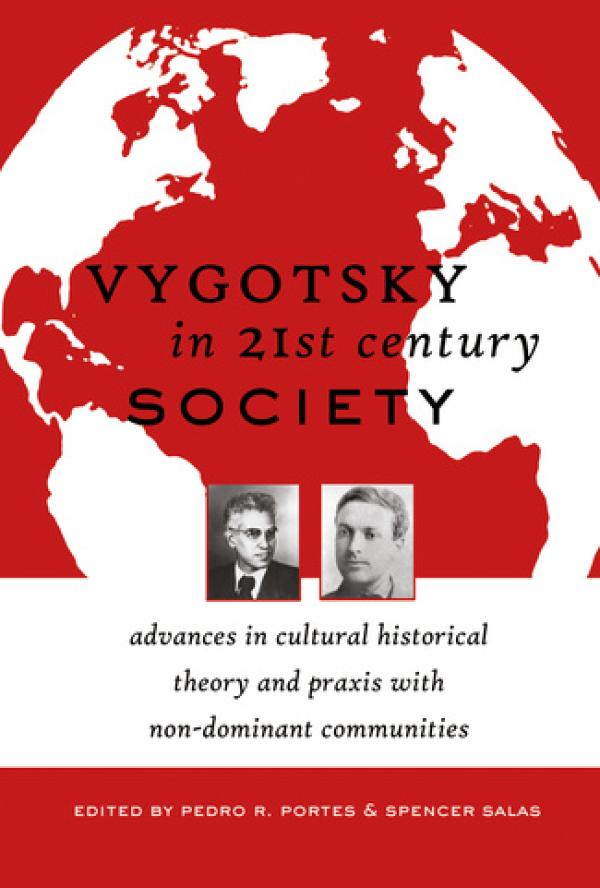
Vygotsky in Twenty-first Century Society is an ensemble of novel perspectives about the legacy of Lev Vygotsky and Alexander Luria. The book illustrates how well the legacy of their work is being applied and continued in contemporary research, and how cultural historical theory has been constructed and re-constructed. Together, these collected essays inform a broader discussion of how a developmentally-oriented cultural paradigm can guide learning and teaching in social and educational policy and in group or individual counseling. Readers will find discussions of issues in human development that have previously been overlooked. This book is important and timely in addressing these issues and fault-lines, particularly for advancing both equity and scientific understandings. (From the Publisher)
Click Here for Book Review Abstract: In this groundbreaking book, Andrea English challenges common assumptions by arguing that discontinuous experiences, such as uncertainty and struggle, are essential to the learning process. To make this argument, Dr English draws from the works of two seminal thinkers in philosophy of education - nineteenth-century German philosopher J. F. Herbart and American pragmatist John Dewey. English's analysis considers Herbart's influence on Dewey, inverting the accepted interpretation of Dewey's thought as a dramatic break from modern European understandings of education. Three key concepts - transformational learning, tact in teaching, and perfectibility - emerge from this analysis to revitalize our understanding of education as a transformational process. Dr English's comparative approach interweaves European and Anglo-American traditions of educational thought with a contemporary scholarly perspective, contributing to a work that is both intellectually rewarding and applicable to a classroom setting. The result is a book that is essential reading for philosophers and scholars of education, as well as educators. (From the Publisher)

Click Here for Book Review Abstract: Delineates Lacan’s theory of the four discourses as a practical framework through which faculty can reflect on where their students are, developmentally, and where they might go. University classrooms are increasingly in crisis—though popular demands for accountability grow more insistent, no one seems to know what our teaching should seek to achieve. This book traces how we arrived at our current impasse, and it uses Lacan’s theory of the four discourses to chart a path forward via an analysis of the freshman writing class. How did we forfeit a meaningful set of goals for our teaching? T. R. Johnson suggests that, by the 1960s, the work of Bergson and Piaget had led us to see student growth as a journey into more and more abstract thought, a journey that will happen naturally if the teacher knows how to stay out of the way. Since the 1960s, we’ve come to see development, in turn, only as a vague initiation into the academic community. This book, however, offers an alternative tradition, one rooted in Vygotsky and the feminist movement, that defines the developing student writer in terms of a complex, intersubjective ecology, and then, through these precedents, proposes a fully psychoanalytic model of student development. To illustrate his practical use of the four discourses, Johnson draws on a wide array of concepts and a colorful set of examples, including Franz Kafka, Keith Richards, David Foster Wallace, Hannah Arendt, and many others. “Graceful, provocative, thoughtful, and well researched, The Other Side of Pedagogy connects theory and teaching in compelling ways. This is a groundbreaking book that scholars of writing will want to read, reread, and teach.” — Joseph Harris, author of A Teaching Subject: Composition Since 1966 (From the Publisher)