Resources
Our plan was simple and highly anticipated—meet my friend Helen at choir rehearsal, then go for an evening treat of ice cream sundaes. I arrived at the church a little early. Rehearsal was underway. Through the small window in the sanctuary door, I could see the choir gathered in the chancel, each member holding an open black folder with sheet music, and all eyes focused on the director. I eased the heavy wooden door open, careful not to let it groan, walked halfway down the aisle, and slid quietly into a pew.Helen stood on the third step with the altos. Our eyes met. She smiled, a knowing, conspiratorial smile. I smiled back. I was certain we were both already thinking about hot fudge and vanilla beans. Helen had sung in this choir for more than ten years. She loved it. The choir was part of her spiritual rhythm, as familiar as prayer.As I waited, the choir director led them through two pieces: one hymn, one gospel song. The choir was faithful and earnest. Their sound was fine. Solid. Dependable. And… just… okay.Near the end of rehearsal, the director called the organist, Randall, forward. Randall had been hired about nine months earlier, and—somewhat reluctantly—the director allowed him to direct the choir from time to time.Randall stood, slid off the organ bench, and moved quickly to the front. One of the singers took her place at the piano. The choir closed their black binders and focused on the new conductor. Randall said nothing. He simply looked at the choir, lifted his arms and waited, gently. The pause itself felt like an invitation. Then he nodded to the pianist, who began playing in the tempo Randall shaped with his hands and arms.After a few measures, Randall brought the choir in.Their sound stopped me cold. I was stunned. The music was not louder. It was clearer. Fuller. Alive. Holy. As Randall conducted, he confidently called out instructions—round the tone here, lift the final consonant there. Each instruction was met with trust. The choir adjusted, leaned in, sang intensely. They sang a verse. Randall stopped them, offered a few more words, and started again from the top.In less than ten minutes, they had rehearsed the entire piece, solos and all. The choir sounded polished, consistent. I sat bewildered.How could the same group of people sound merely adequate under one director and extraordinary under another?When rehearsal ended, Helen gathered her things and hurried down the aisle. We greeted each other and headed for the ice cream shop. She ordered a banana split; I chose a root beer float. We sat outside on a picnic bench, spoons in hand, evening air wrapped around us, glad we had this moment together.Once we were settled, I told her what I had witnessed. I named the contrast. “When your director leads, the choir sounds just okay. But when Randall leads, you sound incredible!”Helen nodded. “We know,” she said gently. “All of us know.” I asked if the choir was undermining the director. She shook her head. “No. We love him. We do exactly what he asks.” Then she paused, took a breath to let the truth land softly. “Randall is just a better musician. He hears more. He knows more. He’s led more. He brings out what’s already in us.” She took another bite of her ice cream. “Randall doesn’t make us better people,” she said. “He just helps us sing who we already are. That’s why we sound better.”Helen already knew, and I had witnessed, that sometimes the very best leadership is about wisdom, listening, and the quiet ability to call forth the best in others.When we consider the roles and responsibilities of educational leaders and administrators, we recognize that the same is true. My hunch is that the primary job of administrators is to call the best out of teachers and staff people by helping them develop their better selves. The highly complex industry of education would have us believe that an administrator’s job is upholding the bureaucracy. Yet we know that the educational enterprise, at its core, is profoundly a human centered endeavor. Perhaps we have paid too much attention to maintaining the institutional mechanisms of teaching without realizing that leaders of educational communities must model healthy relationships as the most important factor of their responsibility. Presidents and Deans, do not miss opportunities to call forth the best in others. This might be your key responsibility and contribution. Reflect …Where in your leadership are you managing systems and policies efficiently, but missing opportunities to listen deeply enough to call forth the fuller gifts already present in your faculty, staff, and students?Who within your institution is “singing just okay” under your leadership—not because they lack talent or commitment, but because your leadership has not yet created the trust, clarity, or inspiration that invites their best?How often do you seek honest feedback about the impact of your leadership—and are you prepared to hear, without defensiveness, what your community already knows?In what ways are you cultivating your own growth, your listening, your wisdom, your relational capacity—so that your leadership expands what others are capable of becoming?If your primary responsibility is not simply to maintain the institution but to call people into their better selves, what would you need to do differently this semester, this year, or starting tomorrow? Make a list. Make a plan.
From Pen America, a resource for faculty, staff, and students providing practical, principled guidance for how campuses can best remain open to all voices. Sections on resources and the law, on such issues as: Academic Freedom, Campus Climate, Discrimination & Harassment, Diversity & Inclusion, Hateful expression, Invited Speakers, and Protests on Campus.
The Council of Independent Colleges offers annual Workshops for Department and Division Chairs to strengthen leadership at the departmental level. Resources and slides from previous workshops are also available on their website. The workshops are designed to serve both experienced and new chairs of departments or divisions at independent colleges and universities. Campuses are encouraged to send several department or division chairs to the workshop so that they can support one another in instituting change upon return to campus and develop stronger working relationships among institutional chairs.
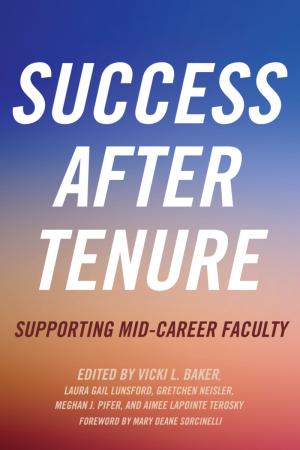
This book brings together leading practitioners and scholars engaged in professional development programming for and research on mid-career faculty members. The chapters focus on key areas of career development and advancement that can enhance both individual growth and institutional change to better support mid-career faculties. The mid-career stage is the longest segment of the faculty career and it contains the largest cohort of faculty. Also, mid-career faculty are tasked with being the next generation of faculty leaders and mentors on their respective campuses, with little to no supports to do so effectively, at a time when higher education continues to face unprecedented challenges while managing continued goal of diversifying both the student and faculty bodies. The stories, examples, data, and resources shared in this book will provide inspiration--and reality checks--to the administrators, faculty developers, and department chairs charged with better supporting their faculties as they engage in academic work. Current and prospective faculty members will learn about trends in mid-career faculty development resources, see examples of how to create such supports when they are lacking on their campuses, and gain insights on how to strategically advance their own careers based on the realities of the professoriate. The book features a variety of institution types: community colleges, regional/comprehensive institutions, liberal arts colleges, public research universities, ivy league institutions, international institutions, and those with targeted missions such as HSI/MSI and Jesuit. Topics include faculty development for formal and informal leadership roles; strategies to support professional growth, renewal, time and people management; teaching and learning as a form of scholarship; the role of learning communities and networks as a source of support and professional revitalization; global engagement to support scholarship and teaching; strategies to recruit, retain, and promote underrepresented faculty populations; the policy-practice connection; and gender differences related to key mid-career outcomes. While the authors acknowledge that the challenges facing the mid-career stage are numerous and varying, they offer a counter narrative by looking at ways that faculty and/or institutions can assert themselves to find opportunities within challenging contexts. They suggest that these challenges highlight priority mentoring areas, and support the creation of new and innovative faculty development supports at institutional, departmental, and individual levels. (From the Publisher)
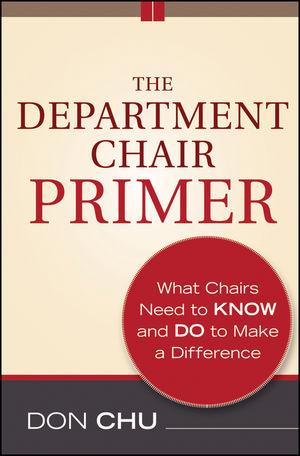
If higher education is to fulfill its vital social mission, new department leaders must be prepared for their positions and get up to speed on the basics quickly, educating themselves about the role and continuing to learn on the job. In this second edition of his classic resource, Don Chu outlines the proven ideas and strategies new department chairs need in order to do their jobs well. Thoroughly revised and updated, The Department Chair Primer contains information that addresses the current pressures and challenges in higher education and offers practical suggestions for responding to them. Filled with illustrative examples, the book gets straight to the heart of challenges and issues. Each chapter details a particular problem, includes a brief introduction to the topic, and provides tips on how to deal with the situation. Covering a wealth of topics, The Department Chair Primer -Explores the chair's role as department leader -Offers suggestions for handling stress and conflict -Includes information on budgeting, resource management, and development -Contains strategies for professional development, people management, and working with challenging personnel -Presents ideas for handling department communications, student development, and strategic positioning Written in a concise and accessible manner, The Department Chair Primer is an ideal resource for the busy new department chair. (From the Publisher)
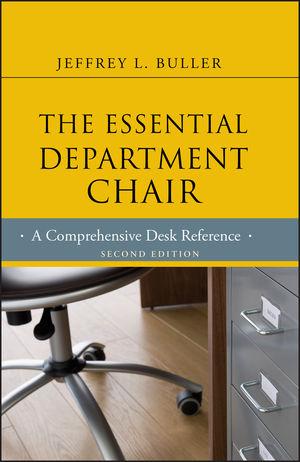
This second edition of the informative and influential The Essential Department Chair offers academic chairs and department heads the information they need to excel in their roles. This book is about the "how" of academic administration: for instance, how do you cultivate a potential donor for much-needed departmental resources? How do you persuade your department members to work together more harmoniously? How do you keep the people who report to you motivated and capable of seeing the big picture? Thoroughly revised, updated, and expanded, this classic resource covers a broad spectrum of timely topics and is now truly more than a guide—it's a much-needed desk reference that tells you "everything you need to know to be a department chair." The Essential Department Chair contains information on topics such as essentials of creating a strategic plan, developing and overseeing a budget, key elements of fundraising, preparing for the role of chair, meeting the challenges of mentoring to increase productivity, and creating a more collegial atmosphere. The book also explores the chair's role in the search process, shows how to conduct a successful interview and what to do when it's time to let someone go. And the author includes suggestions for the best practices to adopt when doing an evaluation or assessment. The Essential Department Chair, Second Edition, contains a wealth of new, realistic case studies to equip leaders in this pivotal position to excel in departmental and institutional life. (From the Publisher)

In order to fulfill their missions, institutions sometimes have to change. Leaders guiding communities through such moments or eras need instructional resources, and we do them a disservice when we oversimplify the work of change leadership. “Ten Easy Solutions” do not exist, and suggesting they do causes leaders to feel discouraged, like there must be something wrong with them when they fear, falter, or fail. Change leadership is hard, sometimes even painful, but it is not impossible when approached with appreciation for complexity and a broad repertoire. Dynamic Discernment: Reason, Emotion, and Power in Change Leadership chops through the thicket of change dynamics, opening up three different pathways: • Reason, where change leaders educate their communities and plot out concrete actions; • Emotion, where leaders manage the reactivity that change can incite in a separate-yet-connected style of engagement; and • Power, where leaders take seriously the ways in which grass-roots and top-down forms of authority can find common ground. Sarah Drummond has experienced change leadership firsthand in numerous contexts, and this book uses abundant illustrations and examples, but Dynamic Discernment is best understood as a new and multidisciplinary theory of change. Although aimed at religious leaders, any who serve a mission-driven institution will find resonance. The book provides guidance for (1) recognizing the dominant dynamic at work in a community experiencing change and (2) choosing leadership practices accordingly. (From the Publisher)
Click Here for Book Review As interest in competency-based education (CBE) continues to grow by leaps and bounds, the need for a practical resource to guide development of high-quality CBE programs led the authors to write this book. Until now, there has been no how-to manual that captures in one place a big picture view of CBE along with the down-to-earth means for building a CBE program. A variety of pressures are driving the growth in CBE, including the need for alternatives to the current model of higher education (with its dismal completion rates); the potential to better manage the iron triangle of costs, access, and quality; the need for graduates to be better prepared for the workforce; and the demands of adult learners for programs with the flexible time and personalized learning that CBE offers. Designed to help institutional leaders become more competent in designing, building, and scaling high-quality competency-based education (CBE) programs, this book provides context, guidelines, and process. The process is based on ten design elements that emerged from research funded by the Gates Foundation, and sponsored by AAC&U, ACE, EDUCAUSE, and the Competency-Based Education Network (C-BEN), with thought partners CAEL and Quality Matters. In short, the book will serve administrators, higher education leaders, faculty, staff, and others who have an interest in CBE by: • Giving context to enable the audience to discover the importance of each design element and to help frame the CBE program (the “why”); • Providing models, checklists, and considerations to determine the “what” component for each design element; • Sharing outlines and templates for the design elements to enable institutions to build quality, relevant, and rigorous CBE programs (the “how”). (From the Publisher)
Understanding Writing Transfer: Implications for Transformative Student Learning in Higher Education
While education is based on the broad assumption that what one learns here can transfer over there– across critical transitions – what do we really know about the transfer of knowledge? The question is all the more urgent at a time when there are pressures to “unbundle” higher education to target learning particular subjects and skills for occupational credentialing to the detriment of integrative education that enables students to make connections and integrate their knowledge, skills and habits of mind into a adaptable and critical stance toward the world. This book – the fruit of two-year multi-institutional studies by forty-five researchers from twenty-eight institutions in five countries – identifies enabling practices for, and five essential principles about, writing transfer that should inform decision-making by all higher education stakeholders about how to generally promote the transfer of knowledge. This collection concisely summarizes what we know about writing transfer and explores the implications of writing transfer research for universities’ institutional decisions about writing across the curriculum requirements, general education programs, online and hybrid learning, outcomes assessment, writing-supported experiential learning, e-portfolios, first-year experiences, and other higher education initiatives. This volume makes writing transfer research accessible to administrators, faculty decision makers, and other stakeholders across the curriculum who have a vested interest in preparing students to succeed in their future writing tasks in academia, the workplace, and their civic lives, and offers a framework for addressing the tensions between competency-based education and the integration of knowledge so vital for our society. (From the Publisher)
Concerned by ongoing debates about higher education that talk past one another, the authors of this book show how to move beyond these and other obstacles to improve the student learning experience and further successful college outcomes. Offering an alternative to the culture of compliance in assessment and accreditation, they propose a different approach which they call the Learning System Paradigm. Building on the shift in focus from teaching to learning, the new paradigm encourages faculty and staff to systematically seek out information on how well students are learning and how well various areas of the institution are supporting the student experience and to use that information to create more coherent and explicit learning experiences for students. The authors begin by surveying the crowded terrain of reform in higher education and proceed from there to explore the emergence of this alternative paradigm that brings all these efforts together in a coherent way. The Learning System Paradigm presented in chapter two includes four key elements—consensus, alignment, student-centeredness, and communication. Chapter three focuses upon developing an encompassing notion of alignment that enables faculty, staff, and administrators to reshape institutional practice in ways that promote synergistic, integrative learning. Chapters four and five turn to practice, exploring the application of the paradigm to the work of curriculum mapping and assignment design. Chapter six focuses upon barriers to the work and presents ways to start and options for moving around barriers, and the final chapter explores ongoing implications of the new paradigm, offering strategies for communicating the impact of alignment on student learning. The book draws upon two recent initiatives in the United States: the Tuning process, adapted from a European approach to breaking down siloes in the European Union educational space; and the Degree Qualifications Profile (DQP), a document that identifies and describes core areas of learning that are common to institutions in the US. Many of the examples are drawn from site visit reports, self-reported activities, workshops, and project experience collected by the National Institute for Learning Outcomes Assessment (NILOA) between 2010 and 2016. In that six-year window, NILOA witnessed the use of Tuning and/or the DQP in hundreds of institutions across the nation.(From the Publisher)