Resources

Women professors of educational administration share their personal stories of being female firsts. (From the Publisher)
In Teaching Critical Thinking, renowned cultural critic and progressive educator bell hooks addresses some of the most compelling issues facing teaching issues facing teachers in and out of the classroom today. In a series of short, accessible, and enlightening essays, hooks explores of the confounding and sometimes controversial topics that teachers and students have urged her to address since the publication of the previous best-selling volums in her Teaching series, Teaching to Transgress and Teaching Community. The issues are varied and broad, from whether meaningful teaching can take place in a large classroom setting to confronting issues of self-esteem. One professor, for example, asked how black female professors can maintain positive authority in a classroom without being seen through the lens of negative racist, sexist stereotypes. One teacher asked how to handle tears in the classroom. while another wanted to know how to use humor as a tool for learning. Addressing questions of race, gender, and class in this work, hooks discusses the complex balance that allows us to teach, value, and learn from works written by racist and sexist authors. Highlighting the importance of reading, she insists on the primacy of free speech, a democratic education of literacy. Throughout these essays, she celebrates the transformative power of critical thinking. This is provocative, powerful, and joyful intellectual work. It is a must read for anyone who is at all interested in education today. (From the Publisher)
Excellence. Originality. Intelligence. Everyone in academia stresses quality. But what exactly is it, and how do professors identify it? In the academic evaluation system known as “peer review,” highly respected professors pass judgment, usually confidentially, on the work of others. But only those present in the deliberative chambers know exactly what is said. Michèle Lamont observed deliberations for fellowships and research grants, and interviewed panel members at length. In How Professors Think, she reveals what she discovered about this secretive, powerful, peculiar world. Anthropologists, political scientists, literary scholars, economists, historians, and philosophers don’t share the same standards. Economists prefer mathematical models, historians favor different kinds of evidence, and philosophers don’t care much if only other philosophers understand them. But when they come together for peer assessment, academics are expected to explain their criteria, respect each other’s expertise, and guard against admiring only work that resembles their own. They must decide: Is the research original and important? Brave, or glib? Timely, or merely trendy? Pro-diversity or interdisciplinary enough? Judging quality isn’t robotically rational; it’s emotional, cognitive, and social, too. Yet most academics’ self-respect is rooted in their ability to analyze complexity and recognize quality, in order to come to the fairest decisions about that elusive god, “excellence.” In How Professors Think, Lamont aims to illuminate the confidential process of evaluation and to push thegatekeepers to both better understand and perform their role. (From the Publisher)
M. Jacqui Alexander is one of the most important theorists of transnational feminism working today. Pedagogies of Crossing brings together essays she has written over the past decade, uniting her incisive critiques, which have had such a profound impact on feminist, queer, and critical race theories, with some of her more recent work. In this landmark interdisciplinary volume, Alexander points to a number of critical imperatives made all the more urgent by contemporary manifestations of neoimperialism and neocolonialism. Among these are the need for North American feminism and queer studies to take up transnational frameworks that foreground questions of colonialism, political economy, and racial formation; for a thorough re-conceptualization of modernity to account for the heteronormative regulatory practices of modern state formations; and for feminists to wrestle with the spiritual dimensions of experience and the meaning of sacred subjectivity. In these meditations, Alexander deftly unites large, often contradictory, historical processes across time and space. She focuses on the criminalization of queer communities in both the United States and the Caribbean in ways that prompt us to rethink how modernity invents its own traditions; she juxtaposes the political organizing and consciousness of women workers in global factories in Mexico, the Caribbean, and Canada with the pressing need for those in the academic factory to teach for social justice; she reflects on the limits and failures of liberal pluralism; and she presents original and compelling arguments that show how and why transgenerational memory is an indispensable spiritual practice within differently constituted women-of-color communities as it operates as a powerful antidote to oppression. In this multifaceted, visionary book, Alexander maps the terrain of alternative histories and offers new forms of knowledge with which to mold alternative futures. (From the Publisher)
Making a Real Difference with Diversity provides readers with a step-by-step guide for implementing, evaluating, and sustaining comprehensive diversity work on campus. Drawn from a six-year diversity initiative involving twenty-eight independent California colleges and universities, the monograph offers a set of promising practices and selected quantitative and qualitative findings pertaining to efforts to enhance college access and success for underrepresented students, increase the presence of underrepresented minority faculty, and strengthen overall institutional functioning regarding diversity. (From the Publisher)
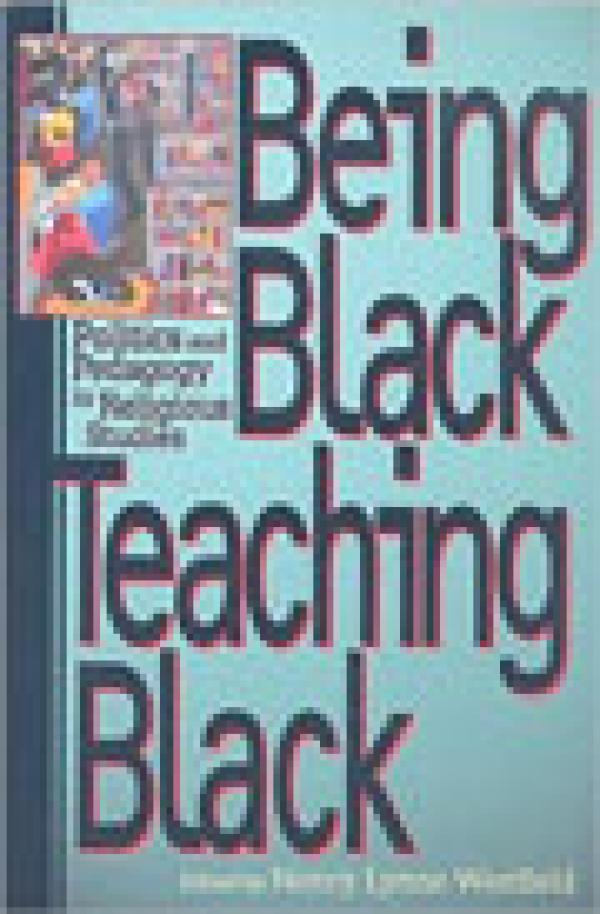
A group of eminent African American scholars of religoius and theological studies examines the problems and prospects of Black scholarhip in the theological academy. They assess the role that prominent African American scholars have played in transforming the study and teaching of religion and theology, the need for a more thorough-going incorporation of the fruits of black scholarship into the mainstream of the academic study of religion, and the challenges and opportunities of bringing black art, black intellectual thought, and black culture into predominantly white classrooms and institutions. (From the Publisher)

Combining an overview of current research literature and 23 engaging narratives, Faculty of Color invites deeper dialogue on the experiences of faculty of color teaching in predominantly white institutions. By raising issues for commentary and investigation, the book challenges its readers to adopt effective strategies for the recruitment and retention of faculty of color in higher education. The authors represent a variety of disciplines and share firsthand experiences that range from teaching, recruitment, research, mentoring, institutional climate, and administration, to relationships with colleagues as well as students. Through their stories, they are able to offer useful insights into * Teaching styles and how they affect promotion decisions * The impact of mentoring relationships * Collegiality in the campus and university setting * Separating self-identity from group membership * Managing service activities * Understanding and dealing with racism Faculty of Color is intended for senior administrators and policymakers, faculty development professionals, current faculty, and future faculty of color who are contemplating academia. Each chapter offers a variety of recommendations designed to guide predominantly white colleges and universities in working to ensure that their institutions continue to change in substantive ways. (From the Publisher)
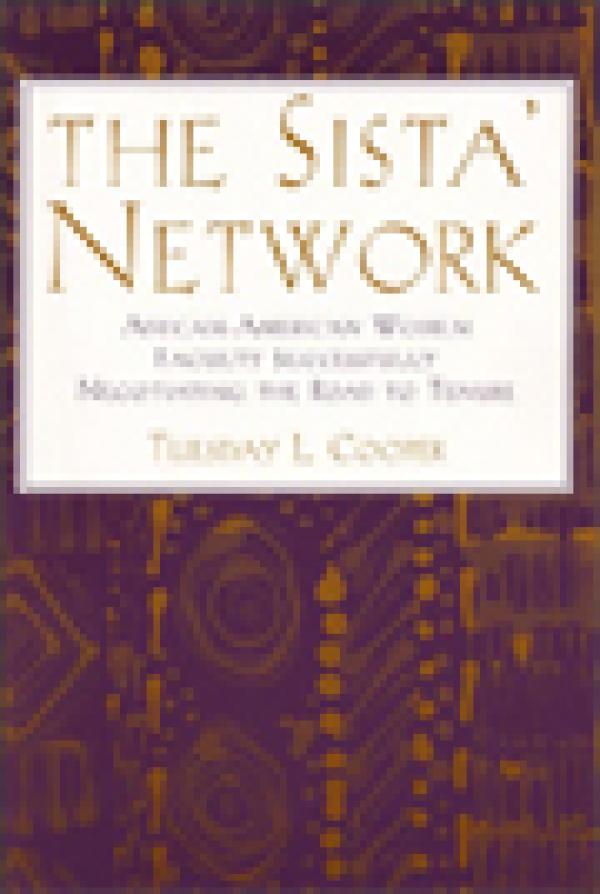
The “Sista’ Network"”is a term used to describe the relationships between and among professional African-American women which enable them to assist one another in learning the unwritten rules and protocols of various professions. In the context of higher education, the Sista' Network can help new African-American women faculty learn the rules to “the Tenure Game.” A qualitative inquiry into the lives and experiences of nine African-American women during various stages of the tenure process, this book partly explores general, practical considerations such as the tenure process; requirements for tenure; and negotiating the balance among teaching, research, service, and collegiality. Yet it delves further into the statistics of African-American women faculty in the academy; issues of isolation, mentoring, and networking; African-American women faculty and the tenure process; African-American feminist thought; and racism, sexism, and the politics of singularity. Also included are 12 guiding principles for new African-American women faculty members embarking upon the tenure process. Carefully weaving African-American feminist thought with the literature on academic tenure and minority along with stories of women faculty’s experiences in the academy, the author creates an effective and engaging account for minority women embarking on the tenure journey themselves. (From the Publisher)
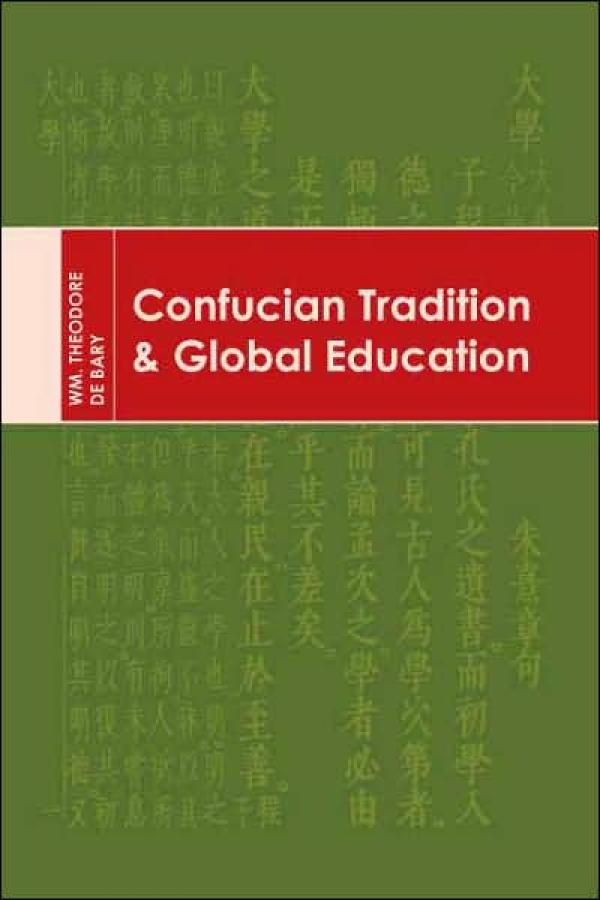
Drawn from a series of lectures that Wm. Theodore de Bary delivered in honor of the Chinese philosopher Tang Junyi, Confucian Tradition is a unique synthesis of essay and debate concerning the future of Chinese education and the potential political uses of Confucianism in the contemporary world. (From the Publisher)