Resources
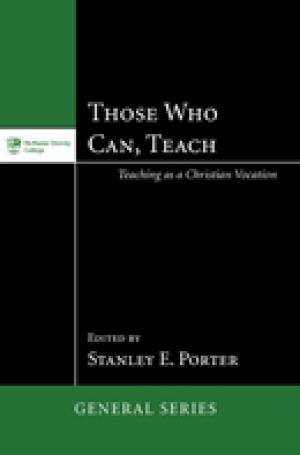
Most doctoral programs recognize the need to provide pedagogical training for their students, and yet, as Stanley Porter notes, rigorous and well-coordinated pedagogical formation is often still lacking (2). Those Who Can, Teach addresses many of the challenges faced by new teachers – particularly, though not exclusively, in seminaries and theological schools.Originating from two colloquies held at McMaster Divinity College, this is a rich volume filled with useful advice, concrete and practical examples, and compelling accounts of what theological education can be. The essays cover a wide range of topics, from developing a teaching philosophy to designing a lesson plan to teaching introductory Hebrew. As with most edited volumes, the distinctiveness of each author’s voice is heard without any attempt to offer a uniform message – and this is to the benefit to the book. Since the authors all teach at McMaster, the essays reflect the institution’s holistic emphasis on cognitive, formative, and practical learning goals. The book is especially strong in three areas. First, many of the essays offer helpful discussions about how to design courses and effective learning experiences. Chapters 2 through 7 consider course and lesson plan design from different angles and specializations. The best of the group is Lee Beach’s chapter, “Sculpting a Lesson.” This essay addresses many of the most frequent pitfalls for new (and not so new!) teachers and provides clear, practical advice for structuring an effective and manageable class session. Although the chapters on teaching Greek and Hebrew from Lois K. Fuller Dow and Paul Evans are obviously more narrowly focused, they offer not only useful accounts of how to teach introductory language courses, but also exemplary models of how to design courses with the vocational aspirations of one’s students in mind. The second strength of the volume is its concern for teachers. This concern runs through almost every essay, but it is the central topic of the concluding essays. As the subtitle of the book suggests, teaching here is seen as a vocation, as a task undertaken in response to God’s gracious love and for the sake of the Kingdom. The essays from Wendy Porter, Gordon Heath, and Phil Zylla propose strong visions for what conceiving of teaching as a vocation might look like, but in ways that open up a fruitful space of self-reflection for the reader. The third strength builds on the second: although Those Who Can, Teach covers topics applicable to almost anyone teaching theology or religion, it would be particularly beneficial to those who are teaching or who plan to teach in the setting of a seminary or theological school. The holistic emphasis throughout the volume on “Knowing,” “Being,” and “Doing” is essential for those who train future pastors and ministers in the church. Most of the example courses and materials in appendices are from courses designed with this audience in mind. I do have two reservations worth mentioning. First, several of the essays tend to over-emphasize the need to attend to different learning styles. The jury is still out on this, but recent research has questioned how decisive such differences are for student learning – even if adopting diverse instructional methods remains important. Second, in the opening essay Stanley Porter, after working through a number of teaching philosophies, ultimately strongly favors the model of the teacher as “colleague or collaborator” for almost any context (30-31). This choice is certainly defensible, but the essay fails to mention the risks of adopting this model for new (and younger) teachers (students may not immediately assume their expertise and competence). Many of the later essays prefer the model of the teacher as the creator of an effective learning environment (29, 58, 108, 181), which in my judgment offers a lower-risk and effective starting point for newer teachers. Obviously not all the essays in a book like this will be equally relevant to all readers. Overall, I would highly recommend this book to anyone who trains doctoral students in teaching – particularly doctoral students who may go on to teach in a seminary context. Individual essays would be very effective for teaching workshops for doctoral students as well.
Kate Blanchard It’s a new year! Perhaps some of you, like me, have just spent a large chunk of time celebrating a holiday (or two) with your families of origin. And perhaps some of you, like me, have recently been pondering the distinct and all-encompassing weirdness that is being middle-aged...

My engineer son has a mantra: “Fix the problem.” As mantras go, it’s a pretty good one. Simple, memorable, intuitive, and to the point. The mantra refers to our tendency to go about addressing issues and problems by doing a...
Eric D. Barreto I love the holiday season, but I think I loved it more as a student than as a teacher. The Christmas season was usually a clear barrier, a distinct break. Finals were done. There was no more work to do. The weeks of Christmas and New Year’s...
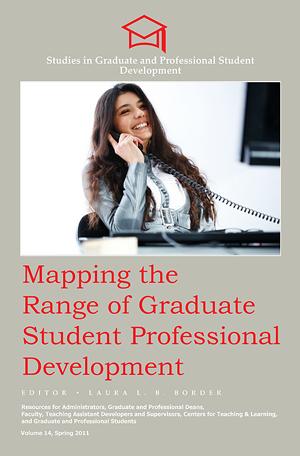
Graduates from religion and theology programs cannot expect to be hired to teaching positions (tenure-track or adjunct) without prior teaching experience, as the current job market demands that candidates gain significant experience and training prior to graduation. Graduate programs must therefore augment their academic offerings to students with an education that prepares them for successful teaching careers. To that end, a number of universities across diverse fields have adopted intentional Graduate Teaching Assistant (GTA) programs to prepare future faculty for a profession of teaching. The collection of essays in this volume examine multiple options for offering this kind of training, from institution-wide certification programs for teaching to single courses on pedagogy that can be embedded into existing degree requirements. Several chapters present case studies, providing a range of models for how an intentional GTA program might operate. Most of the programs reviewed are overseen by research universities with large student populations, such as the University of California-Berkeley. These programs are cross-curricular and focus exclusively on increasing teaching experience, and can be easily adapted for training teachers of theology and religion. This volume is most useful for those who are at least generally familiar with the rationale for training graduate students for teaching vocations and the value of it, and who are familiar (in knowledge if not in fact) with formal GTA programs. Administrators of GTA programs will find this a helpful reference volume as it provides information about how GTA programs compare with one another – including data on the kinds of training being offered (programs, certificates, and courses). Those who have the beginnings of a program and want to improve it will find examples of success (and failure) in schools of comparable size and student population, and find lists pertaining to the components of robust programs. Administrators of programs in schools operating with limited resources will want to read Chapter 8, “Leveraging Existing PFF (Preparing Future Faculty) Resources to Create a Certificate of University Teaching” (125-146), which describes the steps Duquesne University followed to develop a Certificate of Teaching program from meager resources. This is a data-rich volume, although the editors acknowledge the lack of discussion on teaching-related training regarding the ethics of teaching and professional behavior (170), as well as training to teach diversity (171). Also of note, the essays address professional development only insofar as it relates to teaching. They do not address training for supplementary skills needed to prepare future faculty of theology and religious studies, such as administration, community involvement, or advising/mentoring undergraduates. In addition to preparing graduate students to teach, forward-thinking Professional Development Programs should consider careers for their graduates beyond teaching. To that end, programs should also include training in how to apply degree-related skills to the nonprofit sector, as well as education-based, non-teaching careers (such as administration and editing). Administrators will want to keep an eye on future publications of the series Studies in Graduate and Professional Student Development to supplement this otherwise comprehensive and detailed volume.
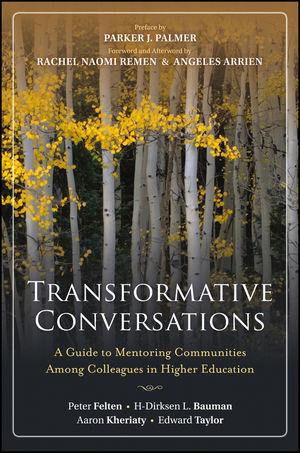
This book stands out for its simplicity of style, transparency of voice, and modesty of ambition. It makes an argument about the power of intentional “mentoring communities,” composed of peers at different stages of career. The authors ground the argument in their experience participating in such a community under the auspices of the Fetzer Institute and also organizing and participating in mentoring communities on their own campuses over a two-year period. Their conclusion: mentoring communities, by supporting and challenging their members to “identify and reconnect to their core values, revitalize their individual dreams, and renew their commitment to goals that serve as the foundation for their work and their lives,” help their members orient their choices and creative projects around their deep purposes and values, and so animate, from within the group, reform in higher education (5-6, 31, 87-88). The authors demonstrate what too few believe: that the solution to what ails higher education, in no small part, lies within the people whose vocation it is to teach and support students’ learning. The transparency of their reporting and reflection on experience lends credibility to the authors’ argument – they “show” far more than they “tell.” The authors refreshingly avoid both indulgence in lament and speculative grand proposals. In language free from jargon yet saturated with the vibrancy of lived experience, they provide a readily accessible “how to” for initiating mentoring communities. These are decidedly not committees, which have “institutional mandate[s] and goals,” or therapeutic groups – which focus on “participants’ emotional wounds and disorders” (20-21). Rather, they are groups of four-to-six colleagues who commit to mutual mentoring, with the intention of helping “participants explore, form, articulate, and live out of their values” (21). The groups focus on “strengths and virtues” not “wounds and weaknesses” (21). The authors refer to these communities as “formation mentoring communities,” using the term “formation” to highlight the orientation around helping members develop as whole persons, cultivate “shared human capacities,” and advance “each person’s particular gifts and talents” (14-15). This slim volume is a superb guide to preparing groups to enter into and sustain serious conversation. In four short chapters the authors describe mentoring communities, elaborate on the practice of conversation, explain how to organize a mentoring community, and illustrate how to do collaborative leadership in the groups. In the last chapter they argue for the centrality of such communities to any serious institutional change in higher education. The authors also provide a rich bibliography of resources on education, convening and facilitating, dialogue and conversation, formation and spiritual direction, mentoring, and community. While not directed explicitly to theological education or religious studies in the liberal arts, deans, department and program heads, and faculty in these settings should read this book. It will provoke thinking regarding and offer strategies to those desirous of welcoming new colleagues into institutions; those wanting to provide better support for colleagues contemplating the next phase in career or life; those wanting to support graduate students; and those concerned with how to compose more satisfying, sustainable, meaning or purpose-anchored lives across the career span.
Eric Barreto, Kate Blanchard and Roger Nam This holiday week, we thought we’d share some of our favorite places where we get stuff done: grading, class prep, research, administrative tasks, service projects, grants and even some occasional writing! Roger: Back home at George Fox University, I rarely do more than grab a book or journal in the...
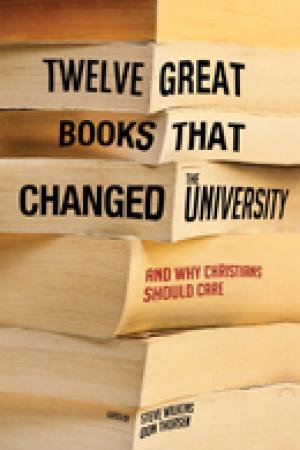
Amid the fragmentation of both academic and civil discourse, this book audaciously seeks unity through the Christian liberal arts, or at least through Christian assessment of what was considered “liberal arts.” Wilkens, Thorsen, and their contributors -- all of whom teach at Azusa Pacific University -- offer Christian readings of classic texts that have exerted wide-ranging influence over the Western canon. The texts include those written by Plato, Augustine, Bacon, Shakespeare, Cervantes, Smith, Freud, Dewey, and, yes, even Darwin. While at first glance perhaps too traditional, this book provides several avenues for both spiritual and professional reflection. Tertullian aside, this book demonstrates that Athens and Jerusalem do share common ground. Wilkens acknowledges that things are not what they were. His introductory chapter addresses the book’s intellectual foundations. The university itself emerges from the twin springs of Christian theology and Greco-Roman philosophy. Therefore the book’s Christian interpretation flows from the original nature of academic life itself. However, Wilkens notes, “while the unity of knowledge was assumed throughout most of Western history, knowledge has now become fragmented and siloed” (11). Curricular fragmentation makes the unifying task of education all the more difficult. Pressure to shape students in marketable disciplines compounds the intellectual disintegration. Educating students to become good employees further subverts more traditional goals of pursuing the good and gaining an intellectual appreciation of the Christian tradition. Academic success no longer recognizes Christian religious maturity as a measurable or desirable outcome. That exclusion has not eliminated the human need (not merely desire) to learn and know both skills and meaning (1). Education cannot be limited to merely technical endeavors. These struggles in part explain why the contributors made their particular choices. The “great books” admittedly were written by white males but those, Wilkens argues, have exerted the greatest, if not the most recent, influence on the university (13). Christian scholars remain free to negotiate this legacy in their respective disciplines. Theology receives its due from Thorsen’s own chapter on Augustine’s Confessions (36-49). After a content review, Thorsen ably addresses Augustine’s autobiography. It remains one of the few Christian texts still read across disciplinary lines. Perhaps the only thing missing here is a justification for not including The City of God. Others offer similarly talented studies, such as Joshua Morris’ reading of Darwin (137-53) and Theresa Clement Tisdale’s assessment of Freud (154-73). The typical scholarly response might tilt toward dismissiveness. After all, fragmentation is indeed part of academic reality. Wilkens acknowledges this, suggesting that the book could be read chronologically (Plato to Dewey) or by individual chapters to gauge a text’s particular impact (16). No companion course exists where these texts comprise the curriculum, so readers are free to integrate or “silo” as they see fit. Given Azusa Pacific’s confessional identity (evangelical Christian), a parallel volume by Catholic scholars on the same sources might make an interesting follow-up. In an age dominated by assessment rubrics, Twelve Great Books reasserts in quick and clean fashion the older, more radical, identity of academic endeavor.
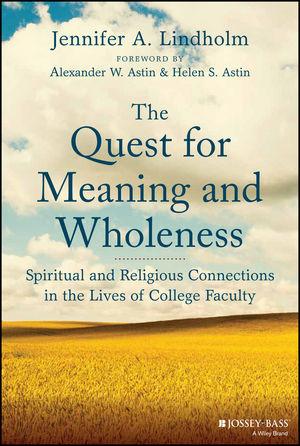
Jennifer A. Lindholm begins her work on the spiritual proclivities and religious perspectives of college faculty in the United States by noting that they teach in a “spiritually engaged nation” where nine in ten adults profess belief in God or a Universal Spirit (1). Religion is ubiquitous in American life – 80 percent of Americans consider religion as important to their lives – but it is also a complex and contested matter that fosters community and generates conflict across the country. Although college students are no different than other Americans in their spiritual and religious seeking – three in four college students are “searching for meaning and purpose in life” – Lindholm argues that they are not receiving sufficient instruction and mentoring from their professors. Two-thirds of college students report that their professors “never” encourage discussion of religious topics and nearly half are dissatisfied with how their college experience has provided opportunities for spiritual reflection (212). Yet Lindholm astutely demonstrates that college professors are no less spiritual or religious than their students. Drawing upon a 2012 survey of 8,447 tenured and tenure-track faculty from 264 diverse colleges and universities, the author finds that 19 percent of faculty self-identify as “not spiritual and not religious,” a figure only four percentage points higher than the general American population (50). Students are still disappointed in the lack of religious dialogue on their campuses in part because their professors experience competing tensions in their own attempts to incorporate their spiritual and religious lives into their work. In the second chapter, Lindholm uses faculty perspectives to provide helpful delineations of what is meant by self-identifying as “spiritual” or “religious.” She interprets her data in the following five chapters to illumine the substantial challenges faculty face when seeking to connect the spiritual and religious dimensions of their lives in the academy. Although faculty who are able to freely and openly express their spirituality are “more likely to view themselves as being authentic in their work and personal lives,” respondents often stated that they encountered overt hostility in the form of religious discrimination from colleagues and stumbled over more subtle obstacles like institutional expectations to be available to work on weekends (ix). One of the many fascinating points in Lindholm’s study shows how faculty from all faiths and in every kind of educational institution – public, private, and religious – experience these tensions. Evangelical faculty at public schools reported the highest levels of occasional discrimination (39 percent), but faculty from other religious traditions, such as Buddhism, Islam, and progressive Christianity, explained how they felt no less like outsiders at work (126-146). Lindholm accomplishes her primary purpose successfully and presents a rich, data-based account of the spiritual and religious lives of college faculty in the United States, and also articulates several cogent and compelling prescriptions to create “valued space for the spirit within the academy” so professors and their students can more fully connect higher education with human wholeness (216). Theological educators will also benefit from this book. Lindholm’s call for greater consideration of spiritual and religious diversity within the scope of collegiate intercultural development applies equally to seminaries with student bodies that are increasingly becoming more ethnically, racially, and theologically diverse.
This collection of essays has its origins in a three-year research project at the University of Michigan (funded by the Teagle and Spencer foundations), which intends to find ways to improve undergraduate education by developing “targeted, exportable classroom strategies to help bridge the gap between students’ and faculty’s (or novices’ and experts’) understanding of disciplinary writing and thinking” (2). Based on research that recognizes metacognition as “most important to good learning outcomes” (2), this collection explores whether disciplinary metacognitive strategies will assist students “to better connect diverse disciplinary writing tasks and develop more versatile identities as disciplinary writers” (3). To that end, they include essays on the use of metacognition in several different disciplines: biology, engineering, mathematics, psychology, humanities, and composition. They conclude that both “student and faculty engagement with course material and writing tasks is resoundingly improved by the introduction of metacognitive strategies” (3). The basic premise upon which this collection rests is that people can learn how to learn. This generally takes two forms. In the first, students might be asked to “reflect” on their learning, by attending to their discomfort, ambiguity, and uncertainty, and revisiting a learning experience again and again in order to discover new insights and a more sophisticated understanding (6). In the second, students might engage metacognition (thinking about thinking): they establish a plan to learn (for example, make predictions, set aside sufficient time, gather appropriate resources, and decide which approach will be most efficient based on experience), monitor their learning (with self-tests, for example), and evaluate success (their ability to recall the idea a week later). Attention to metacognition facilitates students’ ability to transfer understanding across disciplines. Teachers in religion and theology might be particularly interested in a number of immediately useable teaching strategies. Consider “exam wrappers”: after giving a test, ask students to describe how they prepared for it; collect their responses, and return them as they begin to prepare for the next test. In this way, students can monitor and evaluate their learning and give their “future selves some advice” (24). Or invite students to monitor their thinking by including comments in the margins on their writing assignments; for example, they might say, “I am not sure I understood how these two ideas connect,” or “I think I have this correctly stated but I may have to check my facts” (122). Or consider inviting students to design a fifteen-week project using a template to identify purpose, audience, context, genre, media, and arrangement strategy; this type of assignment encourages students to make deliberate rhetorical choices and to revise both their design and their product iteratively. Or try this: invite students to “repurpose” their content knowledge in alternative formats (written page, presentation, image, video, blogging, and so forth) in order to develop skills as emerging experts in their profession (178). Each essay provides concrete, practical descriptions of how reflection and metacognition can be used in different disciplines, with abundant samples of assignments, templates, surveys, and student examples.
Wabash Center Staff Contact
Sarah Farmer, Ph.D.
Associate Director
Wabash Center
farmers@wabash.edu