Resources
For over ten years, Readings for Diversity and Social Justice has been the go-to anthology for the broadest possible coverage of issues related to identity and oppression from a social justice perspective. This highly-anticipated second edition breaks even further ground, boasting over 40 more readings than previously available, updated and original section introductions, and three entirely new chapter sections on Religious Oppression, Transgender Oppression, and Ageism/Adultism. As with the first edition, each chapter section is divided into Contexts, Personal Voices, and Next Steps. The first two parts provide vivid portraits of the meaning of diversity and the realities of oppression. The third part challenges the reader to take action to end oppressive behavior and affirm diversity and social justice. Added new features to this edition include: * Over 130 readings, many new and updated, including three entirely new sections. * A Table of Intersections that enables readers to identify all selections that treat issues of race, religion, gender, sexuality, disability, class, and age, beyond those in designated topical chapters. * An all new companion website with additional resources, further suggested readings, and teaching materials is also available. Offering over one-hundred and thirty selections from some of the foremost scholars in a wide range of fields, Readings for Diversity and Social Justice, Second Edition is the indispensible volume for every student, teacher, and social justice advocate. (From the Publisher)
Drawing on indigenous belief systems and recent work in critical race studies and multicultural-feminist theory, Keating provides detailed step-by-step suggestions, based on her own teaching experiences, designed to anticipate students' resistance to social-justice issues and encourage them to change. She offers a holistic approach to theory and practice. (From the Publisher)
Articulates a learning process to help Christians improve approaches to understanding other religious traditions. Understanding Other Religious Worlds is built on the difference between learning facts about other religions and understanding them and their followers in a wholistic manner. Berling argues that incorporating the religious “other” in one’s own Christian identity is integral to living an authentic Christian life. (From the Publisher)
This volume critically explores themes of belonging, learning and community, drawing on a range of research studies conducted with adult learners in formal and informal contexts and employing interdisciplinary theory from education, feminist theory, cultural studies and human geography. Dominant but simplistic and regulatory ideas and practices of learning community in higher education and lifelong learning are critiqued. Instead, Jocey Quinn argues that learners gain most benefit from creating their own symbolic communities and networks, which help to produce imagined social capital. A rich variety of empirical data is used to explore and demonstrate how such imagined social capital works. (From the Publisher)
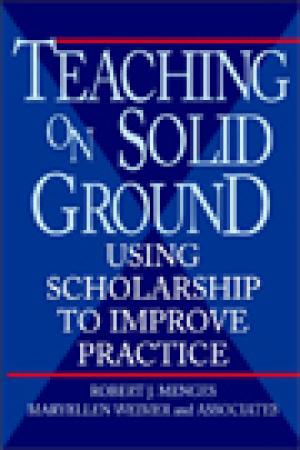
Teaching on Solid Ground gives practitioners more complete understanding of students and learning. It presents new ways of thinking about instruction, and it explores the issues - including faculty motivation and quality of teaching - that demand faculty attention at the institutional and professional level. Underlying Teaching on Solid Ground is the critical premise that educational researchers and teachers must become partners in the ongoing task of teaching improvement. (From the Publisher)
With increasing calls for accountability of faculty, the use of peers as teaching consultants could be the answer to how to monitor our own effectiveness as professionals. (From the Publisher)
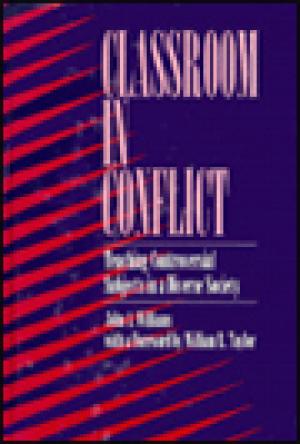
This book transcends recent debates about political correctness to address the underlying problems of teaching controversial subjects in the college and university history classroom. The author criticizes both sides of the debate, rejecting, on the one hand, calls for a uniform, chronological history curriculum and, on the other hand, claims that only ethnic or racial "insiders" are qualified to teach about their communities. In chapters on colonial, comparative, and African history, Williams applies the concept of "Gandhian truth" to historical subjects, moving through tentative and flexible perspectives to achieve a complex picture of historical episodes. And in chapters on imperialism, nationalism, racism, and the problem of "the other," he discusses the difficult and contingent nature of conceptual language. In the second half of the book, he addresses framing rules of discussion by which sensitive issues can be discussed with diverse audiences, the relationship of American pluralism to a world perspective, and what can be accomplished through an education in pluralism. (From the Publisher)
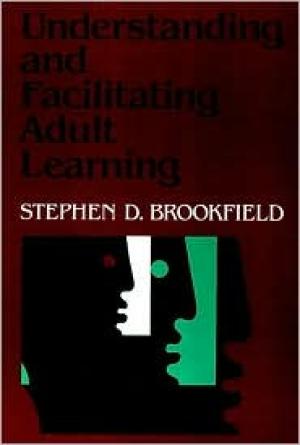
1986 Winner of the Imogene Okes Award and the Cyril O. Houle World Award for Literature in Adult Education The first book to receive both the Imogene Okes Award and the Cyril O. Houle World Award for Literature in Adult Education presented by the American Association for Adult and Continuing Education. This book analyzes current approaches to adult learning and presents a comprehensive review of the research on how adults learn. (From the Publisher)
Written during a time when ordinary language analysis dominated Anglo-American philosophy, The Activities of Teaching ranks among the most thorough and illuminating examinations of the concept of teaching. However, it is more than a text about teaching, ; it is a text that teaches. Written with grace and clarity, the reader is always the author's first consideration. Each chapter contains two parts; the first extends and deepens the analysis of teaching; the second provides the reader with the background necessary to grasp the increasingly sophisticated argument. Each chapter concludes with a set of questions for further exploration of the ideas presented in the text. Suitable as a text for graduate courses in foundations and philosophy of education, in teaching and teacher education, or as a reference for those who study teaching, this work remains one of the very best analytical treatments of the concept of teaching. (From the Publisher)
Contemporary Theories and Practice in Education explores the many lines of thinking that may influence how we teach. Bertrand explains who contributed what to our ways of thinking about learning and teaching - and why those contributions are important. This book invites you to enrich your teaching through the thoughts, research, and proposals of theorists such as Maslow, Piaget, Rogers, Vygotsky, Adler, Freire, and dozens of others. (From the Publisher)
Wabash Center Staff Contact
Sarah Farmer, Ph.D.
Associate Director
Wabash Center
farmers@wabash.edu