Resources

This is a book for anyone who has ever considered engaging in the scholarship of teaching and learning – known familiarly as SoTL – and needs a better understanding of what it is, and how to engage in it. The authors describe how to create a SoTL project, its implications for promotion and tenure, and how it fosters: * Increased satisfaction and fulfillment in teaching * Improved student learning * Increased productivity of scholarly publication * Collaboration with colleagues across disciplines * Contributing to a growing and important body of literature This guide provides prospective SoTL scholars with the necessary background information, foundational theory, tools, resources, and methodology to develop their own SoTL projects, taking the reader through the five stages of the process: Generating a research question; Designing the study; Collecting the data; Analyzing the data; and Presenting and publishing your SoTL project. Each stage is illustrated by examples of actual SoTL studies, and is accompanied by worksheets to help the reader refine ideas and map out his or her next steps. The process and worksheets are the fruit of the successful SoTL workshops the authors have offered at their institution for many years. SoTL differs from scholarly and reflective teaching in that it not only involves questioning one’s teaching or a teaching strategy, but also formally gathering and exploring evidence, researching the literature, refining and testing practices, and finally going public. The purpose of SoTL is not just to make an impact on student learning, but through formal, peer-reviewed communication, to contribute to the larger knowledge base on teaching and learning. While the roots of SoTL go back some 30 years, it was Ernest Boyer in his classic Scholarship Reconsidered who made the case for the parity of the scholarships of integration, of discovery, of application, and of scholarship of teaching as vital to the health of higher education. Glassick, Huber, and Maeroff ’s subsequent Scholarship Assessed articulated the quality standards for SoTL, since when the field has burgeoned with the formation of related associations, a proliferation of conferences, the launching of numerous journals, and increasing recognition and validation by institutions. (From the Publisher)
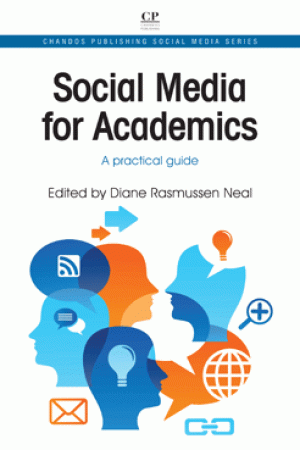
No other book exists that assists academics in learning how to use social media to benefit their teaching and research.  - the editor has an extensive background in social media teaching, consulting, research, and everyday use  - all the contributors come to the book with a common goal, from various expertise areas and perspectives This book provides an overview of social media technologies in the context of practical implementation for academics, guided by applied research findings, current best practices, and the author’s successful experiences with using social media in academic settings. It also provides academics with sensible and easy strategies for implementing a wide spectrum of social media and related technologies - such as blogs, wikis, Facebook, and various Google tools for professional, teaching, and research endeavours. Readership: Academics and academic librarians with professional, teaching and research responsibilities in all fields who are interested in learning more about using social media in the context of their careers, will find this book invaluable. (From the Publisher)

Until very recently, American universities were led mainly by their faculties, which viewed intellectual production and pedagogy as the core missions of higher education. Today, as Benjamin Ginsberg warns in this eye-opening, controversial book, "deanlets"--administrators and staffers often without serious academic backgrounds or experience--are setting the educational agenda. The Fall of the Faculty examines the fallout of rampant administrative blight that now plagues the nation's universities. In the past decade, universities have added layers of administrators and staffers to their payrolls every year even while laying off full-time faculty in increasing numbers--ostensibly because of budget cuts. In a further irony, many of the newly minted--and non-academic--administrators are career managers who downplay the importance of teaching and research, as evidenced by their tireless advocacy for a banal "life skills" curriculum. Consequently, students are denied a more enriching educational experience--one defined by intellectual rigor. Ginsberg also reveals how the legitimate grievances of minority groups and liberal activists, which were traditionally championed by faculty members, have, in the hands of administrators, been reduced to chess pieces in a game of power politics. By embracing initiatives such as affirmative action, the administration gained favor with these groups and legitimized a thinly cloaked gambit to bolster their power over the faculty. As troubling as this trend has become, there are ways to reverse it. The Fall of the Faculty outlines how we can revamp the system so that real educators can regain their voice in curriculum policy. Features • Powerful and stinging critique of one of the most powerful trends in academia: the shift in power to non-academic administrators • Exceptionally well written polemic that will stir controversy at universities across the country • The author is well known throughout academia, and has coauthored one of the bestselling textbooks on American government in recent history (From the Publisher)
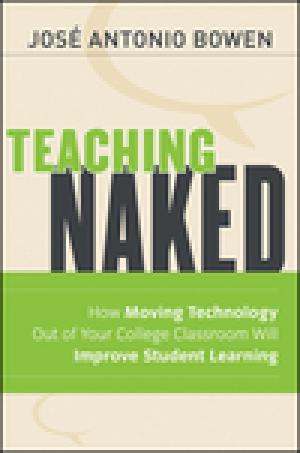
Introducing a new way to think about higher education, learning, and technology that prioritizes the benefits of the human dimension. José Bowen recognizes that technology is profoundly changing education and that if students are going to continue to pay enormous sums for campus classes, colleges will need to provide more than what can be found online and maximize “naked” face-to-face contact with faculty. Here, he illustrates how technology is most powerfully used outside the classroom, and, when used effectively, how it can ensure that students arrive to class more prepared for meaningful interaction with faculty. Bowen offers practical advice for faculty and administrators on how to engage students with new technology while restructuring classes into more active learning environments. (From the Publisher)

This edited book series serves as a guide to the study of improved training, employment and administration of graduate and professional student development programs. A new publication that addresses a critical need in higher education. The series is designed to highlight all aspects of professional development of graduate and professional students. (From the Publisher)

AAR Teaching Religious Studies Series (Oxford University Press) Many people now see religious violence as one of the defining characteristics of the modern world. Instructors are often asked about it in their courses that deal with religion. Classroom discussion of violence committed in the name of religion can either open the door to a more subtle appreciation of complex and divisive social realities or allow students to display the kind of ignorance, prejudice, and recalcitrance that can derail critical analysis. The etiology of religious violence requires the kind of careful distinctions that instructors must work hard to communicate even in the best of classroom circumstances. Teaching Religion and Violence is designed to help instructors to equip students to think critically about religious violence, particularly in the multicultural classroom. The book is organized into two sections. The first, "Traditions," addresses topics and methods appropriate for teaching violence in particular religious traditions. Each essay provides a solid starting point for the instructor developing a new course on violence in one tradition. The overarching aims of the second section, "Approaches," are to suggest alternative rubrics for initiating or furthering discussion of religion and violence and to aid instructors in demonstrating the wide applicability of the questions and concepts developed here. The volume as a whole and each of the essays is firmly grounded in the theoretical literature on religion and violence, in the theory of pedagogy, and in the collective experience of its authors. (From the Publisher)
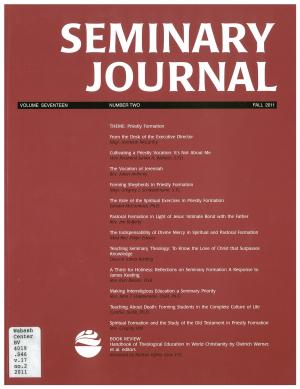
Journal Issue.
One page Teaching Tactic: on the first day of class, students discuss course content by discussing classification strategies
One page Teaching Tactic: low-stakes writing assignments to improve students engagement with texts.
Wabash Center Staff Contact
Sarah Farmer, Ph.D.
Associate Director
Wabash Center
farmers@wabash.edu