Resources
Click Here for Book Review Abstract: Professors and Their Politics tackles the assumption that universities are ivory towers of radicalism with the potential to corrupt conservative youth. Neil Gross and Solon Simmons gather the work of leading sociologists, historians, and other researchers interested in the relationship between politics and higher education to present evidence to the contrary. In eleven meaty chapters, contributors describe the political makeup of American academia today, consider the causes of its liberal tilt, discuss the college experience for politically conservative students, and delve into historical debates about professorial politics. Offering readable, rigorous analyses rather than polemics, Professors and Their Politics yields important new insights into the nature of higher education institutions while challenging dogmas of both the left and the right. (From the Publisher)
Click Here for Book Review Abstract: The recent trend of trying to measure higher education’s return on investment misses a fundamental point, argue Charity Johansson and Peter Felten. The central purpose of a college or university is to transform the lives of students—not to merely change them or help them mature. This transformation is an ongoing process of intentionally aligning one’s behavior with one’s core sense of personal identity. It is the university’s central role to lead students in this transformation, a process that shapes students into intentional, critical, and engaged individuals. Recognizing the remarkable influence of the college experience on peoples’ lives, the authors offer a guide to how colleges and universities can effectively lead students through this life-changing process. Drawn from extensive interviews with students and graduates, faculty and staff, Transforming Students gathers diverse stories to show how students experience the transformation process, which rarely follows a neat or linear path. The interviews illustrate central themes from the literature on transformative learning and the undergraduate student experience. A sequel of sorts to George Keller’s classic Transforming a College—which chronicled Elon University’s metamorphosis from struggling college to a top regional university— Transforming Students addresses the school’s core educational mission: to shape students into engaged adults who embrace learning as a lifelong endeavor. Given this effect, the college experience is much more than preparation for a career. It is preparation for life. (From the Publisher)
Metacognition refers to an intentional focusing of attention on a process in which one is personally engaged. It encourages awareness of one’s current state of accomplishment, along with the situational influences and strategy choices that are currently, or have previously, influenced accomplishment of that process. Through metacognition, one should become better able to accurately judge one’s progress and select strategies that will lead to success. This web site primarily focuses on the process of learning academic materials and skills, with an emphasis on metacognition related to learning within the higher education environment.  A second emphasis is on the process of teaching, i.e. metacognitive instruction. Blog, Resources. Journal. Research.
Click Here for Book Review Abstract: Learning to learn is the key skill for tomorrow. This breakthrough book builds the foundation every student needs, from freshman orientation to graduate school Recent advances in brain science show that most students’ learning strategies are highly inefficient, ineffective or just plain wrong. While all learning requires effort, better learning does not require more effort, but rather effectively aligning how the brain naturally learns with the demands of your studies. This book shows you what is involved in learning new material, how the human brain processes new information, and what it takes for that information to stick with you even after the test. Taking a small amount of time to read and act upon the material in this book will prove to be one of the best decisions you can make as a learner. What you discover will change the way you learn in college and will be helpful in your personal and professional life. You live in a world where you will have to be a lifelong learner, constantly updating your skills and changing jobs to compete in the global marketplace. Most college students today will have as many as 10-14 different jobs by age 38. Learning how to learn in harmony with your brain is crucial to your long-term success. This succinct book explains straightforward strategies for changing how you prepare to learn, engage with your course material, and set about improving recall of newly learned material whenever you need it. This is not another book about study skills and time management strategies, but instead an easy-to-read description of the research about how the human brain learns in a way that you can put into practice right away. Did you know neuroscientists have shown that memories are made while you sleep, and by studying right before sleeping you can make stronger memories for your information? In this book the authors explain the role that sleep, exercise and your senses play in learning; how memory works and what makes the brain pay attention; the importance of your mindset towards learning and pattern recognition; as well as new breakthroughs in brain science that can enhance your ability to learn new information and make later recall (for tests or everyday life) easier. (From the Publisher)
Click Here for Book Review Abstract: Constrained by shrinking budgets, can colleges do more to improve the quality of education? And can students get more out of college without paying higher tuition? Daniel Chambliss and Christopher Takacs conclude that the limited resources of colleges and students need not diminish the undergraduate experience. How College Works reveals the surprisingly decisive role that personal relationships play in determining a student’s collegiate success, and puts forward a set of small, inexpensive interventions that yield substantial improvements in educational outcomes. At a liberal arts college in New York, the authors followed a cluster of nearly one hundred students over a span of eight years. The curricular and technological innovations beloved by administrators mattered much less than the professors and peers whom students met, especially early on. At every turning point in students’ undergraduate lives, it was the people, not the programs, that proved critical. Great teachers were more important than the topics studied, and even a small number of good friendships—two or three—made a significant difference academically as well as socially. For most students, college works best when it provides the daily motivation to learn, not just access to information. Improving higher education means focusing on the quality of a student’s relationships with mentors and classmates, for when students form the right bonds, they make the most of their education. (From the Publisher)
300 page pdf version of a book about effective communication. For any given idea we have, there are 100 different ways to communicate it. Which one do you choose? The book answers these questions, and this guide helps to distill these concepts into teachable exercises.
A 10 minute YouTube clip from the beginning of a longer film produced to help teachers work with international students in writing environments. (http://www.amazon.com/Writing-Across-Borders/product-reviews/B004HU7SUY)  How do we assess international student writing and what teaching practices disadvantage international students and which help them improve as writers? 
A 300 page free-download e-book on the interplay between the science of learning, the science of instruction, and the science of assessment. Research on how people learn is applied to educational settings. The book is based on theory and research in cognitive psychology. (Excerpted from the Introduction.)
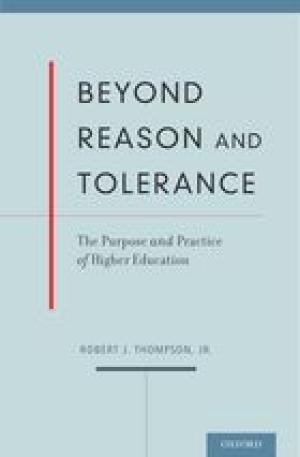
Click Here for Book Review Abstract: Provides a developmental science basis to inform necessary transformations in undergraduate educational practices Argues that emerging adulthood is an especially dynamic time of reorganization and development of the brain that both influences, and is influenced by, the undergraduate experience Synthesizes advances in our understanding of human development and learning Has direct implications for undergraduate education practices The major challenges facing higher education are often framed in terms of preparing students for life-long learning. Society's 21st century needs require civic-minded individuals who have the intellectual and personal capabilities to constructively engage political, ethnic, and religious differences, work effectively, and live together with many different kinds of people in a more global society. In this volume, Robert J. Thompson aims to influence the current conversation about the purposes and practices of higher education. Beyond Reason and Tolerance adopts a developmental science basis to inform the transformations in undergraduate educational practices that are necessary to empower students to act globally and constructively engage difference. It synthesizes current scholarship regarding the nature and development of three core capacities deemed essential: A personal epistemology that reflects a sophisticated understanding of knowledge, beliefs, and ways of thinking; empathy and the capacity to understand the mental states of others; and an integrated identity that includes values, commitments, and a sense of agency for civic and social responsibility. Beyond Reason and Tolerance argues that to foster the development of these capabilities, colleges and universities must recommit to providing a formative liberal education and adopt a developmental model of undergraduate education as a process of intellectual and personal growth, involving empathy as well as reasoning, values as well as knowledge, and identity as well as competencies. Thompson focuses on emerging adulthood as an especially dynamic time of reorganization and development of the brain that both influences, and is influenced by, the undergraduate experience. Advances in our understanding of human development and learning are synthesized with regard to the direct implications for undergraduate education practices. Readership: Faculty, graduate students, and undergraduate students in psychology, human development, and education who have an interest in intergroup relations and cognitive and social development during the period of emerging adulthood. (From the Publisher)
This paper is a guide to the effective design and management of team assignments in a college classroom where little class time is available for instruction on teaming skills. Topics discussed include forming teams, helping them become effective, and using peer ratings to adjust team grades for individual performance. A Frequently Asked Questions section offers suggestions for dealing with several problems that commonly arise with student teams, and forms and handouts are provided to assist in team formation and management. 
Wabash Center Staff Contact
Sarah Farmer, Ph.D.
Associate Director
Wabash Center
farmers@wabash.edu