Scholarship on Teaching
A grassroots and network-based effort to promote the design of research-based learning environments. Supports the scaled implementation and research related to Universal Design for Learning. Promotes the identification and development of models, tools, research, and practices designed to foster effective UDL implementation in educational environments.
An occasional course offered online (with registration fee) by the University of Wisconsin (Madison) Continuing Studies -- who helped develop the Wabash Center’s occasionally offered Workshop For Theological Faculty Teaching Online. “In this course, you’ll gain a gain a basic overview of the knowledge and skills you need to teach in the online environment, contextualized for those teaching in a theological setting. Key topics include online course models, characteristics of online learners, understanding your role as an online instructor, how to plan content and learning activities, and strategies to manage courses.”
The Atla Websites on Religion is a growing, selective, annotated collection of web resources for the study and teaching of religion. It’s first incarnation was on the Wabash Center website, created and maintained by Charles Bellinger.  “The Guide to Internet Resources for Teaching and Learning in Theology and Religion” it was often referred to as “The Internet Guide.” Atla took over development of the site in 2018.

This book brings together leading practitioners and scholars engaged in professional development programming for and research on mid-career faculty members. The chapters focus on key areas of career development and advancement that can enhance both individual growth and institutional change to better support mid-career faculties. The mid-career stage is the longest segment of the faculty career and it contains the largest cohort of faculty. Also, mid-career faculty are tasked with being the next generation of faculty leaders and mentors on their respective campuses, with little to no supports to do so effectively, at a time when higher education continues to face unprecedented challenges while managing continued goal of diversifying both the student and faculty bodies. The stories, examples, data, and resources shared in this book will provide inspiration--and reality checks--to the administrators, faculty developers, and department chairs charged with better supporting their faculties as they engage in academic work. Current and prospective faculty members will learn about trends in mid-career faculty development resources, see examples of how to create such supports when they are lacking on their campuses, and gain insights on how to strategically advance their own careers based on the realities of the professoriate. The book features a variety of institution types: community colleges, regional/comprehensive institutions, liberal arts colleges, public research universities, ivy league institutions, international institutions, and those with targeted missions such as HSI/MSI and Jesuit. Topics include faculty development for formal and informal leadership roles; strategies to support professional growth, renewal, time and people management; teaching and learning as a form of scholarship; the role of learning communities and networks as a source of support and professional revitalization; global engagement to support scholarship and teaching; strategies to recruit, retain, and promote underrepresented faculty populations; the policy-practice connection; and gender differences related to key mid-career outcomes. While the authors acknowledge that the challenges facing the mid-career stage are numerous and varying, they offer a counter narrative by looking at ways that faculty and/or institutions can assert themselves to find opportunities within challenging contexts. They suggest that these challenges highlight priority mentoring areas, and support the creation of new and innovative faculty development supports at institutional, departmental, and individual levels. (From the Publisher)
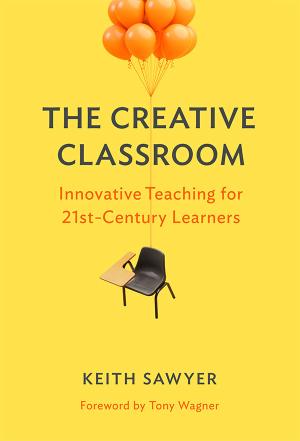
The Creative Classroom presents an original, compelling vision of schools where teaching and learning are centered on creativity. Drawing on the latest research as well as his studies of jazz and improvised theater, Sawyer describes curricula and classroom practices that will help educators get started with a new style of teaching, guided improvisation, where students are given freedom to explore within structures provided by the teacher. Readers will learn how to improve learning outcomes in all subjects—from science and math to history and language arts—by helping students master content-area standards at the same time as they increase their creative potential. This book shows how teachers and school leaders can work together to overcome all-too-common barriers to creative teaching—leadership, structure, and culture—and collaborate to transform schools into creative organizations. (From the Publisher)
What difference does Jesus Christ make for the way we teach the Christian faith? If he is truly God and truly human, if he reveals God to us and us to ourselves, how might that shape our approach to teaching Christian theology? Without a compelling theological vision of theological instruction and without a clear awareness of its unique goals, challenges, and temptations, our teaching will be out of joint with the subject matter, and we will waste valuable opportunities. Drawing on the work of S√∏ren Kierkegaard, Karl Barth, and Dietrich Bonhoeffer, Adam Neder offers a clear and creative theological and spiritual reflection on the art of teaching the Christian faith. This concise and engaging book offers a wealth of fresh insights and practical suggestions. While addressed to teachers in academic contexts, the approach is broad enough to include anyone involved in teaching and learning Christianity. (From the Publisher)

Race, Sports, and Education highlights the myriad ways in which organized collegiate sport has both positively contributed to and negatively detracted from the educational experiences of Black male college athletes. Specifically, John N. Singer examines the educational experiences, opportunities, and outcomes of Black males who have played NCAA Division I football and/or basketball at historically White colleges and universities. Singer is intensely aware of the ways in which many Black athletes have been shortchanged by the collegiate sport system. He describes how the colleges and universities have exploited athletes for the institutions’ financial gain and deprived them of basic educational opportunities that ought to be enjoyed by all students. At the same time, Singer argues that sports do in fact offer genuine educational opportunities and benefits for many of these athletes. He is acutely attuned to the fact that these athletes love their sports, and that their participation in these sports makes unique educational experiences available to them. As Singer shows, to understand the situation and to chart realistic, fruitful reform measures requires a full appreciation of the complexity—indeed, of the many competing and contradictory elements—that characterizes intercollegiate sport and the experiences of Black athletes at the present time. The book brings to the fore the voices, stories, and perspectives of twelve Black male college athletes via a case study of teammates from a big-time college football program and individual reflective vignettes of athletes across several different college programs. Through his analysis of the system and his attention to student views and experiences, Singer crafts a valuable, nuanced account and points in the direction of reforms that would significantly improve the educational opportunities and experiences of these athletes. At a time when collegiate sports have attained unmistakable institutional value and generated unprecedented financial returns—all while largely failing the educational needs of its athletes—this book offers a clear, detailed vision of the current situation and suggestions for a more equitable way forward. (From the Publisher)
A special issue of Teaching Theology & Religion on teaching and learning strategies for religious leadership formation.
A special issue of Teaching Theology & Religion on games and learning.
Intersectional Pedagogy explores best practices for effective teaching and learning about intersections of identity as informed by intersectional theory. Formatted in three easy-to-follow sections, this collection explores the pedagogy of intersectionality to address lived experiences that result from privileged and oppressed identities. After an initial overview of intersectional foundations and theory, the collection offers classroom strategies and approaches for teaching and learning about intersectionality and social justice. With contributions from scholars in education, psychology, sociology and women’s studies, Intersectional Pedagogy include a range of disciplinary perspectives and evidence-based pedagogy. (From the Publisher)