Home » Resources » Scholarship on Teaching » The Creative Classroom: Innovative Teaching for 21st-Century Learners
Scholarship
October 30, 2019
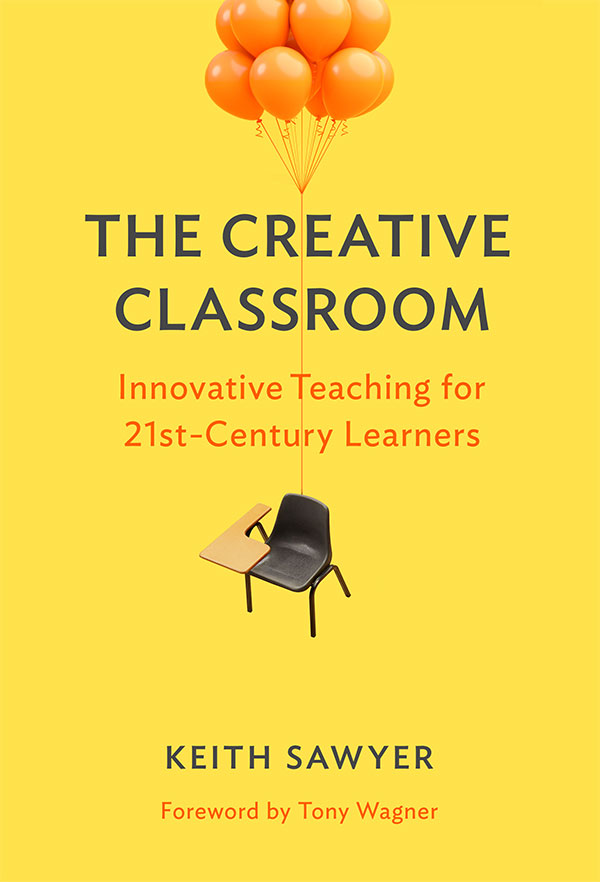
The Creative Classroom: Innovative Teaching for 21st-Century Learners
- Author
- Sawyer, Keith
- Publisher
- Teachers College Press
- ISBN
- 9780807761212
- Table of Contents
-
Foreword (Tony Wagner)
‚ÄÉ
Acknowledgments‚ÄÉ
Part 1. Introduction
‚ÄÉ Teaching with Guided Improvisation
‚ÄÉ Facing the Teaching Paradox
‚ÄÉ The Creative Teachers of the Future
‚ÄÉ
Part 2. Teaching Creative Knowledge
‚ÄÉ Creative Knowledge and Shallow Knowledge
‚ÄÉ Moving Beyond the Coverage Trap
‚ÄÉ Learning Creativity and State Standards
‚ÄÉ Creative Habits of Mind
‚ÄÉ Creative Knowledge in Math, Science, and History
‚ÄÉ Teaching for Creativity in Every Subject
‚ÄÉ
Part 3. Guided Improvisation
‚ÄÉ Learning to Improvise
‚ÄÉ Collaboration and Improvisation
‚ÄÉ Improv Techniques for Teachers
‚ÄÉ When Teachers Need to Break the Rules
‚ÄÉ Lesson Planning for Guided Improvisation
‚ÄÉ Balancing Structure and Improvisation
‚ÄÉ Summary
‚ÄÉ
Part 4. Mastering the Teaching Paradox
‚ÄÉ The Structures of Guided Improvisation
‚ÄÉ Project-Based Learning and the Teaching Paradox
‚ÄÉ Managing the Teaching Paradox: Six Case Studies
‚ÄÉ From Novice Teacher to Expert Improviser
‚ÄÉ Improvising with Pedagogical Content Knowledge
‚ÄÉ Summary
‚ÄÉ
Part 5. Schools for Creativity
‚ÄÉ The Culture of the Creative School
‚ÄÉ Leadership in the Creative School
‚ÄÉ The Organizational Structure of the Creative School
‚ÄÉ Assessment in the Creative School
‚ÄÉ Summary
‚ÄÉ
Part 6. A Call to Action
‚ÄÉ
References
‚ÄÉ
Index
‚ÄÉ
About the Author‚ÄÉ
The Creative Classroom presents an original, compelling vision of schools where teaching and learning are centered on creativity. Drawing on the latest research as well as his studies of jazz and improvised theater, Sawyer describes curricula and classroom practices that will help educators get started with a new style of teaching, guided improvisation, where students are given freedom to explore within structures provided by the teacher. Readers will learn how to improve learning outcomes in all subjects—from science and math to history and language arts—by helping students master content-area standards at the same time as they increase their creative potential. This book shows how teachers and school leaders can work together to overcome all-too-common barriers to creative teaching—leadership, structure, and culture—and collaborate to transform schools into creative organizations. (From the Publisher)