Scholarship on Teaching
This podcast, hosted by Bonni Stachowiak, airs weekly. The podcast focuses on topics such as excellence in teaching, instructional design, open education, diversity and inclusion, productivity, creativity in teaching, educational technology, and blended learning.
Podcast Series. A podcast for people who know religion is weird, but love it anyway. Your hosts, Leah Payne and Brian Doak, are both professors, authors, and pop culture aficionados, whose interests range from archaeology and history and linguistics to LARPing and The Walking Dead. Episodes tackle some piece of media highlighting the wonderful weirdness of religious experience—a documentary, a television show, a Twitter scandal—and use that as a thread on which to hang pearly reflections on a wide variety of topics. Heaven. Hell. The perils of fame within the evangelical world. Church attendance. Atheism. Gamer communities. Starting a cult. Join us.
Katie Geneva Cannon equipped generations of students with analytical tools to reckon with the past and present and to creatively construct previously unimaginable futures. Her body of work teaches us to find new paths as we critically plumb our own historically situated epistemologies and put them in conversation with a variety of traditions. As my teacher, dissertation advisor, and mentor during my graduate studies in religion at Temple University from 1993-2000, Dr. Cannon taught me to examine rigorously my own story in its larger historical and geopolitical contexts, to parse the privileges and perils of pursuing the academic study of religion as a white woman, and to engage deeply with multitudinous ways of knowing. See companion contributions to this Forum written by Edwin David Aponte, Miguel A. De La Torre, Stacey M. Floyd-Thomas, and Angela D. Sims.
Written by her first doctoral student, this essay is a tribute to the legacy and lessons of Dr. Katie Geneva Cannon (1950-2018), the progenitor of womanist ethics. The author embraces Cannon’s signature womanist embodied pedagogy, which takes embodiment as a Black woman seriously and serves as a paradigm for those who purposefully and poignantly live intersecting roles of race, gender, and class. Through both a personal account of the grief experienced by the passing of her mentor and a critical reflection on lessons learned by Cannon’s legacy, the author exposes the daunting challenges faced by womanist scholars as they navigate the front line of the classroom and the frequently death-dealing and dismissive terrain of higher education. See companion contributions to this Forum written by Edwin David Aponte, Miguel A. De La Torre, Stacey M. Floyd-Thomas, Karen K. Seat, and Angela D. Sims.
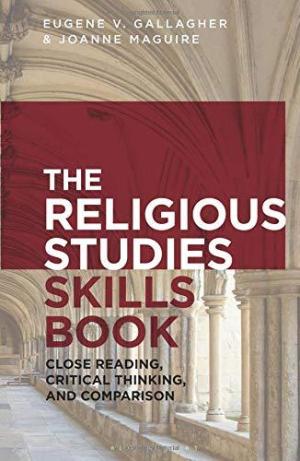
Click Here for Book Review This book supports students engaged in the study of religions by helping them understand key processes particular to the field, including bracketing and comparison, and general humanities skills, like critical thinking and close reading. The authors offer useful examples throughout the book and augment those with further exercises available online. - Molly H. Bassett, Georgia State University Studying religion in college or university? This book shows you how to perform well on your course tests and examinations, write successful papers, and participate meaningfully in class discussions. You'll learn new skills and also enhance existing ones, which you can put into practice with in-text exercises and assignments. Written by two award-winning instructors, this book identifies the close reading of texts, material culture, and religious actions as the fundamental skill for the study of religion at undergraduate level. It shows how critical analytical thinking about religious actions and ideas is founded on careful, patient, yet creative “reading” of religious stories, rituals, objects, and spaces. The book leads you through the description, analysis, and interpretation of examples from multiple historical periods, cultures, and religious traditions, including primary source material such as Matthew 6:9-13 (the Lord's Prayer), the gohonzon scroll of the Japanese new religion Soka Gakkai, and the pilgrimage to Mecca (hajj). It provides you with typical assignments you will encounter in your studies, showing you how you might approach tasks such as reflective, interpretive or summary essays. Further resources, found on the book's website, include bibliographies, and links to useful podcasts. (From the Publisher)
This short essay describes a teaching strategy that addresses a key threshold concept in undergraduate biblical studies courses – how an interpreter’s location within a particular tradition influences that interpreter’s understanding of biblical texts about gender, sex, and sexuality. It is a companion essay to John Van Maaren’s “Transformative Concepts and Troublesome Knowledge: Toward a Threshold Concept Framework for Biblical Studies,” also published in this issue of the journal.
This short essay describes a teaching strategy that addresses two of the threshold concepts named by John Van Maaren in his essay “Transformative Concepts and Troublesome Knowledge: Toward a Threshold Concept Framework for Biblical Studies,” also published in this issue of the journal.
One-page Teaching Tactic that sends students walking around campus to take photos that fit prompts sent by the professor using What'sApp.
One-page Teaching Tactic that works with embodied metaphors and drawing to help students draw relationships between complicated concepts.
One-page Teaching Tactic that has students write creatively in the voice of an ancient person to help them learn to exercise sensitivity to historical, social, political, and social contexts of ancient documents and gain proficiency in reading texts critically and sympathetically.