Scholarship on Teaching
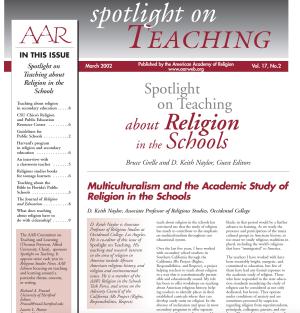
Journal issue. Full text is available online.
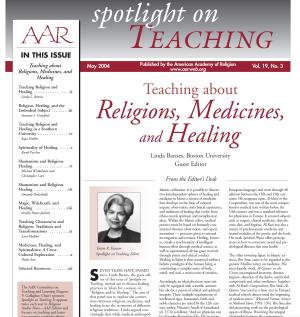
Journal issue. Full text is available online.
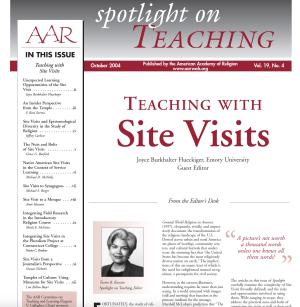
Journal issue. Full text is available online.
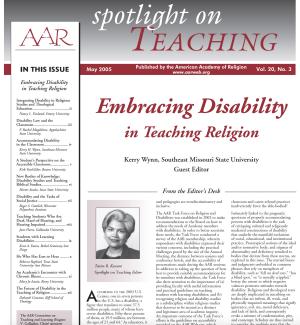
Journal issue. Full text is available online.
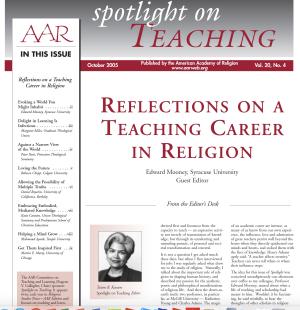
Journal issue. Full text is available online.

Journal Issue.
For more than a quarter of a century, Pat Schneider has helped writers find and liberate their true voices. She has taught all kinds -- the award winning, the struggling, and those who have been silenced by poverty and hardship. Her innovative methods have worked in classrooms from elementary to graduate level, in jail cells and public housing projects, in convents and seminaries, in youth at-risk programs, and with groups of the terminally ill. Now, in Writing Alone and with Others, Schneider's acclaimed methods are available in a single, well-organized, and highly readable volume. The first part of the book guides the reader through the perils of the solitary writing life: fear, writer's block, and the bad habits of the internal critic. In the second section, Schneider describes the Amherst Writers and Artists workshop method, widely used across the U.S. and abroad. Chapters on fiction and poetry address matters of technique and point to further resources, while more than a hundred writing exercises offer specific ways to jumpstart the blocked and stretch the rut-stuck. Schneider's innovative teaching method will refresh the experienced writer and encourage the beginner. Her book is the essential owner's manual for the writer's voice. (From the Publisher)
Noted literary critic Patricia Meyer Spacks has gathered together a group of both liberal and conservative professors to answer the question of whether or not a teacher can still bring passionate commitment to an idea into the classroom as a way of engaging students in a meaningful way. (From the Publisher)
This book presents a national award-winning approach to encouraging dialogue among interdisciplinary faculty about ways to reflect on and broaden their repertoire of teaching skills. Based on the "Dear Abby" advice column format, the process was developed to initiate a dialogue on best practices, successes, and ways to address frustrations in teaching. Faculty from four different disciplines (math, chemistry, physics and engineering) began asking questions about their instructional practices and thinking about teaching in a more scholarly way. A team of outstanding teachers from across Northeastern University and the staff of the Center for Effective University Teaching formed a community of practitioners to construct responses to common teaching challenges, drawing upon the literature on effective teaching as well as their own personal experience. The resulting "columns" were sent to faculty via mass e-mail in the form of suggestions from "Jonas Chalk," an experienced teacher/advisor colleague. Topics were archived and posted on a website. Each quarter, one column was included for publication in the teaching center's newsletter. Topics Jonas tackled included testing approaches, effective uses of office hours, the ways and hows of asking questions in class, dealing with disruptive classroom behavior and much more. The mechanism garnered enthusiastic responses across disciplines; faculty were eager to share their concerns as well as techniques they had developed. Significant numbers of the faculty put the columns' ideas to work in their classrooms. Faculty interested in practicing the scholarship of teaching, while dealing with common classroom concerns, will be able to increase their understanding of classroom dynamics and their repertoire of teaching skills through the concepts and resources described in this book. Written in entertaining, enjoyable and readable prose, Chalk Talk includes a history of the project's development, the actual columns grouped into chapters by topic, and responses from faculty about how the column helped them with their teaching. (From the Publisher)
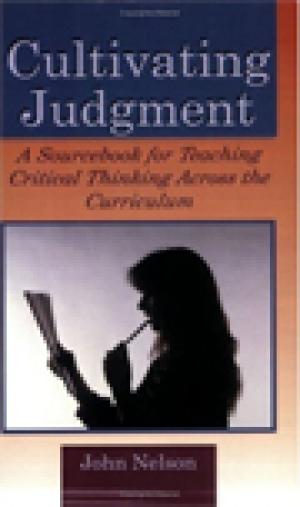
This fine sourcebook provides college and university teachers, across the curriculum, with specific classroom-tested activities and assignments to stimulate and develop student critical thinking. The book consists of fifty modules, each containing: * A description of a critical thinking assignment, * An explanation of the assignment's purposes and benefits, * A discussion of ways to use or modify the assignment in the classroom, and * Suggested related activities, including relevant bibliographical sources. Most modules were developed by the author; in other cases, the author shaped, refined, and expanded on material that has been developed and used by colleagues. Some modules are discipline-specific, some are suitable for a number of disciplines; and many can easily be modified for use in a wide variety of fields. The assignments vary in scope, difficulty and complexity. Some are deigned for introductory freshman courses, while others have been used in graduate courses but could be adapted for lower level courses. Each module stands alone, but the modules are loosely grouped into five sections: (1) Problems and Puzzles (2) Analyses and Critiques (3) Opinions, Decisions, Values (4) Projects, Experiments, Adventures (5) Student as Teacher, Teacher as Student. The sourcebook also includes an introductory chapter on the nature and importance of critical thinking, a cross-referencing of all activities by discipline, and a wide-ranging bibliography. Cultivating Judgment has been extensively tested in college classrooms, then revised, expanded and significantly improved. The author has conducted extensive research on the teaching of thinking skills, and discovered that discovered that no existing source filled the need for a book that spells out and demonstrates how to teach critical thinking in virtually any discipline, from liberal arts to more specialized career programs. You will find Cultivating Judgment to be an engaging book, and one that combines intellectual rigor with a playful, creative spirit – and, one that can be used as a textbook in a general course on critical thinking, or as a resource for teachers across the curriculum! (From the Publisher)